

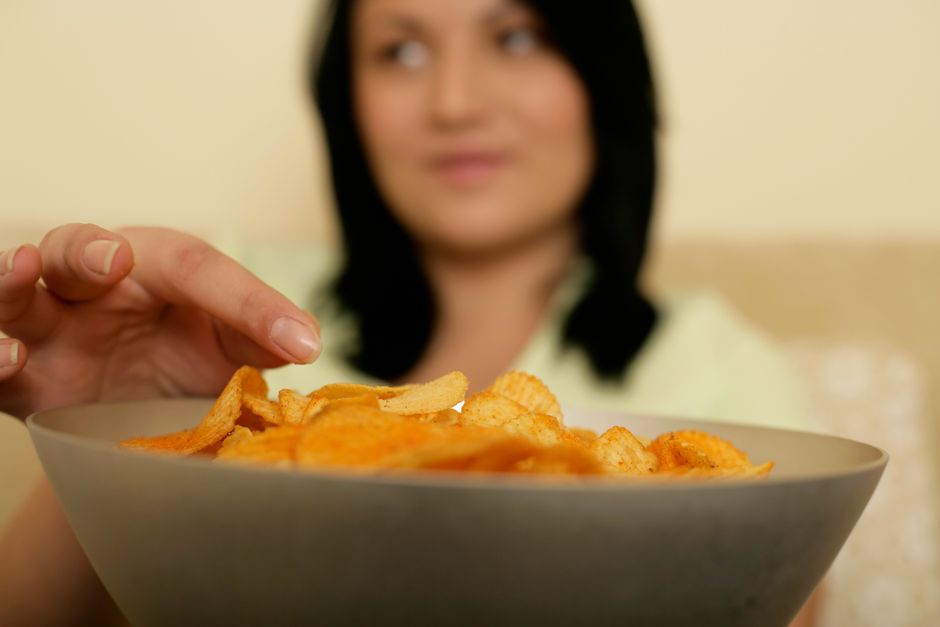
You finished lunch an hour ago. The plate was satisfying, the portions were reasonable, and you weren’t eating at your desk in a rush. But right on schedule, somewhere between 1:30 and 2:30pm, a gnawing, restless hunger returns and the urge to reach for whatever is closest feels almost impossible to ignore.
This is not a willpower problem. It’s a physiology problem, and understanding the difference changes how you respond to it.

What Is Actually Happening in Your Body After Lunch
About 90 to 120 minutes after a carbohydrate-containing meal, your blood glucose peaks and then drops as insulin moves glucose into your cells. For many people, that descent is sharp enough to trigger hunger hormones, particularly ghrelin, before the stomach is actually empty. Research published in Cell Metabolism (2021) found that the speed of this glucose decline, not just the low point, predicted self-reported hunger in real time, meaning a fast drop triggers cravings even when total calories were adequate.
Layered on top of that is a natural circadian dip in core body temperature and alertness that occurs in the early afternoon, partly linked to the body’s internal clock and adenosine buildup. This dip can amplify the sensation of hunger and make it feel more urgent than it really is. Your body often interprets “low energy” as “needs food,” even when it actually needs a brief rest or a small, targeted snack rather than a full meal.
If your lunch leaned heavily on refined carbohydrates (white bread, white rice, pasta without much fiber or protein), you are more likely to experience a steeper glucose curve and an earlier hunger signal. A lunch built around protein, fiber, and fat tends to blunt that curve significantly.
For a deeper look at how the order you eat food within a meal affects this curve, the guide on Eating Vegetables First at Meals Changes Your Blood Sugar More Than Portion Size is a practical starting point.
Why Reaching for the Wrong Snack Makes the Cycle Worse
The irony of the afternoon hunger spike is that the most available snacks, crackers, granola bars labeled “wholesome,” a handful of pretzels, a flavored rice cake, are often the foods that extend the cycle rather than ending it.
These foods deliver quick glucose, trigger another insulin response, and set up a second crash within 60 to 90 minutes. You end up in a loop of snacking that never quite resolves the hunger because the underlying driver (a rapid glucose decline and elevated ghrelin) is never addressed.
The snack you need is not necessarily a large one. It is a strategically composed one.
Three Snack Pairings That Actually Interrupt the Cycle
Each pairing below combines protein with fiber, which together slow gastric emptying, stabilize blood glucose, and suppress ghrelin. Research in the American Journal of Clinical Nutrition consistently links higher-protein snacks to greater satiety and lower subsequent calorie intake at the next meal. Fiber from whole food sources adds bulk and feeds gut bacteria that produce short-chain fatty acids, which may further support fullness signals.
Pairing 1: Greek yogurt plus a small handful of berries
Aim for plain, full-fat or 2% Greek yogurt (roughly 150g) with a half cup of fresh or frozen berries. You get 12 to 15 grams of protein, natural fiber from the berries, and minimal added sugar. The probiotics in yogurt may also support gut signaling pathways involved in appetite regulation, though that research is still emerging.
Pairing 2: Hard-boiled egg plus raw vegetables with hummus
One hard-boiled egg alongside five to six carrot sticks or cucumber slices with two tablespoons of hummus delivers protein, healthy fat, and both soluble and insoluble fiber. This combination is easy to prep on a Sunday for the whole week. If egg-free options suit you better, a small portion of edamame with the same raw vegetables works comparably well.
Pairing 3: Apple slices with natural almond butter
This pairing is portable, inexpensive, and satisfying. One medium apple provides about 4 grams of fiber, while one to two tablespoons of almond butter adds protein and monounsaturated fat. The chewing required for a crisp apple also slows intake and may enhance satiety signals, a finding that holds across several studies on food texture and fullness.
For parents managing afternoon snack prep alongside kids, the article on High-Protein Snacks That Actually Work for Busy Parents: Five Real-Life Combos Ranked by Satiety and Speed covers similar territory with practical prep shortcuts.
The Timing Window That Makes These Pairings Work Better
When you eat your afternoon hunger snack matters almost as much as what you eat. Consuming a small protein-plus-fiber snack at the first sign of that midday dip (around 90 to 120 minutes after lunch) tends to be more effective than waiting until you are genuinely ravenous.
By the time hunger feels urgent, ghrelin levels are already elevated and your likelihood of overeating, or choosing less nutrient-dense foods, rises significantly. Catching the early signal with a prepared, structured snack gives you a chance to respond intentionally rather than reactively.
This is different from scheduled rigid eating. It is about reading your body’s early cues rather than its alarm signals. The guide on Intuitive Eating vs. Structured Meal Timing: Which Approach Actually Keeps You Stable When Starting a Fitness Routine explores how to balance these two approaches without swinging between either extreme.
If you notice the 2pm crash happens almost every day regardless of what you ate for lunch, it may be worth examining your lunch composition more closely. A lunch that includes a solid protein source, cooked or raw vegetables, and a moderate amount of complex carbohydrates tends to extend the satiety window and push that hunger spike back closer to a true meal time. The article on Legumes vs. Eggs vs. Greek Yogurt: Which Breakfast Protein Keeps You Full Longest Without the Crash looks at how different protein sources compare on satiety duration, which applies just as well to lunch choices.
A Simple Place to Start
Choose one of the three pairings above and prepare it the night before or at breakfast time so it is ready when the hunger spike arrives. Trying to decide what to eat when you are already hungry is when snack choices tend to go sideways.
Practice it consistently for a week and notice whether the urgency of your midday hunger shifts. Small, deliberate habits applied repeatedly tend to produce more lasting results than any single perfectly optimized meal.
If you want broader context on afternoon energy and how meal timing affects it, the companion guide Your 2pm Slump Is Not Hunger: How Four People Rebuilt Midday Energy Through Meal Timing is a useful next read.
This article is for general educational and informational purposes only and is not a substitute for medical advice, diagnosis, or treatment. Health needs vary by individual. Consult a qualified healthcare professional before making significant changes to your diet, exercise routine, supplements, medication, or treatment plan, especially if you have a medical condition, are pregnant or breastfeeding, take medication, or have concerns about your symptoms.

Sources
- Wyatt P, et al. “Postprandial glycaemic dips predict appetite and energy intake in healthy individuals.” Cell Metabolism, 2021. (Cited by name; search PubMed for the specific record.)
- Leidy HJ, et al. “The role of protein in weight loss and maintenance.” American Journal of Clinical Nutrition, 2015. (National Library of Medicine, PubMed.)
- Chambers L, et al. “Optimising foods for satiety.” Trends in Food Science and Technology, 2015. (Cited by organization and journal name.)
- National Institute of Diabetes and Digestive and Kidney Diseases (NIDDK): general guidance on blood glucose and meal composition. niddk.nih.gov


