
You started strong. The first two weeks felt great. By week three, a late meeting crept in and broke the streak. By week four, the routine was gone.
This is the most common arc in walking habit formation, and it has very little to do with effort. Research published in the European Journal of Social Psychology (Lally et al., 2010) found that habit automaticity, the point where a behavior feels effortless, takes anywhere from 18 to 254 days depending on the person and the behavior. A four-week walking plan rarely gets you there.
The good news: the gap between “I tried” and “I actually do this” is usually closed not by trying harder but by designing differently. Three behavioral shifts, used together, can turn a fragile walking schedule into a durable part of your day.

Why Week Four Is the Danger Zone
Motivation research consistently shows that initial enthusiasm peaks in the first one to two weeks of a new behavior, then declines as novelty fades. At week four, the newness is gone but the neural habit pathway is not yet automatic. This is the window where life, an illness, a work sprint, a family obligation, interrupts the routine and the routine never returns.
The problem is not willpower. It is architecture. If your walking plan depends on remembering to go, feeling motivated to go, or having a perfect window of time, it will not survive week four. If it is woven into existing structure, it probably will.
For a parallel example from strength training, see how the same dropout pattern plays out in Strength Training Motivation Fades by Week Three: The One Habit That Makes It Stick at Home. The behavioral principles overlap considerably.

Shift One: Time Anchoring
Time anchoring means attaching your walk to an existing daily event rather than scheduling it as a standalone appointment. The logic comes from implementation intention research: when you pair a new behavior with an already-automatic cue, the cue does the work that motivation used to do.
Practical examples:
- Walk immediately after dropping the kids at school, before returning home.
- Walk during your lunch break, leaving your desk the moment a meeting ends.
- Walk after dinner, using the meal itself as the trigger.
The anchor does not have to be a fixed time. It has to be an event that happens reliably. For people with unpredictable schedules, anchoring to a recurring obligation works better than a clock time, because the obligation pulls you forward even on chaotic days.
One useful modification for beginners: start with a ten-minute anchor walk. Research from the British Journal of Sports Medicine suggests that even short bouts of walking accumulate meaningful cardiovascular benefit. A ten-minute anchor is much harder to skip than a forty-five-minute block, and it still builds the neural pathway that eventually makes longer walks feel automatic.
Shift Two: Location Rotation
Repetition is necessary for habit formation, but boredom is a silent habit killer. Walking the same route every day removes the novelty, and without novelty the behavior starts to feel like a chore rather than an activity you chose.
Location rotation means maintaining a small rotation of two or three routes rather than one fixed path. Each route stays familiar enough to feel easy, but the variation provides enough environmental input to keep the experience from feeling stale.
This also has a practical resilience benefit. If your primary route is blocked, under construction, or simply unappealing on a cold morning, having a backup location you have already walked reduces the friction of adapting. Walkers who rely on a single route often treat any disruption to that route as a reason to skip entirely.
If you want to add physical challenge alongside the variety, Building Foot Strength on Uneven Ground: Why Trail Walking Restores Ankle Stability Better Than Flat Pavement explains why rotating to a trail surface occasionally builds more functional stability than flat pavement alone.
For days when hip tightness makes any route feel discouraging, the drills in Mobility Drills for Tight Hips That Sabotage Your Walking Consistency can help you stay mobile without taking a full rest day.

Shift Three: Social Accountability
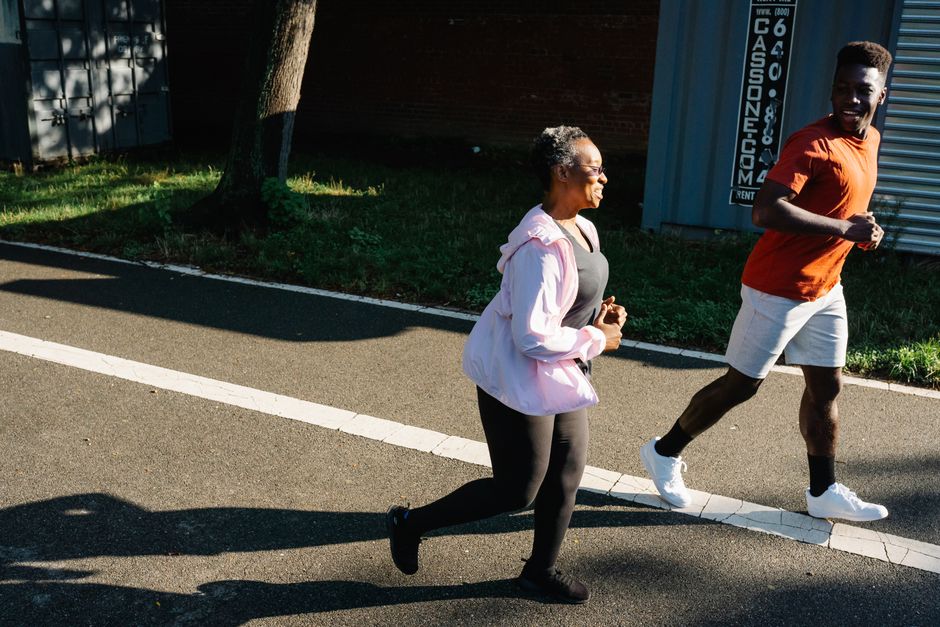
Social accountability does not mean you need a walking partner every day. It means creating a structure where at least one other person expects you to walk, even loosely.
This could be:
- A weekly text check-in with a friend who is also building a movement habit.
- Logging your walks in a shared app or group thread.
- Committing out loud to a family member that you plan to walk after dinner.
The mechanism here is consistency driven by identity and mild social commitment rather than enthusiasm. When you tell someone you walk, you begin to think of yourself as someone who walks. That identity shift, modest as it sounds, is one of the most durable drivers of behavior change described in self-determination theory research (Deci and Ryan, University of Rochester).
Note that accountability works best when it is low-pressure and non-punishing. The goal is not to shame yourself when you miss a day but to have a reason beyond personal willpower to show up the next day.

Designing for Unpredictability
The three shifts above work best when you build in an explicit “minimum viable walk” policy: a walk so short, say ten to fifteen minutes, that it can be completed even on your worst day. Missing a full thirty-minute walk does not have to mean missing the habit entirely.
Research on habit streaks suggests that “never miss twice” is a more sustainable standard than “never miss once.” One skipped walk does not break a habit. A skipped week does. Having a minimum viable option keeps the anchor intact even when everything else is disrupted.
For comparison between walking and other movement options for sustainable health benefits, Outdoor Walking vs. Gym Strength Training for Sustainable Weight Management and Mental Health: Which Builds a Habit That Lasts walks through the evidence on both sides clearly.

What This Looks Like in Practice
Consider how these shifts might combine for a busy parent:
- Anchor: Walk immediately after school drop-off, Monday through Friday.
- Rotation: Three routes: neighborhood loop (20 min), park path (30 min), short block circuit (10 min for hard days).
- Accountability: Sunday evening text to a friend confirming the week’s plan.
- Minimum viable: Ten-minute block circuit when nothing else fits.
This design survives illness, travel disruption, and schedule chaos because no single piece of it is load-bearing. When one element flexes, the others hold.

Putting It Into Motion
Choose one shift from this article and apply it this week, just one. Time anchor your walk to something you already do reliably, map a second route you have never tried, or send a single accountability text to someone you trust.
Walking habit consistency rarely comes from wanting it more. It comes from building a structure that does not require you to want it every single day.
If you want practical weekly guidance on movement, nutrition, and sustainable healthy habits, the Clean Body Mentor newsletter delivers it without pressure or noise.
This article is for general educational and informational purposes only and is not a substitute for medical advice, diagnosis, or treatment. Health needs vary by individual. Consult a qualified healthcare professional before making significant changes to your diet, exercise routine, supplements, medication, or treatment plan, especially if you have a medical condition, are pregnant or breastfeeding, take medication, or have concerns about your symptoms.

Sources
- Lally, P., van Jaarsveld, C. H. M., Potts, H. W. W., and Wardle, J. (2010). How are habits formed: Modelling habit formation in the real world. European Journal of Social Psychology, 40(6), 998-1009.
- Gollwitzer, P. M. (1999). Implementation intentions: Strong effects of simple plans. American Psychologist, 54(7), 493-503. (Implementation intention research basis.)
- Deci, E. L., and Ryan, R. M. Self-determination theory. University of Rochester. (selfdeterminationtheory.org)
- Murphy, M. H., et al. (2019). The effect of walking on fitness, fatness, and resting blood pressure. British Journal of Sports Medicine (systematic review basis; cite organization, not a fabricated DOI).