

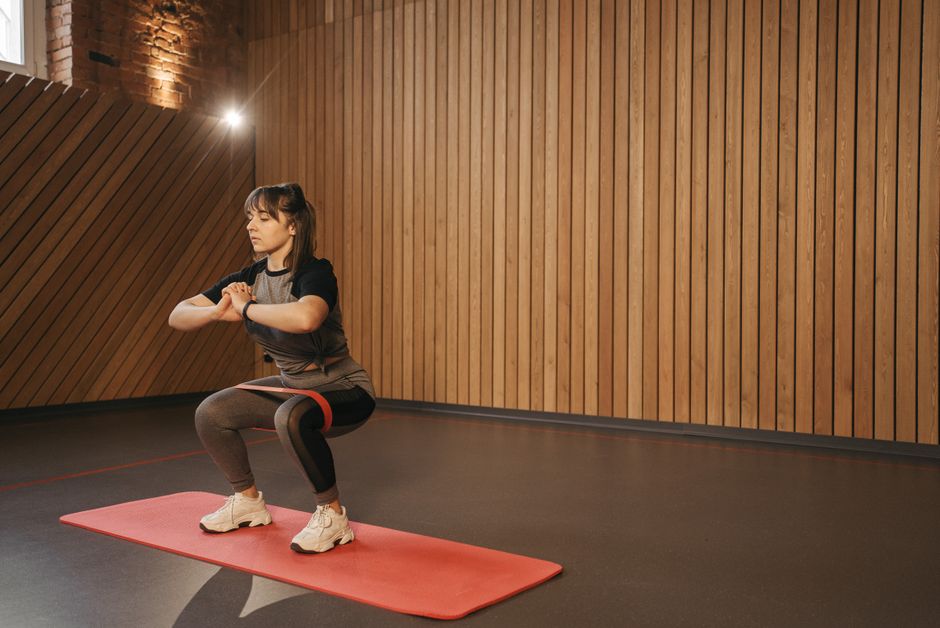
You have cleared space in your living room, found a few YouTube videos, and committed to starting. Then comes the first real decision: do you follow a specific beginner strength training home plan to the letter, or do you move in a way that feels right and build from there?
Neither answer is wrong. But each path comes with real tradeoffs that can either accelerate your progress or quietly undermine it by week three. Here is an honest comparison of both approaches, grounded in what research suggests and what tends to work for real beginners.

What Structured Programs Bring to the Table
A structured program tells you exactly what to do, in what order, for how many sets and repetitions, and how often to rest. That specificity is not just convenient. It serves a protective function.
Research published by the American College of Sports Medicine (ACSM) recommends that beginners follow progressive overload principles, meaning you incrementally increase challenge over time. A structured plan builds that progression in automatically, which reduces two common beginner problems: doing too much too soon and stalling because you are not challenging yourself enough.
Structured programs also reduce decision fatigue. When you are still building a habit, the last thing you want is to spend ten minutes figuring out what comes next. A written plan removes that barrier and keeps workouts shorter and more purposeful.
The downside? Rigid programs can feel suffocating if your body feels off one day or your schedule shifts. Parents, in particular, often find that a plan built around fixed 45-minute blocks does not survive a sick child or a late work call. If you are interested in flexibility without losing structure entirely, Home Workouts That Fit Unpredictable Family Schedules offers a practical middle-ground plan designed around 15, 20, or 30-minute windows.
Another limitation: a fixed program cannot teach you to listen to your body. That skill matters for long-term training, and it is one that intuitive training tends to build faster.

What Intuitive Training Offers
Intuitive training means you move based on how your body feels that day. You might do more push-ups when you feel energized and fewer squats when your legs are sore. You pick exercises that interest you and skip ones that feel awkward or painful.
This approach tends to lower the barrier to entry dramatically. When a workout feels like a personal choice rather than an obligation, you are more likely to show up for it. Research on self-determination theory, widely cited in exercise psychology, suggests that autonomy over activity choice is a meaningful driver of long-term adherence.
Intuitive training also allows you to respond honestly to discomfort. If a movement aggravates a joint, you stop. That protective instinct matters for home exercisers who do not have a trainer watching their form.
The drawback is real, though. Without some structure, most beginners naturally gravitate toward what they already do well, which means the muscles they favor get stronger and the ones they avoid stay weak. That imbalance can lead to plateaus and, eventually, injury from repetitive strain. If you have ever wondered why progress stalls around week six, Five Strength Training Mistakes That Plateau Home Workouts walks through exactly that pattern.

Four Beginners, Four Blended Approaches
The most useful insight from real home exercisers is that almost no one succeeds by staying in one camp. Here is how four different people found their version of balance:
Marcus, 38, worked from home with a desk job. He started with a three-day-per-week bodyweight program but gave himself permission to swap exercises when his lower back felt tight. He kept the schedule rigid and the exercises flexible. After eight weeks, he had not missed a session.
Priya, 44, a parent with two young children. She abandoned her first structured plan in week two because the sessions were too long. She switched to intuitive training but started keeping a simple log of what she did. That log became her loose structure, and she used it to spot when she had avoided leg work for three weeks straight.
Jordan, 29, returning after a long break. Jordan worried about overtraining and relied heavily on feel. He paired that instinct with a minimum viable rule: at least two strength sessions per week, no matter what. The structure was just the floor, not the ceiling. This kind of comeback approach aligns well with what Muscle Memory Returns Faster Than You Think describes about re-entry after time away.
Sofia, 52, new to strength training entirely. Sofia needed structure most. She followed a written beginner program for the first six weeks, then used what she had learned (what movements felt effective, what her weak spots were) to start personalizing. The structure taught her the vocabulary of training; intuition gave her ownership.
A Framework for Blending Both
If you are starting beginner strength training at home and are not sure where to land, consider this practical framework:
- Use structure for frequency and progression. Decide how many days per week you will train and add small increases in difficulty every one to two weeks. Write it down.
- Use intuition for exercise selection and intensity on any given day. If a movement feels wrong, substitute it. If you feel unusually fatigued, reduce the load rather than pushing through.
- Track minimally. A short note in your phone after each session (what you did, how it felt, what was hard) gives you just enough data to spot patterns without turning training into a second job.
- Revisit your plan monthly. What worked in week one may feel easy or tedious in week five. Adjust without guilt.
For a deeper look at navigating the mental side of staying consistent, Strength Training Motivation Fades by Week Three offers one of the most practical habit strategies for home exercisers.
It is also worth noting that how you eat around your training sessions can shape your energy and recovery significantly. Intuitive Eating vs. Structured Meal Timing explores a parallel question on the nutrition side that pairs well with this training comparison.

Which Approach Is Right for You Right Now?
If you are brand new to movement and lack confidence in your form, lean toward structure first. A short, clearly written beginner program reduces injury risk and builds a foundation of movement patterns that intuition alone cannot provide.
If you have tried structured plans before and always quit by week two, the program is probably not the problem. Leaning into intuitive training with a minimal consistent habit (two sessions a week, any style) may be the more sustainable starting point.
Most people who stick with beginner strength training at home long-term eventually land in the same place: a loose structure they own, adjusted by feel, and driven by the confidence that comes from showing up consistently rather than perfectly.
Choose one element from this article to try this week. It could be as small as writing down three exercises you enjoy and committing to doing them twice. Small, specific actions tend to outlast ambitious plans that fade by the end of the month. If you want more practical weekly guidance, the Clean Body Mentor newsletter delivers evidence-informed, beginner-friendly wellness ideas directly to your inbox.
This article is for general educational and informational purposes only and is not a substitute for medical advice, diagnosis, or treatment. Health needs vary by individual. Consult a qualified healthcare professional before making significant changes to your diet, exercise routine, supplements, medication, or treatment plan, especially if you have a medical condition, are pregnant or breastfeeding, take medication, or have concerns about your symptoms.
Sources
- American College of Sports Medicine (ACSM). ACSM’s Guidelines for Exercise Testing and Prescription, 11th ed. Describes progressive overload recommendations for beginners.
- Deci, E.L., and Ryan, R.M. Self-Determination Theory. Research published across multiple peer-reviewed journals; foundational work on autonomy and exercise motivation available via the University of Rochester Self-Determination Theory lab.
- Ryan, R.M., et al. (2009). “Self-determination theory and physical activity.” Journal of Sport and Exercise Psychology, 31(3), 302-321.


