


You started strong. The first few weeks felt like progress every session: push-ups got easier, squats felt more controlled, and you actually looked forward to the next workout. Then, somewhere around week five or six, everything stopped moving. The reps feel the same but the results do not.
Strength training plateaus in home workouts are extremely common for beginners, and the cause is almost never the exercise selection. It is almost always a handful of repeatable mistake patterns that quietly shut down your body’s adaptation engine. The good news: none of these fixes require a gym membership or a rack of dumbbells.
If motivation has already started to waver alongside the stalled progress, this guide on the one habit that makes home strength training stick past week three is worth reading alongside this one.
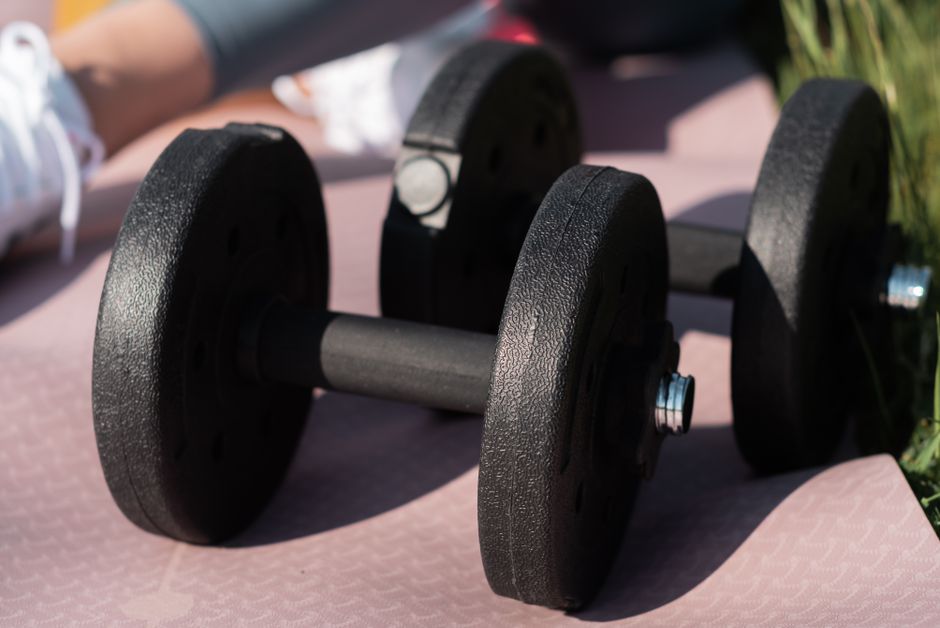
Mistake 1: Doing the Same Reps and Sets Every Week
Your body adapts to the stress you give it. When that stress never changes, adaptation stops. This principle, called progressive overload, is one of the most consistently supported concepts in resistance training research. The American College of Sports Medicine notes that increasing training volume or intensity over time is essential for continued strength gains.
Beginners often assume progressive overload requires heavier weights. At home, it means adding reps, reducing rest time, slowing the tempo, or progressing to a harder variation.
The fix: Keep a simple log. When you can complete all sets at the top of your rep range with solid form, add two reps, shorten rest by fifteen seconds, or move to a harder variation. For push-ups, this progression looks like: elevated push-up, standard push-up, close-grip push-up, feet-elevated push-up. That single ladder can carry you months forward without any equipment.

Mistake 2: Skipping Lower Body Work
Home workouts often skew heavily toward upper body because push-ups, planks, and rows feel like “real” training. But your legs and glutes represent the largest muscle groups in your body. Neglecting them not only limits overall strength but also reduces the total metabolic signal your body receives, which can stall fat loss and body composition goals simultaneously.
Research published in the Journal of Strength and Conditioning Research consistently shows that compound lower body movements produce significant hormonal and systemic adaptations that upper body isolation cannot replicate at the same scale.
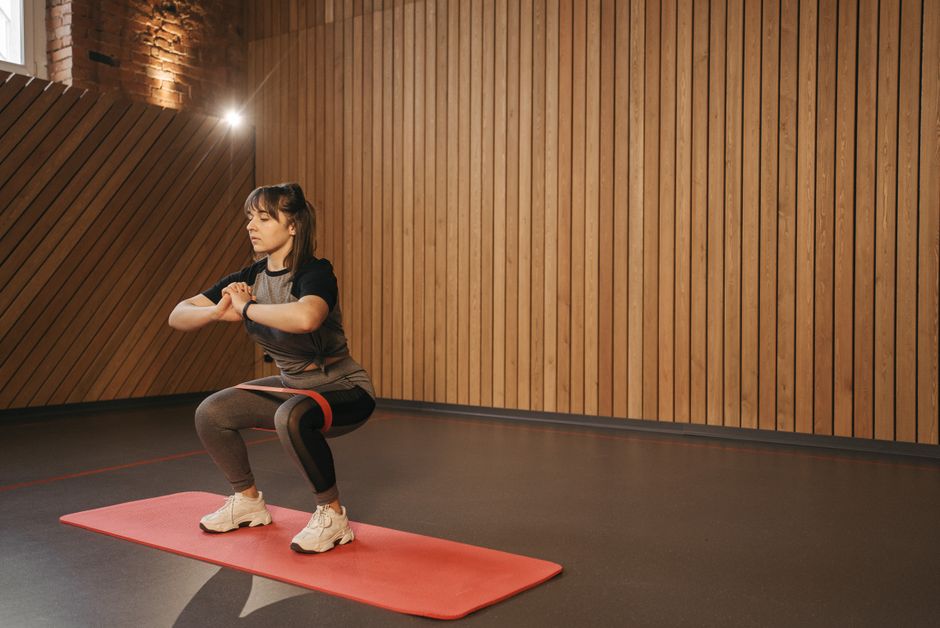
The fix: Anchor at least two movements per session in the lower body. Squats, reverse lunges, single-leg deadlifts, and glute bridges require zero equipment and scale well for beginners. For a structured bodyweight lower body progression, this guide to leg strength without a gym walks through five drills built specifically for home training.
Mistake 3: Treating Every Session Like It Needs to Be Intense
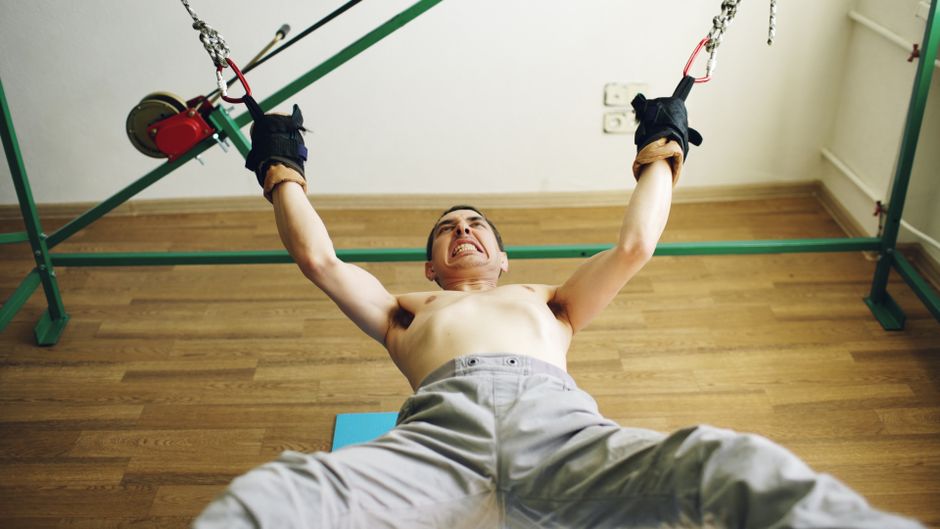
Beginners often equate soreness and exhaustion with effectiveness. When workouts stop feeling brutal, they assume progress has stalled. So they push harder every session and never allow recovery. This creates the opposite problem: accumulated fatigue masks your actual fitness, and you plateau not from under-training but from under-recovering.
Muscle tissue rebuilds and strengthens during rest, not during the workout itself. Without adequate recovery windows, that rebuilding process is repeatedly interrupted.
The fix: Structure your week to include at least one or two rest or active recovery days. On those days, a short walk, light stretching, or mobility work is enough. If you are unsure whether soreness means you should push through or rest, this beginner’s guide to strength training fatigue versus muscle soreness gives clear, practical criteria for making that call.
Hydration also plays an underappreciated role in recovery. If you are doing bodyweight circuits and drinking only water, this article on hydration for strength training recovery explains when electrolytes may actually matter.

Mistake 4: Ignoring Protein Intake
Strength training creates microscopic damage to muscle fibers. The body repairs that damage using dietary protein. Without enough protein, the repair process is incomplete, and strength adaptations stall regardless of how well-designed your program is.
The current evidence-informed recommendation from sports nutrition research suggests most active adults benefit from roughly 1.6 to 2.2 grams of protein per kilogram of body weight daily to support muscle protein synthesis (this comes from a widely cited 2017 meta-analysis in the British Journal of Sports Medicine by Morton and colleagues). Many beginners doing home workouts eat far below this range because they do not track anything.
The fix: You do not need a protein powder or a detailed tracking app. Start by anchoring each main meal around a clear protein source: eggs, Greek yogurt, legumes, chicken, cottage cheese, tofu, or canned fish. If you rely on plant-based sources, this overview of plant proteins ranked by satiety and cost is a practical starting point for building affordable high-protein meals at home.
Mistake 5: Exercising Without a Flexible Structure
The fifth mistake is less about technique and more about planning. Many beginners do random workouts when time allows: a YouTube video one day, nothing for five days, then a long session to compensate. This inconsistency prevents the cumulative progressive stimulus that drives adaptation. Plateaus happen not just from too little challenge but from too little frequency and predictability.
Consistency across weeks matters more than perfection within any single session. Research on habit formation supports the idea that environmental cues and scheduled time blocks significantly improve exercise adherence compared to intention alone.
The fix: You do not need an hour. Fifteen to thirty focused minutes on a predictable schedule outperforms sporadic long sessions. If family life makes scheduling chaotic, this flexible strength plan built around 15, 20, or 30-minute windows was designed specifically for unpredictable days.

A Simple Reset for Weeks Seven and Eight
If you are already at the plateau, here is a practical reset sequence:
- Week 7: Add two reps to every exercise, reduce rest by ten to fifteen seconds, and add one lower body movement you have been skipping.
- Week 8: Introduce one harder variation for your primary push or pull movement and audit your meals for protein at each sitting.
One honest shift per week tends to outperform overhauling everything at once. Pick the mistake above that sounds most familiar and address it first.
Consistency, gradual progression, and adequate recovery are not exciting concepts, but they are the actual mechanism behind every lasting strength gain you will ever make at home.
This article is for general educational and informational purposes only and is not a substitute for medical advice, diagnosis, or treatment. Health needs vary by individual. Consult a qualified healthcare professional before making significant changes to your diet, exercise routine, supplements, medication, or treatment plan, especially if you have a medical condition, are pregnant or breastfeeding, take medication, or have concerns about your symptoms.
Sources
- American College of Sports Medicine. ACSM’s Guidelines for Exercise Testing and Prescription, 11th edition. ACSM.org.
- Morton RW, et al. “A systematic review, meta-analysis and meta-regression of the effect of protein supplementation on resistance training-induced gains in muscle mass and strength in healthy adults.” British Journal of Sports Medicine, 2018. BMJ Publishing Group.
- Kraemer WJ, Ratamess NA. “Fundamentals of resistance training.” Medicine and Science in Sports and Exercise, 2004. ACSM.


