


If you work nights and feel bloated, constipated, or wide awake when you should be winding down, your gut is not broken. It is simply running on a clock that no longer matches your schedule.
Your digestive system has its own internal timer, tightly linked to your circadian rhythm. When you flip your schedule, that timer gets left behind. The result is sluggish digestion, disrupted sleep, and a frustrating pattern where eating well does not seem to help. Understanding why this happens is the first step toward fixing it.

Why Night Shift Disrupts Your Gut (Not Just Your Sleep)
Your circadian rhythm controls far more than when you feel sleepy. It also regulates gastric acid secretion, intestinal motility, and the release of digestive hormones like ghrelin and leptin. Research published by the National Institute of General Medical Sciences confirms that nearly every organ in the body, including the gut, follows a roughly 24-hour biological clock.
During daylight hours, your digestive system runs at peak efficiency. Gut motility is faster, enzyme activity is higher, and your body expects food. At night, those processes slow dramatically. Your gut expects rest, not a full meal.
When you eat a large meal at 2 a.m. because that is when your shift break lands, you are feeding a digestive system that is biologically winding down. The result is slower gastric emptying, more gas and bloating, and a heavier feeling that lingers when you try to sleep. This is not about willpower or food choices. It is a timing mismatch.
Research suggests that irregular eating schedules common in shift work are also associated with higher rates of gastrointestinal complaints, including acid reflux, constipation, and irritable bowel symptoms (International Journal of Environmental Research and Public Health, 2021).
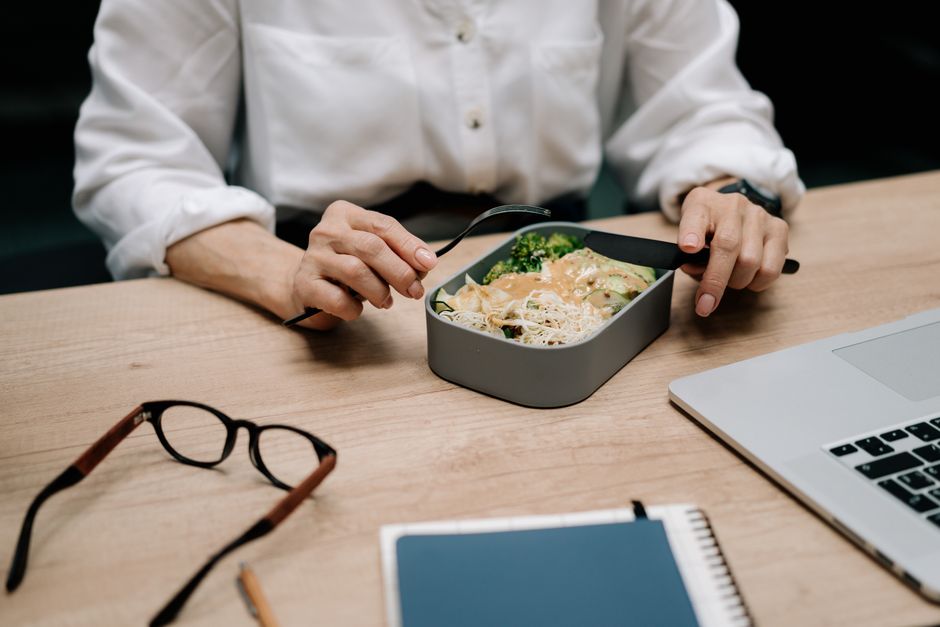
The Practical Eating Framework for Shift Workers
The goal with meal timing for shift workers is not to mimic a 9-to-5 schedule. It is to align your eating pattern with your actual wake-sleep cycle, so your gut has a chance to process food before you go horizontal.
Anchor Your Largest Meal to the Start of Your Wake Window
Think of your largest, most nutrient-dense meal the way a day-shift person thinks of lunch: placed in the middle of your active period, not at the end. If your shift runs from 10 p.m. to 6 a.m., your heaviest eating should happen in the early evening before work, ideally between 6 p.m. and 8 p.m.
This gives your gut two to three hours of active digestion before you head in, reducing the chance of reflux or bloating during your shift.
Eat Lighter During the Overnight Hours
During the shift itself, smaller, easier-to-digest meals work far better than one large break-room meal. Think of your overnight eating as controlled fuel rather than a traditional dinner.
Good overnight options include:
- A small portion of whole grains with a boiled egg or Greek yogurt
- A banana with a tablespoon of nut butter
- Warm soup with soft vegetables and a small amount of protein
- Oatmeal with berries and a sprinkle of chia seeds
Avoid high-fat, high-fiber, or heavily spiced foods during this window. They take longer to digest and are more likely to cause discomfort when your gut motility is already slower. If you want a deeper look at how eating order affects bloating on any schedule, Digestive Comfort Without Food Swaps: How Meal Timing and Eating Order Reshape Your Afternoon Bloating explains the mechanics well.
Stop Eating Two to Three Hours Before Sleep
This is the most impactful shift you can make. When you finish your shift at 6 a.m. and want to sleep by 7 a.m., eating a large meal right before lying down puts your gut in direct conflict with your need for rest. Horizontal posture slows gastric emptying even further and increases reflux risk.
If you are genuinely hungry before sleep, choose something small and easy: warm chamomile or ginger tea with a few crackers, a small piece of fruit, or a modest portion of tryptophan-rich foods like turkey or a small amount of cottage cheese. Tryptophan is a precursor to serotonin and melatonin, and emerging research suggests it may support sleep onset when consumed close to bedtime (USDA Nutrient Database reference; Nutrients journal, 2022).
For a practical roadmap on planning your full meal prep around shift schedules, Meal Prep for Night Shift Workers: Eating on a Flipped Schedule Without Destroying Sleep or Energy is worth bookmarking alongside this guide.

Foods That Support Both Digestion and Sleep on an Inverted Schedule
You do not need a complicated diet. A few consistent food choices can quietly support both gut comfort and sleep quality.
For digestion: Ginger, fennel, and peppermint have evidence-informed support for reducing bloating and improving gastric motility. Warm herbal teas with these ingredients can be genuinely helpful during a shift break. Fermented foods like kefir or a small serving of sauerkraut may also support the gut microbiome, which research increasingly links to circadian regulation (Cell Host and Microbe journal).
For sleep: Magnesium-rich foods (pumpkin seeds, dark leafy greens, almonds) may help with relaxation and are commonly low in shift workers’ diets. A small amount of complex carbohydrates before sleep may modestly raise brain tryptophan availability, which can support melatonin production.
Hydration matters too. Shift workers tend to under-drink water during overnight hours, which slows gut motility even further. Keep a water bottle visible during your shift and aim for consistent sipping rather than large amounts at once.
It is also worth noting that emotional stress, which is common in demanding shift schedules, can significantly affect gut function. The connection is well-documented in gut-brain axis research. If workplace stress is adding to your digestive symptoms, Digestion and Emotional Stress: Why Your Gut Freezes When You Rush and What Breathwork Actually Fixes offers a useful companion read.

Building a Consistent Rhythm Over Time
Your gut adapts slowly, not overnight. Shift workers who stick to consistent meal timing, even on days off, tend to report better digestive comfort over weeks rather than days. Avoid the temptation to revert to daytime eating patterns on your days off if your schedule stays consistent. Frequent switching between rhythms keeps your circadian system perpetually off-balance.
If you find that digestive symptoms persist despite these adjustments, or if you experience significant pain, blood in stool, or unintended weight changes, please speak with a qualified healthcare professional. These strategies are supportive tools, not a substitute for individual medical care.
Start with one change this week: move your heaviest meal to the start of your wake window and stop eating two hours before you plan to sleep. Simple, consistent actions tend to compound in ways that bigger overhauls rarely do. If you want ongoing practical guidance tailored to real schedules and real lives, consider joining the Clean Body Mentor newsletter for weekly wellness support.

Sources
- National Institute of General Medical Sciences. “Circadian Rhythms.” NIGMS Health Information, nigms.nih.gov.
- Albreiki MS, Middleton B, Hampton SM. “A single night shift disruption of sleep schedule and hormonal responses in healthy male participants.” International Journal of Environmental Research and Public Health, 2021.
- Paredes SD, et al. “Tryptophan metabolism and the gut-brain axis in sleep regulation.” Nutrients, 2022.
- Thaiss CA, et al. “Transkingdom control of microbiota diurnal oscillations promotes metabolic homeostasis.” Cell, 2014 (Cell Host and Microbe series).
- USDA FoodData Central. Nutrient profiles for tryptophan-containing foods. fdc.nal.usda.gov.
This article is for general educational and informational purposes only and is not a substitute for medical advice, diagnosis, or treatment. Health needs vary by individual. Consult a qualified healthcare professional before making significant changes to your diet, exercise routine, supplements, medication, or treatment plan, especially if you have a medical condition, are pregnant or breastfeeding, take medication, or have concerns about your symptoms.


