

Most plant-based dinner advice stops at “add more beans.” That is not wrong, but it skips the part that actually matters for fat loss and lasting fullness: whether your dinner delivers a complete amino acid profile, keeps hunger quiet for three or four hours, and fits a real grocery budget. This review ranks five whole-food dinners on all three criteria so you can build a weekly rotation that supports sustainable weight management without tracking every gram or spending a lot.
If you want a deeper look at the protein sources themselves before diving into full meals, Whole-Food Plant Proteins Ranked by Satiety, Cost, and Prep Time is a solid starting point.
How This Ranking Works
Each dinner is scored on three dimensions:
- Protein completeness: Does the combination provide all nine essential amino acids in meaningful amounts? Grains paired with legumes, or legumes paired with seeds, can accomplish this without meat or powders.
- Real satiety: How long does the meal realistically suppress hunger based on protein content, fiber density, and fat type? Research published by the National Institutes of Health supports that dietary protein and fiber independently reduce appetite hormone ghrelin and increase satiety hormones like peptide YY (NIH, Nutrients, 2021).
- Cost per serving: Based on approximate U.S. grocery prices for dried or canned staples, not specialty products.
Portions assume one adult dinner. Protein estimates are per-serving approximations based on USDA FoodData Central values.
Rank 5: Tofu Stir-Fry with Brown Rice and Edamame
Estimated cost per serving: $2.80-$3.50
Protein: ~28 g
Satiety window: 2.5-3 hours
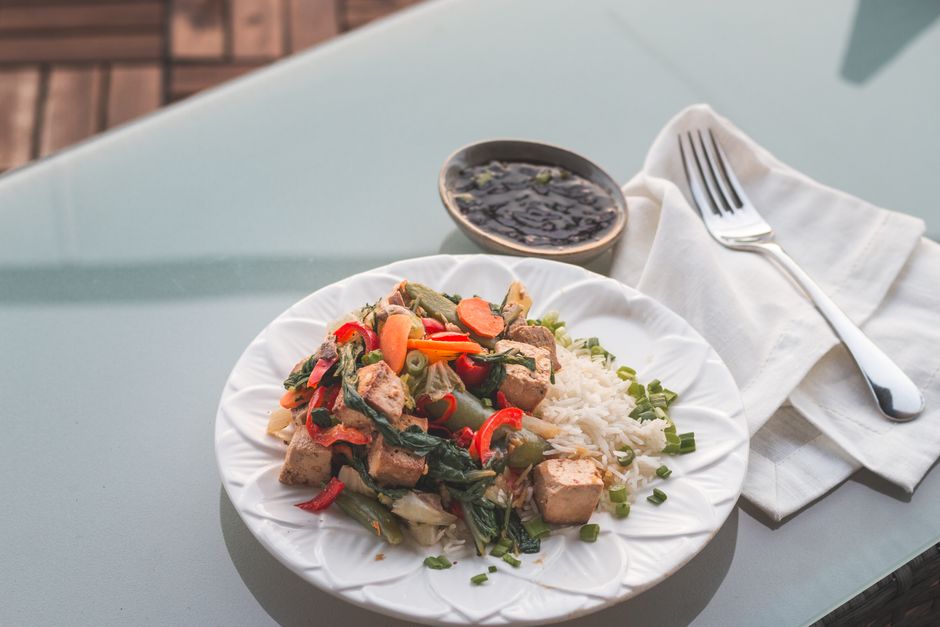
Tofu is a complete protein on its own, and pairing it with edamame and brown rice adds fiber and a secondary amino acid boost. The limitation here is texture and fat content: standard firm tofu is low in fat, which can leave you hungry sooner than higher-fat plant meals. Pressing and pan-frying the tofu in a small amount of sesame oil improves both palatability and satiety, but it still scores lower than the dinners below because the satiety window is shorter.
For best results, use extra-firm tofu, add a tablespoon of tahini or peanut sauce for lasting fat content, and serve with at least one cup of frozen edamame. Frozen vegetables are often more nutritious than you expect and cost significantly less than fresh.
Rank 4: Lentil and Quinoa Bowl with Roasted Vegetables
Estimated cost per serving: $1.80-$2.40
Protein: ~22 g
Satiety window: 3-3.5 hours
Lentils alone are incomplete (low in methionine), but quinoa is a rare plant food with a complete amino acid profile on its own. Together, they cover every essential amino acid and add roughly 15 g of fiber per serving, which is a major satiety advantage. The cost is excellent because both ingredients are shelf-stable and buy well in bulk.
The satiety window is solid but shorter than meals with higher fat content. Add half an avocado or a drizzle of olive oil to push the fullness window closer to four hours. Roasted broccoli or cauliflower adds volume and supports digestive health. If you are new to high-fiber plant meals and experience bloating, the guide on adding plant foods gradually without digestive distress can help you build tolerance systematically.
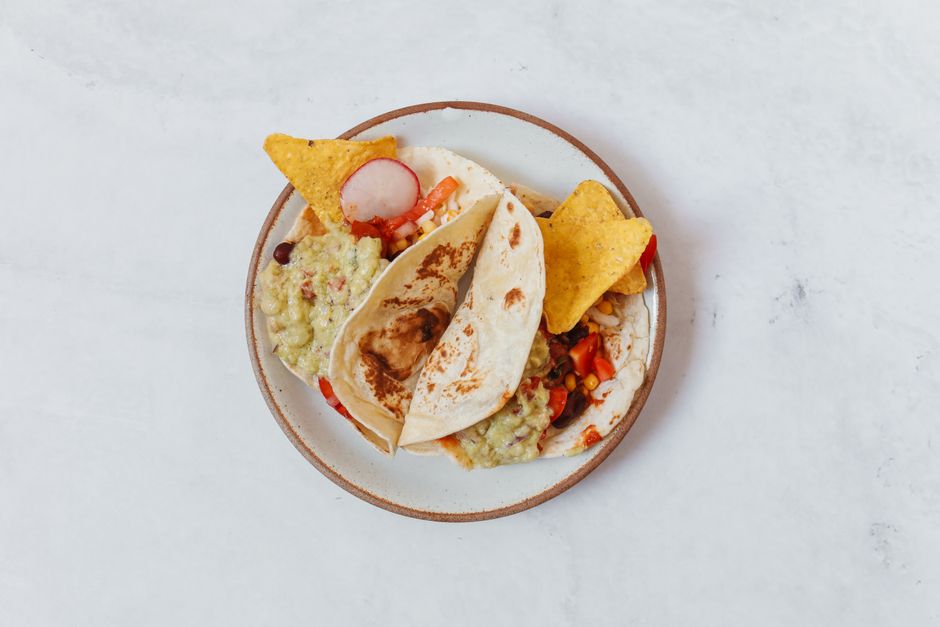
Rank 3: Black Bean and Whole-Wheat Tortilla Tacos with Hemp Seeds and Avocado
Estimated cost per serving: $2.20-$2.90
Protein: ~24 g
Satiety window: 3.5-4 hours
Black beans provide lysine-rich protein that whole-wheat tortillas complement with methionine. Hemp seeds (three tablespoons sprinkled on top) add about 10 g of complete protein plus omega-3 fatty acids, which research suggests may support appetite regulation. The avocado provides monounsaturated fat that meaningfully extends satiety beyond what fiber alone delivers.
This combination lands in the top three because the fat-protein-fiber ratio is well-balanced, and the assembly requires no cooking beyond warming the beans. That matters for busy weeknights. Total prep time: under 15 minutes.
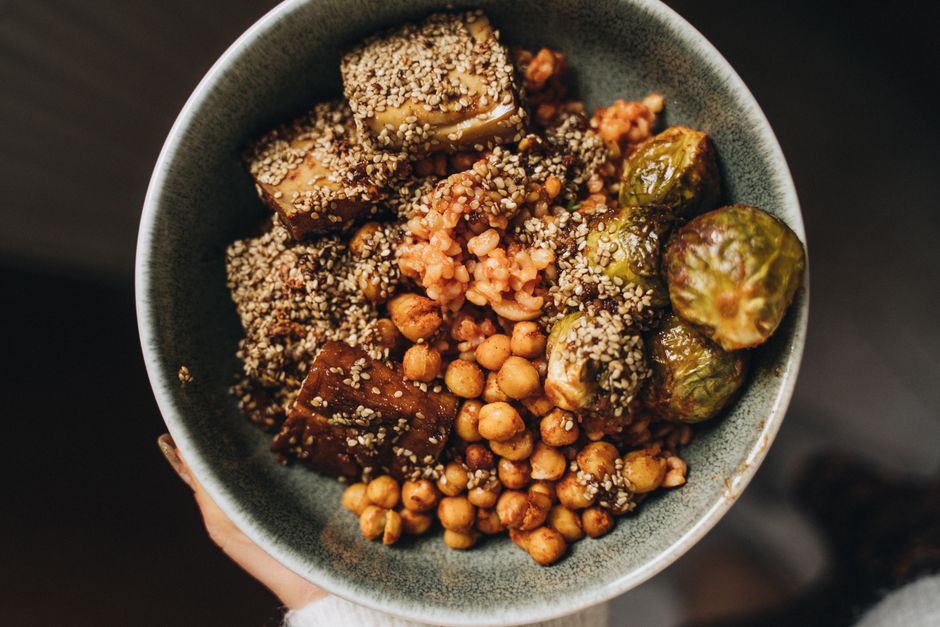
Rank 2: Tempeh, Sweet Potato, and Kale Grain Bowl with Pumpkin Seeds
Estimated cost per serving: $3.00-$3.80
Protein: ~30 g
Satiety window: 4-4.5 hours
Tempeh beats tofu on satiety for two reasons: it is denser in protein (about 31 g per cup) and its fermentation process may improve amino acid bioavailability according to a review published in Frontiers in Nutrition (2021). Sweet potato adds slow-digesting complex carbohydrates, and kale contributes fiber plus micronutrients like calcium and iron. Pumpkin seeds round out the amino acid profile and add magnesium, which supports muscle recovery.
This bowl scores just below the top spot because tempeh is the most expensive ingredient in the list and can be harder to find in smaller grocery markets. If tempeh is unavailable, firm tofu plus an extra tablespoon of pumpkin seeds is a reasonable substitute, though the satiety window shortens slightly.
For readers also thinking about how dinner composition affects overnight recovery, plant-based dinners ranked by satiety and nutrient timing covers that angle in detail.
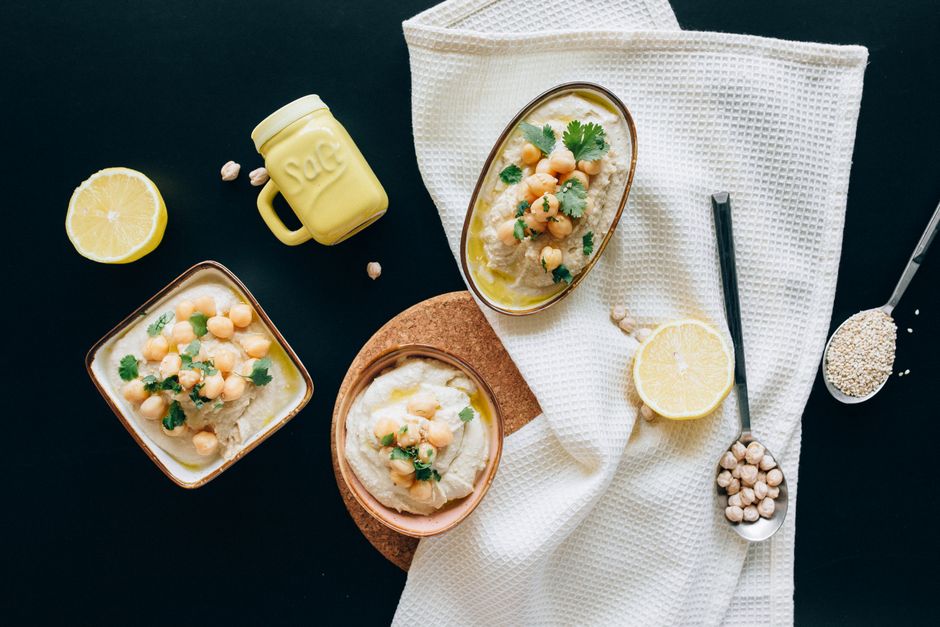
Rank 1: Chickpea and Brown Rice Bowl with Tahini-Lemon Dressing and Spinach
Estimated cost per serving: $1.50-$2.10
Protein: ~26 g
Satiety window: 4.5-5 hours
This combination earns the top spot because it wins on all three criteria simultaneously. Chickpeas and brown rice together supply a complete amino acid profile. Tahini (two tablespoons) adds sesame-derived methionine, healthy fat, and about 5 g of additional protein. Spinach contributes volume, iron, and folate without meaningfully raising cost or calories.
The satiety advantage comes from the synergy of resistant starch in chickpeas, fiber from spinach, and fat from tahini all working together to slow gastric emptying. A calorie deficit does not require hunger. This dinner demonstrates that clearly: at roughly 500-550 calories, it consistently quiets appetite for four-plus hours in a way that lower-fat plant meals do not.
Cost is the standout feature. Using dried chickpeas (cooked in a batch) and bulk brown rice, this dinner comes in under $2 per serving in most U.S. markets. That is genuinely one of the best value-per-satiety combinations in whole-food eating. Pair it with smart grocery habits that support weight management goals to keep the weekly cost even lower.
What the Rankings Show
A few patterns emerge from this comparison:
- Fat content matters as much as protein for the satiety window. Low-fat plant meals (plain tofu, plain lentils) need a fat source added to compete.
- Amino acid pairing is simple in practice: legume plus grain, or legume plus seed, covers the full essential amino acid profile reliably.
- Budget and satiety do not conflict at the plant-based dinner level. The cheapest dinner here is also the most satiating.
If you are managing your weight sustainably, consider building three to four of these dinners into your weekly rotation rather than treating plant-based eating as a weekend experiment. Consistency with high-protein, high-fiber dinners supports body composition goals without the restriction that short-term approaches require.
Start with one dinner from this list this week. Cook a double batch to carry into lunch the next day. That single habit, repeated across a few weeks, tends to shift both grocery spending and evening hunger patterns more reliably than any dramatic meal overhaul.
Sources
- USDA FoodData Central (fdc.nal.usda.gov) – nutrition values for chickpeas, tempeh, tofu, lentils, quinoa
- NIH, Nutrients (2021) – dietary protein, fiber, and appetite hormone regulation
- Frontiers in Nutrition (2021) – fermentation and amino acid bioavailability in tempeh
This article is for general educational and informational purposes only and is not a substitute for medical advice, diagnosis, or treatment. Health needs vary by individual. Consult a qualified healthcare professional before making significant changes to your diet, exercise routine, supplements, medication, or treatment plan, especially if you have a medical condition, are pregnant or breastfeeding, take medication, or have concerns about your symptoms.


