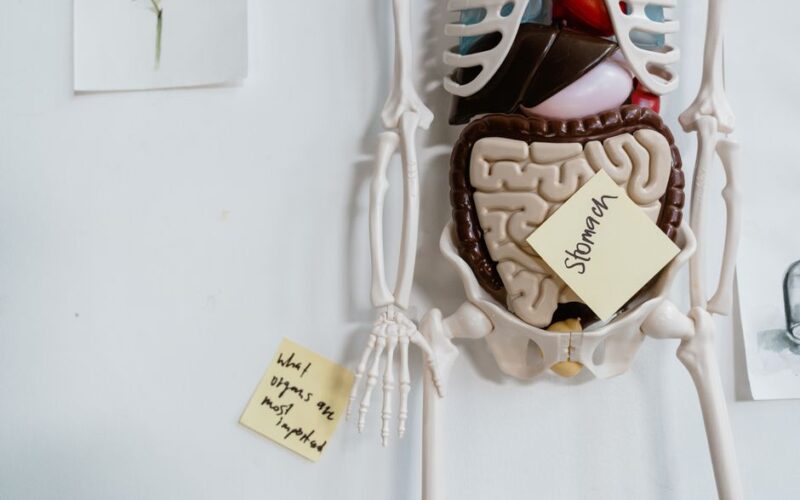


You ate a reasonable lunch, nothing unusual. But by mid-afternoon your stomach feels tight, uncomfortable, and full of trapped air. You wonder if you need to cut something out. Maybe gluten? Beans? Dairy?
Before you start eliminating foods, consider a different explanation: the problem may not be what you ate, but how fast you ate it and the order in which nutrients hit your digestive system. On rushed workdays especially, that combination creates the conditions for bloating even when the meal itself is perfectly balanced.
Here is how eating order actually works for digestive bloating, and what to do about it starting today.

Why Rushed Workdays Are a Perfect Bloating Storm
Your digestive system is not just a passive tube. It requires coordinated muscle contractions, enzyme secretion, and nerve signaling to move food efficiently. When you eat quickly, several things go wrong at once:
- You swallow more air. Rapid biting and swallowing pulls more air into your esophagus, which collects in your stomach and intestines. Research published by the National Institute of Diabetes and Digestive and Kidney Diseases (NIDDK) identifies swallowed air as one of the primary contributors to gas and bloating.
- Chewing is incomplete. Saliva contains amylase, an enzyme that begins breaking down carbohydrates before they even reach your stomach. Rushing shortens this window, meaning larger food particles enter the gut and ferment more aggressively in the lower intestine.
- Your nervous system stays in alert mode. Eating while stressed or distracted activates your sympathetic nervous system, which partially suppresses digestive enzyme production and slows gastric motility. This connection between stress and digestive slowdown is explored further in Digestive Sluggishness vs. Nervous System Stress: Why Your Gut Slows When You Rush and What to Do About It.
The result is food sitting longer than it should, fermenting, and producing the trapped gas that you feel as afternoon bloating.
The Eating Order Principle: Why Sequence Changes Everything
Plate sequencing, sometimes called food order eating, is not a diet. It does not require you to remove anything from your plate. It only asks that you change the sequence in which you eat what is already there.
Research suggests that eating order affects how quickly glucose enters your bloodstream, how efficiently your stomach empties, and how much digestive pressure builds in the first hour after a meal. A 2023 study in the journal Nutrients supported earlier findings that starting a meal with fiber-rich vegetables before proteins and starches moderates digestion speed and reduces post-meal discomfort.
Here is the general sequence that may help reduce digestive bloating on busy days:
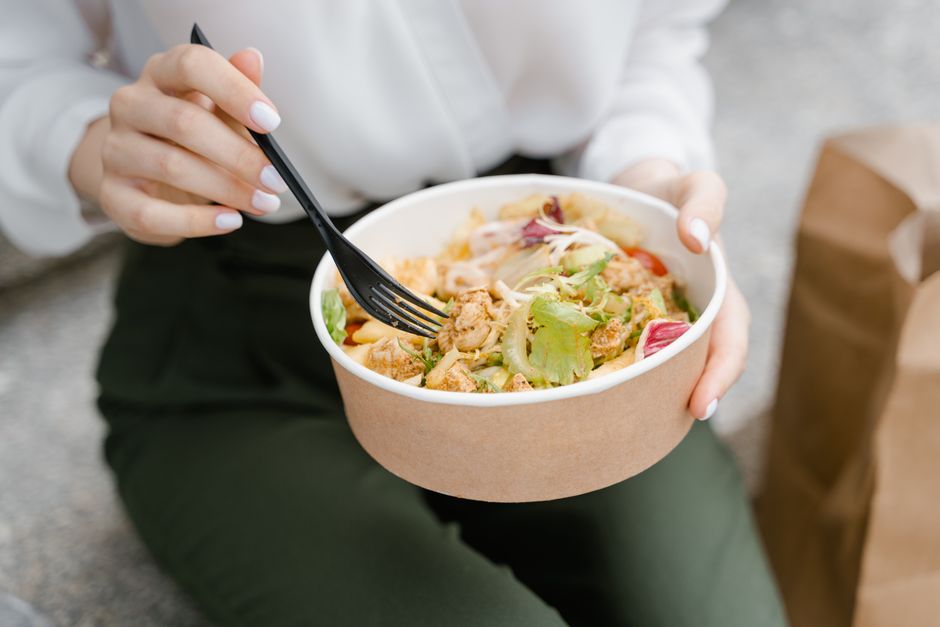
- Start with vegetables or a small salad. Fiber from raw or lightly cooked vegetables stimulates digestive juices and prepares the stomach lining for the rest of the meal. It also slows your eating pace naturally because vegetables require more chewing.
- Follow with protein. Protein signals satiety hormones and maintains steady digestion. It also takes longer to break down than simple carbohydrates, which helps prevent a sudden surge of fermentable material reaching your gut at once.
- Eat grains, starches, or legumes last. These are the foods most likely to ferment if digestion is already backed up. Placing them last, when your stomach is already primed and partially satisfied, reduces both portion size and fermentation load.
You do not have to be rigid about this sequence at every meal. Even a rough approximation, eating a few bites of vegetables first before diving into the rest, can make a noticeable difference over time.
For a practical look at how this approach plays out at lunchtime, Why Your Stomach Feels Heavy After Lunch and How Eating Order Actually Fixes It walks through the midday meal in detail.
Three Workday Habits That Reinforce Eating Order
Plate sequencing works best when paired with a few supportive habits. None of these require extra time or meal prep.
Pause Before the First Bite
Taking 30 to 60 seconds before eating, even just to take a few slow breaths, shifts your nervous system toward a more parasympathetic state. This is sometimes called the rest-and-digest mode, and it meaningfully improves enzyme availability and gastric readiness. Set your food down, look away from your screen, and breathe. That is the entire practice.
Slow Down With a Chewing Count
Most people chew soft food only 5 to 8 times before swallowing. Aiming for 15 to 20 chews per bite sounds tedious but quickly becomes automatic. This single habit reduces swallowed air, increases enzyme contact time, and gives your satiety hormones enough time to signal fullness before you overshoot it. Digestive Discomfort From Rushed Eating: Why Pace and Chewing Beat Food Restriction Every Time covers chewing pace in greater depth if you want a fuller picture.
Take a 5-Minute Walk After Eating
Gentle movement after meals supports gastric motility and helps gas move through the digestive tract instead of pooling. Even a short walk around your office building or down the hallway makes a real functional difference. Digestive Movement Breaks at Your Desk: Why Five Minutes of Gentle Motion Relieves Afternoon Bloating Better Than Food Swaps has a practical desk-side routine if leaving the building is not an option.

What Eating Order Does Not Fix
Plate sequencing and chewing pace are effective tools, but they are not a complete solution for everyone. If your bloating is severe, persistent, accompanied by pain, or tied to specific foods consistently, a qualified healthcare professional or registered dietitian can help identify whether something like irritable bowel syndrome, a food intolerance, or another digestive condition might be involved. Eating order is a behavioral tool, not a medical treatment.
Also worth noting: hydration timing plays a supporting role. Drinking large amounts of water immediately before or during a meal can dilute digestive enzymes slightly. Sipping water between bites rather than gulping it alongside food is a small adjustment that some people find helpful. Digestive Bloating From Hydration Timing: Why Drinking Water With Meals Feels Different Than Between Them explores this in more detail.
Start Small and Stay Consistent
You do not need to restructure your entire diet or overhaul your lunch habits overnight. Pick one change from this article and practice it for a week. Many readers find that the pause-before-eating habit is the easiest entry point because it requires no food change at all.
If you want to go deeper on building gut-friendly workday meals, the Building a Gut-Healing Lunch Bowl That Stops Afternoon Bloating Without Cutting Food Groups guide pairs well with the eating order approach covered here.
For practical weekly wellness guidance on digestion, nutrition, and sustainable habits, the Clean Body Mentor newsletter is a good place to continue learning without the overwhelm.
Sources:
- National Institute of Diabetes and Digestive and Kidney Diseases (NIDDK). Gas in the Digestive Tract. U.S. Department of Health and Human Services.
- Shukla, A.P., et al. (2017). Food Order Has a Significant Impact on Postprandial Glucose and Insulin Levels. Diabetes Care. Referenced in later replication work published in Nutrients (2023).
- Konturek, P.C., et al. (2011). Stress and the Gut: Pathophysiology, Clinical Consequences, Diagnostic Approach, and Treatment Options. Journal of Physiology and Pharmacology.
This article is for general educational and informational purposes only and is not a substitute for medical advice, diagnosis, or treatment. Health needs vary by individual. Consult a qualified healthcare professional before making significant changes to your diet, exercise routine, supplements, medication, or treatment plan, especially if you have a medical condition, are pregnant or breastfeeding, take medication, or have concerns about your symptoms.