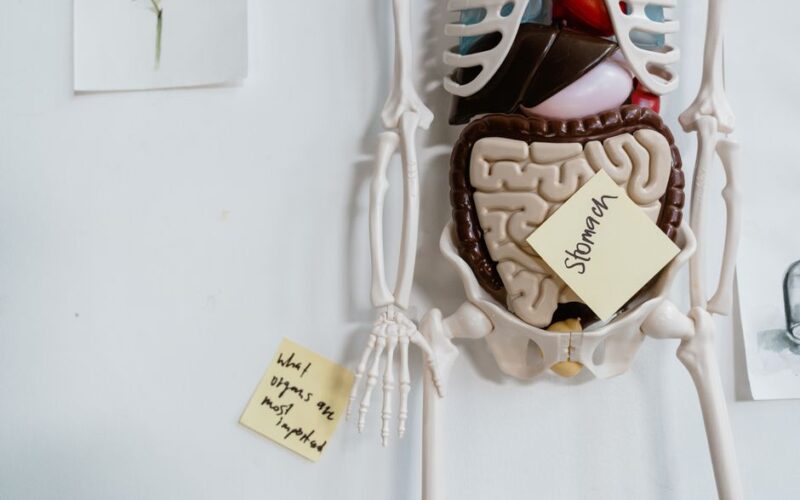


You finish lunch, return to your desk, and within an hour your stomach feels heavy, tight, and uncomfortable. Your first instinct might be to blame what you ate. Maybe the grain bowl, the extra helping, or yesterday’s leftovers. But research suggests that posture and physical stillness after a meal play a much larger role in how your gut processes food than most people realize.
When you sit slumped in a chair for hours after eating, you compress the abdomen, slow motility (the muscular contractions that move food through your digestive tract), and restrict the diaphragm’s ability to support normal gut function. The result: gas builds, transit slows, and you feel bloated even after a perfectly reasonable meal.
Digestive movement breaks, short bursts of gentle desk-friendly motion done shortly after eating, can interrupt that cycle without requiring you to change a single ingredient on your plate.
This tutorial walks you through five practical moves you can do between meetings, at your standing desk, or in a quiet corner of the office.
Why Stillness After Meals Slows Digestion
Your digestive system relies partly on muscular movement called peristalsis. Physical activity, even light walking, appears to accelerate gastric emptying and reduce the time food spends sitting in the stomach, according to research reviewed by the NIH’s National Institute of Diabetes and Digestive and Kidney Diseases. When you remain sedentary, that process slows.
Posture compounds the problem. Slouching forward compresses the stomach and the ascending and transverse portions of the colon, which is exactly where gas tends to accumulate in the afternoon. As explained in more detail in Digestive Bloating From Tight Breathing and Shallow Movement: Why Posture Fixes Work Better Than Food Restriction, shallow chest breathing, common during computer work, also reduces diaphragmatic pressure that normally helps massage the gut from above.
The good news: you do not need a gym, a yoga mat, or a long lunch break. Five focused minutes is enough to stimulate transit and decompress the belly if you choose the right movements.
The Five-Minute Digestive Movement Break Routine
1. Seated Belly Breathing (1 Minute)
Before moving your body, reset your breath. Sit upright, feet flat on the floor, and place one hand on your belly. Inhale slowly through your nose for a count of four, letting your belly push outward against your hand. Exhale through your mouth for a count of six.
Why it helps: Deep diaphragmatic breathing creates gentle internal pressure changes that stimulate the vagus nerve, which is directly involved in digestive signaling. Research published through the journal Neurogastroenterology and Motility has explored the vagus nerve’s role in gut motility, and even brief diaphragmatic breathing appears to shift the nervous system toward the parasympathetic state (often called rest-and-digest) where digestion works best.
Repeat for six to eight breath cycles before moving on.
2. Seated Torso Twists (1 Minute)
Sit at the edge of your chair with feet hip-width apart. Place your right hand on your left knee and your left hand behind you on the chair. Inhale, lengthen your spine upright, then exhale and rotate gently to the left. Hold for two breaths. Return to center and repeat to the right.
Why it helps: Spinal rotation compresses and then releases the ascending and descending colon alternately, a motion that can help move trapped gas along the digestive tract. Think of it as a gentle, external massage for your gut.
Do four to five twists per side.
3. Standing Hip Circles (1 Minute)
Stand up from your chair, feet shoulder-width apart, and place your hands on your hips. Draw slow, wide circles with your hips, as though you are stirring a large bowl with your pelvis. Do eight circles clockwise, then eight counterclockwise.
Why it helps: Hip circles activate the core and mobilize the lumbar spine, which decompresses the gut region that gets most compressed during long bouts of sitting. Standing alone already changes intra-abdominal pressure; adding circular motion amplifies the digestive benefit.
This move pairs well with the posture guidance in Why Your Digestion Feels Sluggish After Meals and How Posture Fixes It.
4. Brief Walking Loop (1 Minute)
Walk to the kitchen, the bathroom, or simply pace your office for sixty seconds. Keep the pace relaxed, not brisk enough to feel like exercise.
Why it helps: Even a two-to-five minute walk after eating has been shown in small clinical trials (including one published in Sports Medicine in 2023) to accelerate gastric emptying and lower postprandial glucose response compared to sitting. A short walking loop is one of the simplest and most evidence-supported digestive movement breaks available to desk workers.
If you find it hard to build the habit, Why Your Digestion Improves on Movement Days and Slows on Rest Days: The Gut-Activity Connection explains the broader gut-activity relationship and may give you more motivation to keep the habit going.
5. Supine Knees-to-Chest (1 Minute, Optional Floor Version)
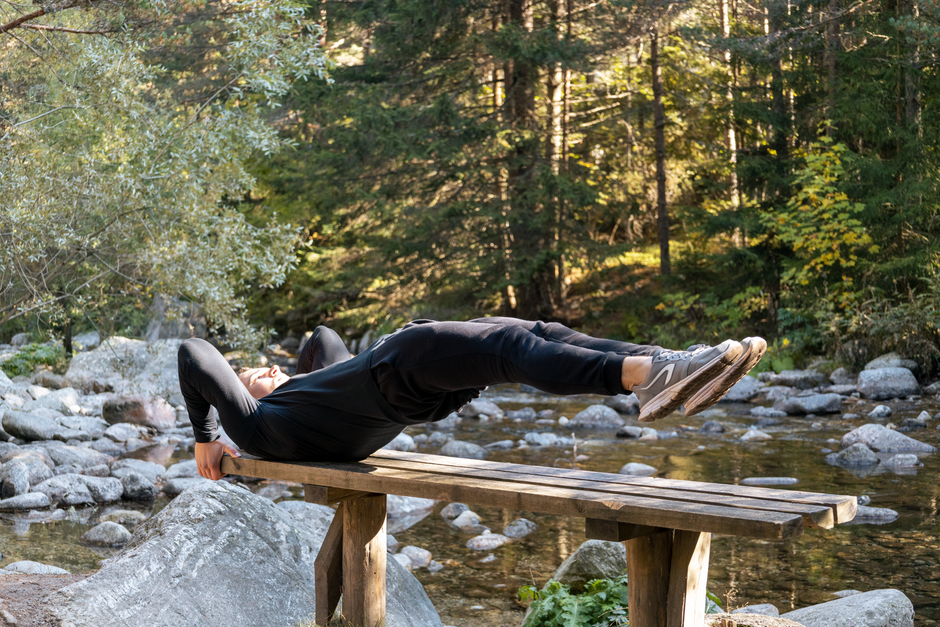
If you have a private space, lie on your back on the floor. Draw both knees gently toward your chest, wrap your arms around your shins, and rock slowly side to side for thirty seconds. Then extend one leg at a time in a cycling motion for another thirty seconds.
No floor available? Do a modified standing version: stand near your desk, lift one knee toward your chest, hold for three seconds, lower, and alternate legs for eight to ten repetitions per side.
Why it helps: The knees-to-chest position is one of the most direct ways to manually compress and release the lower colon. The rocking motion adds a gentle peristaltic nudge that relieves gas buildup in the descending colon.
How to Build the Habit Without Overthinking It
The best digestive movement break is one you actually take. A few practical notes:
- Timing matters. Aim to begin your five-minute routine within fifteen to thirty minutes of finishing lunch. This window aligns with early gastric processing when movement does the most good.
- You do not need all five moves every day. Pick two or three that fit your workspace and rotate. Consistency over completeness.
- Food choices still matter, just not as the only lever. If your meals regularly leave you heavy, combining movement breaks with balanced eating patterns helps more than either approach alone. Digestive Bloating From Rushed Meals: Why Chewing Speed and Pause Breaks Matter More Than Food Swaps covers the eating-pace side of the equation well.
- Afternoon energy slumps often follow bloating. Addressing the digestive discomfort with movement may also help with the 2pm fog. If energy crashes are a separate concern, Why Your Afternoon Energy Crashes at 2pm and How Snack Timing Stops It is worth a read.
One Small Action
Choose a single move from this tutorial, set a recurring reminder on your phone for fifteen minutes after your lunch break ends, and try it for five consecutive workdays. That is a realistic starting point. If you want to explore more practical wellness habits for your daily routine, the Clean Body Mentor newsletter delivers evidence-informed guidance each week, no overwhelm, no restriction.
This article is for general educational and informational purposes only and is not a substitute for medical advice, diagnosis, or treatment. Health needs vary by individual. Consult a qualified healthcare professional before making significant changes to your diet, exercise routine, supplements, medication, or treatment plan, especially if you have a medical condition, are pregnant or breastfeeding, take medication, or have concerns about your symptoms.
Sources
- National Institute of Diabetes and Digestive and Kidney Diseases (NIDDK). “Your Digestive System and How It Works.” U.S. Department of Health and Human Services.
- Brum, J. M., et al. “Effects of walking after meals on postprandial glycemia in adults.” Sports Medicine, 2023.
- Bonaz, B., Bazin, T., and Pellissier, S. “The Vagus Nerve at the Interface of the Microbiota-Gut-Brain Axis.” Frontiers in Neuroscience, 2018.
- Neurogastroenterology and Motility (journal). Various reviews on diaphragmatic breathing and gut motility signaling, Wiley Online Library.