
You finish lunch, sit back down at your desk, and by mid-afternoon your stomach feels tight, puffy, and uncomfortable. Your first instinct might be to audit what you ate: Was it the bread? The beans? Too much soda?
But here is something worth knowing before you start eliminating foods: the way you breathe and hold your body while sitting for hours may be contributing to that bloating more than your menu did.
This is not a fringe idea. Research on intra-abdominal pressure and diaphragm mechanics shows a direct mechanical relationship between posture, breathing depth, and gut motility. Understanding that link can help you find relief without the frustration of unnecessary food restriction.
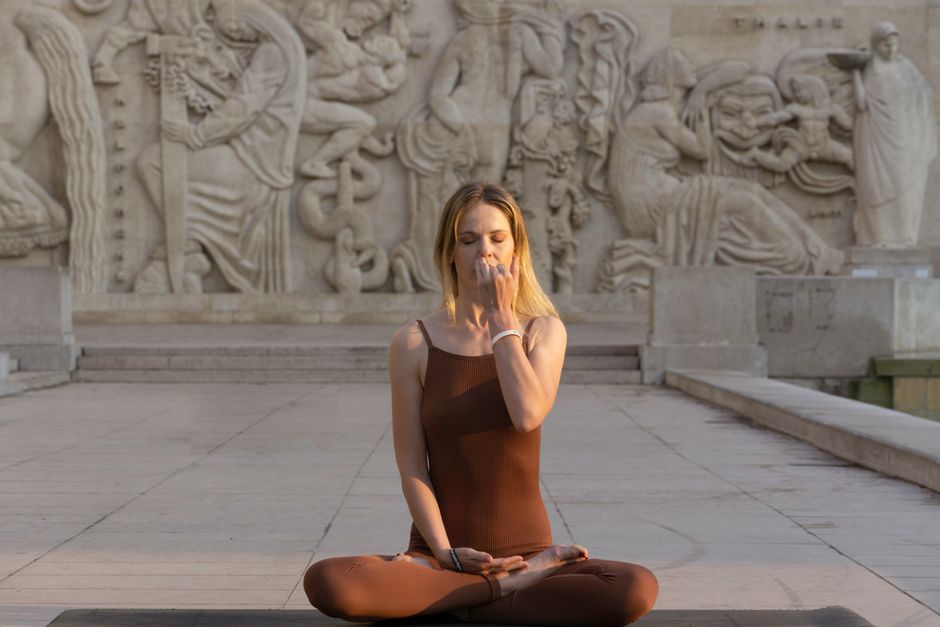
Why Shallow Breathing Traps Gas in Your Gut
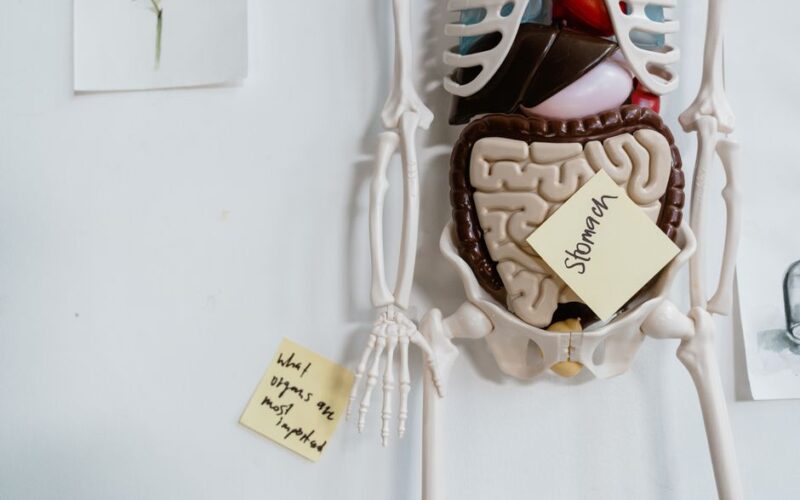
Your diaphragm does two jobs simultaneously. It controls breathing, and it acts as a mechanical pump that helps move food, gas, and fluids through your digestive tract. When you breathe shallowly from your chest, mostly the upper lungs expand while the diaphragm barely moves. That reduced movement means less rhythmic pressure change in your abdominal cavity.
The digestive system depends partly on those pressure changes to keep things moving. When gas builds in your intestines and the surrounding mechanical environment stays static, gas has fewer cues to migrate and release. The result is that uncomfortable balloon-feeling that builds through the afternoon.
Research published in the journal Neurogastroenterology and Motility (and reviewed through PubMed) has found that diaphragmatic breathing training reduced bloating and improved symptoms in people with functional gastrointestinal disorders. The mechanism appears to involve improved peristalsis and reduced visceral hypersensitivity.
If breathing patterns are already connected to how you feel after meals that leave you heavy and sluggish, the postural layer adds another dimension worth addressing.
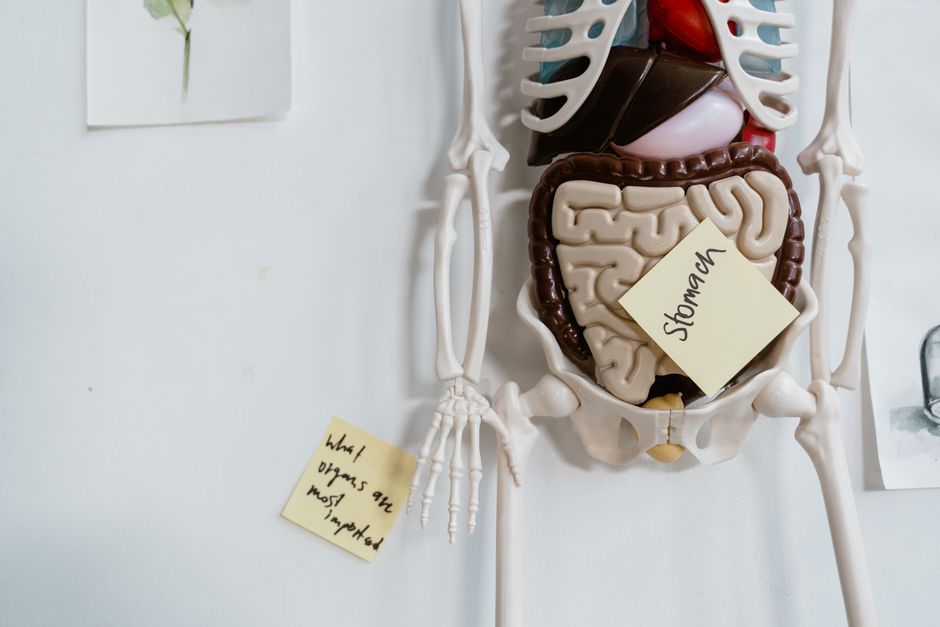
How a Slouched Posture Compresses Your Digestive Space
Sitting hunched forward for several hours, shoulders rolled in, lower back rounded, is the default desk posture for most adults. In this position, your rib cage drops toward your pelvis, physically narrowing the space where your stomach and intestines sit.
This compression does a few things at once:
- It reduces the vertical room your stomach has to expand comfortably after eating.
- It angles the lower esophageal sphincter in ways that may increase pressure and discomfort.
- It tightens the hip flexors and psoas, which can stiffen the lower abdomen and reduce blood flow to digestive tissue.
- It makes diaphragmatic breathing almost structurally impossible, reinforcing shallow chest breathing.
The cumulative effect across a six-to-eight hour workday adds up. You are essentially compressing your gut all afternoon and then wondering why it feels swollen by 3 pm. If you are already exploring digestive movement breaks during the workday, adding a posture reset to those breaks makes them significantly more effective.
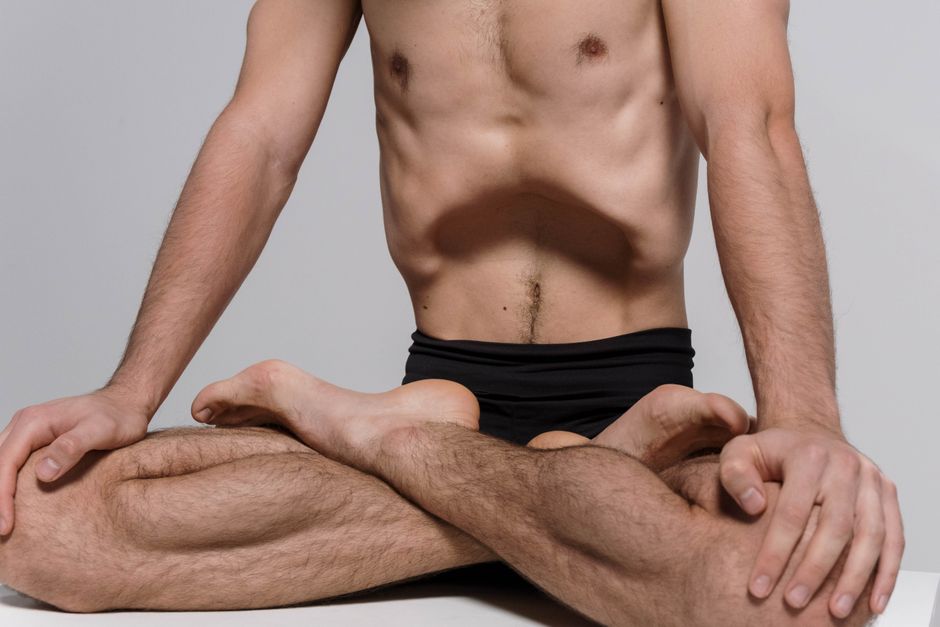
Three Postural and Breathing Resets That Actually Help
These are not elaborate exercises. Each one takes two to five minutes and can be done at a desk, on a couch, or standing in a hallway.
Reset 1: Tall Sit with Diaphragmatic Breathing (2 Minutes)
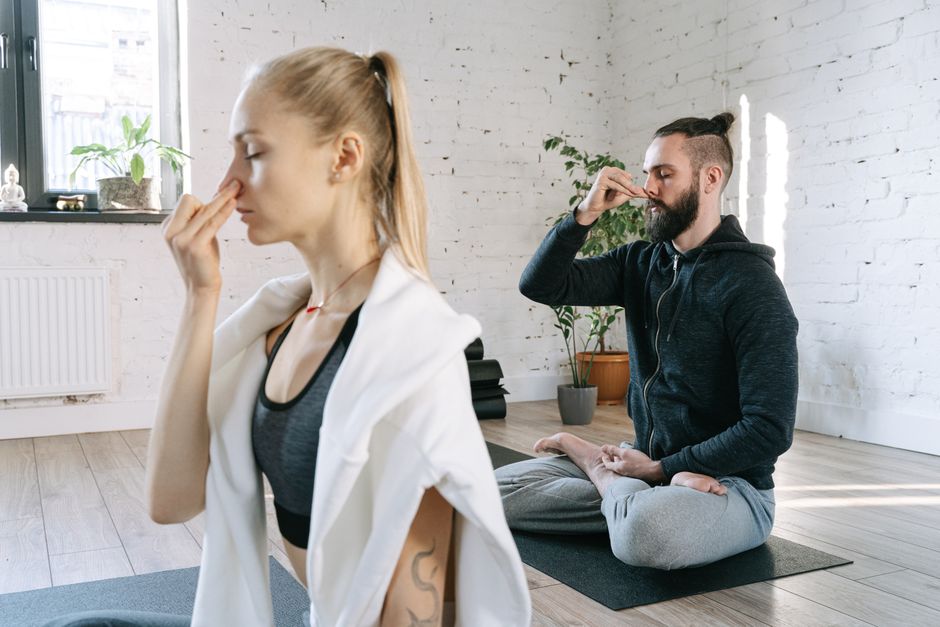
Sit at the edge of your chair with both feet flat on the floor. Lengthen your spine upward as if a string were pulling the top of your head toward the ceiling. Place one hand on your chest and one on your belly.
Breathe in slowly through your nose for four counts, directing the breath so only the belly-hand rises. Your chest-hand stays relatively still. Exhale through pursed lips for six counts, letting the belly fall. Repeat six to eight times.
This activates your diaphragm fully, restores abdominal pressure dynamics, and gives your digestive organs the rhythmic mechanical stimulus they need to move gas along. Breathing patterns that calm the nervous system work through a related mechanism: the vagus nerve runs close to the diaphragm, and deep breathing activates the parasympathetic state that supports digestion.
Reset 2: Thoracic Extension Over a Chair Back (90 Seconds)
Position the top of your chair back so it falls roughly at the level of your mid-upper back (between the shoulder blades). Sit close to the chair back, clasp your hands behind your head for light support, and gently extend backward over the edge, opening your chest toward the ceiling.
Hold for three slow breaths. Return upright slowly. Do this two to three times.
This extension counteracts the forward rounding of hours of desk work, reopens the rib cage, and creates more vertical space in the abdominal cavity. It also tends to produce an immediate sense of decompression that many people describe as relief from that stuffed feeling.
Reset 3: Standing Hip Flexor Release with Reach (2 Minutes)
Step into a gentle lunge stance, with your back knee lowered toward (or resting on) the floor. Keep your torso upright. Raise the arm on the same side as your back leg overhead and reach slightly away from your body.
Hold the position for thirty to forty-five seconds while breathing slowly and deeply. Switch sides.
Tight hip flexors tug on the lower abdominal area and can restrict the movement of the intestines. Releasing them, combined with deep breathing in the stretch, often produces an audible or sensory gut shift within a minute or two. It is one of the simplest ways to support the lower digestive tract without any dietary change.
For more targeted movement that counters desk-sitting stiffness, mobility drills for desk workers walk you through a full ten-minute routine that pairs well with these resets.
When Food Actually Is the Problem
None of this means food choices never cause bloating. Fermentable carbohydrates, carbonated drinks, eating too quickly, and swallowing air are all legitimate contributors. If you have persistent or severe digestive symptoms, working with a registered dietitian or gastroenterologist is the right path, not self-diagnosis through elimination.
But if your bloating is situational, arriving in the afternoon, during desk hours, or after sitting for long stretches, and you have not changed what you are eating, posture and breathing are the most logical place to start. You might also find that eating pace and chewing habits affect how your body processes the same meal under different postural conditions.
A Realistic Starting Point
You do not need to overhaul your workspace or commit to a new exercise program to see a difference. Choose one reset from the three above and practice it twice a day for one week, once midmorning and once mid-afternoon. Notice whether that afternoon tightness shifts in intensity or timing.
Small, consistent changes tend to compound. If movement and breathing are already part of your approach to digestion, you are building a whole-person wellness habit that no food restriction can fully replicate on its own.
For more practical guidance like this, consider exploring the Clean Body Mentor newsletter, where evidence-informed weekly tips cover digestion, movement, and sustainable healthy habits without extreme approaches.
Disclaimer: This article is for general educational and informational purposes only and is not a substitute for medical advice, diagnosis, or treatment. Health needs vary by individual. Consult a qualified healthcare professional before making significant changes to your diet, exercise routine, supplements, medication, or treatment plan, especially if you have a medical condition, are pregnant or breastfeeding, take medication, or have concerns about your symptoms.
Sources
- Diaphragmatic breathing and functional GI symptoms: Bordoni B, Morabito B, et al. “The Relationship of the Diaphragm and Bloating.” Cureus, 2020. Available via PubMed (search PMID: 32461834).
- Intra-abdominal pressure and gut motility: referenced through the journal Neurogastroenterology and Motility (Wiley). Search PubMed for “diaphragmatic breathing bloating functional gastrointestinal.”
- Hip flexor anatomy and abdominal compression: National Academy of Sports Medicine (NASM) corrective exercise resources on anterior pelvic tilt and core pressure dynamics.