
You blend the same frozen banana, spinach, Greek yogurt, and almond butter every morning. Pour it into a glass and you are hungry again by 9:30. Spoon it into a bowl with toppings and, somehow, you make it to lunch. Same calories. Same ingredients. Wildly different staying power.
That gap is not imaginary. The way you consume a blended meal changes how your body registers fullness, how quickly you eat, and how your gut hormones respond. This comparison walks through three popular formats, drinkable smoothies, smoothie bowls, and chunky or partially blended drinks, so you can pick the one that matches your schedule and your hunger pattern.
Why Format Changes Fullness Even When Calories Stay the Same
Satiety is not just about calories. It is shaped by eating rate, oral processing, gastric stretch, and a hormonal feedback loop that takes roughly 15 to 20 minutes to signal the brain that you have eaten enough (according to research published by the National Institute of Diabetes and Digestive and Kidney Diseases).
When you drink a 400-calorie smoothie in three minutes, you outrun that feedback window. The same 400 calories eaten slowly from a bowl triggers earlier satiety signals because you chew toppings, slow down naturally, and give ghrelin (the hunger-promoting hormone) time to fall while GLP-1 and peptide YY (fullness hormones) rise.
Texture also matters for fiber absorption. Intact cell walls in whole fruit release fiber differently than fully broken cell walls in a blended drink. A 2019 study in the journal Food Hydrocolloids found that particle size in blended foods affects the viscosity of the stomach contents, which directly influences gastric emptying rate. Higher viscosity means slower emptying, which means longer fullness.
If your smoothie is leaving you hungry well before lunch, Five Unexpected Reasons Your Smoothie Leaves You Hungry an Hour Later covers ingredient-level fixes worth reading first.
The Drinkable Smoothie: Convenient but Fast
Best for: Busy mornings, post-workout refueling, on-the-go nutrition.
A fully blended, drinkable smoothie is the fastest format. You can consume it in two to four minutes while answering email or driving. That speed is exactly what makes satiety harder to sustain.
When food bypasses chewing almost entirely, two things happen. First, you miss the cephalic phase of digestion, where chewing signals the gut to prepare digestive enzymes and begin the satiety cascade. Second, liquid calories tend to empty from the stomach faster than solid or semi-solid meals, which research from the American Journal of Clinical Nutrition has associated with returning hunger sooner after eating.
That said, a well-designed drinkable smoothie can still provide two to three hours of satiety if it includes enough protein (at least 20 grams), enough fat (healthy fat from nut butter or seeds slows gastric emptying), and enough soluble fiber from ingredients like chia seeds, oats, or frozen banana. The issue is not the blending; it is the drinking speed and composition.
Practical tip: If a drinkable smoothie is your format, sip it slowly over 10 to 15 minutes rather than gulping. Use a small straw or spoon the first few ounces. That alone can extend satiety meaningfully.
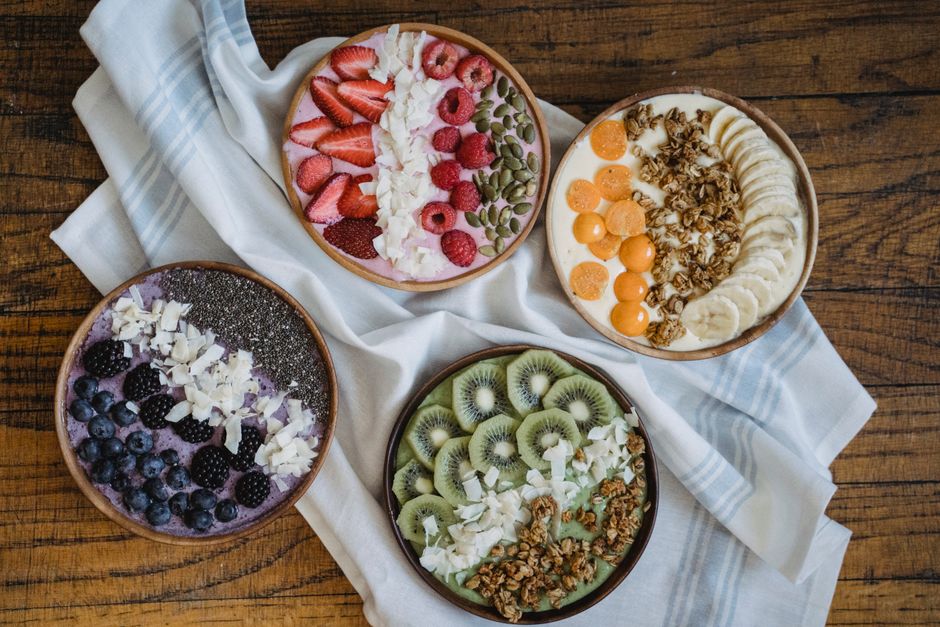
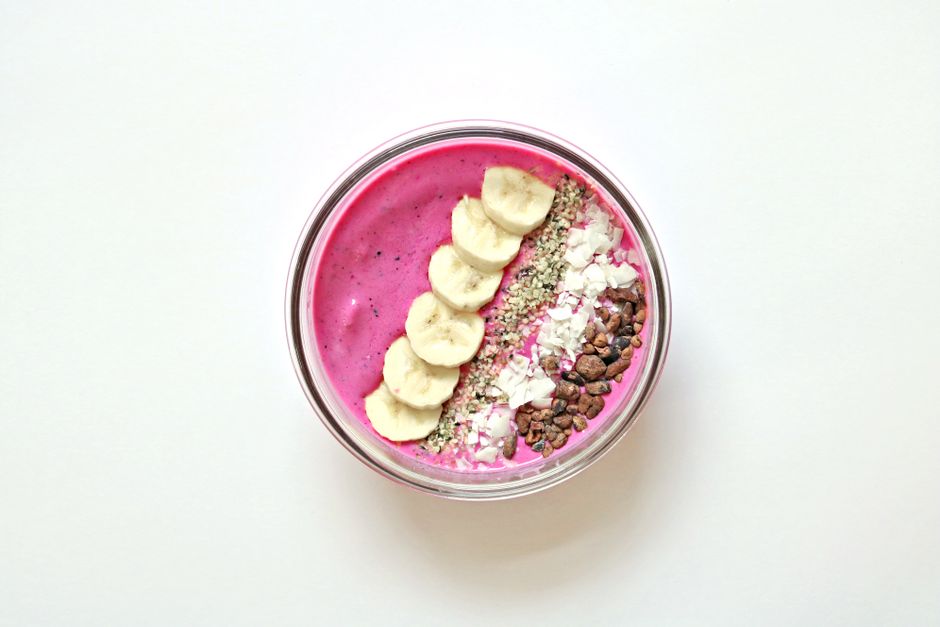
The Smoothie Bowl: Slower Eating, Stronger Satiety Signal
Best for: Weekend mornings, anyone who tends to feel hungry shortly after a liquid breakfast, readers building a more mindful eating habit.
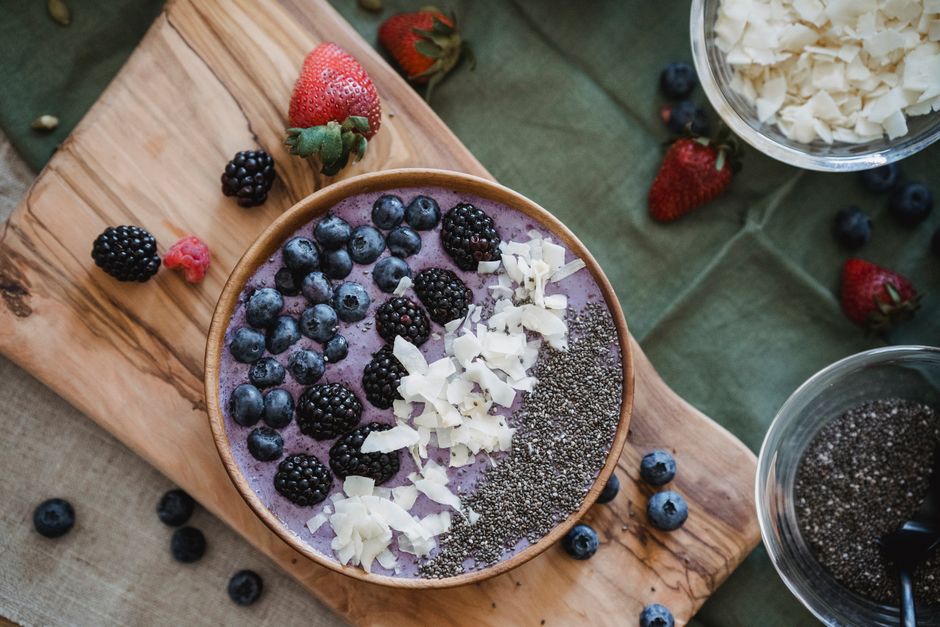
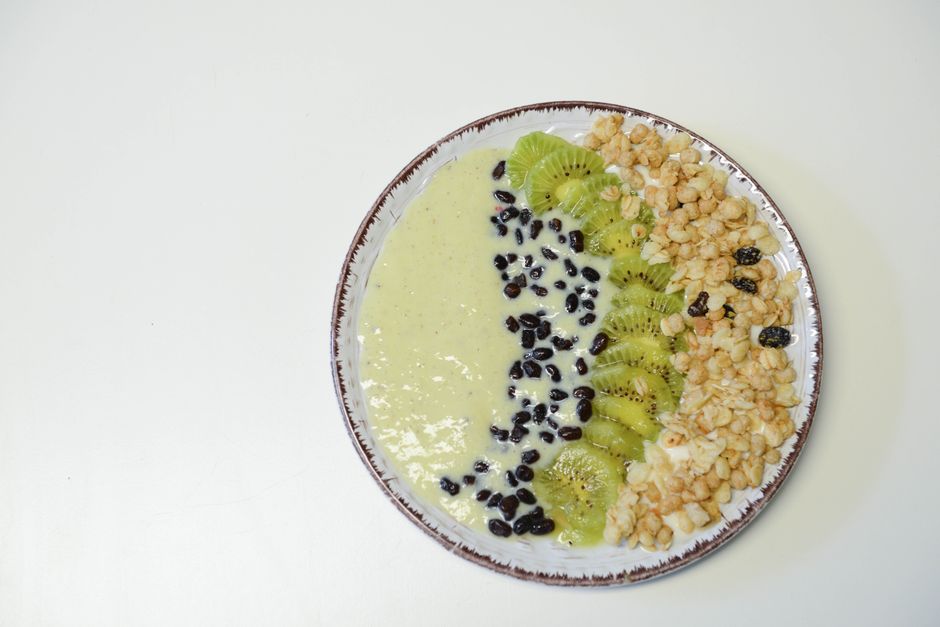
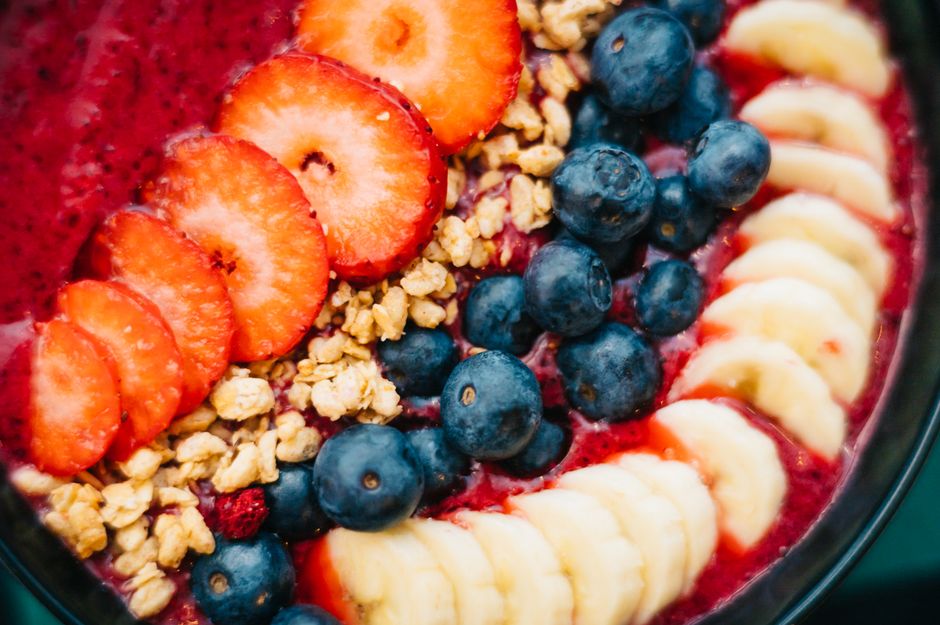
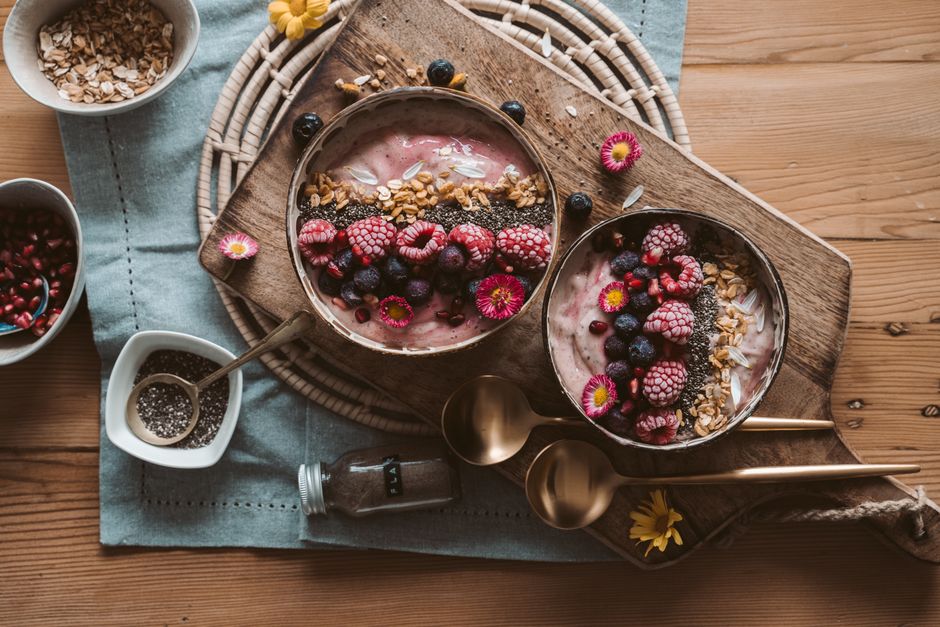
A smoothie bowl uses a thicker base, typically less liquid, frozen banana or avocado for creaminess, and a spoonable consistency, topped with granola, seeds, fresh fruit, or nuts. You cannot rush a bowl the way you rush a drink.
That forced slow-down is the mechanism. Chewing toppings triggers mechanical digestion, increases saliva amylase activity, and gives the gut-brain axis time to register the meal. In a practical sense, eating a bowl of the same ingredients takes roughly three to five times longer than drinking them, and that window matters for hormone signaling.
Research suggests that slower eating is independently associated with lower post-meal hunger ratings, even when calorie content is identical. A 2014 study in the Journal of the Academy of Nutrition and Dietetics found that eating rate significantly predicted hunger and fullness scores in the hour after eating.
Layering also plays a role. Smoothie Bowl Staying Power: Why Layering Order Changes Satiety and How to Build One That Lasts Until Lunch explains how placing protein-rich layers at the base and fiber-dense toppings on top can further extend fullness compared to a casually assembled bowl.
Practical tip: Keep your smoothie bowl base below 3/4 cup of liquid. Freeze your fruit solid before blending. Aim for at least one tablespoon of seeds and one protein source in the toppings to hit satiety trifecta: fat, fiber, and protein.
The Chunky Blend: A Middle-Ground Worth Trying
Best for: Weekday mornings when you have five extra minutes, readers who dislike both purely liquid and purely spoonable textures.
A chunky blend is intentionally under-blended. You stop the blender early or pulse instead of running it continuously so the result has visible texture and some chewable pieces. Think smoothie with bits of oat, berry skin, or half-blended spinach leaf still intact.
This format sits between the other two for satiety. The partial cell disruption means fiber is partly intact, viscosity is moderate, and eating rate is naturally slower than a drinkable smoothie because the texture demands occasional chewing. It is also faster to prepare and consume than a full bowl setup.
For readers managing midday energy crashes that trace back to a weak breakfast, a chunky blend can be a practical step up from a thin drinkable smoothie without requiring a full sit-down bowl routine.
Which Format Is Right for You
| Format | Avg. eating time | Satiety window | Best match |
|---|---|---|---|
| Drinkable smoothie | 2-4 min | 1.5-2.5 hrs | Post-workout, commuters |
| Chunky blend | 5-8 min | 2-3 hrs | Weekday mornings |
| Smoothie bowl | 10-15 min | 2.5-4 hrs | Leisurely mornings, hunger-prone eaters |
The satiety windows above assume equivalent macros. If your drinkable smoothie is high in protein and fat, it can rival a bowl in staying power. If your bowl is mostly fruit with minimal protein, it will not hold hunger as long as the format alone might suggest. Composition and format work together.
If you are building out a broader breakfast strategy, Meal Prep for Different Hunger Patterns offers a practical system for matching your morning meal to when you actually feel hungry, which pairs well with choosing the right smoothie format.
One Small Change to Try This Week
If your current blended breakfast leaves you hungry before lunch, pick one format shift and try it for five days. If you drink your smoothie fast, slow down and sip over 12 minutes. If you are ready to step up, try a chunky blend tomorrow morning by stopping the blender after 20 seconds. If weekends allow, try a full smoothie bowl with a protein-rich topping and notice whether your hunger holds through mid-morning.
Small, consistent changes in how you consume your food, not just what you consume, can shift your hunger patterns noticeably over time. For more practical breakfast and smoothie guidance, the Clean Body Mentor newsletter delivers weekly evidence-informed ideas you can actually use.
This article is for general educational and informational purposes only and is not a substitute for medical advice, diagnosis, or treatment. Health needs vary by individual. Consult a qualified healthcare professional before making significant changes to your diet, exercise routine, supplements, medication, or treatment plan, especially if you have a medical condition, are pregnant or breastfeeding, take medication, or have concerns about your symptoms.
Sources
- National Institute of Diabetes and Digestive and Kidney Diseases: information on satiety hormone timing and gut-brain signaling (niddk.nih.gov)
- Bolhuis, D.P. et al. (2019). Particle size and texture effects on gastric emptying. Food Hydrocolloids.
- Mattes, R.D. (1996). Dietary compensation by humans for supplemental energy provided as ethanol or carbohydrate in fluids. American Journal of Clinical Nutrition.
- Andrade, A.M. et al. (2008). Eating slowly led to decreases in energy intake within meals. Journal of the American Dietetic Association.
- Robinson, E. et al. (2014). Eating attentively: a systematic review. Journal of the Academy of Nutrition and Dietetics.