
You blend the same ingredients you always use, pour them into a bowl, add some granola, and by 10:30 am your stomach is sending distress signals. Sound familiar? The problem is rarely the ingredients themselves. More often, it is the ratio of liquid to solids, the order in which your body encounters key nutrients, and whether your toppings are doing any real work.
This tutorial walks through the mechanics of a smoothie bowl recipe built for satiety, then gives you three ready-to-use bowls designed to hold hunger until lunch.
Why Smoothie Bowls Can Leave You Hungry (And Why Smoothie Bowls Often Do Not Have To)
Blended food empties from the stomach faster than chewed whole food, because the mechanical breakdown your teeth normally do has already happened. Research published in the journal Appetite has found that texture and viscosity both influence gastric emptying rate and perceived fullness. A thin, pourable bowl clears faster than a thick, spoonable one.
Protein and fiber are the two heavyweights for satiety. Dietary fiber slows gastric emptying and feeds gut bacteria that signal fullness through short-chain fatty acids, according to research compiled by the USDA. Protein triggers the release of satiety hormones, including GLP-1 and peptide YY, as noted in a review from the American Journal of Clinical Nutrition. Fat slows digestion further and helps fat-soluble nutrients absorb.
For a deeper look at why many blended meals miss the mark on hunger control, Five Unexpected Reasons Your Smoothie Leaves You Hungry an Hour Later is a useful companion read.
The Layering Framework That Actually Changes How Long You Stay Full
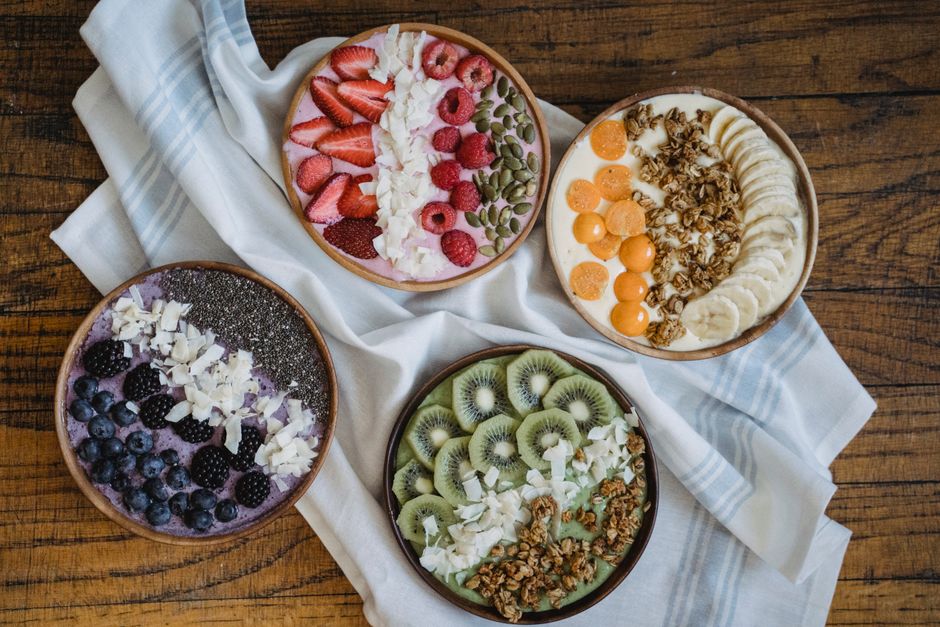
Layering order in a smoothie bowl is not about aesthetics. It influences how quickly you consume certain nutrients and how your body physically encounters them. Here is a practical sequence:
Layer 1: The base (thicker than you think it should be)
The base should be thick enough to hold a spoon upright. Use roughly 1/4 to 1/3 cup of liquid, not a half cup or more. Frozen banana or mango adds body without watering down the bowl. Greek yogurt, silken tofu, or a scoop of protein powder provides the protein anchor.
Layer 2: A fiber source blended in
Add a tablespoon of chia seeds, ground flaxseed, or rolled oats directly into the blend. These add viscosity and slow stomach emptying before toppings even enter the picture.
Layer 3: Protein-forward toppings first
When you eat, spoon through the protein-rich toppings at the top of the bowl before you reach the sweeter fruit sections. Hemp seeds, a thin spread of nut butter, or a dollop of cottage cheese on top gives your body the protein signal earlier in the meal. This mirrors the principle explored in Protein Order at Breakfast Changes Your Hunger Signals All Day.
Layer 4: Slower-digesting texture for the finish
Granola, sliced almonds, or pumpkin seeds add crunch and healthy fat. Eating these last extends the meal slightly, which gives satiety hormones more time to catch up to your actual intake.
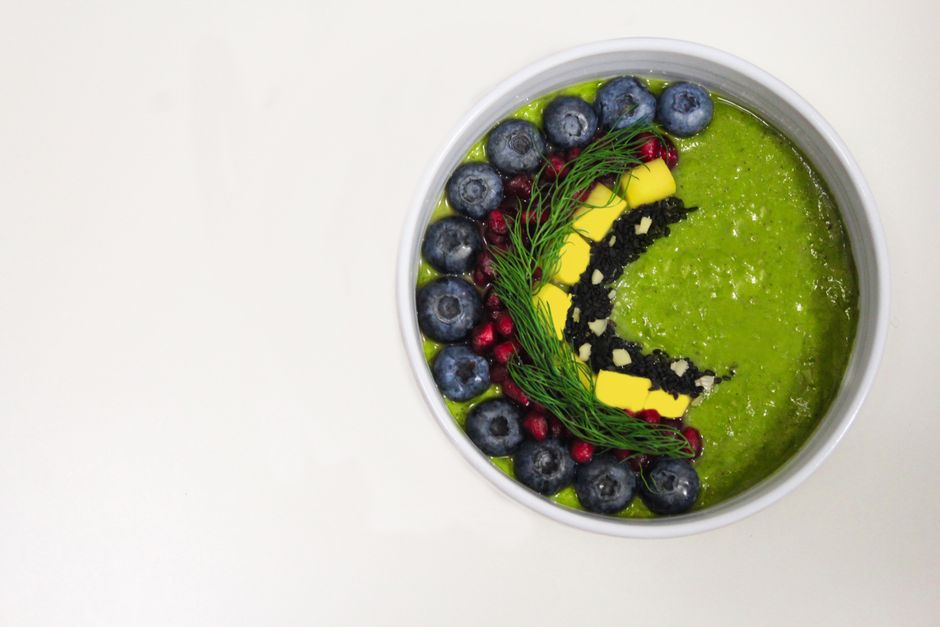
Getting the Liquid Ratio Right
This is the single most overlooked variable in a smoothie bowl recipe satiety failure. Most people use the same amount of liquid they would in a drinkable smoothie. For a bowl, cut that by roughly half.
A useful target: aim for a 3:1 ratio of frozen or dense ingredients to liquid by volume. If you use 1.5 cups of frozen fruit, start with about 1/2 cup of liquid, then add liquid a tablespoon at a time only if your blender struggles. The goal is a texture closer to soft-serve than juice.
This matters because thicker blends require more chewing of the toppings to eat, slow the eating pace slightly, and spend more time in the stomach. Pace and texture together support better hunger management, a point also covered in Digestive Discomfort From Rushed Eating: Why Pace and Chewing Beat Food Restriction Every Time.
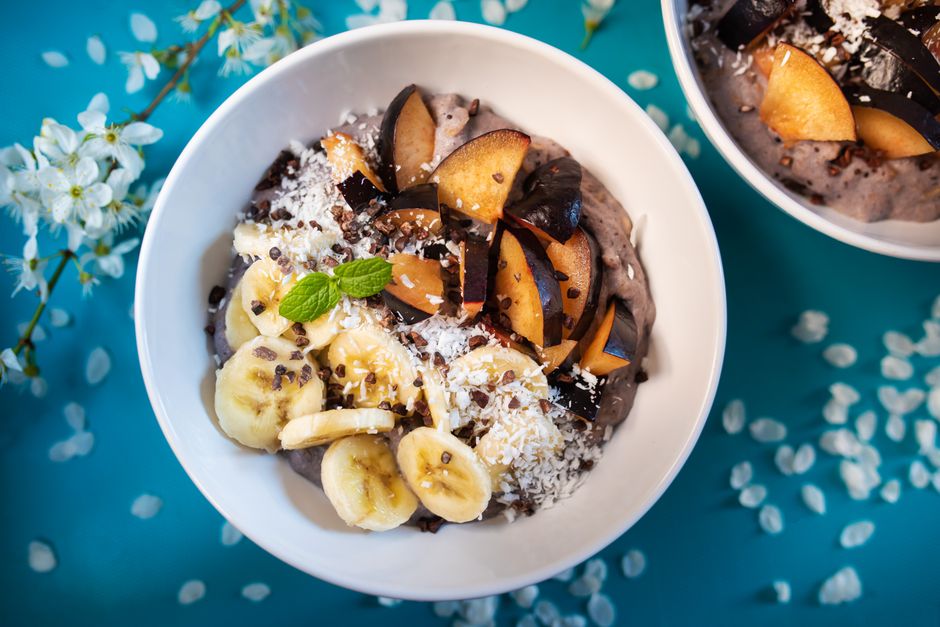
Three Smoothie Bowl Recipes Built for Satiety
1. Green Protein Bowl
Blend (base):
- 1 cup frozen mango chunks
- 1/2 cup baby spinach
- 1/2 cup plain Greek yogurt (2% or full fat)
- 1 tablespoon ground flaxseed
- 1/4 cup unsweetened almond milk
Toppings in this order:
- 2 tablespoons hemp seeds (protein-first layer)
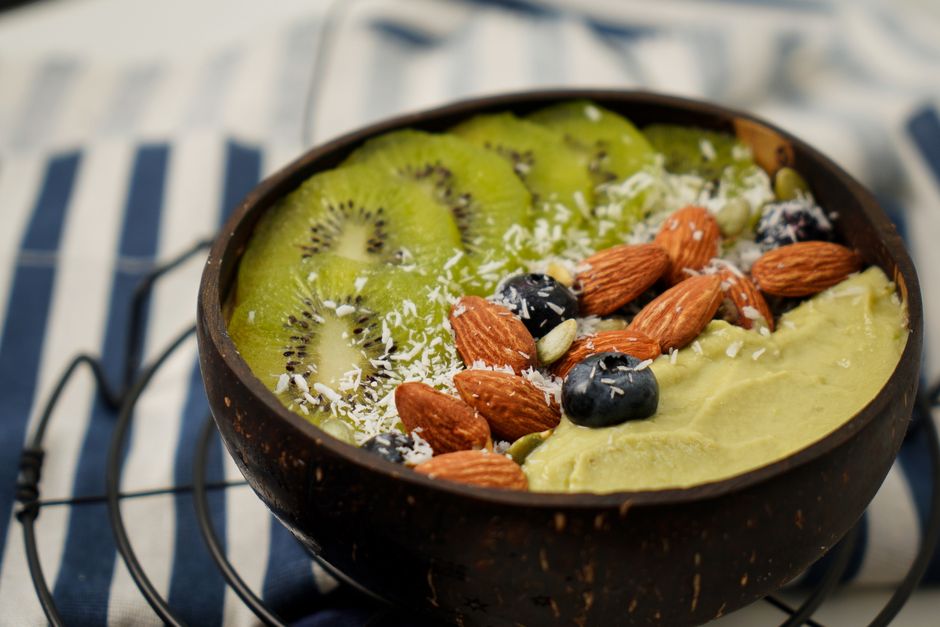
- 1/4 cup sliced kiwi
- 1 tablespoon almond butter (drizzled)
- 2 tablespoons low-sugar granola (texture finish)
Why it works: The Greek yogurt and hemp seeds together deliver roughly 18 to 20 grams of protein. Flax and spinach provide fiber. Almond butter slows digestion further with healthy fat.
2. Berry Chia Power Bowl
Blend (base):
- 1 cup frozen mixed berries
- 1/2 cup frozen cauliflower rice (neutral flavor, adds fiber and thickness)
- 1 scoop unflavored or vanilla whey or pea protein powder
- 1 tablespoon chia seeds
- 1/4 cup unsweetened oat milk
Toppings in this order:
- 2 tablespoons pumpkin seeds
- 1/4 cup fresh blueberries
- 1 tablespoon tahini (drizzled)
- Small handful of sliced almonds
Why it works: Protein powder anchors the base. Cauliflower rice is nearly tasteless but adds meaningful fiber and keeps the base thick. Pumpkin seeds and almonds provide crunch and fat.
3. Tropical Oat Bowl
Blend (base):
- 1/2 cup frozen pineapple
- 1/2 cup frozen banana
- 1/4 cup rolled oats (blended in dry)
- 1/2 cup plain low-fat cottage cheese
- 2 tablespoons coconut milk
Toppings in this order:
- 2 tablespoons sunflower seed butter (protein and fat layer)
- 1/4 cup sliced mango
- 1 tablespoon shredded unsweetened coconut
- Sprinkle of cinnamon
Why it works: Cottage cheese is a surprisingly high-protein base with roughly 14 grams per half cup. Rolled oats blended in add beta-glucan fiber, which research published by the NIH’s National Library of Medicine links to improved satiety signals. Coconut provides a small amount of medium-chain triglycerides.
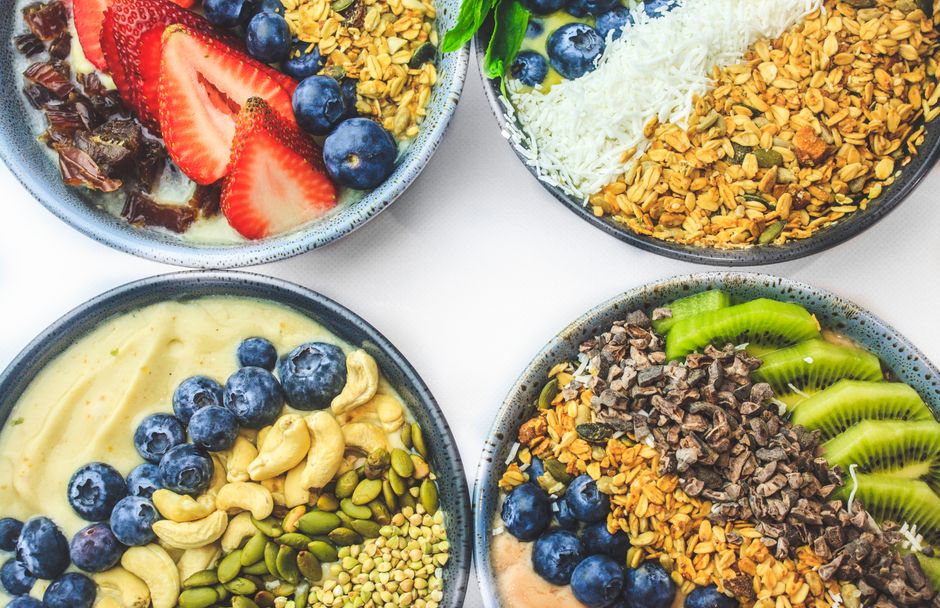
Building Your Own Satiety Bowl: A Simple Checklist
Before you blend, run through this:
- Protein source in the base? Aim for at least 15 grams (yogurt, cottage cheese, protein powder, silken tofu).
- Fiber blended in? Chia, flax, oats, or spinach all work.
- Liquid under control? Start with 1/4 cup and add slowly.
- Protein-first toppings? Hemp seeds, nut butter, or seeds before granola.
- Slow-digesting fat? At least one source (nut butter, seeds, avocado slice).
If you are building this into a broader high-protein morning strategy, Seven High-Protein Breakfast Combos That Stop Morning Hunger by 10am offers additional breakfast frameworks that pair well with a bowl routine.
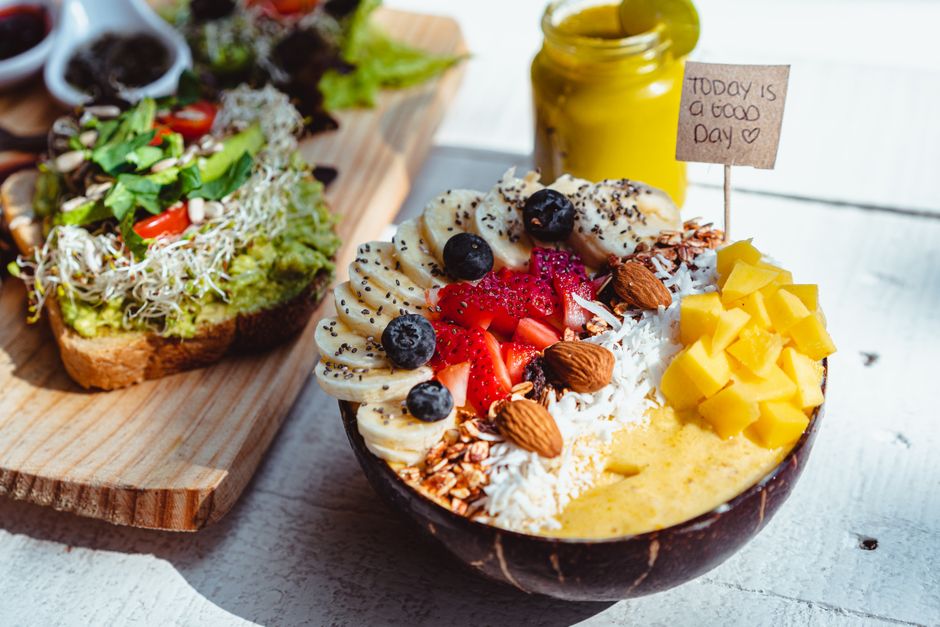
One Action Worth Taking Today
Choose one bowl above or build your own using the checklist. Make it twice this week, paying attention to your hunger level at noon. Small, repeated experiments reveal more than any single perfect meal. If smoothie bowls become a reliable morning anchor, you may find afternoons easier to manage, too. The Five Unexpected Reasons Your Afternoon Hunger Spikes at 3pm guide is worth reading alongside this one if mid-afternoon cravings are still a pattern after a stronger breakfast.
This article is for general educational and informational purposes only and is not a substitute for medical advice, diagnosis, or treatment. Health needs vary by individual. Consult a qualified healthcare professional before making significant changes to your diet, exercise routine, supplements, medication, or treatment plan, especially if you have a medical condition, are pregnant or breastfeeding, take medication, or have concerns about your symptoms.
Sources
- Cassady, B.A. et al. “Mastication of almonds: effects of lipid bioaccessibility, appetite, and hormone response.” American Journal of Clinical Nutrition, 2009. (Referenced via AJCN archives; original available through PubMed.)
- Rebello, C.J. et al. “Dietary fiber and satiety: the effects of oats on satiety.” Nutrition Reviews, 2016. Available via the NIH National Library of Medicine (PubMed).
- USDA Dietary Guidelines for Americans 2020-2025: Fiber and Satiety. U.S. Department of Agriculture, dietaryguidelines.gov.
- Leidy, H.J. et al. “The role of protein in weight loss and maintenance.” American Journal of Clinical Nutrition, 2015. Available via PubMed.
- Zhu, Y. and Hollis, J.H. “Soup consumption is associated with a lower dietary energy density and a better diet quality in US adults.” British Journal of Nutrition, 2014. (Texture and gastric emptying context.)