

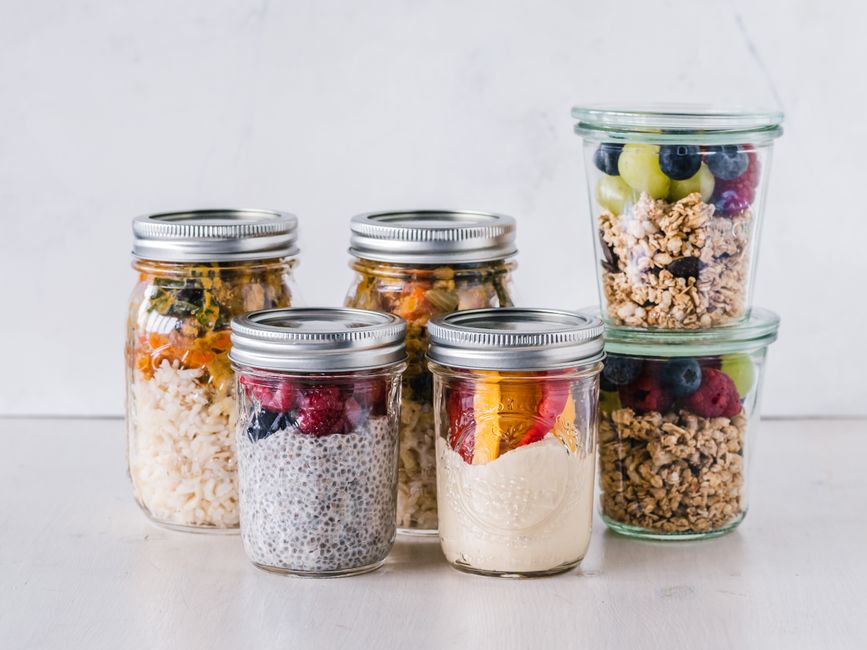
Most meal-prep guides open with the same assumption: you eat breakfast shortly after waking. But if you have ever forced yourself through a bowl of oatmeal at 7am when your stomach was still quiet, or scrambled for food at 10:30am because your prep was designed for early risers, you already know that approach does not fit everyone.
Hunger timing in the morning is not random or a discipline problem. It reflects real biology, and when your meal prep accounts for that, eating becomes a lot easier to sustain.
Why Morning Hunger Does Not Follow a Fixed Clock
Several factors shift the time your appetite actually arrives each morning.
Sleep quality and duration. Poor or short sleep can alter ghrelin (the hunger hormone) and leptin (the satiety hormone), sometimes suppressing early-morning appetite. Research published by the National Institutes of Health suggests that sleep disruption meaningfully changes appetite-regulating hormones, which is part of why you may not feel hungry after a restless night. If you are working on your sleep and curious about how evening habits connect to morning hunger, Building Better Sleep Without a Bedroom Overhaul: How Meal Timing and Evening Digestion Shape Rest covers the connection clearly.
Previous-day eating patterns. A large, late dinner slows gastric emptying. Your digestive system may still be finishing that work in the early morning, which pushes your natural hunger signal later.
Activity level. An early morning workout accelerates hunger. A sedentary morning delays it. This is not a flaw; it is your body allocating resources appropriately.
Stress and cortisol. High cortisol on a stressful morning can temporarily suppress appetite. Some people confuse this stress-driven delay with not being a “breakfast person.” If emotional stress is affecting your appetite more broadly, Why Emotional Stress Shrinks Your Appetite and How to Eat Through Grief Without Forcing offers a compassionate look at that dynamic.
Knowing which factor drives your timing helps you choose the right template below.

The Three Meal-Prep Breakfast Templates
These templates are built around three natural hunger windows. Choose the one that matches your body most days, or prep two if your pattern shifts across the week.
Template 1: Light and Early (Hunger at 9am or Before)
Who this fits: People who wake up hungry, early exercisers, or those who ate a lighter dinner the night before.
The goal here is a meal that is satisfying but not heavy, since your body is ready for food early and the morning is still long. You want enough protein and fiber to hold you through mid-morning without creating a blood sugar spike that crashes by 10am. For a deeper look at the pairings that work best, Why Your Morning Hunger Returns by 9am and Which Breakfast Pairing Prevents It for Four Hours is worth reading alongside this.
Batch-cook options:
- Egg muffins with spinach, feta, and sun-dried tomato (make 8-12, store 4 days in the fridge)
- Greek yogurt parfait jars layered with berries and a tablespoon of hemp seeds (assemble 4-5 jars Sunday)
- Overnight oats with protein powder stirred in, topped with almond butter and banana slices
Why it works: Each option delivers 15-25 grams of protein alongside fiber, which research suggests may support steady satiety hormones. The prep takes about 30 minutes once a week.
Beginner modification: Start with just the yogurt jars. They require zero cooking and come together in 10 minutes for the whole week.
Template 2: Medium and Mid-Morning (Hunger at 10am)
Who this fits: People who have coffee first, take a slow-start morning, or had a moderate dinner the night before.
At 10am your window is narrower before lunch, so this template focuses on nutrient density rather than volume. You want a meal that feels complete but does not tip into uncomfortable fullness before midday.
Batch-cook options:
- Smashed white bean and avocado toast prep: mash a can of white beans with lemon, garlic, and olive oil and refrigerate; spread on toast fresh each morning and top with a soft-boiled egg (boil 6 eggs in batch)
- Chia pudding made with unsweetened oat milk and a scoop of collagen or protein powder, topped with walnuts and a small handful of raspberries
- A high-protein smoothie base frozen in individual zip bags: spinach, frozen banana, protein powder, and flaxseed; blend fresh with oat milk in the morning
Why it works: Beans, chia, and flaxseed all bring soluble fiber that may help moderate post-meal glucose response, which is useful when your eating window before lunch is shorter. The Seven High-Protein Breakfast Combos That Stop Morning Hunger by 10am guide offers additional pairing ideas if you want to expand this rotation.
Beginner modification: The frozen smoothie bags are the easiest entry point. Prep 5 bags in 20 minutes and blend one each morning.
Template 3: Substantial and Late (Hunger at 11am or Later)
Who this fits: Intermittent fasters, people with high-stress mornings that suppress early appetite, night-shift workers transitioning schedules, or anyone whose digestion simply runs slow in the early hours.
At 11am, breakfast and lunch are close together. The goal shifts to a meal substantial enough that you are not eating again within two hours, but not so large that it creates afternoon sluggishness. Protein and healthy fat take priority over refined carbs here.
Batch-cook options:
- Sheet-pan tofu or chicken thighs roasted with sweet potato and broccoli (works equally well as a late breakfast or early lunch; batch 4 servings)
- A grain bowl base: cooked farro or quinoa portioned into containers, topped fresh each morning with a fried egg, sliced avocado, and kimchi for gut-supportive variety
- High-protein savory oats: steel-cut oats cooked in low-sodium broth, mixed with a poached egg and shredded rotisserie chicken
Why it works: Protein eaten earlier in a meal may help regulate appetite hormones for the hours that follow, as discussed in Protein Order at Breakfast Changes Your Hunger Signals All Day: The Science Behind Eating Eggs or Beans First. A substantial, protein-forward late breakfast can also reduce the likelihood of a late-afternoon energy dip.
Beginner modification: The grain bowl is the most flexible. Cook a large batch of quinoa on Sunday and customize toppings each morning with whatever is already in the fridge.

Putting the System Into Practice
Start by observing your natural hunger window for three or four days without changing anything. Notice whether stress, sleep quality, or the previous night’s dinner shifts your timing. Then select the template that matches your most common pattern and prep it on Sunday or Monday.
If your hunger timing changes midweek, it helps to have one backup option from a neighboring template already in the fridge. The egg muffins from Template 1 and the soft-boiled eggs from Template 2 overlap well and take the same prep time.
For readers whose schedules rotate or who work non-standard hours, Meal Prep for Shift Workers: How to Eat on Flipped Schedules Without Sacrificing Sleep or Energy extends these same principles into more unpredictable routines.

A Realistic First Step
Choose one template and one recipe from that template. Prep it this week. Notice whether your energy and focus hold steadily through your morning. Adjust ingredient ratios or portion sizes based on how you feel rather than a fixed rule.
If you want more practical guidance on balanced eating, food timing, and sustainable nutrition habits, the Clean Body Mentor newsletter delivers one actionable idea each week without overwhelming your inbox.
Sources
- National Institutes of Health, National Heart, Lung, and Blood Institute. Sleep deprivation and deficiency: effects on health. Available at: www.nhlbi.nih.gov
- Spiegel K, Tasali E, Penev P, Van Cauter E. “Sleep curtailment in healthy young men is associated with decreased leptin levels, elevated ghrelin levels, and increased hunger and appetite.” Annals of Internal Medicine, 2004. (PubMed)
- Leidy HJ, et al. “The role of protein in weight loss and maintenance.” American Journal of Clinical Nutrition, 2015. (PubMed)
- USDA Dietary Guidelines for Americans, 2020-2025. Available at: www.dietaryguidelines.gov
This article is for general educational and informational purposes only and is not a substitute for medical advice, diagnosis, or treatment. Health needs vary by individual. Consult a qualified healthcare professional before making significant changes to your diet, exercise routine, supplements, medication, or treatment plan, especially if you have a medical condition, are pregnant or breastfeeding, take medication, or have concerns about your symptoms.