

Most meal prep advice assumes you eat breakfast at 7 a.m., lunch around noon, and dinner before 8 p.m. If you work nights, rotating shifts, or 12-hour blocks that flip from days to nights, that advice lands somewhere between useless and mildly irritating.
Your hunger signals are running on a different clock. Your digestion slows when the sun goes down whether or not you have permission to sleep. And eating a heavy meal at 3 a.m. just to get through the shift can leave you too wired, too bloated, or too depleted to sleep well when you finally get home.
The good news: with a small amount of planning, shift work meal prep nutrition can work with your body’s rhythms instead of against them. Here is a practical system for doing that.

Why Shift Work Creates Unique Nutrition Challenges
Your body runs on a circadian rhythm, a roughly 24-hour internal clock that regulates hormones, digestion, body temperature, and appetite. Research published in the journal Current Biology and summarized by the National Institute of General Medical Sciences (NIGMS) confirms that this rhythm governs when your gut is most ready to digest food, and that forcing large meals during biological nighttime can impair glucose metabolism and increase feelings of fatigue.
In practical terms, this means:
- Digestion slows at night. Your gut motility decreases after midnight regardless of your schedule.
- Hunger hormones shift. Ghrelin (the hunger hormone) and leptin (the fullness hormone) follow a light-dark pattern, not a work-shift pattern. Night workers often feel less hungry at the start of a shift and intensely hungry mid-shift.
- Sleep disruption compounds everything. Poor sleep raises cortisol and cravings for high-sugar, high-fat foods, making it harder to make nourishing choices when you are exhausted.
Understanding these patterns is the first step toward a smarter shift work meal prep nutrition approach.
Step 1: Anchor Your Eating to Your Sleep Window, Not the Clock
Instead of trying to eat “breakfast” when you wake at 4 p.m. or “dinner” at 11 p.m., anchor your main meals around your sleep window. Think of your schedule in thirds:
-
Pre-sleep meal (60-90 minutes before bed): Your largest, most balanced meal. Prioritize protein and easy-to-digest carbohydrates, and keep fat moderate. Research suggests that eating protein before sleep may support muscle repair without disrupting rest. Learn more about how timing and food choices shape rest quality in this guide on meal timing and evening digestion.
-
Mid-shift fuel (your longest alert window): This is where you need steady energy without a blood sugar crash. Aim for a high-protein, fiber-rich meal that includes a moderate portion of complex carbohydrates. Avoid large amounts of fat here since fat slows digestion and can increase fatigue during active work.
-
Wake-up meal (within 60-90 minutes of waking): Even if this falls at an unusual hour, eating soon after waking supports cortisol regulation and sets a metabolic anchor for the rest of your active period.
For a 12-hour night shift (say, 7 p.m. to 7 a.m.), the pattern might look like this:
- 5:30 p.m. Wake-up meal: scrambled eggs, whole-grain toast, and fruit
- 11 p.m. Mid-shift meal: grilled chicken or chickpea bowl with brown rice, roasted vegetables, and a light vinaigrette
- 6:30 a.m. Pre-sleep meal: Greek yogurt with oats, a drizzle of honey, and a small banana
This approach draws on the same principles covered in building a balanced dinner for stable sleep, which explains why meal composition near sleep matters more than most people realize.
Step 2: Batch-Cook Foods That Travel and Reheat Well
The biggest barrier for shift workers is not knowledge, it is time. You come home exhausted, you wake up rushed. Batch cooking removes the decision-making.
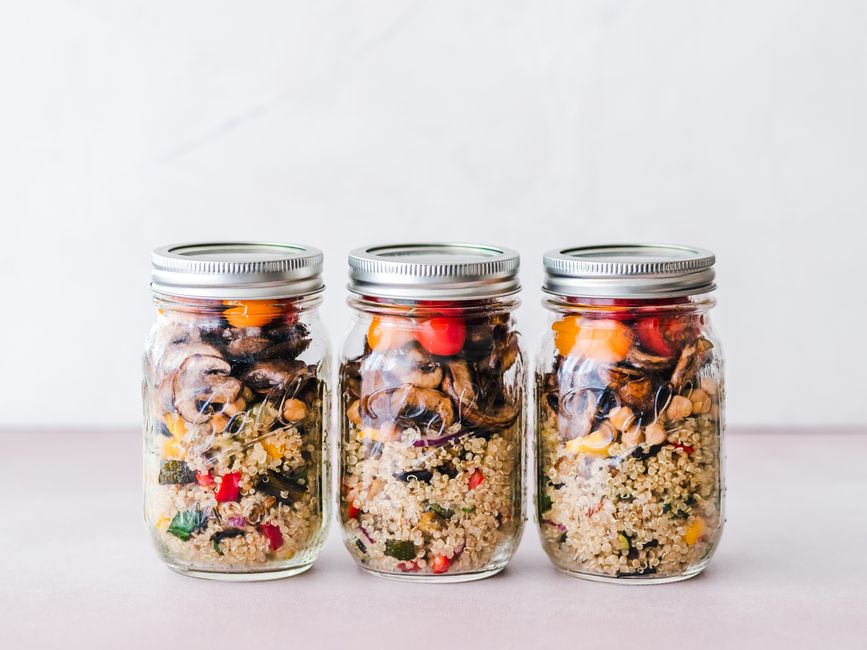
Cook once, eat for three to four days. Aim to prep:
- A protein base: Ground turkey, baked salmon portions, hard-boiled eggs, canned lentils, or cooked edamame. These stay fresh for three to four days refrigerated and require zero reheating skill.
- A grain or starch: Brown rice, cooked farro, roasted sweet potato cubes, or whole-grain pasta. Portion into 1-cup containers.
- Roasted or blanched vegetables: Broccoli, zucchini, bell peppers, and green beans hold up well and do not get soggy like salad greens.
- A versatile sauce: Tahini-lemon dressing, peanut-ginger sauce, or a simple olive oil and garlic blend can transform the same base ingredients into meals that feel different each day.
For mid-shift snacking, keep options that require no prep: string cheese, a handful of almonds, a small container of cottage cheese with cucumber slices, or high-protein snacks that keep energy stable without triggering a crash.

Step 3: Manage Caffeine Timing Around Your Sleep Window
Caffeine has a half-life of roughly five to six hours for most adults, meaning that a large coffee at 3 a.m. still has half its caffeine load in your system when you arrive home at 7:30 a.m. trying to sleep.
A practical rule for overnight workers: stop caffeine intake at least six hours before your planned sleep time. So if your shift ends at 7 a.m. and you plan to sleep by 8:30 a.m., your last caffeinated drink should be around 2 a.m.
For the second half of your shift, consider switching to water, an herbal tea, or a small protein-rich snack to manage alertness instead. This connects to broader patterns explored in caffeine timing and natural energy rhythms.

Step 4: Protect Digestion and Hydration During Long Shifts
Shift workers are often dehydrated because break times are unpredictable and high-sodium vending machine food is too easy to reach for. Dehydration compounds fatigue, impairs concentration, and makes cravings worse.
Simple hydration strategy:
- Fill a large water bottle (at least 32 oz) at the start of each shift and aim to finish it before the midpoint.
- Pair salty snack cravings with water rather than eliminating them.
- If your gut feels sluggish during night shifts, a short walk on your break may help more than another cup of coffee. Light movement after eating supports digestion, as explored in how to use digestive movement breaks to restore energy and focus at work.

Step 5: Plan Your Transition Days Without Perfection
Rotating-schedule workers face an extra layer of complexity: the days when your shift flips. Going from nights to days (or the reverse) disrupts appetite and sleep simultaneously.
On transition days, focus on two priorities only:
- Eat something nourishing when you wake up even if your hunger signal is confused.
- Keep your pre-sleep meal light and easy to digest so you can fall asleep despite an off-kilter body clock.
Do not try to overhaul your diet on a transition day. Rely on the batch-cooked food already in your fridge.
A Realistic Starting Point
Shift work meal prep nutrition does not require a perfect system from day one. If you do just one thing this week, make it this: batch cook a protein and a grain on your first day off. That single habit creates options for every meal that follows, and options are exactly what shift workers need most.
If you want a broader look at how food timing affects your energy across the day, the guide on pairing foods for natural energy without afternoon crashes offers a useful complement to the shift-work approach above.
Choose one section of this tutorial to try on your next shift cycle. Small, consistent changes add up faster than an overhaul you abandon after three days. And if you want practical weekly wellness guidance delivered to you, consider joining the Clean Body Mentor newsletter.
This article is for general educational and informational purposes only and is not a substitute for medical advice, diagnosis, or treatment. Health needs vary by individual. Consult a qualified healthcare professional before making significant changes to your diet, exercise routine, supplements, medication, or treatment plan, especially if you have a medical condition, are pregnant or breastfeeding, take medication, or have concerns about your symptoms.

Sources
- National Institute of General Medical Sciences (NIGMS). “Circadian Rhythms.” nigms.nih.gov
- Depner CM, et al. “Circadian disruption and metabolic disease.” Current Biology, 2019. (For context on circadian rhythm and metabolism.)
- Spiegel K, et al. “Sleep loss and the regulation of appetite and metabolism.” The Lancet, 2002. (Research on sleep, ghrelin, leptin, and appetite.)
- Res PT, et al. “Protein ingestion before sleep improves postexercise overnight recovery.” Medicine and Science in Sports and Exercise, 2012.