

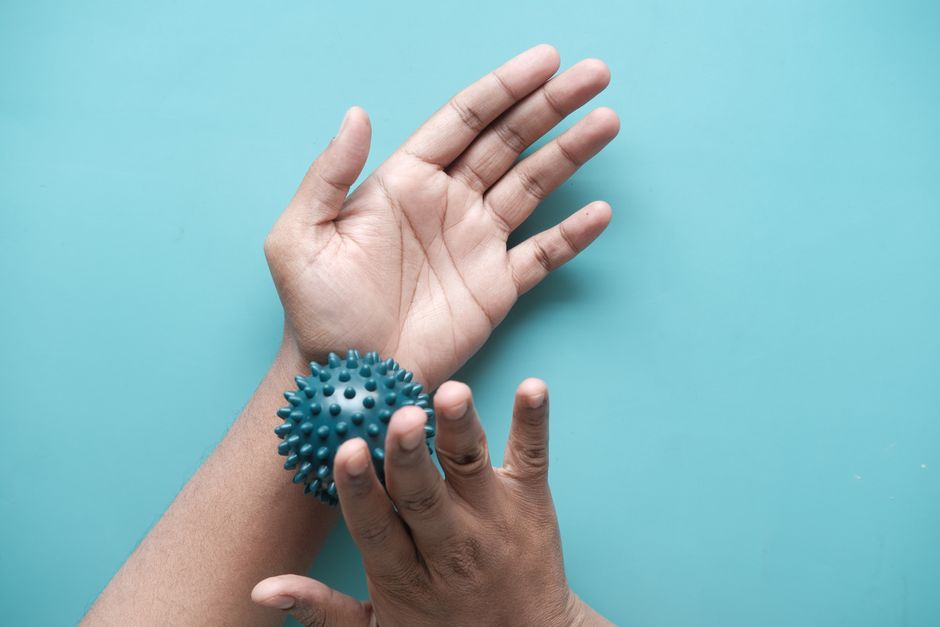
You are halfway through a document when your fingers start to tingle. You shake your hand, flex your wrist, and the feeling fades for a moment before creeping back. If this sounds familiar, you are not imagining it, and you are not alone.
Hand numbness at desk work is one of the most common complaints among people who type or mouse for extended hours. The good news is that most cases driven purely by posture and sustained static position respond well to targeted movement drills. This tutorial explains what is actually happening in your body and walks you through five progressive exercises you can perform during short breaks, no equipment required.
What Is Actually Compressing Your Nerves
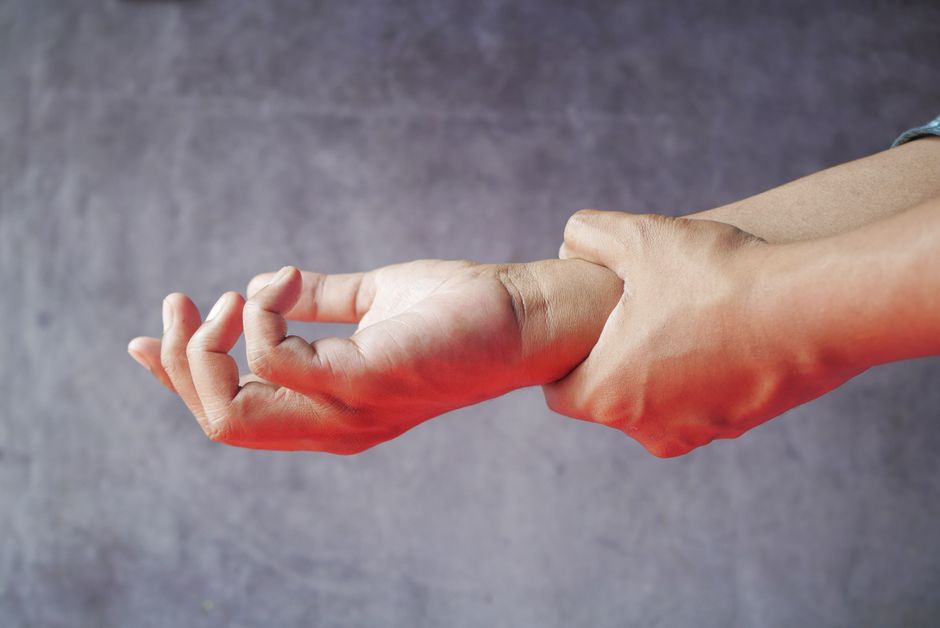
Three main nerve pathways can be pinched or irritated during desk work: the median nerve (which runs through the carpal tunnel in your wrist), the ulnar nerve (which passes around the elbow and into the ring and little fingers), and the brachial plexus nerves (which exit the cervical spine and travel through the shoulder and chest area before reaching the arm).
When you sit with your chin jutting forward, your shoulders rounded, and your wrists bent or pressing on a hard surface, you create compression at multiple points along these pathways simultaneously. Research published in journals covering occupational medicine consistently links prolonged static postures to increased nerve compression risk. The National Institute of Neurological Disorders and Stroke notes that carpal tunnel syndrome, one of the most recognized outcomes of sustained wrist loading, affects millions of workers annually.
Tingling and numbness are the nerves signaling reduced blood flow and mechanical pressure. Mild, posture-driven cases often improve meaningfully with consistent hand numbness at desk relief exercises and postural resets. However, if your symptoms are severe, occur at night, or come with weakness in your grip, a qualified healthcare professional should evaluate you before you proceed with any exercise program.
How to Use These Five Drills
Work through the five drills in order during a five to ten minute break. Start gently and stay within a comfortable range. If any movement increases sharp pain or worsens symptoms, stop and consult a professional. Build frequency first: aim for two to three times per workday before adding intensity.
Drill 1: Cervical Nerve Glide (Seated)
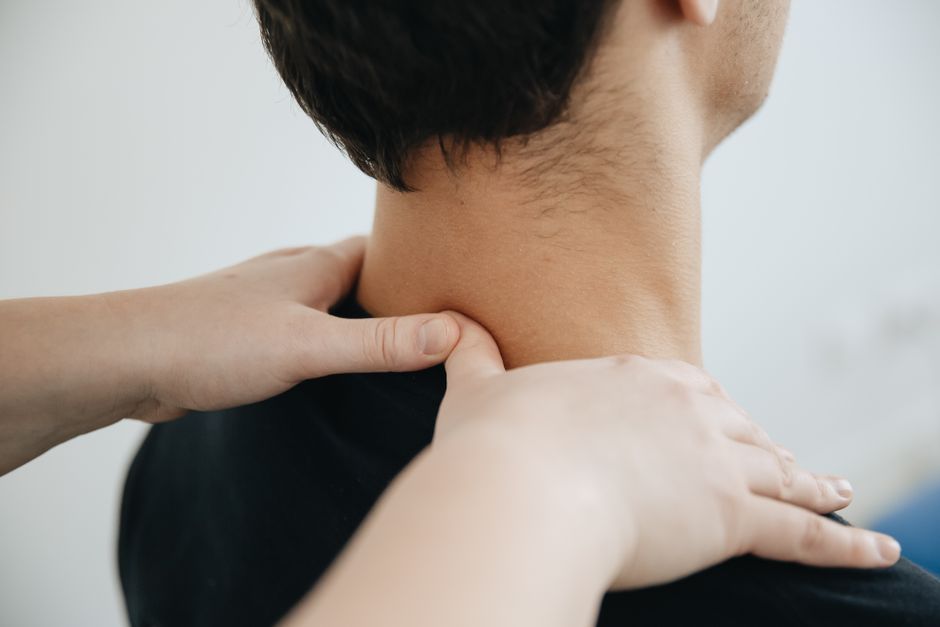
Start here because the nerves originate at the neck. Compression higher up the chain amplifies problems further down.
- Sit tall with both feet flat on the floor.
- Let your right ear drop slowly toward your right shoulder until you feel a mild pull on the left side of your neck.
- At the same time, gently reach your left hand toward the floor, fingers spread.
- Hold three seconds. Return to neutral. Repeat five times per side.
This gentle traction encourages the nerve to glide freely along its path rather than remain stuck under compressed tissue.

Drill 2: Doorway Chest Opener
Rounded shoulders narrow the space through which the brachial plexus travels. Opening the chest is essential for sustained hand numbness at desk relief.
- Stand in a doorway or face a wall corner.
- Place both forearms on the frame at shoulder height, elbows bent to 90 degrees.
- Step one foot forward and lean your chest gently through the opening until you feel a stretch across the pectorals.
- Hold 20 to 30 seconds. Breathe steadily. Repeat twice.
If a doorway is not available, clasp your hands behind your back while seated and lift your arms gently away from your lower back. It achieves a similar opening effect.
For more structured guidance on reversing the forward-rounded position that builds up at a desk, Stretching for Desk Posture: Five Moves That Reverse Rounded Shoulders in 10 Minutes pairs well with this drill.
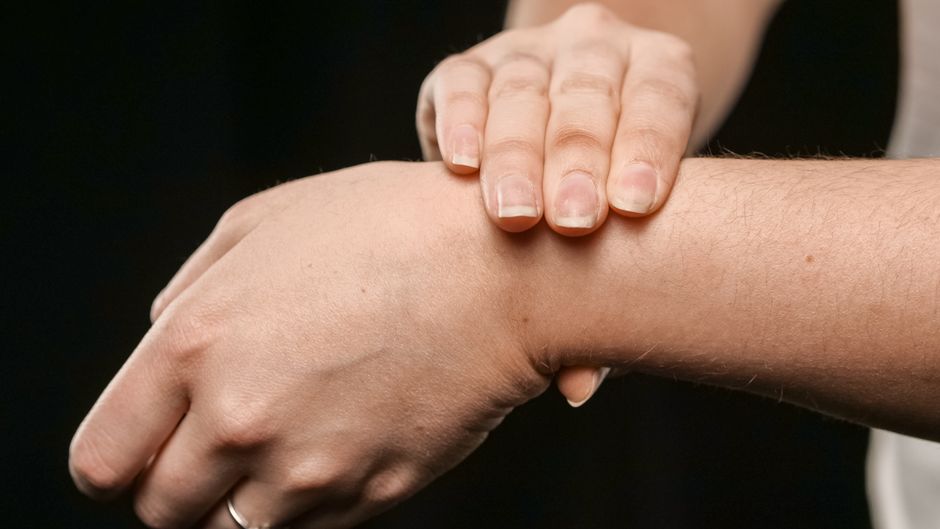
Drill 3: Wrist Tendon Glide Sequence
This sequence mobilizes the tendons and median nerve inside the carpal tunnel without forcing a deep stretch.
Move through each position slowly, holding two seconds each:
- Straight fingers: all fingers extended, thumb relaxed.
- Hook fist: curl the fingertips to touch the top of the palm, keeping knuckles extended.
- Full fist: curl fingers all the way down into a gentle fist.
- Tabletop: extend fingers straight out and bend at the large knuckle to make a 90-degree shelf.
- Straight fist: bend at the large knuckle and the middle knuckle while keeping fingertips straight.
Complete the full sequence five times on each hand. Research on tendon gliding exercises suggests they can reduce pressure inside the carpal tunnel and improve nerve mobility. The American Academy of Orthopaedic Surgeons includes gliding exercises among conservative management options for early carpal tunnel symptoms.
Drill 4: Ulnar Nerve Flossing at the Elbow
The ulnar nerve is responsible for the “funny bone” sensation and numbness in the ring and little fingers. It is especially vulnerable when your elbow is bent past 90 degrees for long periods, which happens constantly during typing and phone use.
- Sit upright. Extend your right arm straight out to the side at shoulder height, palm facing up.
- Slowly bend the elbow, bringing your hand toward your ear while keeping your palm facing you.
- Simultaneously tilt your head away from that arm.
- Extend back out to the starting position and repeat gently for eight to ten reps per side.
Move slowly. Nerve flossing works by encouraging the nerve to slide smoothly through its tunnel rather than remaining adhered. If you feel a sharp electric sensation, reduce your range of motion.
Drill 5: Thoracic Spine Extension Over a Chair Back
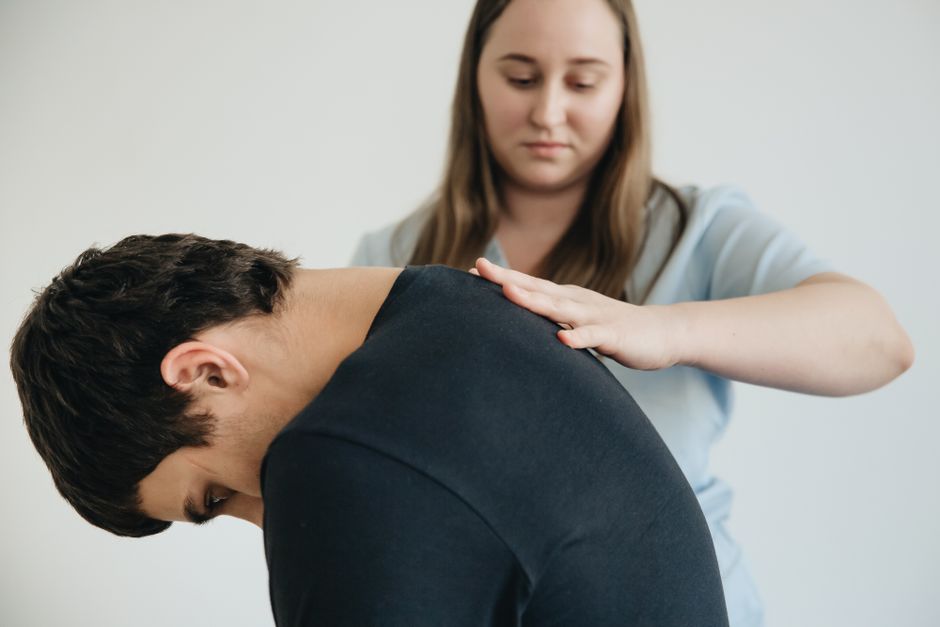
The thoracic spine (mid-back) locks into flexion after hours of sitting. This stiffness transfers compression load upward into the neck and downward into the shoulders, compounding nerve pressure throughout the arm.
- Sit near the edge of a sturdy chair. Place a rolled towel or your clasped hands behind your mid-back.
- Gently extend backward over the support, letting your head drop back slightly.
- Hold three to five seconds. Return slowly to upright. Repeat five times.
You may hear or feel a gentle release. This is a gradual mobility drill, not a forceful manipulation.
Pairing thoracic extension with deliberate movement breaks through the day makes a meaningful difference. Digestive Comfort at Your Desk: Why Movement Breaks Stop Bloating Better Than Food Swaps is a useful companion read if you want a broader break framework that addresses multiple sitting-related symptoms at once.
Building a Sustainable Habit
Five progressive drills are only useful if you actually do them. The most practical approach is to attach them to an existing cue: every time you finish a video call or stand up for water, run through two or three of the drills. You do not need to complete all five every session.
For a deeper look at grip-specific recovery alongside these nerve glides, Grip Strength and Hand Numbness at Your Desk: Progressive Drills to Restore Sensation Without Taking Time Off Work extends the work you started here. And if numbness is spreading to your neck and you need targeted cervical relief, Why Your Hands Feel Numb After Desk Work and How Neck Stretches Reverse It addresses that angle directly.
Choose one drill from this tutorial to practice consistently today. Starting small and repeating reliably outperforms an ambitious routine that fades by Thursday.
This article is for general educational and informational purposes only and is not a substitute for medical advice, diagnosis, or treatment. Health needs vary by individual. Consult a qualified healthcare professional before making significant changes to your diet, exercise routine, supplements, medication, or treatment plan, especially if you have a medical condition, are pregnant or breastfeeding, take medication, or have concerns about your symptoms.

Sources
- National Institute of Neurological Disorders and Stroke. Carpal Tunnel Syndrome Fact Sheet. National Institutes of Health.
- American Academy of Orthopaedic Surgeons. Carpal Tunnel Syndrome. OrthoInfo clinical resource.
- Oskouei AE, et al. “Effects of neuromobilization maneuver on clinical and electrophysiological measures of patients with carpal tunnel syndrome.” Journal of Physical Therapy Science, 2014.
- Rozmaryn LM, et al. “Nerve and tendon gliding exercises and the conservative management of carpal tunnel syndrome.” Journal of Hand Therapy, 1998.


