


If you spend several hours a day in front of a screen, your body is probably telling you something. That tight pull across your upper chest, the sensation that your shoulders are slowly creeping forward, the shallow breaths you take without noticing: these are not character flaws or signs you are weak. They are predictable adaptations to a posture that holds you in one position for hours at a time.
Forward-head posture and rounded shoulders can compress your chest cavity, which research published in the Journal of Physical Therapy Science suggests may reduce respiratory muscle efficiency. When your chest is compressed, diaphragm movement is restricted, breathing becomes shallower, and some people notice bloating or sluggish digestion as a side effect. (If that connection surprises you, this guide on how rounded posture affects breathing and afternoon bloating explains the mechanism in plain language.)
The good news is that targeted desk stretches for posture can reverse much of this in a single short session. Below is a progressive five-move tutorial you can do at or near your desk, with options for tighter and more mobile bodies. Set a 10-minute timer and work through them in order.
Why These Five Moves, in This Order
The sequence is intentional. The first two stretches release tension in the chest and front shoulders before you try to activate the muscles that hold your shoulders back. Skipping straight to strengthening a compressed chest is a common mistake that limits results. Think of it as unlocking a door before you walk through it.
You do not need a mat, foam roller, or gym. A chair with a firm back and about two feet of clear space is enough.

Move 1: Doorway Chest Opener (or Chair-Back Chest Opener)
Time: 90 seconds
Stand in a doorway and place your forearms on the frame at shoulder height, elbows bent to 90 degrees. Gently step one foot forward and lean your chest through the opening until you feel a stretch across your pectoral muscles. Hold for 20 to 30 seconds, breathing slowly, then step back and repeat two more times.
No doorway available? Sit near the edge of your chair, interlace your fingers behind your head, and gently draw your elbows back while lifting your chest toward the ceiling. This achieves a similar opening effect.
Modification for very tight chest muscles: Reduce the lean-in angle so you feel a mild, comfortable pull rather than a sharp sensation. Depth will increase within a week or two.
Move 2: Supine Thoracic Extension Over a Rolled Towel
Time: 2 minutes
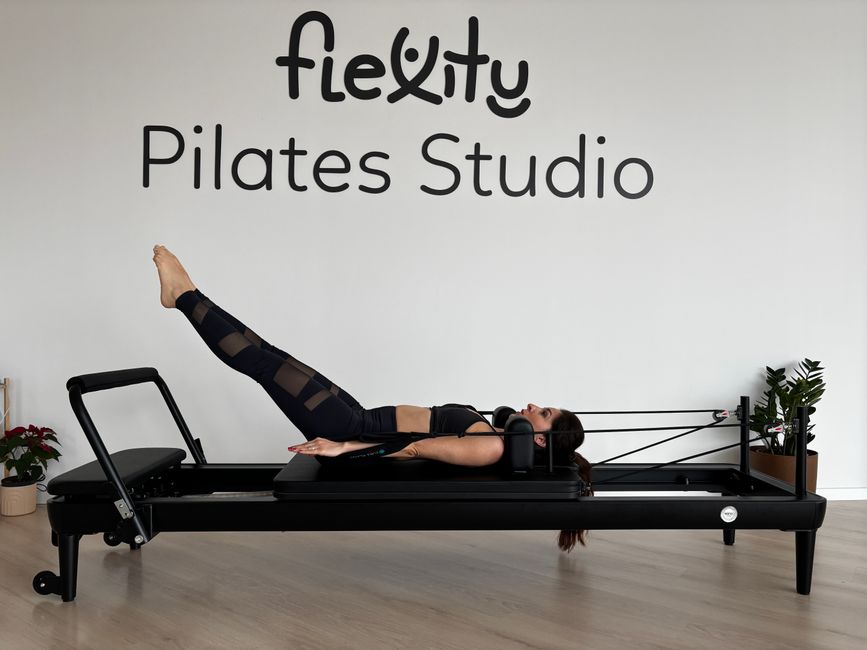
Roll a bath towel or yoga mat into a firm cylinder about four inches in diameter. Place it on the floor perpendicular to your spine and lower yourself so it sits between your shoulder blades. Let your arms rest out to the sides, palms up. Breathe slowly and allow gravity to gently extend your mid-back over the roll for 60 to 90 seconds.
This move specifically targets the thoracic spine, which loses its natural extension curve when you hunch. Restoring that curve is essential for repositioning your shoulders.
More mobile bodies: Move the towel slightly higher or lower along your thoracic spine between rounds to cover more of the upper and mid-back.
Sensitive backs: Use a softer towel or thinner roll and reduce time to 30 seconds per position.

Move 3: Doorway or Wall Angel
Time: 90 seconds
Stand with your back against a wall, feet about four inches out from the baseboard. Press your lower back, upper back, and the backs of your arms against the wall. Raise your arms to a goalpost position (elbows at 90 degrees, upper arms at shoulder height). Slowly slide your arms overhead, keeping contact with the wall throughout, then slide them back down. Aim for 8 to 10 slow repetitions.
If your arms cannot maintain wall contact without pain or arching your lower back away, that is completely normal for people new to desk stretches for posture. Reduce range of motion and work within your comfortable range.
This movement retrains your shoulder blade position, activating lower trapezius and serratus anterior, two muscles that are often underworked in desk workers. If you find this move particularly revealing, the companion guide on tech neck and rounded shoulders covers the shoulder-blade mechanics in more detail.

Move 4: Pectoral Minor Stretch (Corner Stretch)
Time: 90 seconds
Stand facing a corner of the room. Place both forearms flat on the two walls with elbows slightly below shoulder height. Gently lean your chest toward the corner, feeling the stretch deep in your chest and the front of your shoulders. Hold 20 to 30 seconds and repeat twice.
The pectoral minor is a small but influential muscle that pulls the shoulder blade forward and down when it is tight. Most chest stretches miss it. This position targets it more directly because the elbows are lower than in the doorway opener.
Move 5: Seated Chin Tuck With Shoulder Blade Squeeze
Time: 2 minutes
Sit tall in your chair with your feet flat on the floor. Gently draw your chin straight back (as if making a gentle double chin) while simultaneously squeezing your shoulder blades together and down. Hold for five seconds. Release fully, then repeat 10 times.
This is the only move in the sequence that asks your muscles to actively work. By the time you reach it, your chest should feel more open and your thoracic spine more mobile, which means the muscles responsible for holding your shoulders back can actually do their job. Finishing with active work helps your nervous system learn the new position rather than reverting the moment you sit back at your screen.
For readers who also experience hand tingling or numbness during desk sessions, this article on desk stretches that restore sensation in the hands pairs well with this routine.

How to Build This Into a Real Habit
A single session will likely produce noticeable relief. Lasting change in posture requires repetition. Research suggests that postural habits shift gradually with consistent practice rather than intensive one-time sessions. A practical approach:
- Short term: Do the full sequence once a day for two weeks, ideally mid-morning or mid-afternoon when your posture tends to collapse.
- Maintenance: After two weeks, the towel extension and wall angels three to four times per week is often enough to maintain the gains.
- Stack it: Pair the routine with an existing habit, right after your lunch break or before your end-of-day screen shutdown, so it does not rely on willpower alone.
If you notice that posture also affects how you feel after meals, it may be worth reading about why sitting upright during meals actually changes digestion.
Choose one move from this tutorial, the one that felt most revealing, and commit to doing just that move every day this week. Small, consistent actions create the postural change that one ambitious stretch session cannot.
For more practical, evidence-informed guidance on movement, self-care, and whole-person wellness, subscribe to the Clean Body Mentor weekly newsletter.
This article is for general educational and informational purposes only and is not a substitute for medical advice, diagnosis, or treatment. Health needs vary by individual. Consult a qualified healthcare professional before making significant changes to your diet, exercise routine, supplements, medication, or treatment plan, especially if you have a medical condition, are pregnant or breastfeeding, take medication, or have concerns about your symptoms.
Sources
- Kang, J. I., et al. (2015). “Effect of Feedback Respiratory Training on Pulmonary Function of Stroke Patients.” Journal of Physical Therapy Science, 27(8). Published by J-STAGE (Japan Science and Technology Agency).
- Harman, K., et al. (2005). “Effectiveness of an exercise program to improve forward head posture in normal adults: a randomized, controlled 10-week trial.” Journal of Manual and Manipulative Therapy, 13(3). Published by Taylor and Francis.
- American College of Sports Medicine position stand on posture and musculoskeletal health (ACSM.org).
- National Institutes of Health, National Institute of Neurological Disorders and Stroke: information on musculoskeletal pain from sedentary postures (NIH.gov).


