


You probably do not think about your ankles until one rolls unexpectedly on a curb or a staircase edge catches you off guard. For desk workers, that moment tends to arrive sooner than expected, and the reason is not age or bad luck. It is weeks and months of sitting still.
When you spend most of the day with your feet planted flat on the floor or tucked under your chair, the small stabilizer muscles that run through your lower leg, ankle, and foot receive almost no proprioceptive challenge. They do not need to fire to keep you upright because your chair is already doing that job. Over time, those muscles become underused and less responsive, which matters the moment you step onto uneven pavement, a gravel path, or a curb you misjudged.
Flat-ground walking trains a relatively narrow slice of these muscles because the surface never surprises your nervous system. That is why ankle stability exercises for desk workers need to be intentionally progressive, not just more of the same walking you are already doing.

What Actually Weakens When You Sit All Day
Your ankle stability depends on three overlapping systems: the muscles of your lower leg (peroneus longus, tibialis anterior, and the calf complex), the small intrinsic foot muscles, and your proprioceptive nervous system, which detects micro-shifts in joint position and signals corrections faster than conscious thought.
Research published in the Journal of Biomechanics and summarized by the National Institutes of Health (NIH) suggests that reduced physical activity measurably impairs proprioceptive acuity over time, particularly in older adults but beginning as early as the late twenties in sedentary individuals. The practical effect is a slower correction response when your ankle tilts unexpectedly, which is exactly when sprains and falls happen.
If you are already exploring related desk-worker movement issues, you may find the guide to How to Rebuild Foot Strength After Months at Your Desk: Five Progressive Bodyweight Drills You Can Do Anywhere a useful companion to what follows here.
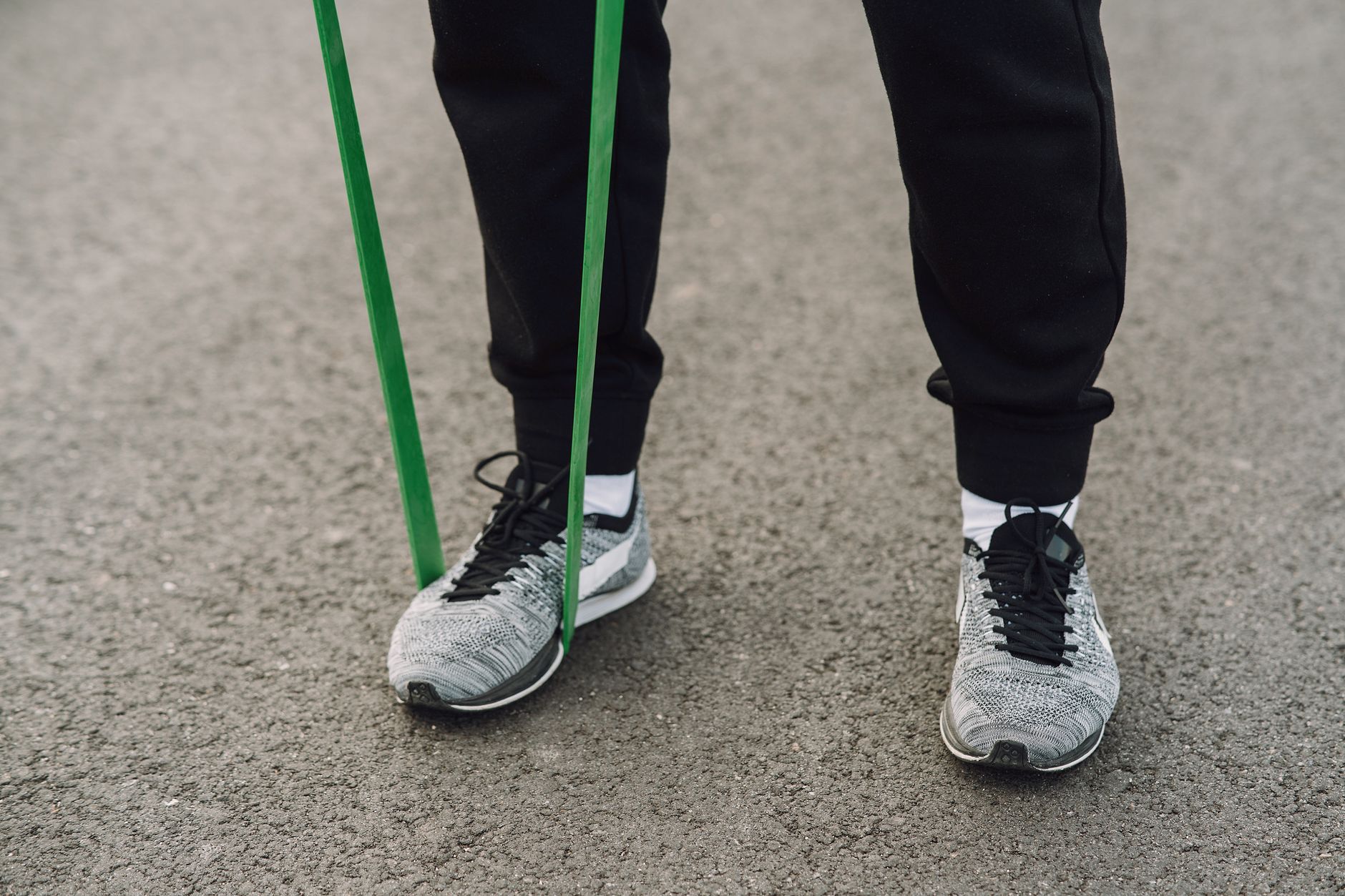
Five Progressive Drills to Restore Ankle Stability
These drills require no equipment. They move from simple to moderately challenging so you can begin wherever feels right and progress at your own pace. Work barefoot or in thin-soled shoes when possible to maximize sensory feedback.
Drill 1: Seated Ankle Circles and Alphabet Tracing
Who it is for: Anyone starting from a very sedentary baseline or returning after an ankle injury.
While seated, lift one foot off the floor and slowly draw large circles with your toes, ten clockwise and ten counterclockwise. Then trace the alphabet in capital letters. This reactivates the range of motion your ankle uses when navigating varied terrain and gently wakes up the stabilizing muscles without load.
Do both feet. This takes about two minutes and is a reasonable start between meetings or during a video call.
Drill 2: Standing Heel-to-Toe Rocks
Stand behind your chair with both hands lightly resting on the back for balance. Slowly rock onto your heels so your toes lift off the ground, hold for two seconds, then rock forward onto your toes and hold for two seconds. Aim for ten slow repetitions.
This drill activates the tibialis anterior on the dorsiflexion phase and the calf complex on the plantarflexion phase while requiring your ankle stabilizers to manage a shifting center of gravity. Progress by reducing how much you rely on the chair back over time.
Drill 3: Single-Leg Standing with Eyes Open, Then Closed
This is where proprioceptive training begins in earnest. Stand near a wall or chair for safety. Shift your weight onto one foot and hold for 20-30 seconds. Keep a micro-bend in your standing knee rather than locking it.
Once that feels stable, close your eyes. Removing visual feedback forces your ankle and foot muscles to manage balance entirely through proprioceptive signals, which is precisely the capacity that erodes during prolonged sitting. Research cited by the American College of Sports Medicine notes that balance training with eyes closed is among the more effective methods for improving reactive ankle stability.
Aim for three holds per side, eyes open and eyes closed, once per day.
Drill 4: Lateral Band-Free Side Steps With Deliberate Heel Strike
No resistance band needed. Step laterally two feet to the right, deliberately landing on your heel and rolling through to your toe rather than landing flat-footed. Take four steps right, four steps left. Repeat three times.
The lateral direction challenges the peroneus muscles on the outer ankle, the muscles most responsible for preventing inversion sprains. Flat-ground walking rarely loads this plane, which is why the peroneus group tends to be disproportionately weak in desk workers.
For a broader lower-body context, the Leg Strength Without a Gym: Five Progressive Bodyweight Drills for Stairs, Walking, and Daily Life guide pairs well with this drill sequence.
Drill 5: Tandem Walking (Heel-to-Toe Line Walking)
Place a strip of tape on the floor or use a floorboard line. Walk heel-to-toe along it for ten steps forward and ten steps backward. Keep your arms out to your sides at first, then bring them down to your sides as the drill becomes easier.
Backward heel-to-toe walking is especially useful because it demands deliberate engagement of your dorsiflexors and anterior chain, which are chronically underused when you sit for extended periods.

Building the Habit Without Overthinking It
The five drills above take roughly ten minutes combined. You do not need to do all of them every day. A realistic starting point is Drills 2 and 3 on weekdays, adding Drill 4 and 5 on days when you are walking more. Use Drill 1 as a warm-up whenever your ankles feel stiff.
Consistency matters more than volume here. Two or three sessions a week of intentional ankle stability work can produce noticeable changes in balance confidence within four to six weeks, though individual results vary based on starting fitness, age, and how much daily movement you get outside of these drills.
If you are curious how footwear choices interact with this kind of training, the article on Barefoot Walking vs. Supportive Shoes: When Foot Freedom Builds Strength and When Support Prevents Injury covers the tradeoffs in useful detail.
For a broader look at how three real people progressed through a similar rebuilding process, Rebuilding Foot Strength and Ankle Stability After Months at Your Desk: A Case Study of Three People Who Restored Movement Without Physical Therapy offers practical context alongside the drills.

A Note on When to See a Professional
These drills are appropriate for generally healthy adults who experience mild ankle weakness or instability related to sedentary work. If you have a history of ankle sprains, ligament laxity, nerve damage, or balance disorders, or if you experience pain during any drill, pause and consult a physical therapist or qualified healthcare professional before continuing. They can assess your specific mechanics and modify the progression appropriately.
Choose one drill from this list and practice it consistently for a week before adding another. That single habit is more likely to produce lasting change than cycling through all five for two days and forgetting about it. If you want more practical movement guidance delivered weekly, consider joining the Clean Body Mentor newsletter for evidence-informed, beginner-friendly wellness ideas.
This article is for general educational and informational purposes only and is not a substitute for medical advice, diagnosis, or treatment. Health needs vary by individual. Consult a qualified healthcare professional before making significant changes to your diet, exercise routine, supplements, medication, or treatment plan, especially if you have a medical condition, are pregnant or breastfeeding, take medication, or have concerns about your symptoms.

Sources
- National Institutes of Health (NIH), National Library of Medicine: research on proprioceptive acuity and sedentary behavior, available at PubMed.gov
- American College of Sports Medicine (ACSM): position statements on balance and proprioceptive training for injury prevention, acsm.org
- Journal of Biomechanics: studies on lower-limb proprioception and muscle activation patterns in sedentary adults (organization cited; specific URL not linked to avoid inaccuracy)


