
You finished a hard workout yesterday, and today is a rest day. By mid-morning, something feels off. You are eating roughly the same portions as usual, but you feel either overly full and sluggish or oddly unsatisfied before the next meal. Neither feeling makes sense until you understand what actually shifts on rest days.
Your digestive system moves more slowly when your body is not active. Gut motility, the rhythmic muscular contractions that push food along, responds to physical movement. Less movement means slower transit, which is why bloating and that heavy, stuck feeling are so common on rest days even when you eat the same foods. You can read more about this pattern in Digestive Sluggishness on Rest Days: Why Your Gut Slows Without Movement and How to Eat Lighter Without Restriction.
The goal for rest day meals is not restriction. It is building meals that are high in fiber, moderate in protein, and lower in the dense calorie load your muscles needed for recovery yesterday. The five meals below are ranked by how well they satisfy hunger, support comfortable digestion, and match the energy your body actually uses on a lower-activity day.

1. White Bean and Roasted Tomato Soup With Whole Grain Toast
Why it works on rest days: Beans are one of the most reliable satiety foods available. Research published in the journal Nutrients (2021) suggests that legume consumption is associated with greater feelings of fullness compared to protein-matched meat meals, partly because of their combined fiber and resistant starch content. White beans also digest more slowly than red meat or processed carbs, matching the slower pace of your gut on a rest day.
Simmer canned white beans with crushed roasted tomatoes, a little garlic, and low-sodium broth until thick. A single slice of whole grain sourdough toast on the side gives you enough complex carbohydrate without the heavy post-meal fatigue that comes from a large grain portion. The warm liquid in the soup also supports gentle gut movement without any effort on your part.
Calorie range: approximately 380 to 430 calories. Filling? Very.

2. Greek Yogurt Bowl With Cucumber, Olive Oil, and Toasted Seeds
Why it works on rest days: On active training days, you might want a high-carbohydrate meal to replenish glycogen. On rest days, a moderate-protein, lower-glycemic meal tends to hold hunger steadier without leaving you feeling heavy. Plain full-fat Greek yogurt (around 170 grams) delivers close to 17 grams of protein and provides live cultures that may support gut comfort.
Top the yogurt with diced cucumber, a half teaspoon of olive oil, a pinch of flaky salt, and a tablespoon of toasted pumpkin seeds for crunch and added zinc. This is a savory yogurt bowl, not a fruit-loaded dessert version, and that distinction matters. The savory approach keeps blood sugar more stable and tends to prevent the mid-afternoon energy crash that sweet breakfasts can trigger. If afternoon crashes sound familiar, Five Reasons Your Afternoon Energy Crashes Before 3pm and Which Snack Pairing Actually Fixes It covers the meal-timing piece in detail.
Calorie range: approximately 280 to 330 calories. Works especially well as a late-morning meal.
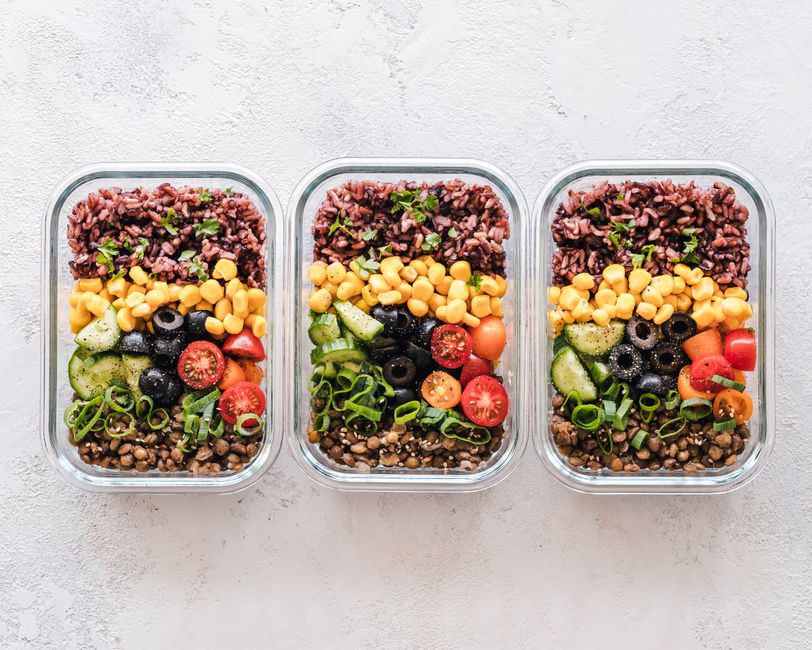
3. Lentil and Spinach Stew Over a Small Portion of Brown Rice
Why it works on rest days: Lentils are dense in plant protein and soluble fiber, both of which slow gastric emptying and extend the window between meals. A standard half-cup serving of cooked lentils provides roughly 9 grams of protein and 8 grams of fiber (USDA FoodData Central). Pairing them with wilted spinach adds iron, magnesium, and folate without adding significant calories.
Keep the rice portion small, around a third of a cup cooked, which is enough to round out the meal without tipping the energy balance beyond what a rest day calls for. Season with turmeric and cumin, both of which have modest evidence for supporting digestive comfort, though the real satiety driver here is the lentil and vegetable base.
If you find yourself reliably bloated after meals like this one, Five Reasons You Feel Bloated After Healthy Meals (And Which Eating Habits Actually Fix It) walks through common causes that have nothing to do with the food itself.
Calorie range: approximately 390 to 440 calories.
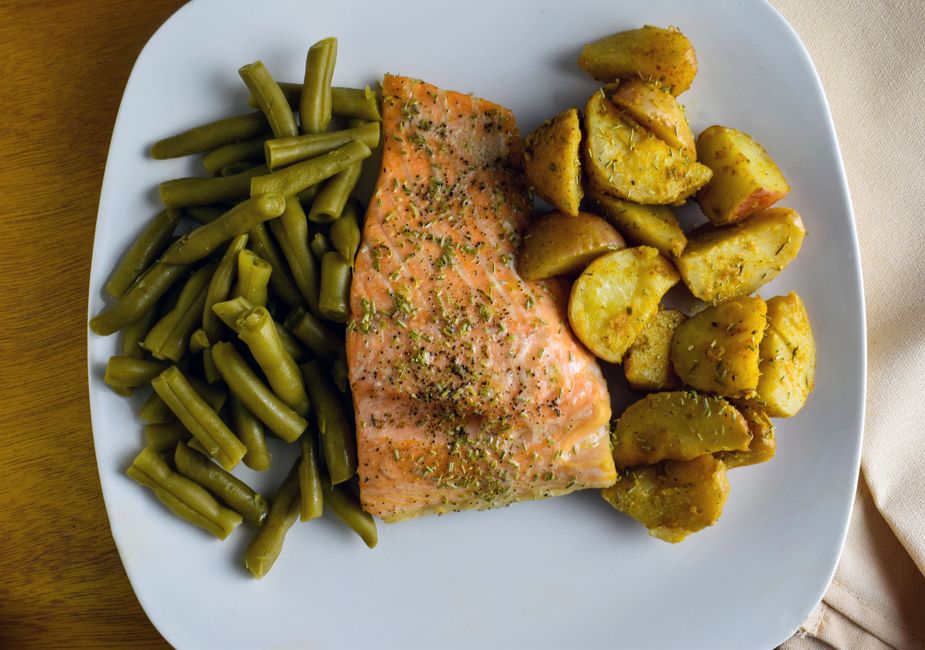
4. Salmon and Roasted Vegetable Sheet Pan Plate
Why it works on rest days: Fatty fish like salmon provides omega-3 fatty acids alongside high-quality complete protein, a combination that research suggests may reduce low-grade inflammation that accumulates after training (National Institutes of Health, Office of Dietary Supplements). On rest days, your muscles are repairing, and protein continues to matter even though you are not exercising. A four-ounce salmon portion delivers roughly 25 grams of protein.
Pair it with a generous tray of roasted zucchini, bell peppers, and cherry tomatoes. Roasting concentrates flavor without adding significant calories, and the vegetables bulk out the plate visually, which supports satisfaction even at a moderate calorie level. Season simply with olive oil, lemon, garlic, and herbs.
This is one of the most flexible rest day meals because you can swap the vegetable mix based on what is already in your fridge. How to Eat Vegetables First at Meals for Better Digestion and Stable Blood Sugar offers a simple technique that pairs well with a plate like this one.
Calorie range: approximately 420 to 480 calories.
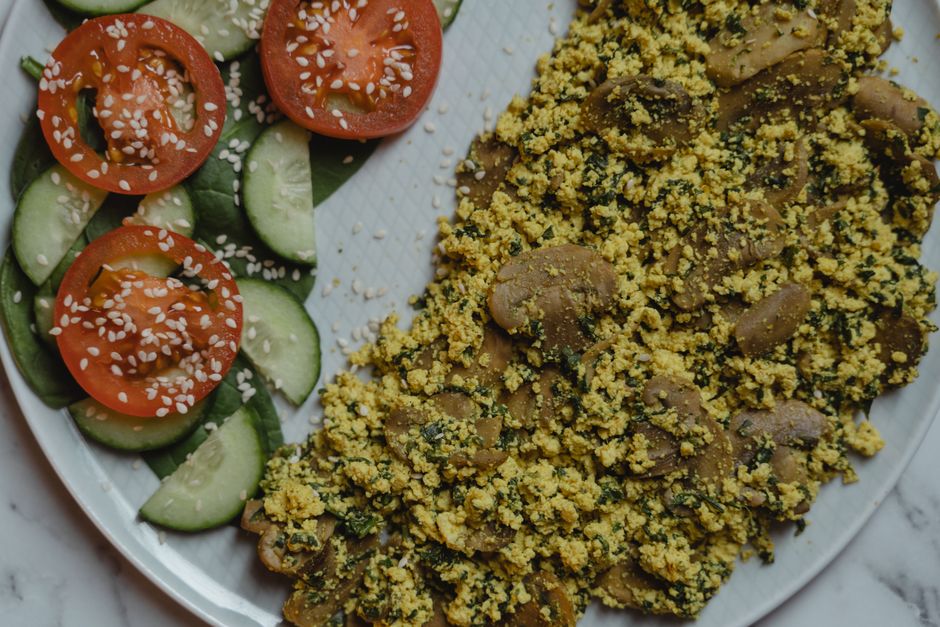
5. Tofu Scramble With Kale, Mushrooms, and a Soft Egg
Why it works on rest days: This meal works at any time of day and is especially useful when you want a warm, filling plate without the weight of a meat-based meal. Firm tofu crumbled into a pan with sauteed mushrooms and wilted kale delivers a wide amino acid profile alongside B vitamins and plant iron. Adding a single soft-boiled or poached egg on top increases the satiety factor noticeably without a large calorie jump.
Mushrooms are particularly useful on rest days because they are low in calories, high in volume, and contain beta-glucan fiber that research suggests may help with satiety signaling (Appetite journal, 2021). Use tamari or a little miso paste to season, and finish with a squeeze of lemon.
Calorie range: approximately 340 to 390 calories.

How to Choose the Right Meal for Your Rest Day
All five of these rest day meals share a common structure: adequate protein to keep hunger quiet, fiber to slow digestion appropriately, and a moderate calorie load that fits a day when your energy output is lower. None of them require you to count calories closely or eat less than you want to. They are simply designed to work with your body on a lower-movement day rather than against it.
Start with whichever meal appeals most to you right now and build from there. Small, realistic choices practiced consistently tend to produce the most durable results over time. If you want to explore more about how rest days affect not just your body but also your mood and overall well-being, Why Rest Days Feel Emotionally Harder and How Movement Timing Shapes Your Mood Without Medication is worth a read next.
For practical weekly wellness guidance including meal ideas, movement tips, and habit-building strategies, consider joining the Clean Body Mentor newsletter.
This article is for general educational and informational purposes only and is not a substitute for medical advice, diagnosis, or treatment. Health needs vary by individual. Consult a qualified healthcare professional before making significant changes to your diet, exercise routine, supplements, medication, or treatment plan, especially if you have a medical condition, are pregnant or breastfeeding, take medication, or have concerns about your symptoms.
Sources
- Mollard RC, et al. “The acute effects of a pulse-containing meal on glycaemic responses and measures of satiety and metabolism.” Nutrients, 2021. (Legumes and satiety)
- USDA FoodData Central: Lentils, cooked. National Agricultural Library.
- National Institutes of Health, Office of Dietary Supplements: Omega-3 Fatty Acids Fact Sheet for Health Professionals.
- Cheskin LJ, et al. “Lack of energy compensation over 4 days when white button mushrooms are substituted for beef.” Appetite, 2021.