


You lace up your shoes, step outside, and within five minutes your hips feel stiff, your lower back aches, and what was supposed to be an energizing walk becomes something you just want to finish. Sound familiar?
Tight hip flexors and underactive glutes are two of the most common reasons walking feels harder than it should. When your hips cannot move through a full, comfortable range of motion, your body compensates: your lower back overworks, your stride shortens, and the whole experience becomes less enjoyable. Over weeks, that discomfort quietly erodes the habit.
The good news is that hip mobility for walking is trainable, and you do not need a gym or complicated equipment to do it. The four drills below are progressive, meaning each one builds on the last, and together they target the specific movement patterns that make walking feel fluid and sustainable.
Before you start, a quick note: if you have a diagnosed hip or lower-back condition, get clearance from a qualified healthcare professional before adding new movement drills to your routine.

Why Tight Hips Derail a Walking Habit
The hip flexors (primarily the iliopsoas group) shorten when you sit for long periods. Research published by the National Institutes of Health has linked prolonged sitting to reduced hip extension range of motion and altered gait mechanics. When your hip flexors are short and stiff, they pull your pelvis forward, compress your lumbar spine, and limit how far your leg can swing behind you with each step.
At the same time, the glutes often become underresponsive after long hours of sitting. A less active glute means less propulsive power per stride, so your calves and lower back pick up the slack. The result: fatigue arrives faster, discomfort sets in, and your motivation to walk regularly quietly drops.
Fixing this combination does not require stretching alone. You need drills that combine lengthening tight tissue with activating the muscles that are supposed to do the work. That is exactly what the routine below does.
If you want to pair this with a structured walking plan, the Home Walking Workouts for Busy Parents: A Four-Week Plan That Fits Nap Time, Lunch Breaks, and Weekend Routines guide gives you a realistic framework to build on.
The Four-Drill Routine
Do this sequence before or after a walk, or on its own on rest days. Move slowly and deliberately. Discomfort from a stretch is normal; sharp or shooting pain is a signal to stop.
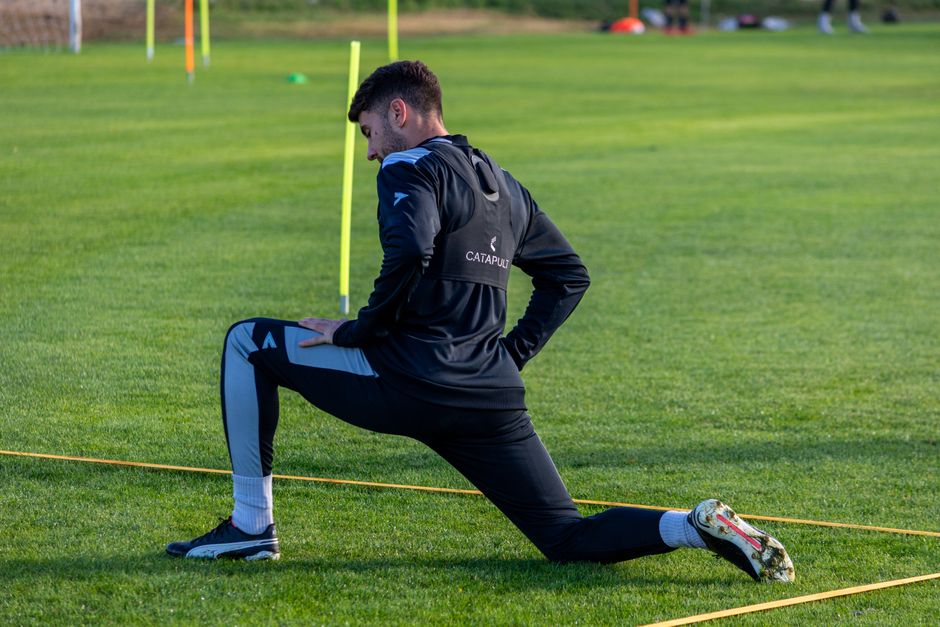
Drill 1: Kneeling Hip Flexor Rock (90 seconds per side)
This drill targets the iliopsoas directly without requiring any balance or equipment.
How to do it: Kneel on your right knee with your left foot planted flat in front of you (a low lunge position). Keep your torso upright and your front shin vertical. Gently shift your hips forward until you feel a stretch along the front of your right hip. Hold for two seconds, then rock back slightly to release. Repeat the rock slowly for 90 seconds, then switch sides.
Why it works: The rhythmic movement, rather than a static hold, encourages the nervous system to release tension progressively. Research suggests that slow, oscillating stretches can be more effective at reducing perceived stiffness than holding a single position.
Beginner modification: Place a folded towel under your kneeling knee for comfort, and hold onto a chair or wall for balance.
Drill 2: Glute Bridge with a Pause (10 to 12 reps)
Once you have created some length in the hip flexors, you need to switch on the glutes so they contribute during your walk.
How to do it: Lie on your back with knees bent and feet flat on the floor, hip-width apart. Press your feet into the floor and lift your hips until your body forms a straight line from shoulders to knees. Pause at the top for two full seconds, squeezing your glutes deliberately. Lower slowly. Do 10 to 12 reps.
Why it works: The pause forces real glute engagement rather than allowing momentum to carry the movement. Over time, this translates directly into better push-off mechanics during walking.
Progression: Once 12 reps feel easy, try a single-leg glute bridge by extending one leg and completing the set on one side at a time.
For a broader lower-body strength program that complements this drill, see Home Leg Strength Without Equipment: Progressive Bodyweight Drills That Build Power for Stairs, Walking, and Daily Life.
Drill 3: World’s Greatest Stretch (5 reps per side)
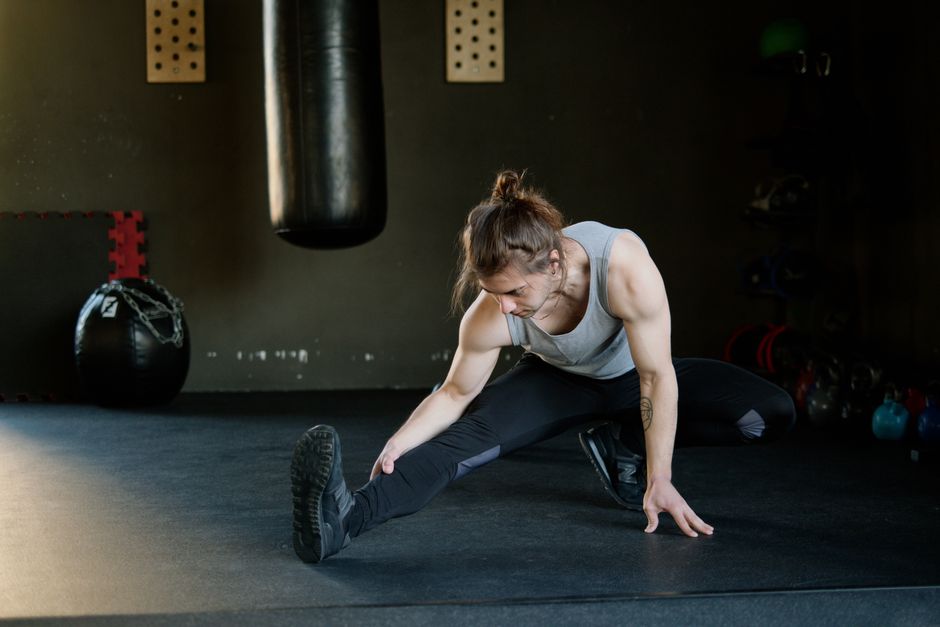
This multi-joint drill addresses hip flexion, hip rotation, and thoracic mobility simultaneously, all of which contribute to a longer, more comfortable walking stride.
How to do it: Start in a high plank. Step your right foot to the outside of your right hand. Drop your left knee to the floor. Rotate your right arm up toward the ceiling, opening your chest. Hold for two seconds. Return to plank and repeat on the left side. Complete 5 reps per side.
Why it works: Walking requires coordinated rotation through the hips and spine. Drilling that pattern actively, rather than passively, builds the mobility you actually use in motion.
Beginner modification: Skip the arm rotation and simply hold the lunge position for three breaths per side until you feel comfortable with the full movement.
Drill 4: Standing Hip Circle (10 slow circles per direction per side)
This drill closes the loop by training the hip joint through its full available range, a form of articular conditioning that improves joint health over time.
How to do it: Stand near a wall for balance. Lift your right knee to hip height and slowly trace a large circle outward, down, back, and up again, like you are stirring a pot with your knee. Complete 10 circles in one direction, then reverse for 10 more. Switch legs.
Why it works: Controlled articular circles, popularized in functional range conditioning frameworks, help maintain cartilage health and reduce joint stiffness by moving synovial fluid through the joint. They are low-impact but highly effective for building the range of motion that makes each walking step feel smooth.
How to Fit This Into Your Routine
You do not need to do all four drills every single day to see results. A realistic starting point:
- Before a walk: Drills 1 and 4 (about 6 to 8 minutes total) to warm up the joints.
- After a walk: Drills 2 and 3 (about 8 to 10 minutes total) while your muscles are warm.
- Rest days: Run through all four drills at a relaxed pace to maintain progress.
Consistency over two to four weeks is where most people notice a genuine shift. Steps start to feel longer and more effortless, and the low-back drag that used to set in by minute ten tends to ease noticeably.
Walking also has benefits that extend well beyond hip comfort. If you are curious how movement affects digestion on active days compared to rest days, Five Unexpected Reasons Your Digestion Improves on Outdoor Walking Days and Slows on Rest Days is worth a read.
One Small Step to Start
Choose one drill from this list and practice it consistently for the next seven days before adding the others. Even a single drill done regularly builds the neural and muscular patterns that make walking feel better over time. Small, sustainable actions compound faster than ambitious routines that fade after a week.
If you found this helpful, explore other movement guides on Clean Body Mentor or subscribe to our newsletter for practical weekly wellness ideas delivered without the overwhelm.
This article is for general educational and informational purposes only and is not a substitute for medical advice, diagnosis, or treatment. Health needs vary by individual. Consult a qualified healthcare professional before making significant changes to your diet, exercise routine, supplements, medication, or treatment plan, especially if you have a medical condition, are pregnant or breastfeeding, take medication, or have concerns about your symptoms.

Sources
- National Institutes of Health (NIH): Research on prolonged sitting and hip extension mobility. Search NIH PubMed for “hip flexor tightness prolonged sitting gait” for relevant literature.
- Spina, A. Functional Range Conditioning framework on articular circles and joint health. Functional Anatomy Seminars (functionalanatomyseminars.com).
- Behm, D.G. et al. “Acute effects of muscle stretching on physical performance, range of motion, and injury incidence in healthy active individuals.” Applied Physiology, Nutrition, and Metabolism, 2016 (available via PubMed).


