

Most people plate dinner and eat whatever looks most appealing first, which is usually the carbohydrate. The bread, the rice, the pasta, the roasted potatoes. The chicken, lentils, or salmon end up somewhere in the middle or scraped up at the end.
It turns out that order is not a neutral choice. A growing body of research on meal sequencing suggests that eating your protein source first may influence hunger hormones, blood glucose stability, and the specific amino acids your brain needs to manufacture sleep-supporting compounds overnight. The good news: you do not need to change your portion sizes, your recipes, or your budget. You only need to change the order.
This tutorial walks through why protein timing and meal order at dinner matter, what the science currently shows, and how to build a simple habit that may support better sleep and next-day recovery.
What Meal Sequencing Research Actually Shows
The case for eating in a specific order began gaining attention through research on glycemic control. A study published in Diabetes Care (Alpana Shukla et al., 2015) found that eating protein and vegetables before carbohydrates significantly reduced post-meal blood glucose and insulin spikes in people with type 2 diabetes. Subsequent work from Weill Cornell Medicine extended this finding to people without diabetes, showing that carbohydrate-last meal order blunted glucose peaks by roughly 30 percent compared with eating carbohydrates first.
Blood glucose stability is not only a daytime concern. Elevated blood sugar in the hours before bed is associated with more fragmented sleep and reduced slow-wave sleep, which is the deepest, most physically restorative stage. When you eat protein first, your body begins producing digestive enzymes and satiety hormones like peptide YY and GLP-1 before the carbohydrate load arrives, which flattens the glucose curve into the evening and may set a calmer hormonal environment for sleep.
If you want to understand the broader mechanics of how food order influences digestion and blood sugar, Protein Sequencing for Stable Blood Sugar: Why the Order You Eat Your Meal Matters is a helpful companion read.

The Tryptophan Connection: Protein, Serotonin, and Melatonin
Here is where protein timing becomes directly tied to sleep quality rather than just blood glucose.
Tryptophan is an essential amino acid found in animal proteins like chicken, turkey, eggs, and fish, and in plant sources like lentils, chickpeas, pumpkin seeds, and tofu. Your body uses tryptophan as a precursor to serotonin, which then converts to melatonin, the hormone that signals your brain it is time to sleep.
The timing issue is subtle but meaningful. Tryptophan competes with other large neutral amino acids for transport across the blood-brain barrier. When you eat a mixed meal with carbohydrates alongside protein, the insulin response triggered by those carbohydrates actually helps clear competing amino acids from the blood, which can improve tryptophan uptake into the brain. But when protein is eaten first and the carbohydrate follows, that sequence appears to optimize both the hormonal response and the gradual rise in available tryptophan, rather than producing a sharp spike and dip.
This is still an area of emerging research rather than a settled clinical guideline. What is established: tryptophan availability matters for melatonin synthesis, and the timing of protein relative to carbohydrates at your evening meal influences that availability. Research published in Nutrients (2021) reviewed the dietary patterns associated with sleep quality and consistently found that protein intake timing across the day, including at the evening meal, was associated with better self-reported sleep outcomes.
For a wider look at how protein is distributed across the day, Protein Timing Across Your Day: How Breakfast, Lunch, Dinner, and Snacks Shape Hunger and Energy Better Than Total Intake offers a practical framework.
Overnight Recovery: Why Protein First Also Helps Your Muscles
Sleep is your primary recovery window. Human growth hormone, which supports muscle repair and fat metabolism, is secreted in pulses during deep sleep. Amino acid availability during those overnight hours influences how effectively your body uses that window.
Research on protein distribution, including work cited by the International Society of Sports Nutrition, suggests that spreading protein across meals rather than backloading it at dinner produces better muscle protein synthesis across the day. However, for dinner specifically, getting adequate protein early in the meal (rather than neglecting it until the end) means digestion begins sooner and amino acids become available to tissues earlier in the overnight period.
This matters practically for anyone doing strength training, walking, or other physical activity. If you are eating dinner at 7 p.m. and sleeping by 10 p.m., starting your meal with 20 to 30 grams of protein rather than finishing with it shifts the digestion timeline forward by roughly 30 to 45 minutes, which may extend the recovery window during the night’s deepest sleep stages.
For more on what to eat to support recovery specifically, Rest Day Meals That Support Recovery Without Sabotaging Your Progress breaks this down by meal and activity level.

How to Restructure Your Evening Meal (Without Changing What You Cook)
This tutorial does not require new recipes. It requires a small shift in how you serve and start your plate.
Step 1: Identify your protein anchor. Before plating, decide which item is your primary protein: grilled chicken, baked salmon, lentil dal, tofu, ground turkey, a bean-heavy stew. That item goes on your fork first.
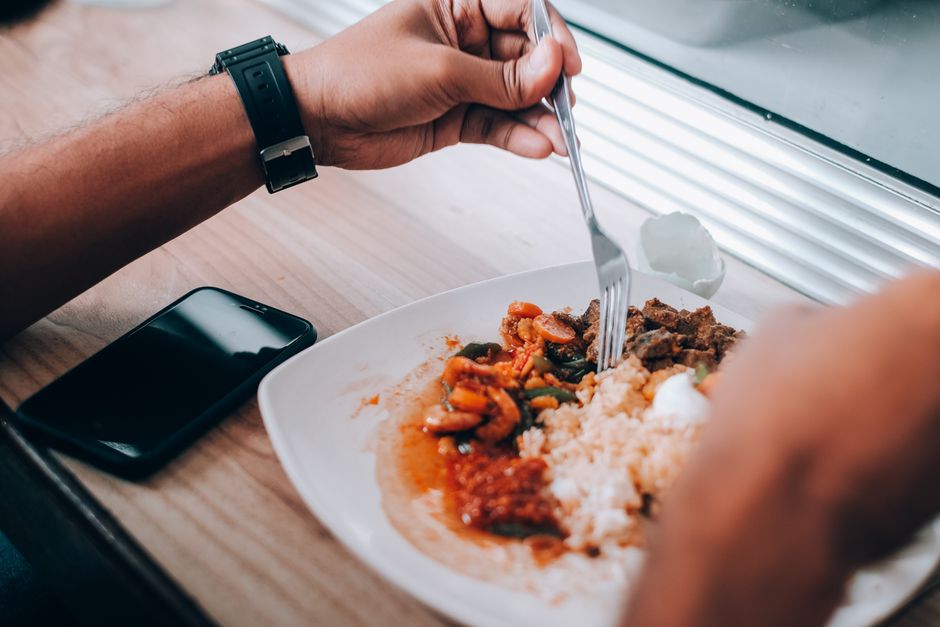
Step 2: Eat three to five bites of protein before touching carbohydrates. This does not have to be rigid. You can eat vegetables alongside protein during this opener. The goal is simply to delay carbohydrate-rich foods (rice, bread, pasta, potato) for the first few minutes of the meal.
Step 3: Slow your pace. Eating protein first works better when you slow down enough for satiety hormones to register. Aim for one bite every 20 to 30 seconds during the first few minutes. Digestive Discomfort From Rushed Eating: Why Pace Matters More Than Food Choices explains why pace has a measurable impact on digestion and fullness.
Step 4: Keep carbohydrates on the plate but eat them last. You do not need to restrict them. Carbohydrates support serotonin and melatonin production, so they still belong at dinner. Simply let the protein and vegetable portion lead.
Step 5: Note sleep quality over one to two weeks. Because sleep quality is subjective and variable, give the habit time before judging it. Factors like caffeine timing and overall sleep hygiene interact with meal order. Isolate what you can and observe.
Good Protein Anchors for Dinner
- Chicken breast or thighs (baked, grilled, or stir-fried)
- Salmon or tuna (broiled, pan-seared, or in a grain bowl)
- Lentils, black beans, or chickpeas (in a stew, curry, or salad)
- Tofu or tempeh (marinated and baked or pan-cooked)
- Eggs (frittata, shakshuka, or a simple scramble with vegetables)
- Greek yogurt-based sauces paired with lean meat as a dual-protein opener

A Realistic Note on Expectations
Protein timing and meal sequencing are promising tools, but they work as part of a broader healthy routine, not as isolated fixes. If your sleep is significantly disrupted, other factors including stress, screen exposure, room temperature, alcohol, and sleep disorders deserve attention alongside meal habits. Consult a qualified healthcare professional if sleep problems are persistent or affecting your daily functioning.
That said, restructuring the order of a meal you are already cooking costs nothing and carries no meaningful downside. Small, sustainable changes compounded over weeks are how habits actually take root.
Choose one dinner this week where you consciously eat your protein source first. Notice how full you feel before reaching the carbohydrate portion, and pay attention to how you feel the next morning. That single experiment is a reasonable starting point.
For broader practical guidance delivered weekly, the Clean Body Mentor newsletter covers evidence-informed habits like these in a format built for real schedules.
This article is for general educational and informational purposes only and is not a substitute for medical advice, diagnosis, or treatment. Health needs vary by individual. Consult a qualified healthcare professional before making significant changes to your diet, exercise routine, supplements, medication, or treatment plan, especially if you have a medical condition, are pregnant or breastfeeding, take medication, or have concerns about your symptoms.
Sources
- Shukla, A.P., et al. (2015). Food order has a significant impact on postprandial glucose and insulin levels. Diabetes Care. Referenced via PubMed (PMID 25972565).
- Pot, G.K., et al. (2021). Diet and sleep: Association with sociodemographic factors. Nutrients, 13(5). Referenced via PubMed.
- Stokes, T., et al. (2018). Recent perspectives regarding the role of dietary protein for the promotion of muscle hypertrophy. Nutrients. International Society of Sports Nutrition position stand on protein and exercise referenced for distribution guidance.
- Friedman, M. (2018). Analysis, nutrition, and health benefits of tryptophan. International Journal of Tryptophan Research. Referenced via PubMed.