
You finished a reasonable lunch, nothing extreme, and yet by 2pm your waistband feels tight and your focus is somewhere else entirely. If that pattern sounds familiar, the problem is probably not how much you ate. Research suggests that food sequencing, fiber type, and the enzyme activity of specific vegetables can influence how gas builds during digestion, and that small changes to what you pair together matter more than shrinking your plate.
This guide walks you through five underrated vegetables that, when combined intentionally, support a more comfortable afternoon without asking you to drop a single food group.
Why Combination Matters More Than Quantity
Bloating after lunch often comes down to fermentation speed. When certain high-fermentable foods arrive in the colon without enough enzyme support or complementary fiber, gut bacteria produce gas faster than the body can move it along. The result is the familiar pressure and distension that hits a few hours after eating.
A practical way to think about it: vegetables rich in digestive enzymes can begin breaking down harder-to-process compounds before they reach the large intestine, reducing the fermentation load. Layering those vegetables into your meal in the right order gives your body a head start. As explained in more detail in How to Reduce Afternoon Bloating Without Cutting Carbs or Fats: A Practical Guide to Eating Order and Pace, sequence often outperforms restriction when it comes to digestive comfort.
The Five Vegetables and What Each One Does
1. Fennel
Fennel contains anethole, a compound that research suggests relaxes intestinal smooth muscle and may reduce spasms that trap gas. A 2014 review in the Journal of Ethnopharmacology cited fennel’s traditional and emerging clinical use as a carminative, meaning it helps expel gas rather than letting it accumulate. Thinly sliced raw fennel eaten at the start of a meal gives anethole time to prepare the gut before heavier foods arrive.
2. Zucchini
Zucchini is low in FODMAPs (fermentable oligosaccharides, disaccharides, monosaccharides, and polyols), the carbohydrate group most associated with bloating in sensitive digestive systems. Because it adds bulk and soluble fiber without a high fermentation load, it works well as a base or filler vegetable that keeps meals satisfying without triggering gas. Lightly cooked zucchini is gentler on digestion than raw, making it a smart swap when your gut is already irritated.
3. Ginger Root (Used as a Vegetable in Cooking)
Ginger accelerates gastric emptying, which means food moves from the stomach into the small intestine faster, reducing the window for fermentation to build pressure. A 2008 study published in the European Journal of Gastroenterology and Hepatology found that ginger significantly accelerated gastric emptying in healthy volunteers. Grating fresh ginger into a stir-fry or roasted vegetable mix adds this benefit without requiring a supplement.
4. Bok Choy
Unlike other cruciferous vegetables such as broccoli or cabbage, bok choy is lower in the sulfur-containing glucosinolates that tend to produce sulfur gas during fermentation. It still delivers fiber, vitamin C, and potassium, but with a more digestive-friendly profile. Steaming bok choy briefly (three to four minutes) softens its cellular structure, making its fiber easier to process.
5. Cucumber
Cucumber is roughly 95 percent water and contains cucurbitacins, compounds with mild anti-inflammatory properties. Its high water content supports intestinal motility, the rhythmic contractions that keep food moving. Eating cucumber with or immediately after denser foods may help counteract the sluggish movement that contributes to bloating. Because it requires almost no digestion itself, it adds volume to a meal without adding fermentation fuel.
How to Layer These Vegetables Into Your Lunch
Sequence is the practical tool here. You are not building a rigid protocol; you are nudging your digestive system in a helpful direction before the harder-to-digest parts of your meal arrive.
Step 1: Start with fennel and cucumber (raw, before anything else)
Eat a small portion of thinly sliced fennel and cucumber at the beginning of your meal, before your protein, grains, or legumes. Think of it as a brief pre-meal salad rather than a side dish. This gives anethole time to begin relaxing intestinal muscle while the cucumber contributes hydration that supports motility.
Step 2: Add ginger to whatever you cook next
If your main dish is warm, grate fresh ginger directly into it. Even half a teaspoon in a sauce or stir-fry counts. This does not require a separate ginger dish; it integrates naturally into rice bowls, soups, or roasted trays.
Step 3: Use zucchini and bok choy as your cooked vegetable base
Build your warm components around lightly steamed or sauteed zucchini and bok choy. Both are low in fermentable compounds and add enough fiber to slow glucose absorption without adding gas-producing bulk. They work well under a protein source or alongside whole grains.
For a ready-made framework that puts this into practice, the Building a Gut-Healing Lunch Bowl That Stops Afternoon Bloating Without Cutting Food Groups guide offers a structured meal template you can adapt to any eating style.
A Real Lunch Example
Here is what the layering approach looks like on a plate:
- Pre-meal (2-3 minutes before the main dish): Small bowl of sliced fennel and cucumber with lemon juice
- Main bowl: Brown rice or farro as the base, topped with lightly steamed bok choy and sauteed zucchini cooked in olive oil with fresh grated ginger, finished with a protein of your choice (grilled chicken, baked tofu, or canned salmon all work)
This is a complete, satisfying meal with carbohydrates, fat, protein, and fiber all present. Nothing is removed. The vegetables do the digestive work in sequence rather than requiring you to audit your macros.
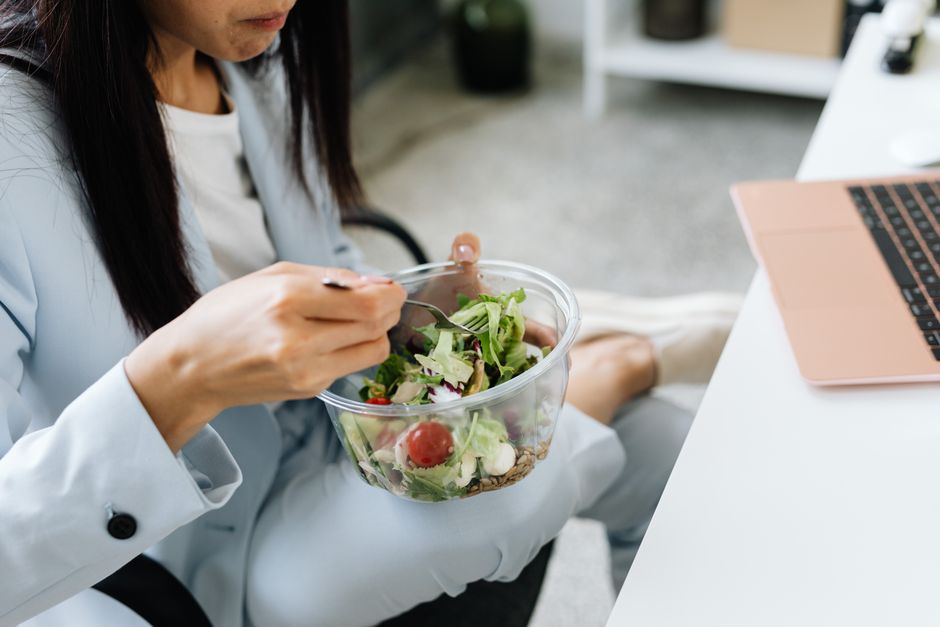
If eating quickly at your desk is part of the pattern, Digestive Bloating From Rushed Meals: Why Chewing Speed and Pause Breaks Matter More Than Food Swaps is worth reading alongside this guide, because even the best vegetable combination works better when you slow down enough to chew thoroughly.

A Few Honest Caveats
These vegetables are broadly well-tolerated, but individual digestion varies. If you have irritable bowel syndrome or a confirmed FODMAP sensitivity, check with a registered dietitian before increasing fiber volume significantly. Fennel, in particular, may interact with certain estrogen-sensitive conditions; that is a conversation for your healthcare provider, not a reason to panic.
For most healthy adults, these combinations represent balanced eating with a practical digestive benefit. They are foods that reduce bloating naturally without requiring a special diet, a supplement stack, or a restricted food list.
Sources
- Badgujar, S.B., et al. (2014). “Foeniculum vulgare Mill: A Review of Its Botany, Phytochemistry, Pharmacology, Contemporary Application, and Toxicology.” BioMed Research International. National Library of Medicine (PubMed).
- Wu, K.L., et al. (2008). “Effects of ginger on gastric emptying and motility in healthy humans.” European Journal of Gastroenterology and Hepatology, 20(5), 436-440.
- Monash University Low FODMAP Diet research program: monash.edu/medicine/ccs/gastroenterology/fodmap
Choose one step from this guide and try it at your next lunch. Even starting with the raw fennel and cucumber before your meal is a meaningful shift. For more practical, sequence-based digestion guidance, explore the Clean Body Mentor nutrition hub or sign up for the weekly newsletter, where evidence-informed wellness tips arrive without the noise.
This article is for general educational and informational purposes only and is not a substitute for medical advice, diagnosis, or treatment. Health needs vary by individual. Consult a qualified healthcare professional before making significant changes to your diet, exercise routine, supplements, medication, or treatment plan, especially if you have a medical condition, are pregnant or breastfeeding, take medication, or have concerns about your symptoms.