
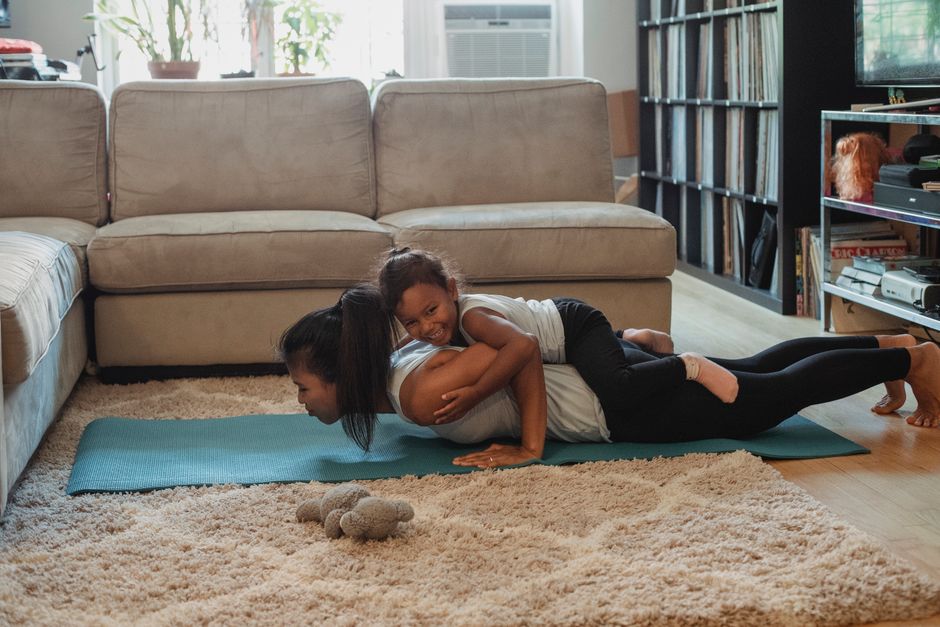
You have about seven minutes before someone needs a snack, a sibling dispute breaks out, or your phone lights up with a school notification. Sound familiar?
If you have been waiting for a full hour of uninterrupted time before starting strength training, that hour may never reliably arrive. The good news is you do not need it. Research from the American College of Sports Medicine supports the idea that shorter, well-structured sessions performed consistently can build meaningful strength and muscle over time. Twenty focused minutes, three to four times a week, is a legitimate and sustainable approach for busy parents.
This tutorial walks you through exactly how to build that routine, what movement patterns to prioritize, and how to adapt when life interrupts mid-workout (because it will).

Why 20 Minutes Is Enough (When You Use It Well)
The mistake most people make is treating short sessions like lesser sessions. A 20-minute workout built around compound movements that challenge multiple muscle groups at once is far more productive than 45 minutes of scattered machines at a gym you rarely visit.
Compound patterns, like squats, hinges, pushes, and pulls, recruit large amounts of muscle simultaneously. That means more work in less time, a greater hormonal response, and better carry-over to the everyday physical demands of parenting: lifting a toddler, carrying groceries, or getting off the floor quickly.
If you are brand new to home-based strength work, the Strength Training for Beginners at Home: Build Confidence and Lean Muscle Without Equipment or a Gym guide is a useful starting point before layering in the structure below.
The Four Movement Patterns Worth Your Time
Rather than memorizing a long list of exercises, anchor your sessions to four foundational patterns. Every exercise you do should fit one of these categories:
- Squat (lower body, knee-dominant): Bodyweight squat, goblet squat with a filled backpack, or split squat
- Hinge (lower body, hip-dominant): Glute bridge, single-leg deadlift with a bag of rice, or Romanian deadlift
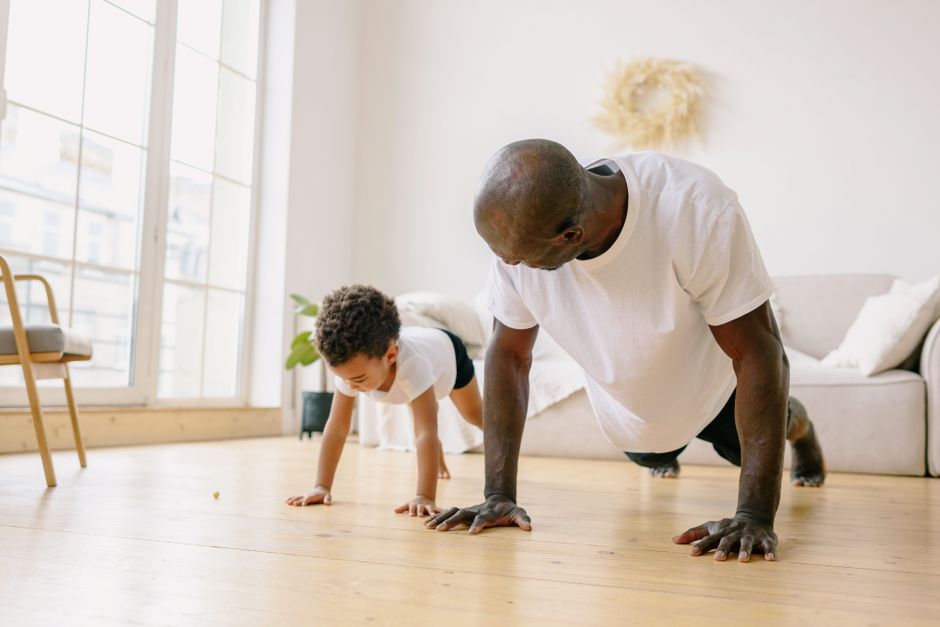
- Push (upper body): Push-up (kneeling or elevated if needed), overhead press with water bottles or light dumbbells
- Pull (upper body): Resistance band row, doorframe row, or any banded pull-apart
Rotate these so each session hits at least two patterns. A Monday session might focus on squat plus push. A Wednesday session might pair hinge with pull. On a busy Friday, you do all four with fewer sets.
For adding equipment affordably, Resistance Band Workouts for Beginners at Home: Build Strength and Confidence Without Weights or Machines covers how a single set of bands opens up pull and row options without taking up closet space.
A Sample 20-Minute Strength Session
Here is a real-world structure you can use this week. No warm-up equipment needed; a two-minute movement warm-up (arm circles, hip circles, bodyweight squats) handles preparation.
Minutes 0-2: Warm-up movement
Minutes 2-18 (three rounds of the following circuit):
- Goblet squat or bodyweight squat: 10 reps
- Push-up (modify by elevating hands on a countertop): 8-10 reps
- Glute bridge: 12 reps
- Resistance band row or doorframe row: 10 reps
- Dead bug (core stability, 5 reps per side)
Rest 30-45 seconds between exercises. Rest 60-90 seconds between rounds. Three rounds of this circuit takes approximately 16 minutes with rest, leaving a two-minute cool-down stretch.
Minutes 18-20: Standing forward fold, hip flexor stretch, or child’s pose
This session requires no gym, minimal floor space, and works with or without equipment. Resistance bands are optional but helpful for the row.
How to Handle Interruptions Without Abandoning the Session
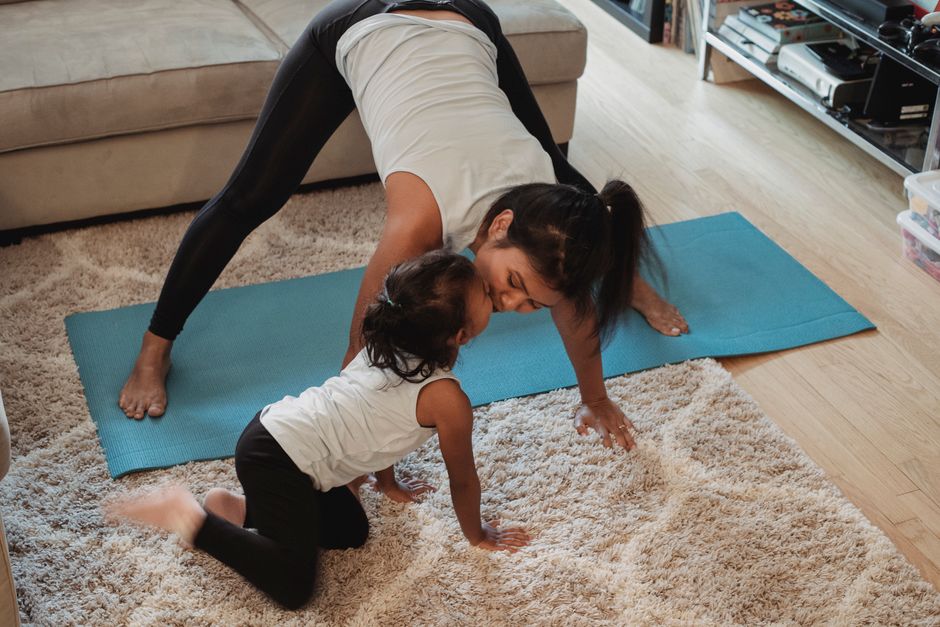
Here is what no generic fitness guide tells you: when parenting interrupts your workout, finishing it in two separate chunks still counts.
If you complete two rounds of the circuit above, get pulled away for 10 minutes to handle a child situation, and return for the third round, you have still done meaningful work. Research suggests that accumulated physical activity throughout the day delivers health and fitness benefits, even when it is not continuous. The CDC’s physical activity guidelines acknowledge that activity can be broken into shorter bouts.
Practical strategies for staying consistent:
- Start the moment you have coverage, not when you feel ready. Motivation often follows movement, not the other way around.
- Lay out your mat the night before. Reducing friction matters when time is short.
- Use nap time or school pickup as anchor points. Same trigger, same habit.
- Lower your standard on hard days. One round instead of three is not failure. It is practice.
Adjusting for Your Energy Level
Parental fatigue is real. Sleep deprivation, emotional load, and physical demands of caring for children affect how your body responds to training. Pushing through exhaustion with high intensity every session is not sustainable and can increase injury risk.
A practical three-level system:
- High energy: Full circuit, three rounds, moderate to challenging resistance
- Moderate energy: Two rounds, bodyweight only, slower tempo
- Low energy: Ten minutes of gentle movement: a set of glute bridges, some wall push-ups, a five-minute walk around the block
Low-energy days still reinforce the habit of movement. And why you get sick after intense workouts and how rest days actually build better fitness explains why recovery is not laziness but an essential part of strength development.
Supporting Your Training With Food
Strength adaptations depend partly on protein intake. Research published in journals such as the British Journal of Sports Medicine suggests that adults engaging in resistance training benefit from approximately 1.6 grams of protein per kilogram of body weight daily, though individual needs vary. You do not need supplements to reach this. Eggs, Greek yogurt, legumes, canned fish, and cottage cheese are practical, affordable options for busy households.
For meal ideas that support your training without requiring extra cooking time, Meal Prep for Beginners: Simple Systems to Save Time and Build Healthier Eating Habits offers a straightforward starting framework.
If you have recently had a baby and are returning to movement, Postpartum Strength Training at Home: Real Progressions From Three Mothers Who Built Functional Confidence covers the specific modifications and pacing that apply during postpartum recovery.
Building the Habit Over Perfecting the Workout
The most effective strength training program for busy parents is the one that actually happens. You will miss sessions. The kids will get sick. Work will expand. Your goal is not a perfect training record; it is a consistent enough pattern that strength accumulates over weeks and months.
Choose one session from this guide and do it this week. Three rounds if you can, one round if you cannot. Notice how you feel after, not just during. Over time, those 20-minute pockets add up into something real: more strength, better posture, more energy, and a quiet confidence in what your body can do.
For a broader look at building sustainable habits around home training, Building a Sustainable Strength Training Routine at Home: Progressive Workouts From Bodyweight to Basic Equipment shows you how to progress intelligently once these patterns feel familiar.
If you find these practical guides helpful, subscribing to the Clean Body Mentor newsletter means new evidence-informed wellness content lands in your inbox each week, no gym membership required.
This article is for general educational and informational purposes only and is not a substitute for medical advice, diagnosis, or treatment. Health needs vary by individual. Consult a qualified healthcare professional before making significant changes to your diet, exercise routine, supplements, medication, or treatment plan, especially if you have a medical condition, are pregnant or breastfeeding, take medication, or have concerns about your symptoms.
Sources
- American College of Sports Medicine. Position Stand on Resistance Training. ACSM Guidelines for Exercise Testing and Prescription.
- U.S. Centers for Disease Control and Prevention. Physical Activity Guidelines for Americans: How Much Physical Activity Do Adults Need? CDC.gov.
- Morton RW et al. “A systematic review, meta-analysis and meta-regression of the effect of protein supplementation on resistance training-induced gains in muscle mass and strength in healthy adults.” British Journal of Sports Medicine, 2018.