
Maybe you’ve thought about getting stronger, but the idea of stepping into a gym feels overwhelming. Or maybe your schedule is packed, your budget is tight, and buying a set of dumbbells simply isn’t a priority right now. Whatever your starting point, you don’t need a gym, expensive gear, or a personal trainer to begin building lean muscle and functional strength.
Strength training for beginners at home is not only possible, it’s a genuinely effective way to improve body composition, support bone density, boost metabolism, and feel more confident in your everyday life. This tutorial will walk you through the foundational concepts, a realistic starter routine, and the progression strategies that keep you improving week after week without injury or burnout.

Why Strength Training Matters More Than You Might Think
Strength training is often associated with heavy barbells and crowded weight rooms, but its benefits reach far beyond aesthetics. Research suggests that regular resistance exercise supports:
- Lean muscle development and fat loss. Building muscle increases resting metabolic rate, which may help your body burn more calories throughout the day over time.
- Bone health. Weight-bearing and resistance exercises place beneficial stress on bones, which research links to improved bone mineral density, particularly important as adults age.
- Mental well-being. Studies consistently show that exercise, including strength training, is associated with reduced symptoms of anxiety and depression and improved mood.
- Functional movement. Getting stronger makes everyday tasks such as carrying groceries, lifting children, and climbing stairs easier and safer.
- Blood sugar management. Muscle tissue plays an important role in glucose uptake. Regular strength training may support healthier blood sugar regulation.
If you’ve been focusing primarily on walking or cardio, adding even two sessions of bodyweight training per week can meaningfully change how your body feels and functions. Speaking of walking, pairing movement habits is a great strategy: check out Walking for Weight Loss: A Realistic Approach to Fat Loss Through Daily Movement for a complementary plan that pairs beautifully with the routines below.
What You Need Before You Start
The great news is that the list is short.
Space
You need enough floor space to lie down and extend your arms overhead. A yoga mat or a carpeted area works perfectly. You don’t need a dedicated home gym.
Time
Beginners see real progress with as little as 20 to 30 minutes per session, two to three times per week. Consistency over time matters far more than session length.
A Baseline Check-In
If you have a known medical condition, joint pain, a recent injury, are pregnant, or have been sedentary for an extended period, it’s worth speaking with a qualified healthcare professional before starting a new exercise program. Most healthy adults can begin bodyweight training safely, but individual needs vary and a quick check-in protects your long-term progress.
The Right Mindset
Progress in strength training is gradual and nonlinear. You will have sessions that feel hard and sessions that surprise you. The goal in the early weeks is to build movement patterns, not to exhaust yourself. Consistency and patience are the real performance-enhancing tools.
The Foundational Movement Patterns
Effective home strength training doesn’t require memorizing a hundred exercises. It requires mastering a small set of movement patterns that train your whole body and translate to real-world strength.
Push (Chest, Shoulders, Triceps)
Push movements involve pressing your body or an object away from you. The primary bodyweight example is the push-up.
- Beginner modification: Wall push-up or incline push-up with hands on a countertop or sturdy chair.
- Standard: Full push-up with a neutral spine and controlled lowering.
- Progression: Slow the lowering phase to a 3-second count (also called a tempo push-up).
Pull (Back, Biceps, Rear Shoulders)
Pull movements are the trickiest to train without equipment because most involve pulling toward your body.
- Beginner-friendly option: Table rows. Lie under a sturdy table, grip the edge, and pull your chest toward it while keeping your body in a straight line.
- Alternative: Towel rows using a door frame and a rolled towel if the table option isn’t available.
- Progression: Elevate your feet on a chair to increase the resistance.
This movement pattern often gets neglected in bodyweight routines, which creates muscle imbalances over time. Prioritize it from day one.
Hinge (Hamstrings, Glutes, Lower Back)
Hinge movements train the posterior chain, the group of muscles running along your backside that stabilizes your spine and powers most athletic movement.
- Beginner option: Glute bridge. Lie on your back, feet flat on the floor hip-width apart, and drive your hips toward the ceiling while squeezing your glutes.
- Progression: Single-leg glute bridge, then eventually a Romanian deadlift with a filled water jug or household object as light resistance.
Squat (Quads, Glutes, Core)
Squatting is one of the most functional movement patterns humans perform. Done consistently, it builds lower body strength and joint resilience.
- Beginner option: Assisted squat using a doorframe or chair back for balance support.
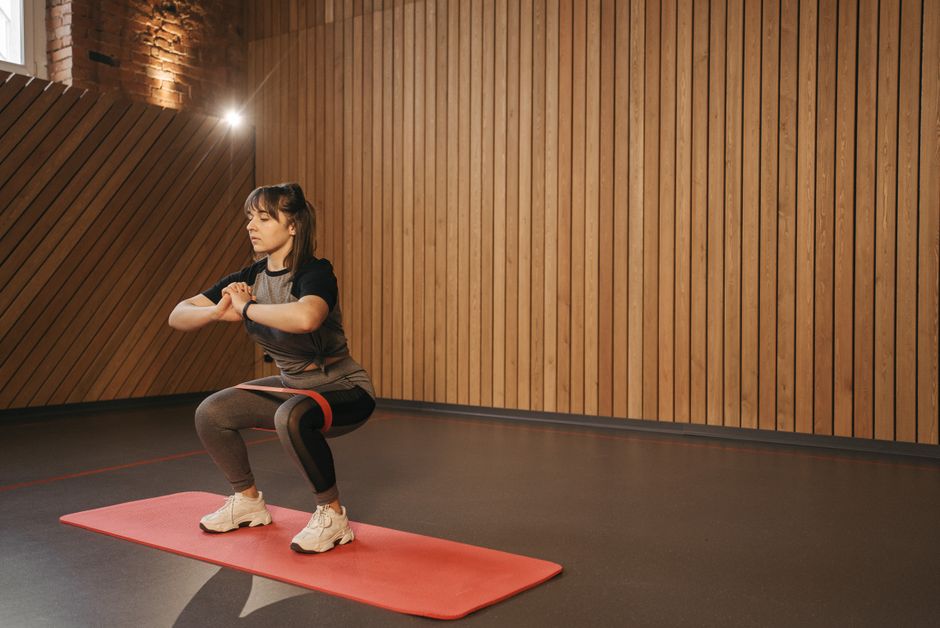
- Standard: Bodyweight squat with feet shoulder-width apart, toes slightly turned out, and a tall chest.
- Progressions: Pause squat (hold the bottom position for 2 seconds), split squat, or Bulgarian split squat with rear foot elevated.
Core (Stability and Anti-Rotation)
Core training is about stability, not just abdominal appearance. A strong core protects your spine during every other movement pattern.
- Beginner options: Dead bug, modified plank on knees, or a basic hollow body hold.
- Standard: Full plank, bird-dog, or side plank.
- Progressions: Plank shoulder taps, plank with hip dips, or a longer isometric hold.
Your 4-Week Beginner Home Workout Plan
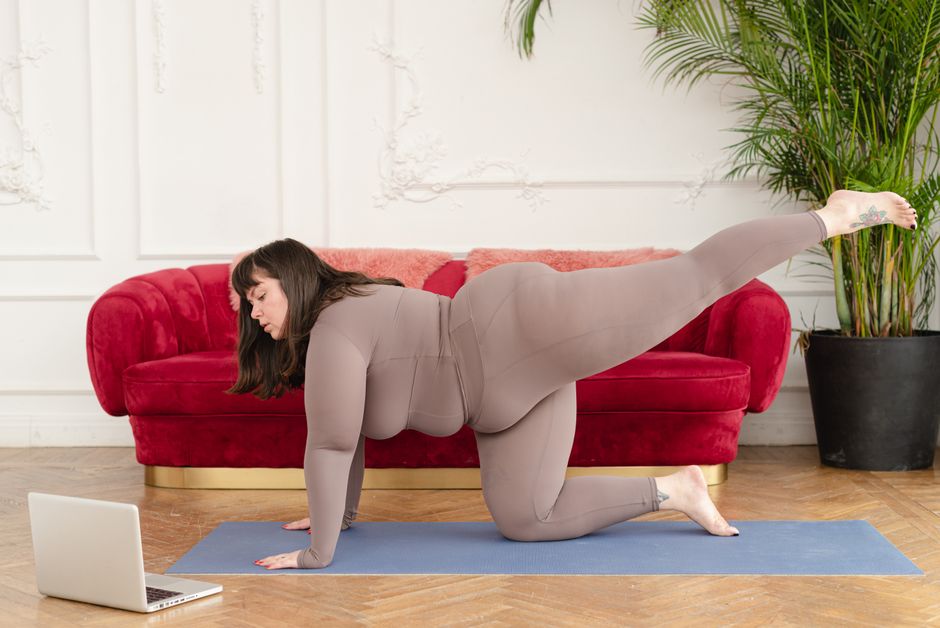
This plan uses the five movement patterns above, requires no equipment, and fits into three sessions per week with rest days in between.
How to Use This Plan
- Perform each exercise for the prescribed sets and repetitions.
- Rest 60 to 90 seconds between sets.
- Choose the modification level that allows you to complete every rep with good form. If the standard version causes pain or significant form breakdown, use the beginner modification.
- Aim for sessions on non-consecutive days such as Monday, Wednesday, and Friday.
Week 1 and 2: Foundation Phase
Full-Body Circuit (Perform 2 sets of each):
- Incline or wall push-up: 8 to 10 reps
- Glute bridge: 12 reps
- Assisted bodyweight squat: 10 reps
- Table row or towel row: 8 reps
- Modified plank (on knees): hold 20 seconds
- Dead bug: 5 reps per side
Rest 1 to 2 minutes between exercises during the first two weeks. Focus entirely on movement quality.
Week 3 and 4: Build Phase
Full-Body Circuit (Perform 3 sets of each):
- Standard push-up or tempo incline push-up: 8 to 12 reps
- Single-leg glute bridge: 8 reps per side
- Bodyweight squat with a 2-second pause: 10 to 12 reps
- Table row with feet elevated: 8 reps
- Full plank: hold 25 to 30 seconds
- Bird-dog: 6 reps per side
By week three, your rest periods can shorten slightly to 45 to 60 seconds if your recovery allows.
After Week 4: What to Do Next
Once you can complete all Week 3 and 4 exercises with clean form, you’re ready to progress. Options include increasing reps, adding more sets, slowing the tempo further, or introducing simple resistance like a loaded backpack, resistance bands, or household objects. You could also explore a more structured split routine that trains upper and lower body on separate days.
Eating to Support Your Training
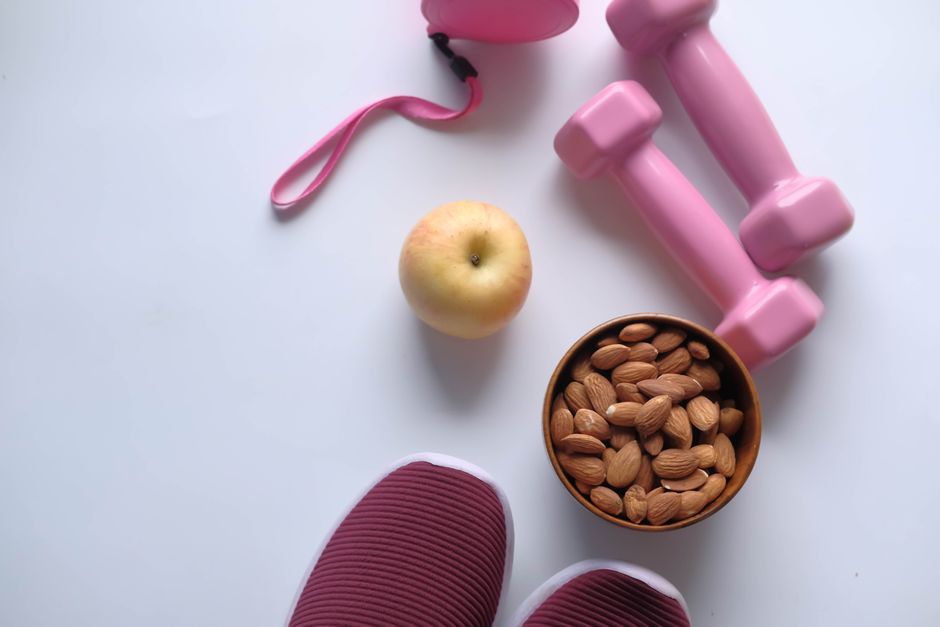
Strength training places a demand on your muscles that nutrition helps meet. You don’t need a rigid diet plan to support your progress, but a few principles make a meaningful difference.
Protein intake: Muscle repair and growth rely on adequate dietary protein. Research suggests most active adults benefit from approximately 1.2 to 1.6 grams of protein per kilogram of body weight per day, though individual needs vary. Lean sources like eggs, chicken, Greek yogurt, legumes, tofu, and cottage cheese are practical starting points.
For practical high-protein morning ideas that set your body up for a strong training day, the High-Protein Breakfast Ideas for Steady Energy and Satiety guide is a helpful companion resource.
Carbohydrates: Carbs fuel your workouts and replenish muscle glycogen after training. Whole grains, fruits, legumes, and root vegetables are all excellent options. A moderate serving around your training window supports energy and recovery.
Gut health: Nutrient absorption depends partly on a healthy digestive system. If you’re increasing protein and fiber intake significantly, your gut health matters more than you might expect. The Digestive Health and Whole-Person Wellness: What You Should Know About Gut Function article covers this connection in an accessible way.
Hydration: Muscles are roughly 75 percent water. Even mild dehydration can impair performance and recovery. Aim to drink water consistently throughout the day, not just during your workout.
Common Mistakes Beginners Make (and How to Avoid Them)
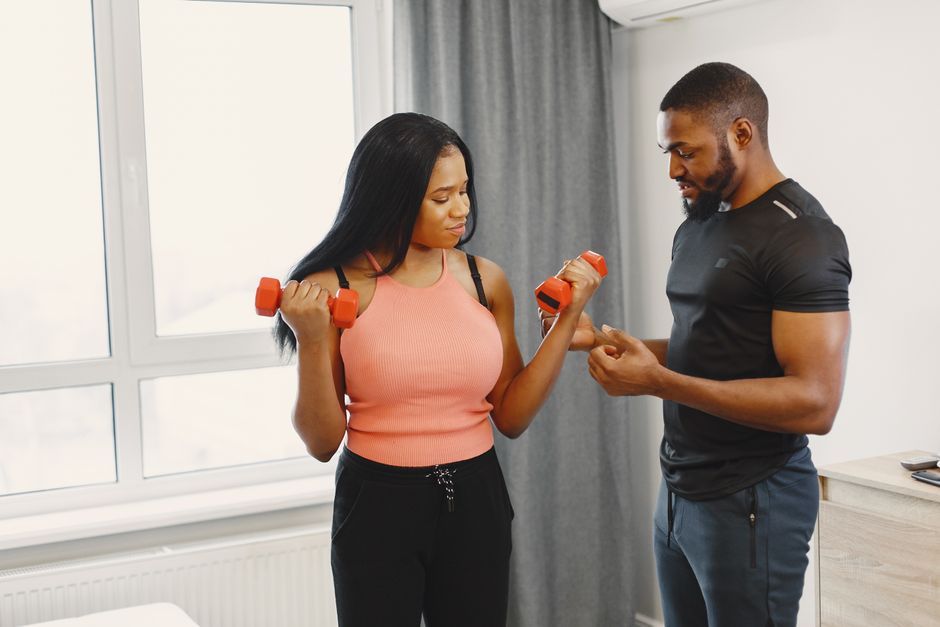
Understanding where people go wrong early on can save you weeks of frustration or unnecessary soreness.
Starting Too Hard, Too Fast
The most common beginner mistake is choosing a routine that is far too intense for the first week. Your connective tissue, including tendons and ligaments, adapts more slowly than your muscles. An aggressive start often leads to joint discomfort or early burnout. The plan above is deliberately conservative for the first two weeks for exactly this reason.
Skipping the Pull Pattern
Most people default to push exercises because they’re familiar. Neglecting the pull pattern creates muscle imbalances, rounded shoulders, and potential shoulder discomfort over time. Table rows might feel awkward at first, but they’re worth prioritizing.
Confusing Soreness with Damage
Delayed onset muscle soreness (DOMS) is a normal response to new exercise and typically peaks 24 to 48 hours after training. It is not a sign that you injured yourself. However, sharp pain during an exercise, joint pain, or pain that persists beyond 72 hours deserves attention and possibly a consultation with a healthcare professional.
Expecting Rapid Visual Changes
Building lean muscle is a slow, rewarding process. Early gains are largely neurological as your nervous system learns new movement patterns. Visible changes in muscle definition typically require consistent effort over several months. Tracking your reps, rest times, and energy levels week to week gives you meaningful feedback when visual changes are still subtle.
Skipping Rest Days
Muscle growth happens during recovery, not during the workout itself. Training the same muscle groups every day without rest is counterproductive and increases injury risk. Two to three sessions per week with rest days in between is the sweet spot for most beginners.
Safety Notes
Bodyweight training is generally safe for most healthy adults, but a few safety principles protect your long-term progress:
- Learn form before adding difficulty. A properly performed push-up at low reps beats a sloppy one at high reps every time.
- Warm up briefly. Five minutes of gentle movement such as arm circles, leg swings, and a slow body-weight squat prepares your joints and raises your heart rate before more demanding exercises.
- Listen to your body. Discomfort from muscle fatigue is expected. Pain in a joint or a sharp, sudden sensation is a signal to stop and assess.
- If you have osteoporosis, cardiovascular disease, a recent surgery, or any condition affecting joints or mobility, consult a qualified healthcare professional or a certified personal trainer before beginning.

Frequently Asked Questions
Can I really build muscle without any equipment?
Yes. Bodyweight training provides sufficient mechanical tension to stimulate muscle growth, particularly for beginners who are starting from a lower fitness baseline. Research supports bodyweight resistance exercise as an effective method for improving strength and body composition. As you advance, adding modest resistance such as a weighted backpack or resistance bands can extend your progress further.
How long before I see results from home strength training?
Most beginners notice improved energy, coordination, and strength within two to four weeks, though these early changes are mostly neurological. Visible changes in muscle definition and body composition typically become more noticeable after six to twelve weeks of consistent training combined with adequate protein intake.
Do I need to be sore after every workout to know it’s working?
No. Soreness is not a reliable indicator of an effective workout. As your body adapts, you will experience less DOMS from the same workouts. Progress is better tracked through improvements in reps, tempo control, and how difficult the exercises feel over time.
How do I know when to progress to harder exercises?
A good rule of thumb is to progress when you can complete all sets and reps of an exercise with clean form and feel like you have at least two or three more quality reps in reserve. If the exercise feels very easy for two consecutive sessions, it’s time to advance.
What should I eat after a home workout?
Aim for a meal or snack containing protein and carbohydrates within one to two hours after training. Examples include Greek yogurt with fruit, eggs on whole-grain toast, a high-protein smoothie, or cottage cheese with berries. This combination supports muscle repair and glycogen replenishment.
This article is for general educational and informational purposes only and is not a substitute for medical advice, diagnosis, or treatment. Health needs vary by individual. Consult a qualified healthcare professional before making significant changes to your diet, exercise routine, supplements, medication, or treatment plan, especially if you have a medical condition, are pregnant or breastfeeding, take medication, or have concerns about your symptoms.
Your Next Step
You don’t need to overhaul your life to start getting stronger. You just need one small, consistent action repeated over time.
Choose one exercise from the Foundation Phase list above and practice it today. Just one set, just a few minutes. Notice how your body feels. Build from there.
When you’re ready to expand your wellness routine beyond strength training, browse the Clean Body Mentor library for practical guides on movement, nutrition, and sustainable healthy habits. And if you’d like a weekly dose of encouragement and evidence-informed wellness ideas delivered to your inbox, consider joining the Clean Body Mentor newsletter. Progress over perfection, every single week.