


If reaching overhead feels stiff, or your upper back aches by mid-afternoon, your desk setup may be quietly reshaping your shoulders. Hours of typing with your arms forward shortens the muscles across your chest and the front of your shoulders. Over weeks, that shortening pulls your shoulder blades apart, rounds your upper back, and limits how far your arms can move in any direction.
The good news: shoulder mobility for desk workers responds well to consistent, progressive stretching. You do not need a gym or equipment. What you do need is an understanding of why the stiffness builds and a sensible progression from easy to more demanding holds.
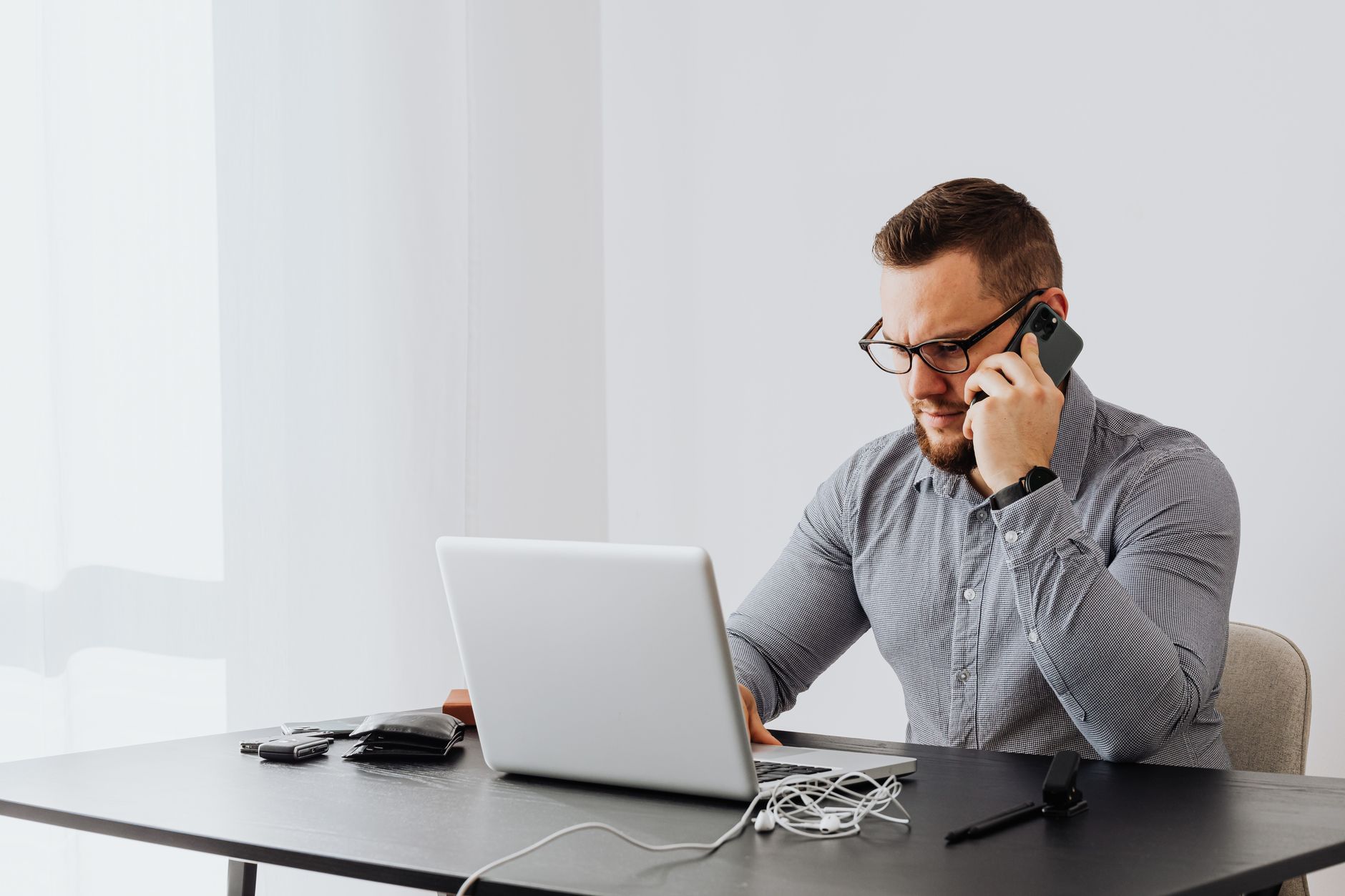
Why Screen Time Shortens Your Shoulders
When you sit at a screen, your arms reach forward toward a keyboard or mouse. That position keeps two muscle groups in a shortened state for hours: the pectoralis minor (a small muscle under your chest that tips the shoulder blade forward) and the anterior deltoid (the front cap of your shoulder). Research published in the Journal of Physical Therapy Science (2015) found that people with forward-head posture showed significantly reduced shoulder external rotation compared with people who maintained neutral alignment.
Shortened anterior muscles do more than limit reach. When your rib cage collapses forward, your diaphragm has less room to expand. That means shallower breathing throughout the day. Shallow breathing also raises baseline stress levels and can slow digestion, something covered in depth in the companion guide on Digestive Bloating From Desk Posture: Why Slouching Slows Your Gut and Four Stretches That Fix It in Minutes.
Before you start the stretches below, one framing note: these moves work best when practiced gradually. Progress from wall-assisted holds (less intensity) to floor-based holds (more tissue length) over several weeks. Pushing a stiff shoulder too hard too soon tends to create guarding, not relief.

Stretch 1: Wall Corner Chest Opener (Beginner)
Why it works: The corner of a wall lets you control exactly how much stretch you feel, making it the safest starting point for anyone who has never worked on shoulder mobility.
How to do it:
- Stand facing the corner of a wall, about one arm’s length away.
- Raise both arms to shoulder height and place your forearms flat against each wall, elbows bent at 90 degrees.
- Slowly step one foot into the corner and lean your chest gently forward until you feel a mild stretch across the front of both shoulders.
- Hold 20 to 30 seconds. Breathe slowly. Step back and repeat two to three times.
Progression cue: As weeks pass, try raising your forearms slightly higher on the wall (above shoulder height) to target more of the pec minor and anterior capsule.
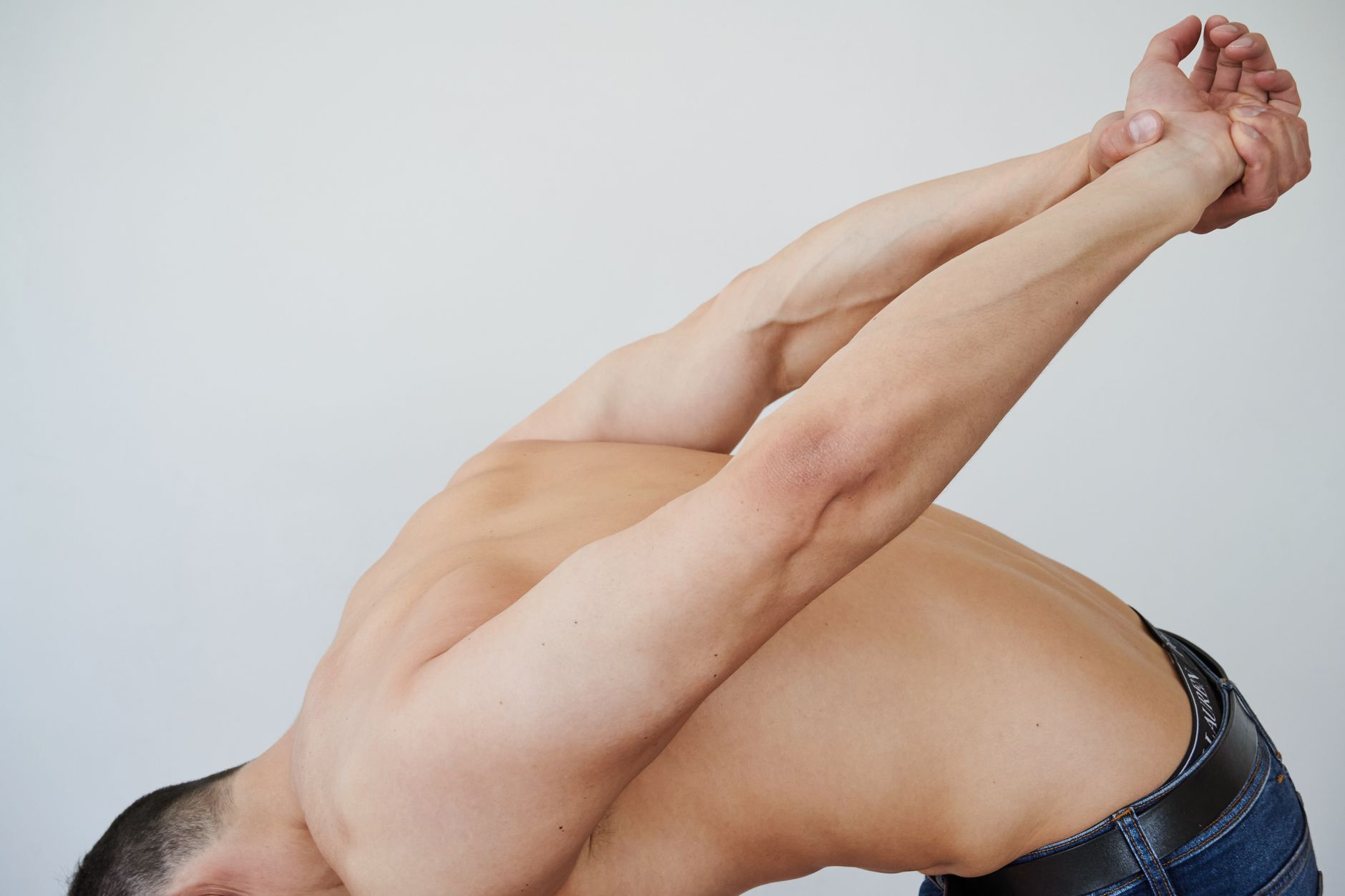
Stretch 2: Doorway Single-Arm Rotation Stretch (Beginner to Intermediate)
Why it works: Working one arm at a time lets you notice side-to-side differences in range, which are common after years of one-dominant typing.
How to do it:
- Stand in a doorway. Place your right hand on the frame at shoulder height, palm facing forward.
- Keeping your arm straight but not locked, gently rotate your body to the left until you feel a stretch from your chest toward your armpit.
- Hold 20 to 30 seconds. Breathe out slowly on each exhale to deepen the stretch slightly.
- Switch sides. Complete two rounds per side.
Modification: If straight-arm intensity feels sharp, bend your elbow to 90 degrees and place your forearm on the frame instead.
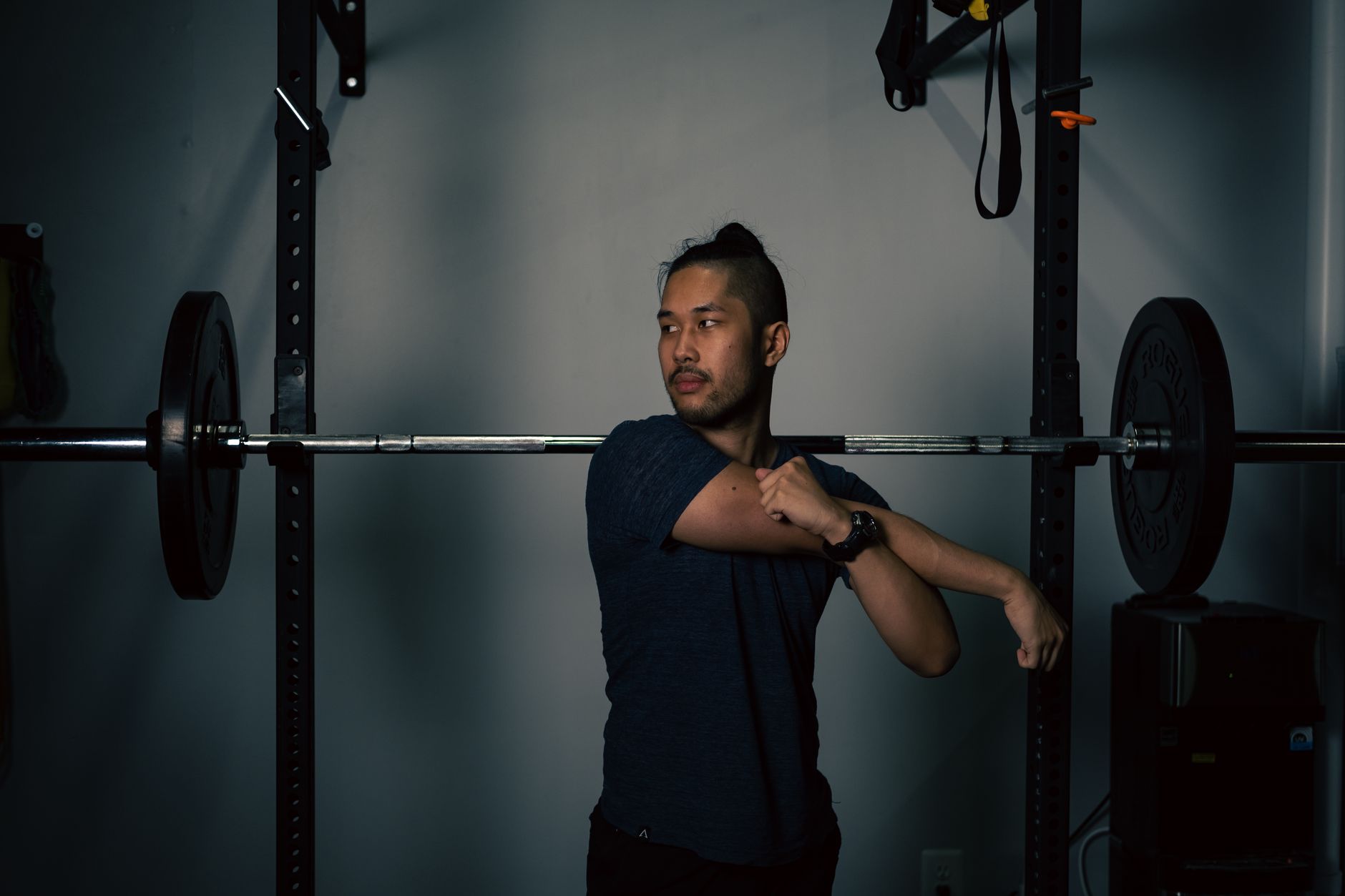
Stretch 3: Clasped-Hand Shoulder Extension (Intermediate)
Why it works: This move combines shoulder extension (moving arms behind you) with external rotation, the two ranges most restricted by desk posture. No wall needed.
How to do it:
- Stand tall. Clasp both hands behind your lower back, palms facing each other.
- Squeeze your shoulder blades together gently, then lift your clasped hands away from your body as far as comfortable.
- At the same time, lift your chest slightly and breathe in.
- Hold 20 to 30 seconds, then release. Repeat three times.
Progression cue: Over two to three weeks, aim to lift your hands a little higher each session. If hands-clasped feels impossible at first, hold a folded towel or resistance band between both hands to bridge the gap.
For a broader set of moves targeting rounded shoulders, see Stretching for Desk Posture: Five Moves That Reverse Rounded Shoulders in 10 Minutes.
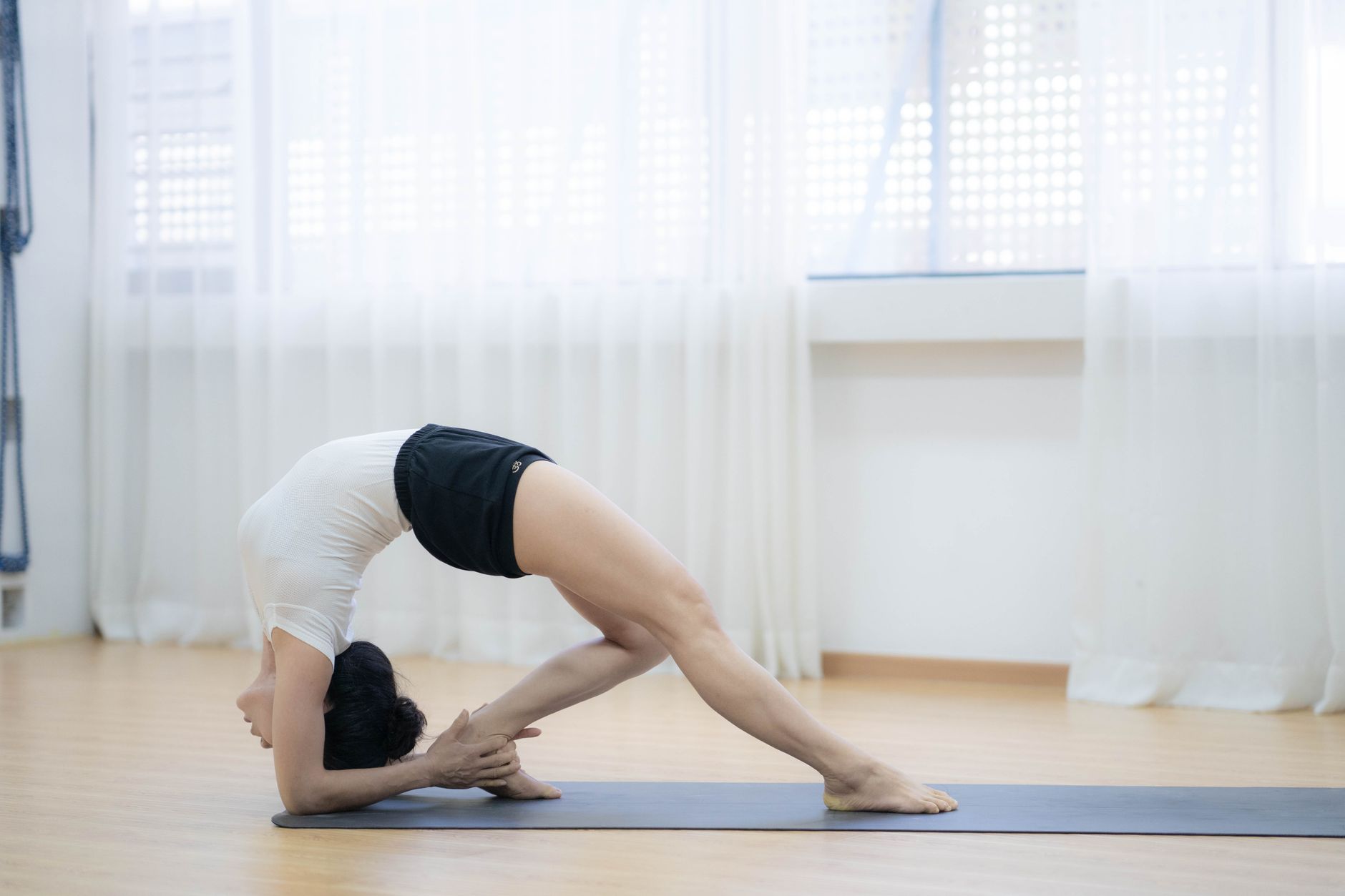
Stretch 4: Floor Supported Thoracic Bridge Hold (Intermediate to Advanced)
Why it works: Lying on the floor removes gravity-related compensation patterns, letting your chest and anterior shoulder fully relax into the stretch over a longer hold.
How to do it:
- Lie on your back on a firm surface. Place a rolled towel or yoga block between your shoulder blades, just below the top of your shoulder blades.
- Extend both arms out to your sides at shoulder height, palms facing the ceiling.
- Let gravity gently pull your shoulders toward the floor. Breathe slowly and do not force the stretch.
- Hold 60 to 90 seconds. Remove the prop and rest for 30 seconds before repeating once more.
Important note: If you feel any pinching in the shoulder joint (not a stretch sensation but a sharp catch), remove the prop and reduce the range. Discomfort deep in the joint is a signal to consult a qualified healthcare professional before continuing.
This floor-based hold pairs well with the breathing work described in Building Emotional Resilience Through Breathwork: A Four-Week Progressive Practice for Stress Relief, since slow diaphragmatic breathing during the hold deepens both the stretch and the nervous-system benefit.

How to Build This Into Your Day
You do not need a dedicated session for all four stretches. A realistic structure:
- Morning (5 minutes): Stretches 1 and 2 as a warm-up after getting up.
- Afternoon break (3 minutes): Stretch 3 at your desk or in a hallway.
- Evening (5 minutes): Stretch 4 on the floor before winding down.
Consistency matters more than duration. Research suggests that short, frequent stretching sessions accumulate meaningful change in tissue length over four to eight weeks. Missing a day is not a setback; resuming is what counts.
If you are also dealing with numbness or tingling during desk work, the companion article Why Your Hands Go Numb During Desk Work and Progressive Drills to Restore Feeling explores the nerve tension component that sometimes accompanies rounded-shoulder posture.
A Note on Breathing and Posture Beyond the Shoulder
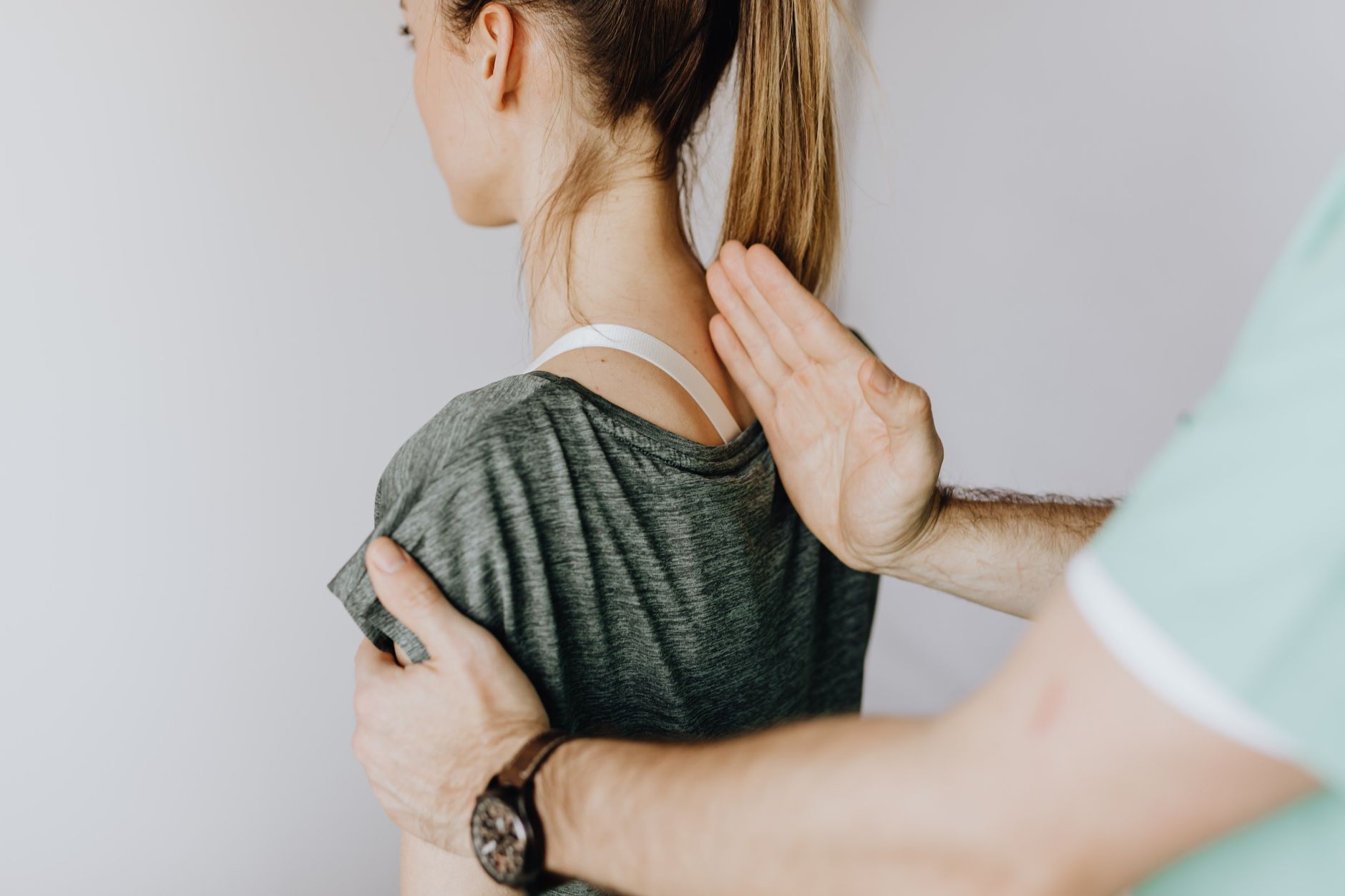
Restoring shoulder range is not just about reaching overhead more easily. When your shoulders and thoracic spine open up, your ribcage lifts, your diaphragm has more room, and your breathing deepens naturally. That shift can influence how alert you feel in the afternoon, how well you manage desk-related stress, and even how your gut moves food along after meals, since diaphragmatic movement massages the digestive organs. It is a reminder that posture is a whole-person concern, not just an aesthetic one.

Moving Forward
Choose one stretch from this tutorial that feels manageable today and commit to practicing it for the next seven days before adding a second. Small, repeated practice builds more lasting mobility than sporadic intense sessions.
If you want a fuller picture of desk-related movement habits, the Digital Wellness at Your Desk: How Screen Time Affects Your Posture, Digestion, and Evening Sleep guide brings together posture, screen habits, and sleep in one place.
For weekly practical wellness guidance delivered straight to your inbox, consider joining the Clean Body Mentor newsletter.
This article is for general educational and informational purposes only and is not a substitute for medical advice, diagnosis, or treatment. Health needs vary by individual. Consult a qualified healthcare professional before making significant changes to your diet, exercise routine, supplements, medication, or treatment plan, especially if you have a medical condition, are pregnant or breastfeeding, take medication, or have concerns about your symptoms.

Sources
- Kim, E.K., et al. (2015). The effects of forward head posture on shoulder range of motion. Journal of Physical Therapy Science, 27(11), 3509-3512. (PubMed)
- American College of Sports Medicine. Position Stand on flexibility training and musculoskeletal health. ACSM Guidelines.
- National Institutes of Health (NIH), National Library of Medicine. MedlinePlus: Stretching. Retrieved from medlineplus.gov.


