

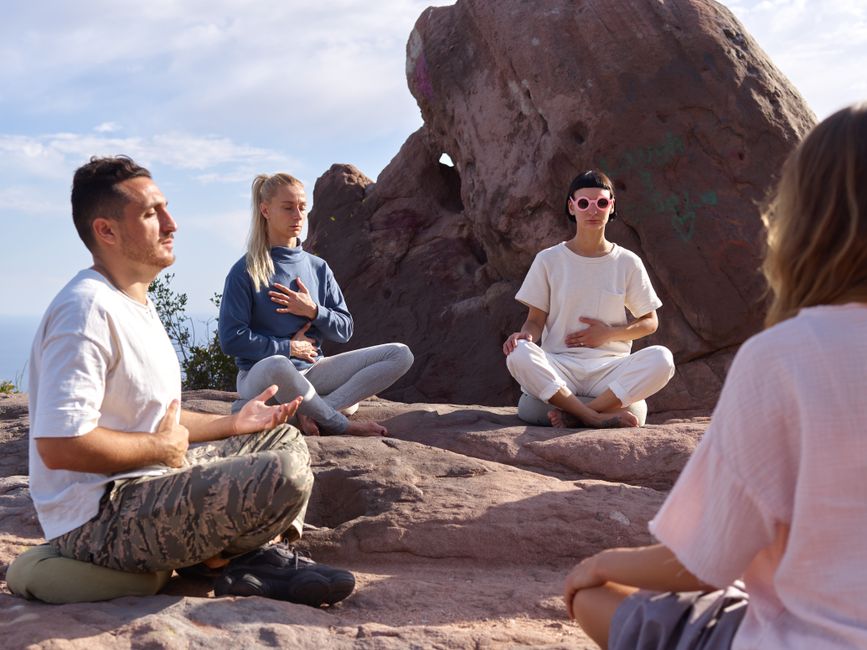
Most stress-relief advice points you toward the same handful of tools: meditate, journal, take a walk. All of those have real value. But when your shoulders are at your ears and your mind is spinning at 2pm, you need something immediate, structured, and portable.
Breathwork for stress relief fits that gap. Research published in the journal Cell Reports Medicine (Stanford, 2023) found that cyclic sighing, a form of controlled extended exhale, reduced self-reported anxiety and improved mood more consistently than mindfulness meditation over a four-week period. The mechanism is physiological: a long, slow exhale activates the parasympathetic branch of your nervous system, slowing heart rate and easing the fight-or-flight response. You do not need an app, a quiet room, or any prior experience.
This four-week tutorial teaches you a progressive breathwork practice built on that science. Each week adds one layer of skill. Total time per session: 3-5 minutes.

Why Breathing Actually Changes How You Feel
Your breath is the one autonomic function you can control voluntarily, which makes it a direct handle on your nervous system. When you breathe in, your heart rate speeds up slightly. When you breathe out, it slows. Extending the exhale relative to the inhale shifts the balance toward calm.
This is not a metaphor. The vagus nerve, the main highway of the parasympathetic nervous system, responds to the mechanical stretch of a slow, deep exhale by signaling the brain to downregulate stress hormones. Research suggests this pathway is why breathwork can reduce cortisol markers and lower subjective stress ratings, often within a single session.
If you have ever noticed that stress also affects your digestion or gut comfort, that connection is real too. Digestion and Emotional Stress: Why Your Gut Freezes When You Rush and What Breathwork Actually Fixes explains how the same vagal pathway links your breathing, stress response, and digestive function.
What You Will Need
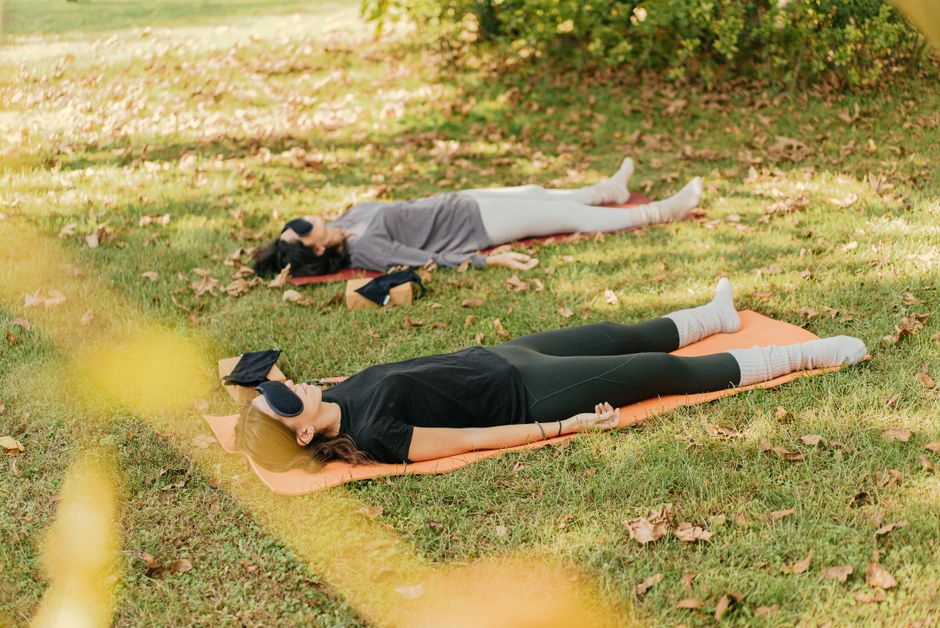
- A chair, couch, floor, or any seated position where you can sit upright
- A timer on your phone (set it and put the phone face-down)
- Three to five uninterrupted minutes
You do not need a special breathing app. You do not need silence. You can do this at your desk, in a parked car, or in a bathroom between meetings.
Week One: Find Your Natural Exhale
Goal: Become aware of your default breathing pattern and begin lengthening the exhale.
The practice (3 minutes daily):
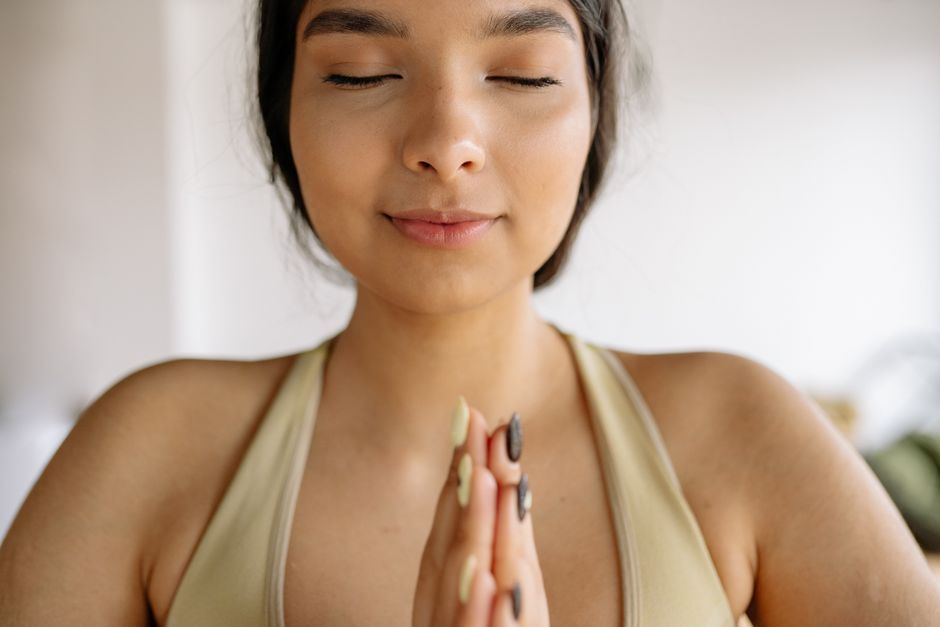
- Sit upright and place one hand on your belly.
- Breathe in naturally through your nose for a count of 4.
- Breathe out slowly through pursed lips for a count of 6.
- Repeat for 3 minutes without forcing depth or straining.
The 4:6 ratio is the foundation. Most people discover they have been taking short, shallow exhales without realizing it. Shallow breathing keeps your nervous system slightly activated all day, contributing to that low-grade tension that feels normal but is not inevitable.
Do not worry about doing it perfectly. Consistency this week matters more than precision.
Week Two: Add Belly Engagement
Goal: Shift from chest breathing to diaphragmatic breathing for a fuller calming signal.
The practice (3-4 minutes daily):
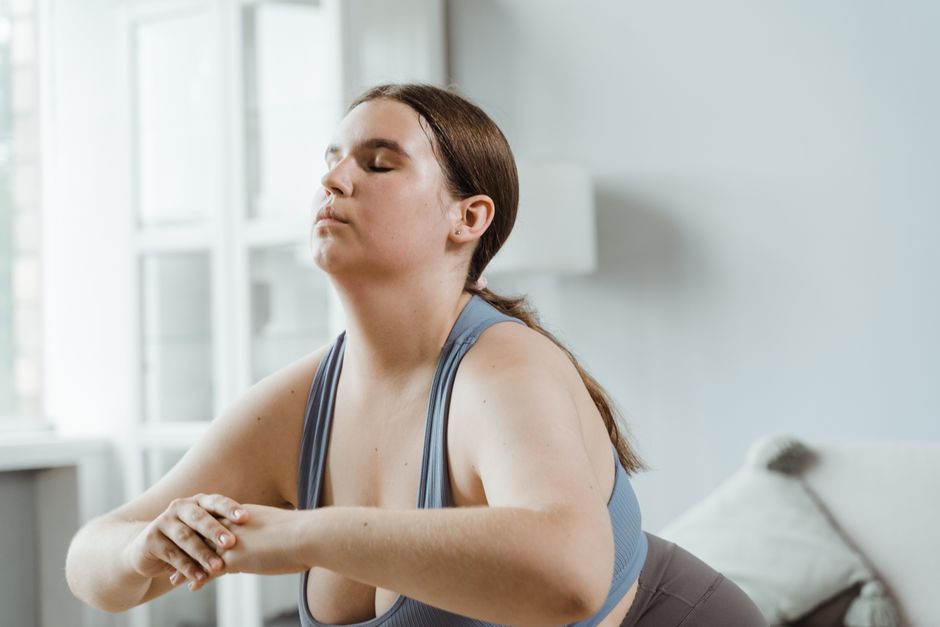
- Sit upright with one hand on your belly and one on your chest.
- Inhale through your nose for a count of 4. Your belly hand should rise first; your chest hand should barely move.
- Exhale through your nose or pursed lips for a count of 6-7.
- At the end of the exhale, gently draw your navel slightly inward to fully empty the lungs.
- Repeat for 3-4 minutes.
Diaphragmatic breathing increases the mechanical stretch on the vagus nerve with each exhale. It also reduces the work your accessory neck and shoulder muscles do when you breathe, which is why chronic shallow breathers often carry tension in their upper body.
If you sit at a desk most of the day, rounded posture can physically restrict full diaphragmatic movement. Digestive Bloating From Shallow Breathing and Rounded Posture: Why Breathwork Beats Food Swaps for Afternoon Relief covers how posture and breath interact in ways most people overlook.
Week Three: Introduce Box Breathing for Acute Stress
Goal: Add a pattern you can deploy during a stressful moment, not just as a daily reset.
The practice (4-5 minutes daily, plus on-demand use):
Box breathing uses four equal counts to create a rhythm your nervous system can lock onto quickly:
- Inhale through your nose: count of 4.
- Hold at the top: count of 4.
- Exhale slowly: count of 4.
- Hold at the bottom: count of 4.
Repeat 4-6 cycles. The brief breath holds increase carbon dioxide tolerance gently, which helps reduce the sense of urgency and panic that often accompanies stress. This technique is used in clinical and military stress-inoculation training, though you do not need an extreme context to benefit from it.
Start using it on-demand this week. Before a difficult conversation, when you feel tension rising, or at the start of a midday break. The goal is to make it reflexive.

Week Four: Cyclic Sighing for Emotional Reset
Goal: Use the most physiologically potent breath pattern to rapidly downregulate after stress.
The practice (3-5 minutes daily):
Cyclic sighing was the pattern that outperformed mindfulness meditation in the Stanford study mentioned above. It is simple:
- Take a normal inhale through your nose.
- At the top of that inhale, take one quick sniff to fully inflate your lungs.
- Exhale slowly and completely through your mouth, as long as comfortable.
- Repeat continuously for 3-5 minutes.
The double inhale opens any collapsed alveoli in the lungs and dramatically extends the exhale that follows. That long exhale is the strongest single lever you have for activating parasympathetic calm. Many people feel a noticeable physical release within the first 5-6 cycles.
By the end of week four, you will have four tools: the foundational exhale extension, diaphragmatic breathing, box breathing for acute moments, and cyclic sighing for emotional reset. Use whichever fits the situation.
Making Consistency Easier Than Motivation
Duration matters less than regularity. A three-minute daily practice builds nervous system adaptability over time in ways that occasional longer sessions do not. The research on breathwork for stress relief consistently points to daily practice producing more durable emotional resilience than sporadic use.
Attach your breathwork to an existing anchor: right after you pour your morning coffee, before you open your laptop, or when you arrive at your parked car before walking into the building. Habit stacking makes the routine self-sustaining.
If you are also building other movement habits and want something that fits the same philosophy of gradual, sustainable progress, the four-week structure in Home Walking Workouts for Busy Parents: A Four-Week Plan That Fits Nap Time, Lunch Breaks, and Weekend Routines uses a similar weekly layering approach.

A Realistic Starting Point
Choose one week from this plan and start there. If you already breathe from your belly and have tried basic techniques before, start at week two or three. If breathwork is completely new, begin with week one’s simple 4:6 ratio for seven days before progressing.
The goal is not mastery in month one. It is building a reliable, portable tool you actually use when stress arrives. That consistency, more than any single technique, is what builds emotional resilience over time.
For more practical weekly wellness guidance, the Clean Body Mentor newsletter delivers evidence-informed strategies like these directly to your inbox.
This article is for general educational and informational purposes only and is not a substitute for medical advice, diagnosis, or treatment. Health needs vary by individual. Consult a qualified healthcare professional before making significant changes to your diet, exercise routine, supplements, medication, or treatment plan, especially if you have a medical condition, are pregnant or breastfeeding, take medication, or have concerns about your symptoms.

Sources
- Balban, M.Y., et al. “Brief structured respiration practices enhance mood and reduce physiological arousal.” Cell Reports Medicine, 2023. (Stanford University)
- Gerritsen, R.J.S., and Band, G.P.H. “Breath of Life: The Respiratory Vagal Stimulation Model of Contemplative Activity.” Frontiers in Human Neuroscience, 2018.
- Zaccaro, A., et al. “How Breath-Control Can Change Your Life: A Systematic Review on Psycho-Physiological Correlates of Slow Breathing.” Frontiers in Human Neuroscience, 2018.


