Gym anxiety is real. So is the cost of a membership, the commute, and the awkward feeling of not knowing what machine to use. If any of that has kept you from strength training, you are not alone, and you are not behind. The truth is, some of the most effective beginner movements require nothing but your body and enough floor space to lie down.
This tutorial covers five foundational bodyweight exercises for beginners, a clear modification for each one, and a three-day-per-week plan that builds lean muscle and functional strength at home. No weights, no machines, no gym confidence required.
Why Bodyweight Training Actually Works
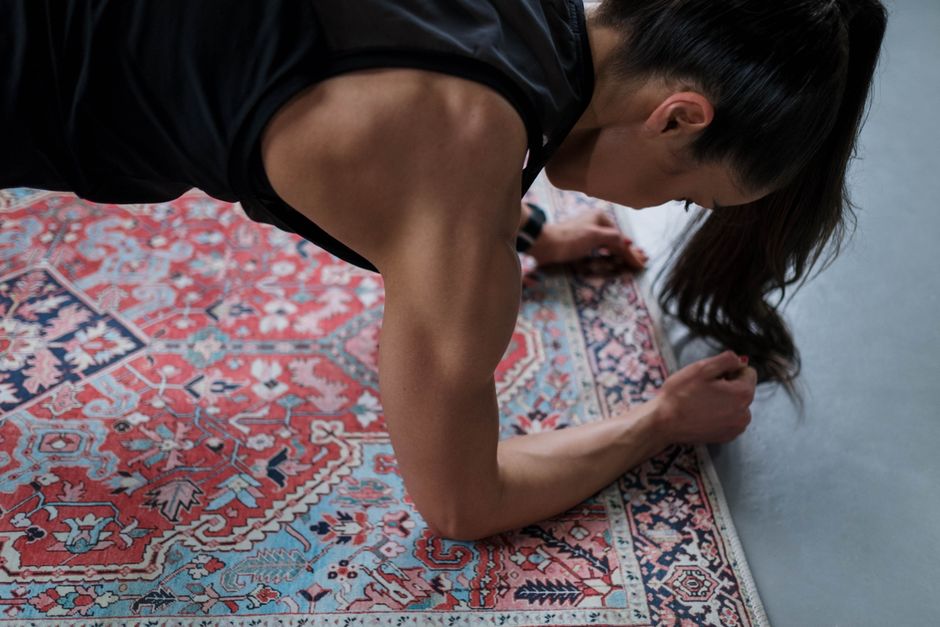
Strength training does not require external load to produce results. Research published in the Journal of Human Kinetics suggests that bodyweight resistance training can meaningfully improve muscular endurance, body composition, and functional movement, especially in untrained individuals. The key is progressive overload, the practice of gradually making an exercise harder over time, whether by slowing the tempo, adding reps, reducing rest, or advancing to a harder variation.
Bodyweight training also builds what exercise scientists call functional strength, the kind that helps you carry groceries, climb stairs, and lift your kids without strain. If you want to eventually add equipment, starting here first builds a reliable foundation. You can always expand with tools like bands later (check out Resistance Band Workouts for Beginners at Home: Build Strength and Confidence Without Weights or Machines), but none of that is necessary to get started today.

Five Foundational Movements to Learn First
1. Squat
The squat trains your quads, glutes, and hamstrings while also working your core for stability. Stand with feet shoulder-width apart, toes turned out slightly. Lower your hips back and down as if sitting into a chair, keeping your chest tall and knees tracking over your toes. Press through your heels to stand.
Beginner modification: Squat to a chair or low surface. Touch lightly and stand back up. This takes fear of falling backward out of the equation and builds confidence in the range of motion.
Progression: Slow the lowering phase to a four-second count, pause at the bottom, then drive back up.
2. Push-Up
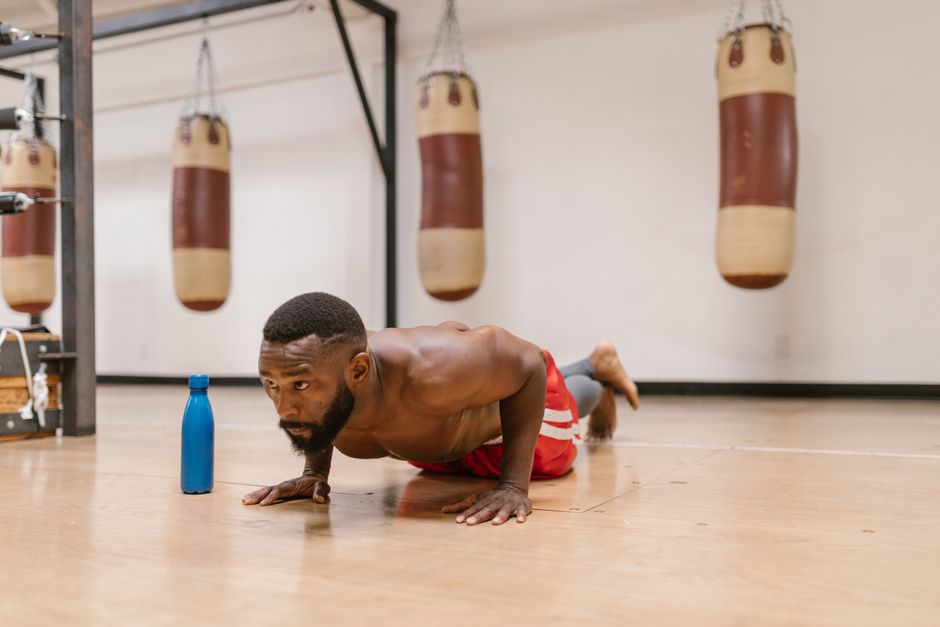
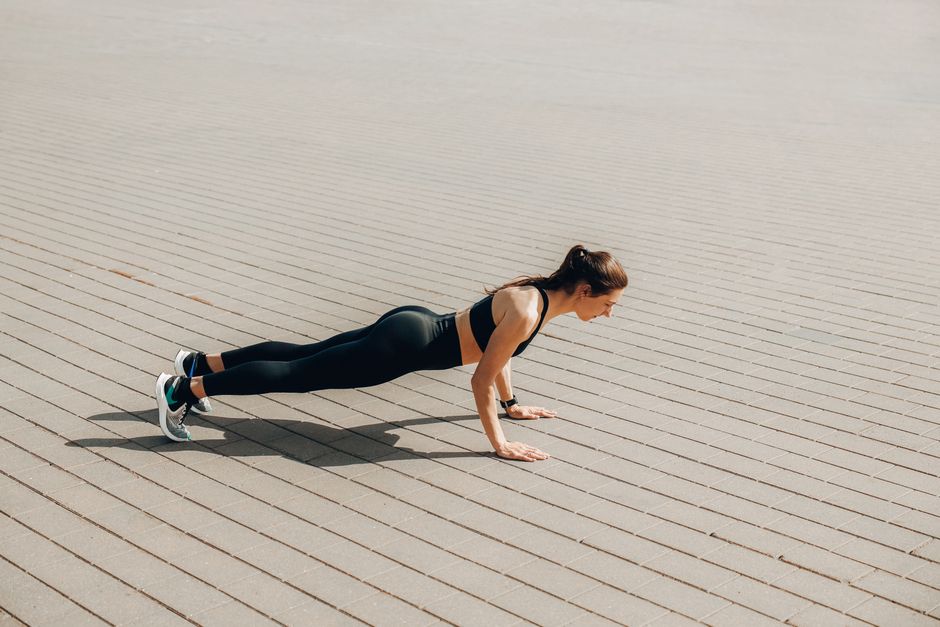
The push-up targets your chest, shoulders, and triceps while engaging your core throughout. Start in a plank position with hands slightly wider than shoulder-width. Lower your chest toward the floor by bending your elbows, then push back up.
Beginner modification: Perform from your knees, or place hands on a countertop or wall to reduce the load. This is not a lesser version of a push-up. It is the right version for where you are right now.
Progression: Move to a lower surface (like a sturdy coffee table), then eventually to the full floor position as strength develops.
3. Glute Bridge
This move strengthens your glutes, hamstrings, and lower back, areas that often weaken from prolonged sitting. Lie on your back with knees bent and feet flat on the floor. Press through your heels and lift your hips until your body forms a straight line from shoulders to knees. Hold briefly, then lower.
Beginner modification: Reduce the range of motion if you feel strain. Even a partial lift activates the target muscles.
Progression: Add a two-second hold at the top, or try a single-leg bridge once double-leg feels easy.
4. Reverse Lunge
Lunges build single-leg strength and balance, which transfers directly to walking, climbing stairs, and everyday movement. Step one foot back and lower your back knee toward the floor, keeping your front shin roughly vertical. Push through your front heel to return to standing.
Beginner modification: Hold a wall or chair for balance. Focus on a controlled descent rather than depth.
Progression: Release the support, increase depth, or add a brief pause at the bottom.
5. Plank Hold
The plank builds core stability that supports every other movement you do. Position yourself on your forearms and toes (or knees), forming a straight line from head to hips. Hold without letting your hips sag or rise.
Beginner modification: Start from your knees, or limit your hold to 10 to 15 seconds and rest. Duration builds over time.
Progression: Add five seconds each week. Aim for 30 to 60 seconds as a medium-term goal.
Your Three-Day Beginner Routine
Do this routine on three non-consecutive days per week, for example Monday, Wednesday, and Friday. Rest days matter as much as training days because muscle repairs and grows during recovery, not during the workout itself.
Warm-up (5 minutes): March in place, do 10 arm circles each direction, and perform 10 slow bodyweight squats with no intention of working hard. Just move.
| Exercise | Sets | Reps or Time |
|---|---|---|
| Squat (or chair squat) | 2-3 | 8-12 reps |
| Push-Up (wall, counter, or floor) | 2-3 | 6-10 reps |
| Glute Bridge | 2-3 | 10-12 reps |
| Reverse Lunge | 2 | 6-8 per leg |
| Plank Hold | 2 | 15-30 seconds |
Rest 60 to 90 seconds between sets. The whole session should take 25 to 35 minutes.
Weeks 1 to 2: Use beginner modifications. Focus on form and feeling each muscle engage.
Weeks 3 to 4: Add one rep or five seconds to each exercise. Move to a harder modification if the current version feels smooth and controlled.
Week 5 and beyond: Continue adding small challenges. This is progressive overload in practice, and it is what keeps results coming without plateauing.
For a broader look at how to expand this kind of routine over months, the guide on Building a Sustainable Strength Training Routine at Home: Progressive Workouts From Bodyweight to Basic Equipment walks through the longer arc of home-based strength building.
What to Eat to Support the Work
You do not need a complicated nutrition plan, but protein matters. Muscles repair using amino acids, and research suggests that distributing protein across meals (rather than eating most of it at dinner) may support muscle synthesis more effectively. A high-protein breakfast is a practical way to start that pattern. Eggs, Greek yogurt, cottage cheese, or a protein-rich smoothie all work well.
For what to eat specifically around your sessions, the Strength Training Recovery Nutrition guide covers post-workout eating without overcomplicating it.
Stay hydrated too. Even mild dehydration can blunt strength output and slow recovery.

Starting Small Is Still Starting
You do not need to be consistent for months before you see any benefit. Research from the American College of Sports Medicine suggests that even two resistance training sessions per week produce meaningful strength and health gains in beginners. The barrier is usually psychological, not logistical.
Pick one exercise from this list and do it today. Just one set, just a few reps, just to make the movement familiar. That is how sustainable habits form: not through perfect commitment on day one, but through small actions that accumulate.
If you want more structure and community support, the Clean Body Mentor newsletter delivers practical weekly wellness guidance, including movement tips, meal ideas, and habit strategies, straight to your inbox.

Sources
- Calatayud J, et al. “Importance of proprioceptive training in producing well-rounded athletes” (Journal of Human Kinetics, 2015). American College of Sports Medicine Position Stand on Resistance Training. ACSM Guidelines for Exercise Testing and Prescription (current edition).
- American College of Sports Medicine. “Resistance Training for Health.” ACSM’s Health and Fitness Journal.
- Morton RW, et al. “A systematic review, meta-analysis and meta-regression of the effect of protein supplementation on resistance training-induced gains in muscle mass and strength.” British Journal of Sports Medicine, 2018.
This article is for general educational and informational purposes only and is not a substitute for medical advice, diagnosis, or treatment. Health needs vary by individual. Consult a qualified healthcare professional before making significant changes to your diet, exercise routine, supplements, medication, or treatment plan, especially if you have a medical condition, are pregnant or breastfeeding, take medication, or have concerns about your symptoms.