


You lace up your shoes with good intentions, head out for a walk, and by the fifteen-minute mark your calves are burning, your ankles feel unstable, and you are limping home wondering why something so simple feels so hard. The problem usually is not your fitness level. It is the hours you spend sitting every day, shortening your calf muscles and letting your ankle stabilizers go quiet.
The good news: you can reverse this with a handful of targeted ankle strength exercises that require no gym, no equipment, and only a few minutes of floor space. This tutorial walks you through five progressive drills in the order that makes them most effective, from basic mobility to functional strength.
Why Sitting Stiffens the Calf-Ankle Chain
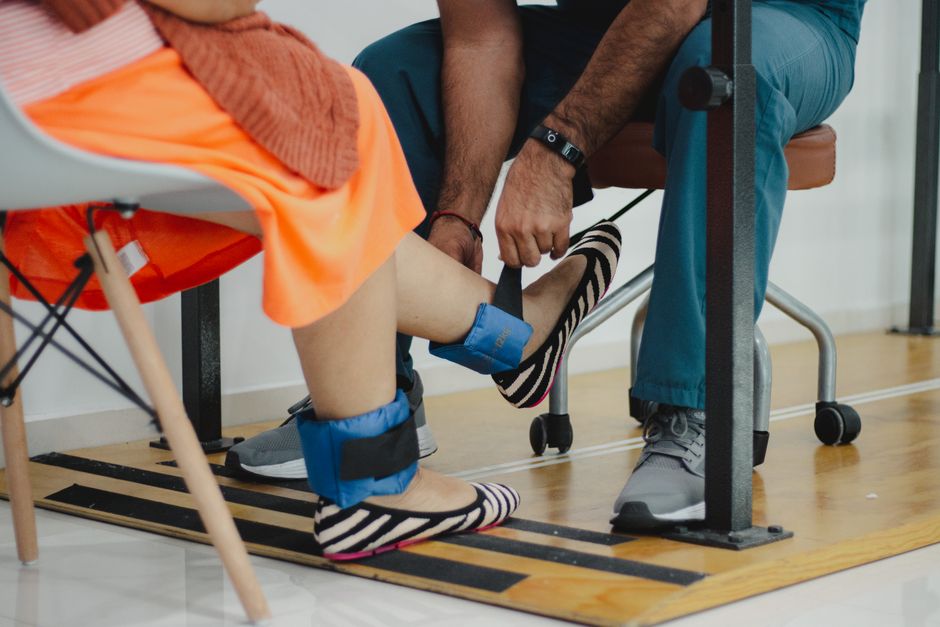
When you sit for long stretches, your gastrocnemius and soleus muscles (the two main calf muscles) remain in a shortened position. Over time, the surrounding connective tissue adapts to that shorter length. The muscles become less pliable, and the ankle loses its full range of motion.
At the same time, the small stabilizing muscles around the ankle joint, including the peroneals and tibialis anterior, receive little activation while you are seated. Research published by the American College of Sports Medicine notes that prolonged sedentary time reduces neuromuscular activation in the lower leg, making those stabilizers slower to fire when you need them on uneven ground.
The result is a joint that is stiff at the top of its range and unstable at the bottom, a combination that makes walking uncomfortable quickly. If you have noticed this pattern, How to Restore Foot Strength and Mobility When Desk Work Has Locked Your Ankles gives you an excellent foundation to read alongside this tutorial.
Before You Begin: A Two-Minute Calf Release
Drilling strength into a chronically tight muscle without first releasing some tension is like trying to stretch a rubber band that is still knotted. Spend two minutes seated, rolling the bottom of each foot over a firm water bottle or lacrosse ball, pressing into tender spots for a few seconds before moving on. This brief myofascial work improves tissue pliability so the exercises below translate into real strength gains faster.
The Five Progressive Ankle Strength Exercises
Drill 1: Ankle Alphabet (Mobility Foundation)
Sit in a chair with one foot lifted slightly off the floor. Using only your ankle and toes, trace the capital letters A through Z in the air. Go slowly and make each letter as large as you comfortably can. Switch feet.
This drill re-educates the full range of ankle movement in all planes, not just the up-and-down motion most people default to. It is the gentlest entry point and also a quick daily check-in: if certain letters feel restricted, you now know exactly where your ankle is stiff.
Frequency: Once daily, both feet.
Drill 2: Heel Raises with Slow Lowering (Calf Activation)
Stand behind a chair and rest your fingertips lightly on the back for balance only. Rise up onto both forefeet, hold for one second at the top, then lower slowly over three to four seconds. That slow descent is the key. Eccentric loading, resisting gravity on the way down, is where calf tissue remodeling happens.
Research in the British Journal of Sports Medicine (Alfredson protocol lineage) has consistently shown that slow eccentric calf work outperforms standard raises for building tendon resilience in the Achilles and lower leg. Start with two sets of ten and progress to three sets of fifteen over two weeks.
Progression: Once both-leg raises feel easy, perform the lowering phase on one foot only.
Drill 3: Towel Toe Scrunch (Foot Arch Strengthening)
Place a small hand towel flat on a hard floor. Sit in a chair and use your toes to scrunch the towel toward you, then spread it flat again. Repeat ten times per foot.
The intrinsic foot muscles support the arch and transfer force efficiently through the ankle with each walking step. Strengthening them reduces the fatigue that collapses your arch mid-walk, which is often the hidden cause of calf cramps in beginners.
Drill 4: Single-Leg Balance with Micro-Bends (Stability Training)
Stand on one foot near a wall for safety. Hold for twenty seconds while making small, intentional micro-bend adjustments at the knee and ankle rather than locking the joint rigid. Your ankle should be working constantly to keep you upright.
This is where proprioception, your body’s internal position sense, gets trained. A study in the Journal of Athletic Training found that single-leg balance training significantly improved dynamic ankle stability in adults with previous ankle sprains. Even if you have never sprained an ankle, this drill sharpens the reflexes that prevent it.
Progression: Progress from eyes open to eyes closed, or try this on a folded yoga mat for added instability.
Drill 5: Banded or Bodyweight Ankle Circles Under Load (Functional Integration)
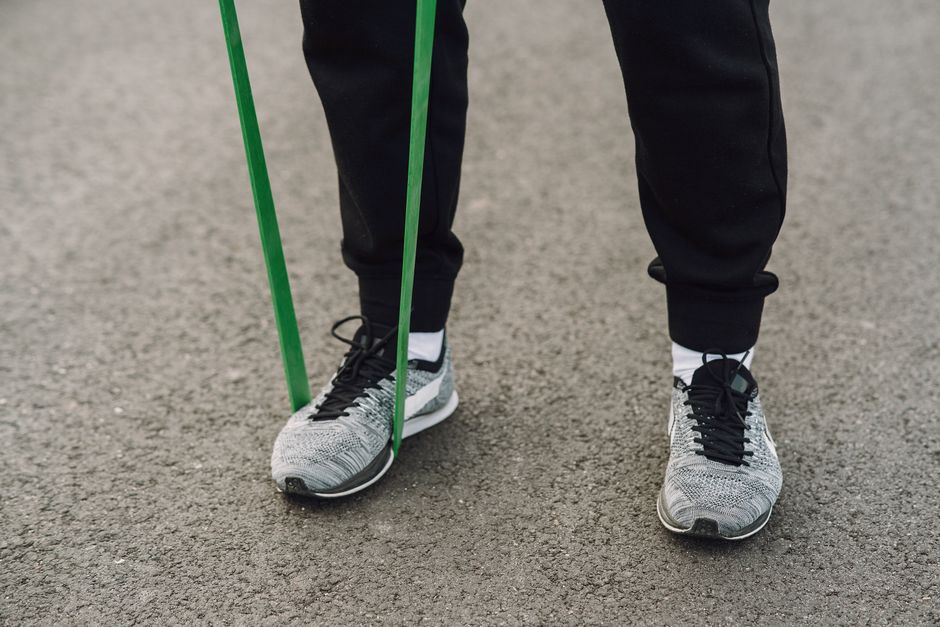
Stand with feet hip-width apart and lower into a quarter squat, about twenty degrees of knee bend. Hold this position while slowly rotating each ankle through its range of motion, ten circles inward and ten outward, without shifting your weight to compensate. This drill trains ankle mobility under the kind of load your joints experience mid-stride.
If this feels wobbly, it is a sign your stabilizers are not yet firing efficiently. Stay consistent and you will notice the circles becoming smoother within one to two weeks.

How to Build This Into Your Week
You do not need a separate workout session. These five drills take roughly eight to ten minutes end to end and slot naturally into a desk break or the minutes before your walk. Try this simple weekly rhythm:
- Days 1, 3, 5: All five drills as a pre-walk warm-up.
- Days 2, 4: Drill 1 and Drill 4 only as a brief mobility check-in.
- Day 6 or 7: Rest or light walking only.
If you want a structured walking plan to pair this with, Walking for Stress Relief and Mood: A Three-Week Progressive Plan for Beginners gives you a realistic progression that accounts for beginner fatigue. And if you find that tight hips or lower back tension also affects your stride, Mobility Moves for Tight Hips and Lower Back: A 5-Exercise Routine That Fits Your Lunch Break pairs naturally with this ankle work.

What Progress Actually Looks Like
In the first week, expect mild soreness in the shins and along the outer ankle, areas that have been underworked for months. That is normal. By week two, most people notice their heel raises feel steadier and the balance drills require less wall support. By week three to four, walking should feel noticeably more fluid, with less calf fatigue at the fifteen-minute mark that previously made you want to turn back.
If you are curious why a walking habit fades for reasons beyond ankle weakness, Five Reasons Your Walking Habit Fades by Week Three and How to Make Movement Stick for Real covers the behavioral side of the equation.
Your Next Move
Pick one drill from this list, ideally the Ankle Alphabet or the Heel Raise, and practice it consistently for the next seven days before adding the others. Small, repeated effort builds the neuromuscular patterns that make walking sustainable. You do not need to do all five perfectly on day one. You just need to start.
If you find this kind of progressive, no-equipment approach helpful, the Clean Body Mentor newsletter delivers practical weekly guidance on movement, meals, and sustainable healthy habits straight to your inbox.
This article is for general educational and informational purposes only and is not a substitute for medical advice, diagnosis, or treatment. Health needs vary by individual. Consult a qualified healthcare professional before making significant changes to your diet, exercise routine, supplements, medication, or treatment plan, especially if you have a medical condition, are pregnant or breastfeeding, take medication, or have concerns about your symptoms.

Sources
- American College of Sports Medicine: position statements on sedentary behavior and neuromuscular health (ACSM.org).
- Alfredson H, et al. “Heavy-load eccentric calf muscle training for the treatment of chronic Achilles tendinosis.” American Journal of Sports Medicine, 1998. Referenced in subsequent eccentric loading reviews published in the British Journal of Sports Medicine.
- Hale SA, et al. “The effects of a 4-week joint-mobilization program on postural control and lower extremity function in subjects with recurrent ankle sprains.” Journal of Athletic Training, 2007.