
By mid-afternoon, your hips feel locked in place, your lower back aches just below the belt, and the walk from your desk to the coffee machine feels oddly stiff. Sound familiar? Hours of sitting shortens the hip flexors, compresses the lumbar spine, and quietly chips away at the range of motion you rely on for everything from climbing stairs to squatting down at the gym.
The good news: you do not need a yoga mat, a stretching class, or a full hour to reverse this pattern. A focused 10-minute block of hip mobility exercises at work, done at or near your desk during lunch, can meaningfully restore movement and reduce end-of-day discomfort. Here is a practical review of five drills worth building into your midday habit.

Why Sitting Tightens Your Hips Differently Than You Think
Most people assume sitting is simply rest. In reality, staying in a 90-degree hip position for several hours places the hip flexor muscles, particularly the psoas and iliacus, in a chronically shortened state. Research published through the National Institutes of Health suggests that prolonged sitting is associated with reduced hip extension range of motion and increased lumbar compressive load. When those muscles tighten, they pull on the lower back, alter pelvic tilt, and make it harder to generate power during physical activity.
This is not a flexibility problem you fix once. It is a daily accumulation that calls for daily movement. Even short mobility sessions spread through the day can interrupt this pattern, which is exactly what the following five exercises are designed to do.
If you are also dealing with stiffness in the upper body from desk work, the guide on Mobility Drills for Desk Workers: Reverse Sitting Stiffness and Reclaim Posture in 10 Minutes pairs well with this routine.

The Five-Move Routine: What Each Exercise Does and Why It Works
1. Standing Hip Circle (60 seconds per side)
Stand with your feet hip-width apart and place one hand on your desk for balance. Lift one knee to hip height and slowly draw a wide circle with that knee, rotating from the hip socket. Go forward for 30 seconds, then reverse.
Why it works: Hip circles mobilize the ball-and-socket joint through its full range rather than just one plane. This synovial fluid movement lubricates cartilage and warms the joint capsule before deeper stretching. It is the safest starting point because it requires no load and can be done in dress shoes.
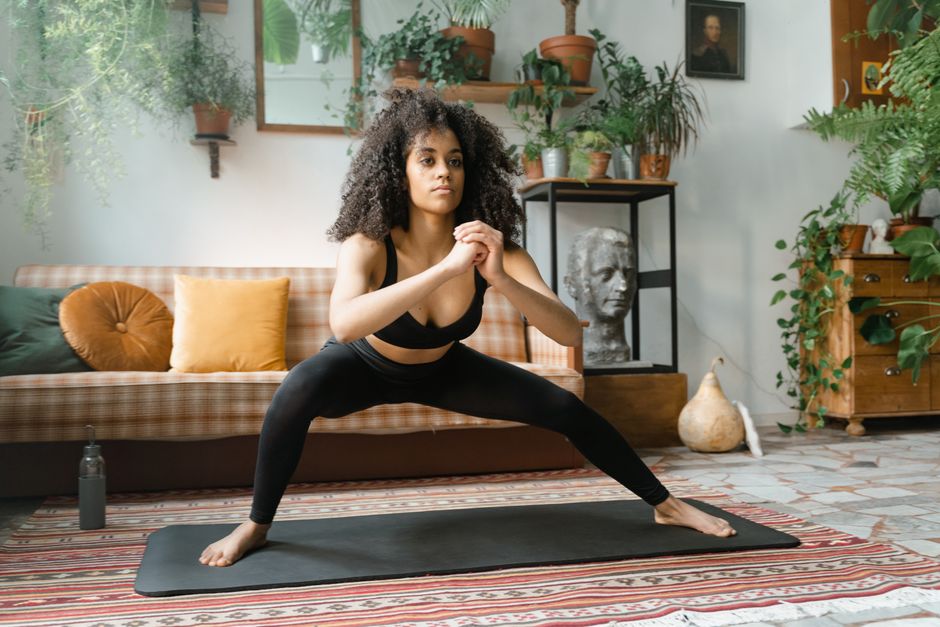
2. Standing Hip Flexor Lunge Stretch (45 seconds per side)
Step one foot forward into a split stance with your back heel lifted. Lower your back knee toward the floor, or stop just before if balance is a concern. Tuck your pelvis slightly forward (think of pulling your front hip bone upward) and hold. You should feel a gentle pull at the front of the rear hip.
Why it works: This targets the psoas and rectus femoris directly, the two muscles most shortened by sitting. The pelvic tuck is the key detail many people skip. Without it, the lumbar spine arches and the stretch shifts away from the hip flexor entirely. Hold the stretch steadily rather than bouncing.
3. 90-90 Hip Position (60 seconds per side)
Sit on the floor (or the edge of a firm chair if the floor is not an option) with both knees bent at approximately 90 degrees, one leg rotated forward and one rotated to the side. Sit upright, avoid rounding the lower back, and hold the position. You can gently lean forward over the front shin for a deeper sensation.
Why it works: The 90-90 simultaneously addresses internal and external hip rotation, two planes of motion that seated positions almost entirely ignore. Research suggests limited hip internal rotation is associated with compensatory lower back strain. This drill is a staple in physical therapy settings for hip and lumbar rehabilitation.
4. World’s Greatest Stretch (3 reps per side, slow)
Start in a low lunge with your right foot forward. Place your right hand on the floor inside your right foot for support. Rotate your right arm upward toward the ceiling, following it with your gaze, then return. Complete the rep by straightening your front leg slightly into a hamstring stretch before returning to lunge position.
Why it works: This multi-joint drill hits the hip flexor, thoracic spine, groin, and hamstring in one connected movement, which mirrors how the body actually moves in daily life. Because it involves rotation, it also activates the obliques and reinforces the relationship between hip mobility and spinal stability. Three slow reps take about 90 seconds per side.
5. Glute Bridge (10 reps, hold 2 seconds at top)
Lie on your back with knees bent and feet flat. Drive your hips upward until your body forms a straight line from shoulders to knees. Squeeze your glutes at the top for two seconds, then lower with control.
Why it works: Tight hip flexors often come with underactive glutes, a pattern sometimes called “reciprocal inhibition.” Bridging directly activates the posterior chain, which creates a functional counterbalance to the hip flexor tightening from sitting. This is not just a stretch; it is a strengthening complement that makes the other four moves more effective over time.
How to Fit This Into a Real Workday
The full sequence takes 9 to 11 minutes. You do not need a mat. A clean patch of carpet, a quiet conference room, or a private corner works fine. Wear whatever you have on, including pants and flat shoes.
A practical approach: pair this routine with your lunch break just before you eat. That timing works well because you are already mentally transitioning away from the screen. It also sets up a lower-back-friendly afternoon. If you are curious about what to eat to sustain your energy after moving, the article on Building a High-Protein Lunch for Stable Afternoon Energy: Macros, Meal Combos, and Real-Life Examples is a solid companion.
Consistency matters more than intensity here. Five sessions per week of this 10-minute block will outperform one long stretching session done occasionally. Research suggests that hip mobility improvements follow a gradual adaptation model: the connective tissue changes slowly, and skipping sessions regularly resets that progress.
For desk workers dealing with shoulder and neck tightness alongside hip stiffness, consider adding the sequence covered in Beginner Shoulder and Neck Mobility: Five Exercises That Reverse Desk Stiffness in 10 Minutes on alternating days.

A Note on Discomfort vs. Pain
Mild muscular tension during these exercises is normal and expected, especially in the hip flexors and groin during the lunge stretch. Sharp, pinching, or joint-level pain is a signal to stop and consult a qualified healthcare professional. People with existing hip impingement, labral tears, or lumbar disc issues should get clearance before adding new mobility drills.
Closing Thought
Choose one move from this list, the one that feels most relevant to where you are stiffest, and start there for three days. Add a second move when the first feels comfortable. Small, consistent steps build sustainable habits far more reliably than all-or-nothing routines.
If you want more movement guidance designed for real, busy days, the Clean Body Mentor newsletter delivers practical weekly tips directly to your inbox.
This article is for general educational and informational purposes only and is not a substitute for medical advice, diagnosis, or treatment. Health needs vary by individual. Consult a qualified healthcare professional before making significant changes to your diet, exercise routine, supplements, medication, or treatment plan, especially if you have a medical condition, are pregnant or breastfeeding, take medication, or have concerns about your symptoms.

Sources
- National Institutes of Health, National Library of Medicine: research on sedentary behavior, hip flexor adaptations, and lumbar loading (PubMed database)
- American College of Sports Medicine: position stand on flexibility and mobility training
- Journal of Orthopaedic and Sports Physical Therapy: hip rotation and lumbar compensation patterns