
If your feet feel stiff when you first stand up from your desk, or if you notice your arches barely lifting when you walk, you are not imagining it. Hours of sitting with your feet flat and mostly still trains your ankles to stay in one position and quietly switches off the small intrinsic muscles that support your arch.
The good news is that these foot strength exercises at home require no equipment, almost no floor space, and less than ten minutes spread across a workday. The five progressive drills below address the root patterns that desk work creates: restricted ankle range of motion, collapsed arches, and weakened proprioception (your foot’s ability to sense and react to the ground).
If you are also dealing with tight hips and a stiff lower back from sitting, the Mobility Moves for Tight Hips and Lower Back: A 5-Exercise Routine That Fits Your Lunch Break guide pairs well with this one.
Why Desk Sitting Specifically Hurts Your Feet
When you sit, your ankles rest in mild plantar flexion (toes slightly pointed) and your arches bear no load. Over hours and years, the ankle joint loses dorsiflexion range, meaning it becomes harder to bring your shin forward over your foot when you walk or squat. Research published in the Journal of Orthopaedic and Sports Physical Therapy links restricted ankle dorsiflexion to increased stress on the plantar fascia, knees, and lower back.
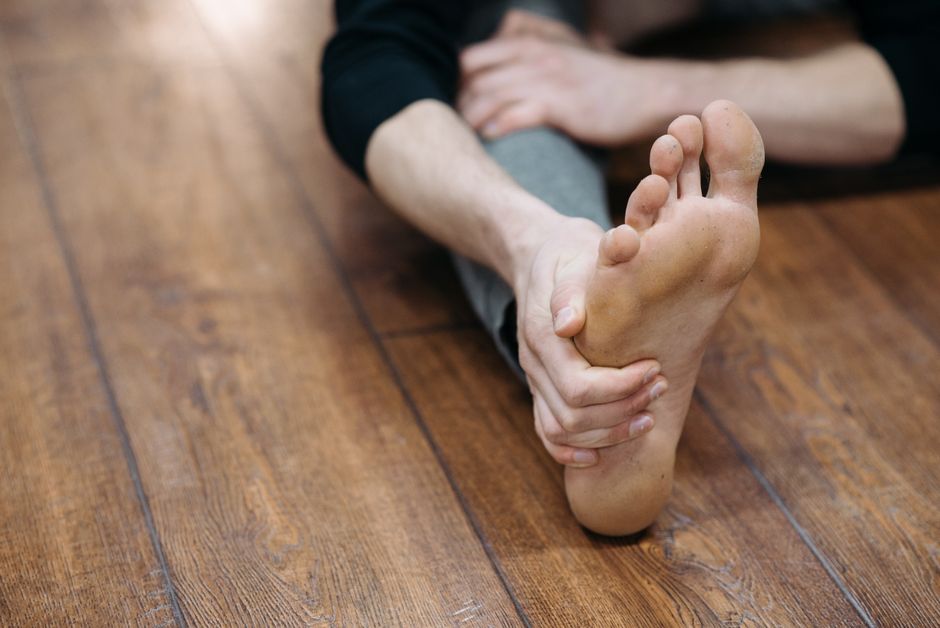
At the same time, the intrinsic foot muscles, which are the small muscles running along the sole and between the toes, shorten and weaken from disuse. This shifts arch support onto passive structures like ligaments and the plantar fascia rather than active muscle tissue. The result is flat-footed walking, fatigue after short distances, and achiness that often gets blamed on shoes rather than on lost strength.
For a broader look at how footwear choices interact with this problem, see Barefoot Walking vs. Supportive Shoes for Daily Movement: When Each Builds Better Foot Strength and Which Fits Your Life.
The Five-Drill Progressive Routine
Work through these in order. Drills 1 and 2 restore range of motion first, drills 3 and 4 activate and load the intrinsic muscles, and drill 5 trains the proprioceptive control that ties everything together.
Drill 1: Seated Ankle Circles (2 Minutes, Any Chair)
Sit tall, lift one foot a few inches off the floor, and slowly draw large circles with your toes. Ten circles clockwise, ten counterclockwise, then switch feet. Keep the motion coming from the ankle, not the hip.
This increases synovial fluid movement in the joint and begins to restore the full range of motion your ankle has stopped using. It takes two minutes and can be done during any meeting where your camera is off.
Drill 2: Wall-Supported Ankle Dorsiflexion Stretch
Stand facing a wall, place your toes about three inches from the baseboard, and gently drive your knee forward until it touches (or nearly touches) the wall without your heel lifting. Hold three seconds, release, and repeat ten times per side.
If your knee cannot reach the wall at three inches, move your foot closer. Progress by gradually increasing the toe-to-wall distance over days. This drill directly targets the range of motion loss that contributes to plantar fascia overload.
Drill 3: Towel Toe Scrunches (Standing or Seated)
Place a small towel flat on the floor. Using only your toes, scrunch the towel toward you, then spread it back out. Do three sets of fifteen repetitions per foot.
This activates the flexor digitorum brevis and other intrinsic muscles that form the dynamic arch. Most desk workers find this surprisingly difficult at first, which is a reliable signal that these muscles have been underused.
Drill 4: Short-Foot Hold
Stand in bare feet on a firm floor. Without curling your toes, try to shorten the distance between your big toe joint and your heel by doming the arch upward. Think of lifting the arch without gripping the floor with your toes.
Hold the dome for five seconds, release fully, and repeat ten times per foot. This is the most important foot strength exercise at home for rebuilding active arch support because it directly loads the intrinsic muscles under a bodyweight challenge.
It may take several sessions before you feel the right muscles working. That is normal. Consistency over days matters more than perfection in the first attempt.
Drill 5: Single-Leg Balance with Micro-Adjustments
Stand on one foot near a counter for safety. Let yourself wobble slightly rather than gripping with your toes for balance. Notice the small adjustments your ankle and arch make. Hold thirty seconds per side.
Once this becomes comfortable, close your eyes for the last ten seconds of each hold. This challenges proprioception, the sensory feedback loop between your foot and your nervous system that determines how confidently you walk on uneven surfaces.
Poor proprioception after long sitting periods is a meaningful fall-risk factor in older adults, according to research summarized by the National Institute on Aging. Building it at any age is worthwhile.
For complementary upper-body work that fits the same desk-worker schedule, the guide on Rebuilding Shoulder Strength Without Weights: Progressive Bodyweight Moves for Desk Workers and Beginners follows a similar progressive structure.
How to Fit This Into a Real Workday
You do not need a dedicated session. Try this split:
- Morning bathroom break: Ankle circles and the wall dorsiflexion stretch (three minutes).
- Lunch: Towel scrunches and short-foot holds while standing at the counter (four minutes).
- Afternoon break: Single-leg balance while waiting for coffee or a file to download (two minutes).
This approach turns dead time into gradual progress. After two to three weeks of consistent practice, most people notice that their ankles feel looser when they first stand up and that walking feels more grounded. If you want movement breaks to also help your digestion and focus, How to Use Digestive Movement Breaks to Restore Energy and Focus at Work offers a complementary strategy.
For further ankle and calf work, Building Stronger Calves and Ankles at Home: Progressive Bodyweight Drills for Everyday Mobility and Injury Prevention extends these drills into a more complete lower-leg routine.
A Note on Pain vs. Discomfort
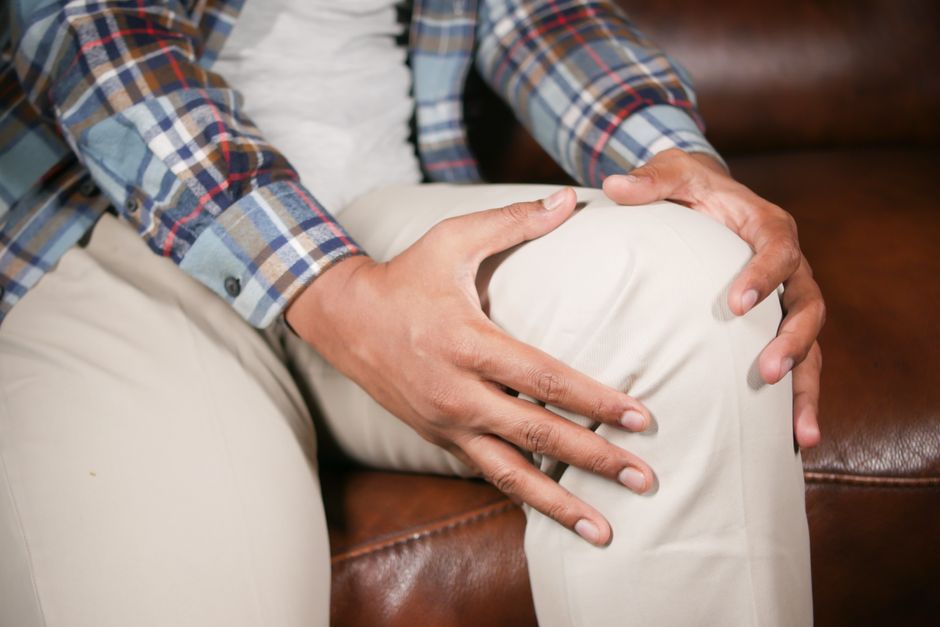
Mild muscle fatigue during these drills is expected, especially in the arch. Sharp pain in the heel, sharp pain along the outer ankle, or pain that lingers hours after practice are signals to stop and consult a qualified healthcare professional, particularly if you have a history of plantar fasciitis, Achilles issues, or ankle sprains.

Start Small, Stay Consistent
Choose one drill from this list, ideally the short-foot hold, and practice it every day for a week before adding more. One well-practiced drill done consistently outperforms five drills done once and forgotten. Once the routine feels natural, the full sequence takes under ten minutes and can replace the restless fidgeting that sitting too long tends to produce anyway.
If this article was useful, you might enjoy the Clean Body Mentor newsletter, which delivers practical, evidence-informed movement and wellness guidance each week.
This article is for general educational and informational purposes only and is not a substitute for medical advice, diagnosis, or treatment. Health needs vary by individual. Consult a qualified healthcare professional before making significant changes to your diet, exercise routine, supplements, medication, or treatment plan, especially if you have a medical condition, are pregnant or breastfeeding, take medication, or have concerns about your symptoms.
Sources
- Hoch MC, McKeon PO. “Ankle dorsiflexion range of motion and risk of injury: a systematic review.” Journal of Orthopaedic and Sports Physical Therapy, 2011. (Referenced for the link between restricted dorsiflexion and downstream joint stress.)
- National Institute on Aging, U.S. Department of Health and Human Services. Balance and fall-risk information available at nia.nih.gov.
- Jam B. “Evaluation and retraining of the intrinsic foot muscles for pain syndromes related to abnormal control of pronation.” Advanced Physical Therapy Education Institute, 2006. (Referenced for intrinsic muscle function and arch support mechanics.)