You blend a smoothie, drink it in four minutes, and somehow feel hungry again by 10 a.m. Then a friend tells you she makes the same ingredients into a bowl and stays satisfied until noon. Same spinach, same banana, same protein powder. So what is actually different?
The answer is not calories. It is texture, eating speed, and the way your body processes chewing cues. This smoothie bowl satiety comparison breaks down the real mechanism, shows you when each format earns its place, and gives you a simple build-your-own framework for both.
Why Texture Changes the Hunger Signal
Eating triggers a cascade of hormonal responses that begin before the food even reaches your stomach. Chewing activates mechanoreceptors in your jaw and mouth, sending early satiety signals to the brain through the vagus nerve. Research published by the NIH suggests that oral processing time (how long food stays in your mouth) meaningfully influences perceived fullness, independent of caloric load.
When you drink a smoothie, you bypass most of that chewing process. The blended liquid passes through the stomach faster than solid or semi-solid food because it requires less mechanical breakdown. Gastric emptying rate directly affects how quickly hunger returns. A thicker, chewable bowl format slows that rate, giving gut hormones like GLP-1 and peptide YY more time to register fullness before you are already reaching for a snack.
This is not a small effect. A 2013 study in the journal Appetite (Cassady et al.) found that solid forms of the same food produced significantly greater fullness ratings than liquid versions matched for calories and macronutrients. The smoothie bowl satiety comparison is not really about nutrition labels. It is about how your physiology interprets the physical act of eating.
Head-to-Head: Where Each Format Wins
Smoothie (Drinkable Format)
Best for: Pre-workout fuel, post-workout recovery, mornings when you are genuinely not hungry, travel days, or when appetite is low due to illness or stress.
Why it works in those contexts: Fast gastric emptying is actually useful before exercise. You want available energy without feeling heavy. A well-built smoothie with protein and some fat can still deliver a meaningful satiety window of roughly 90 to 120 minutes if you include enough fiber and protein.
Where it falls short: If you drink it quickly, skip protein, or rely on fruit-heavy blends, you may spike blood glucose without enough fiber or protein to slow the rebound. Hunger can return fast. For more on what tips a smoothie into the “too heavy or too light” zone depending on your activity, see Five Signs Your Smoothie Is Too Heavy for Your Activity Level and What to Swap Instead.
Smoothie Bowl (Spoonable Format)
Best for: Seated breakfast when you have 10 to 15 minutes, rest days, days when you need to stay full through a long morning meeting, or any time you want breakfast to feel like a real meal.
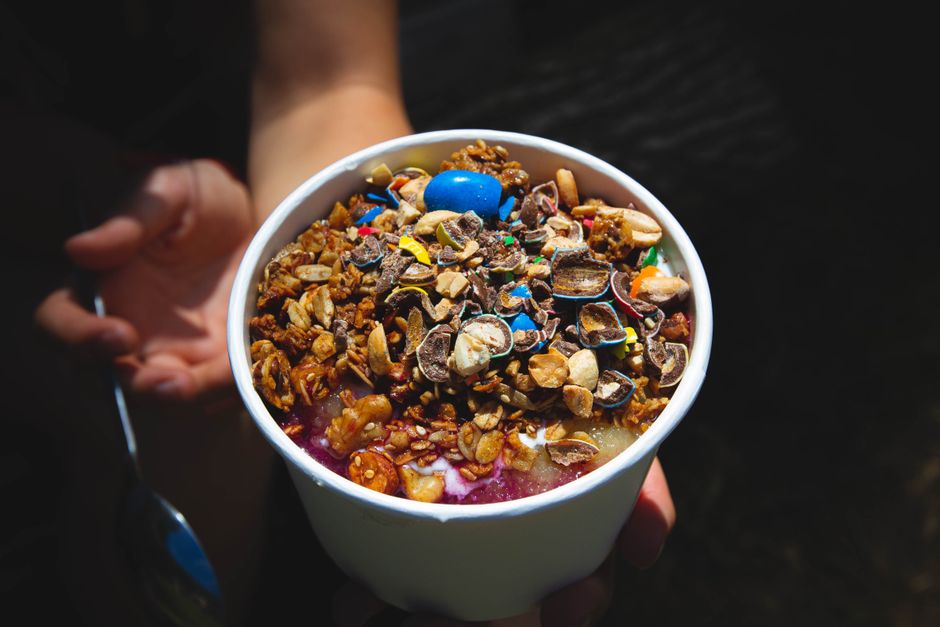
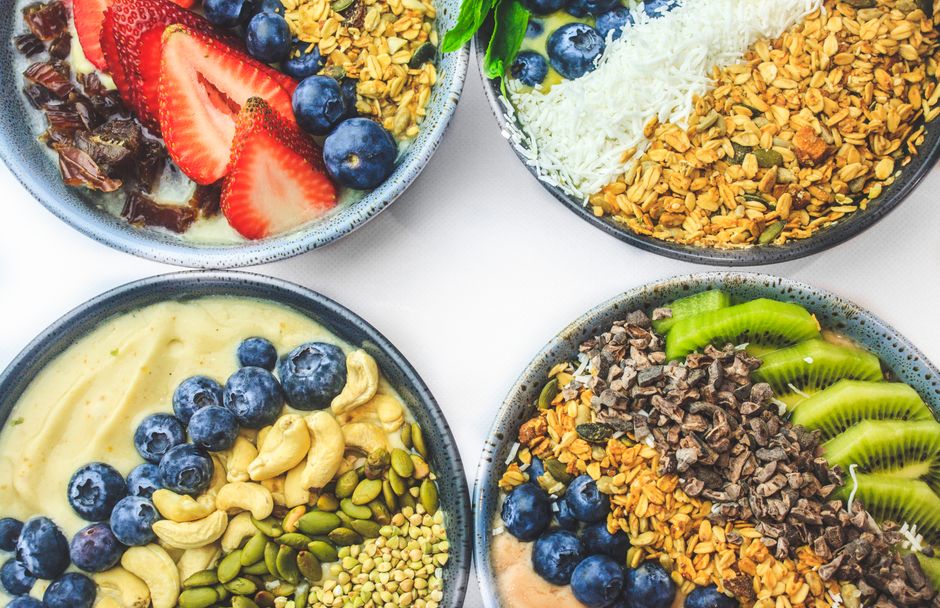
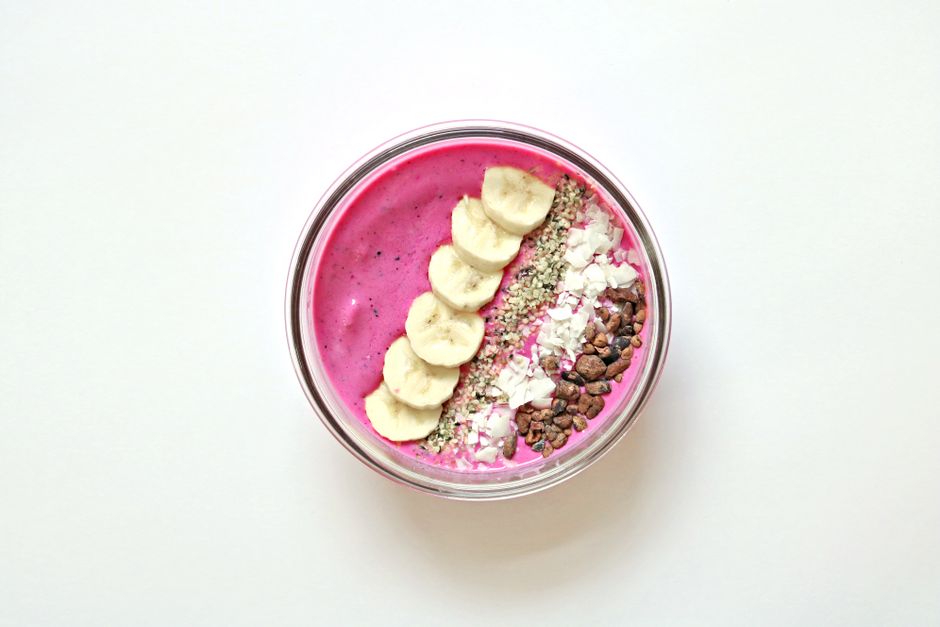
Why it works better for satiety: The spoonable texture forces slower eating. Toppings like granola, sliced banana, hemp seeds, or nut butter add varied textures that extend oral processing time. The thicker base (usually less liquid than a drinkable smoothie) further slows gastric emptying. The result is a longer satiety window, often 2.5 to 3.5 hours in research on solid versus liquid meal formats.
Where it falls short: It takes more time and a bit more prep. If you are rushing or eating over a sink, a bowl will not get eaten mindfully, which partly defeats the texture advantage.
The Mechanism in Plain Terms
Think of it this way. Your stomach does not read calorie labels. It responds to volume, viscosity, and the hormonal signals triggered upstream by chewing and swallowing rate. A thick smoothie bowl with toppings occupies more volume in the stomach, moves more slowly through the digestive tract, and triggers longer-lasting satiety hormones than the same blend poured into a glass.
This connects to a broader principle worth knowing: eating speed matters as much as eating content for hunger management. If you are curious how eating order adds another layer to this, Digestive Comfort Through Eating Order: Which Foods First Actually Stop Bloating Without Restriction covers how sequence affects both digestion and fullness.
How to Build Each Format for Maximum Satiety
Drinkable Smoothie Blueprint
Keep liquid to no more than one cup to maintain thickness. Use this structure:
- Protein anchor (20+ grams): Greek yogurt, silken tofu, or a clean protein powder
- Fiber base: Half a frozen banana plus one cup of leafy greens or half a cup of frozen cauliflower
- Healthy fat: One tablespoon of almond butter or half an avocado
- Slow-sip rule: Aim for at least 10 minutes to finish it. Eating speed applies to drinking too.
Smoothie Bowl Blueprint
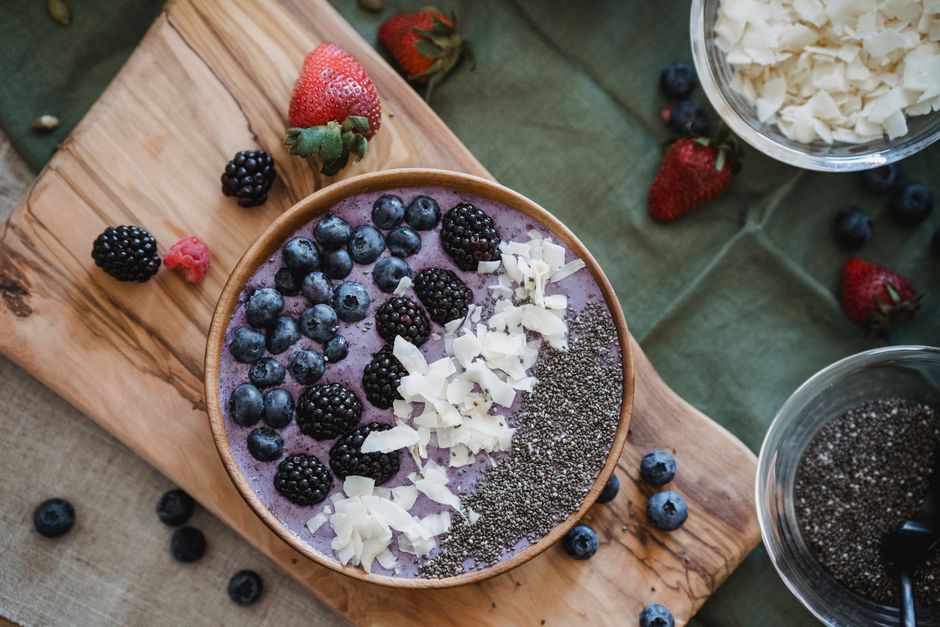
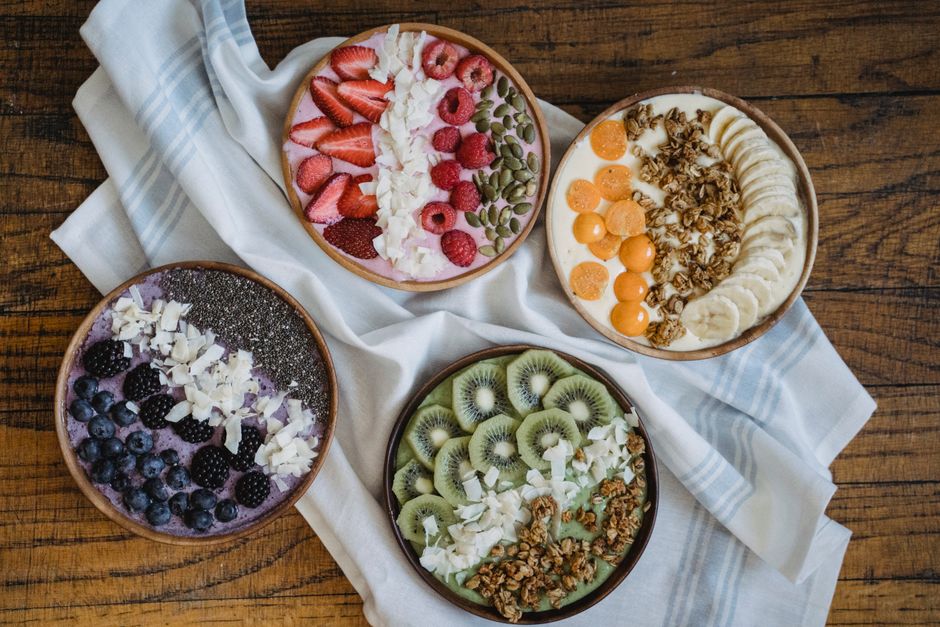
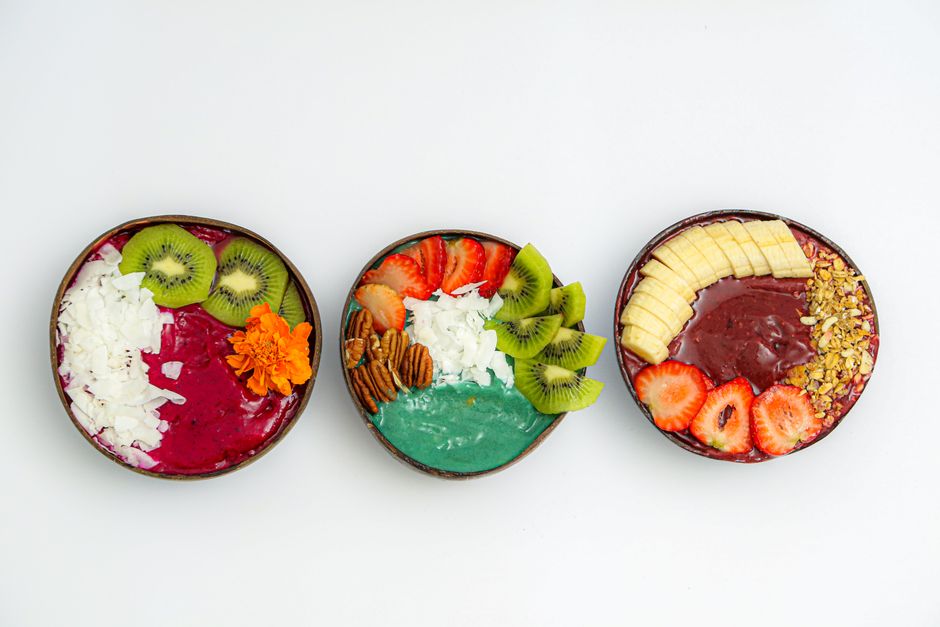
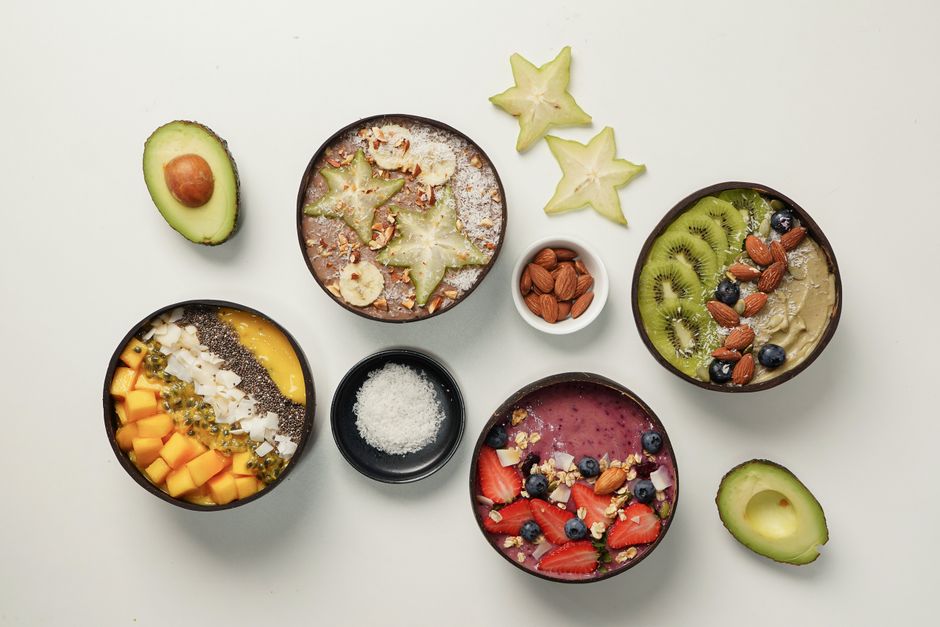
Start with a thick, spoonable base (use minimal liquid, ideally under half a cup), then layer:
- Base (thick): Blended frozen mango or acai with Greek yogurt and minimal milk
- Protein layer: A scoop of protein powder blended in, or top with cottage cheese curds
- Textured toppings: Granola, hemp seeds, sliced almonds, or chia pudding for chew
- Fruit or vegetable accent: Fresh berries, kiwi slices, or thin-sliced cucumber for color and micronutrients
- Finishing fat: A thin drizzle of nut butter or a sprinkle of pumpkin seeds
If you need your bowl to survive a long morning, pair it with one of the high-protein strategies covered in High-Protein Breakfasts That Survive Until Lunch: Eggs, Legumes, Dairy, and Whole Grains Ranked by Satiety.
Which One Should You Actually Choose?
For most seated morning meals on regular or rest days, the smoothie bowl satiety comparison favors the bowl. The texture advantage is real, the evidence is consistent, and the fuller feeling typically lasts noticeably longer than a drinkable version built from the same produce.
But the drinkable smoothie is not a lesser option. It is the right tool for a different job: quick pre-workout fuel, appetite-suppressed mornings, or high-activity days when fast digestion is an asset rather than a liability.
The practical takeaway: match the format to your morning’s demands rather than picking one and sticking with it forever. On a slow workday, build the bowl. Before a gym session or a rushed commute, blend and go.
Start simple. This week, try making your usual smoothie recipe into a thicker bowl format for two or three mornings and notice whether you reach for a snack before lunch. That single experiment will tell you more than any comparison chart.
For a broader look at how liquid meals stack up against whole-food alternatives throughout the day, Smoothie Recipes vs. Whole-Food Meals: Which Format Delivers Stable Energy Until Lunch Without the Afternoon Crash is a natural next read.
This article is for general educational and informational purposes only and is not a substitute for medical advice, diagnosis, or treatment. Health needs vary by individual. Consult a qualified healthcare professional before making significant changes to your diet, exercise routine, supplements, medication, or treatment plan, especially if you have a medical condition, are pregnant or breastfeeding, take medication, or have concerns about your symptoms.
Sources
- Cassady, B.A., et al. (2012). “Mastication of almonds: effects of lipid bioaccessibility, appetite, and hormone response.” American Journal of Clinical Nutrition. Referenced for oral processing and satiety signaling.
- Zhu, Y., and Hollis, J.H. (2014). “Associations between eating rate and energy intake, adiposity, and dietary quality in a sample of US adults.” Nutrients. National Institutes of Health (PubMed).
- Cassady, B.A., et al. (2013). Solid vs. liquid food form and satiety. Appetite. Elsevier. For the solid-versus-liquid fullness findings cited above.
- National Institute of Diabetes and Digestive and Kidney Diseases (NIDDK). Overview of gastrointestinal hormones including GLP-1 and peptide YY. Available at niddk.nih.gov.