


You blend a smoothie at 7am and by 9:30 you are standing in front of the fridge again. That pattern is frustrating, but it is also fixable. The problem usually is not the smoothie format itself. It is the specific ingredients chosen and, sometimes, the order they enter your body.
Building a smoothie that keeps you full means looking at three layers: the protein source, the fat type, and the fiber strategy. Each one works differently in your body, and choosing well across all three changes how long that drink actually sustains you.
Why Most Smoothies Do Not Satisfy for Long
A typical fruit-and-yogurt smoothie blends fast-digesting carbohydrates with minimal fat and moderate protein. Blood glucose rises relatively quickly, and without enough fiber or fat to slow gastric emptying, hunger returns within an hour or two. Research published in the journal Appetite has consistently linked slower gastric emptying with greater feelings of fullness after meals. Smoothies that do not include ingredients that slow digestion essentially fast-track the hunger signal.
If your current smoothie leaves you hungry, the guide Five Unexpected Reasons Your Smoothie Leaves You Hungry an Hour Later walks through the most common structural mistakes worth reading alongside this review.
Protein Source: Whey vs. Plant-Based and What the Evidence Suggests
Protein is the most researched satiety macronutrient. Studies in journals such as The American Journal of Clinical Nutrition show that higher-protein meals reduce appetite hormones and increase peptide YY, a hormone that signals fullness. The question for smoothies is which protein source works best.
Whey protein digests relatively fast but delivers a strong, rapid amino acid spike that may support muscle protein synthesis. Some research suggests whey modestly outperforms casein and soy on short-term hunger suppression, though findings are not definitive enough to call it the clear winner for everyone.
Casein digests more slowly than whey because it forms a gel in the stomach. That slower release may extend the feeling of fullness longer, making it a reasonable alternative for people who use dairy-based powders.
Plant-based proteins (pea, hemp, brown rice blends) vary more by source. Pea protein in particular has shown satiety outcomes comparable to whey in several small trials. It also carries a useful amount of arginine, which is rare in most animal proteins. Hemp adds omega-3 fatty acids alongside protein, which contributes to the fat layer discussed next.
For smoothie use, a protein target of 20 to 30 grams is a practical range associated with meaningful satiety benefits. Whole-food protein sources like plain Greek yogurt (17 to 20 grams per cup), silken tofu, or hemp seeds work just as well as powders for many people, and they also contribute texture and micronutrients. If you prefer to skip powders, the article High-Protein Plant-Based Snacks That Keep You Full: Real Food Options Beyond Bars and Powders offers context that applies equally well to smoothie building.
Fat Source: Why Type and Form Both Matter
Fat slows gastric emptying, but not all fats do this equally in a blended drink.
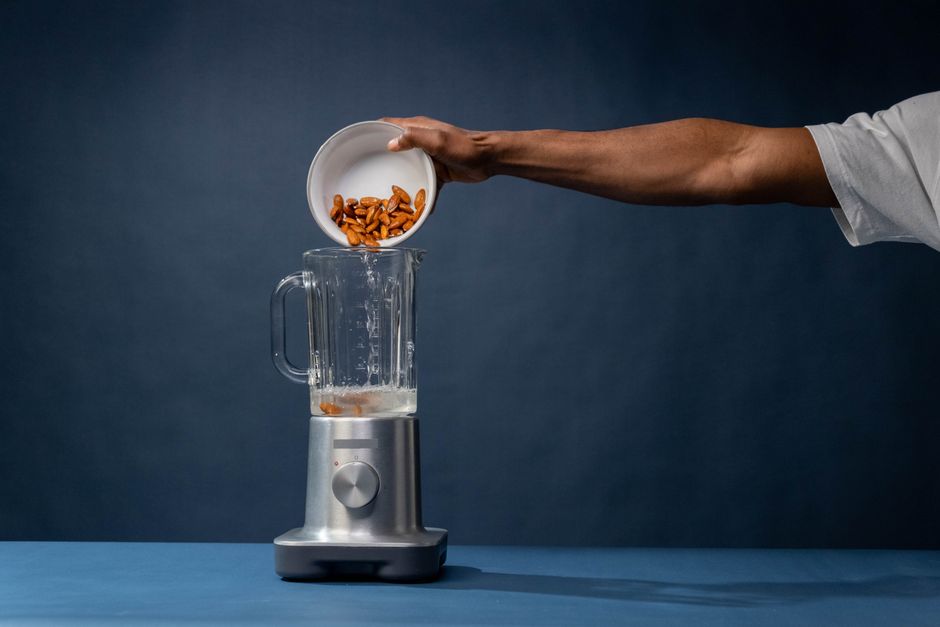
Nut butters (almond, peanut, cashew) add healthy unsaturated fats plus a small amount of protein and fiber. One to two tablespoons contribute roughly 90 to 180 calories and provide measurable viscosity, which research in Physiology and Behavior links to greater perceived fullness compared with thinner beverages.
Avocado brings monounsaturated fats and a creamy texture that thickens the blend naturally. One-quarter of a medium avocado (roughly 60 calories) is enough to increase smoothie viscosity without dominating flavor.
Coconut and coconut oil are sometimes positioned as satiety aids due to their medium-chain triglyceride (MCT) content. The evidence here is more nuanced. MCTs may marginally increase thermogenesis and reduce short-term appetite compared with long-chain fats, but the effect is small and the saturated fat content of whole coconut warrants moderation. Unsweetened coconut flakes in small amounts add texture and mild fat; relying on large amounts of coconut oil is not strongly supported by current evidence for most people.
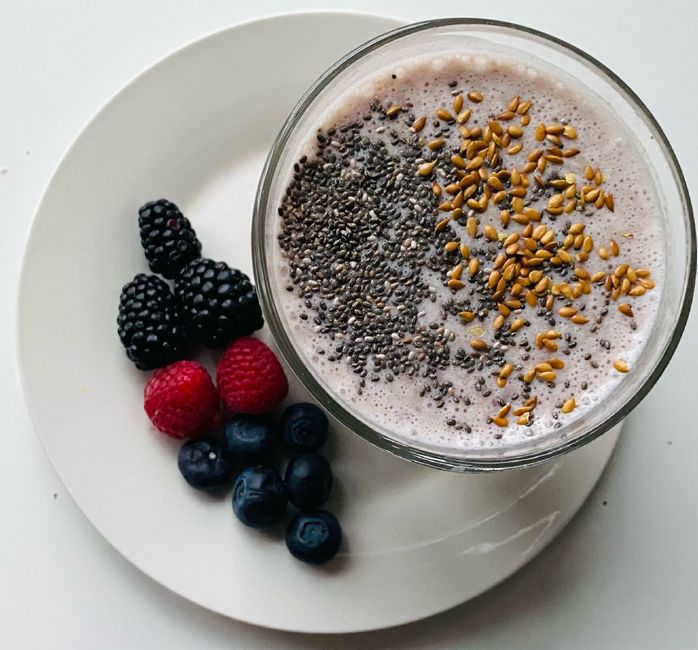
Chia seeds and flaxseeds straddle fat and fiber categories. Each delivers omega-3 fatty acids alongside soluble fiber, making them one of the more efficient smoothie additions for satiety.
Fiber Strategy: Soluble vs. Insoluble and Sequencing
Fiber is where many smoothies fall short. Most fruits used in blending (banana, mango, frozen berries) contribute some fiber, but the amounts are often below the threshold needed to meaningfully slow digestion on their own.
Soluble fiber is the more important category for smoothie satiety. It dissolves in liquid and forms a gel that slows stomach emptying and feeds beneficial gut bacteria. Good soluble fiber sources for smoothies include oats (roughly 2 grams of beta-glucan per half cup), chia seeds, psyllium husk powder (start small: one teaspoon), and ripe pears or apples with skin on if blended whole.
Insoluble fiber from leafy greens like spinach or kale adds bulk and micronutrients but contributes less to the slowing effect. Including greens is still worthwhile for overall nutrient density.
For a practical, evidence-informed look at how layering and sequencing affect satiety in blended drinks, the Smoothie Satiety Secrets: Ingredient Order, Texture, and Timing That Actually Keep You Full Until Lunch guide goes deeper on the structural decisions.
Liquid Ratio and Texture: The Overlooked Variable
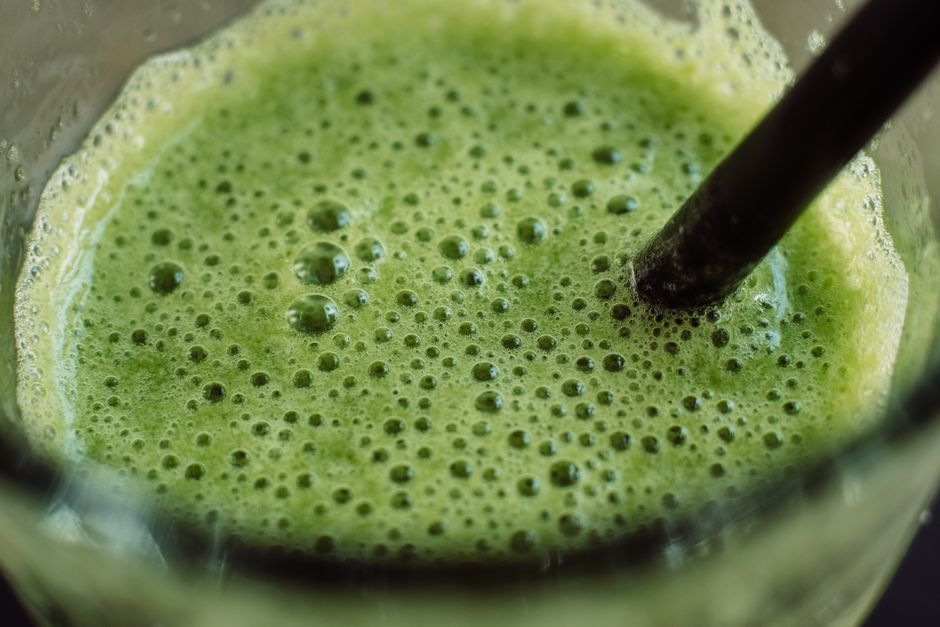
Thicker smoothies tend to produce greater satiety than thin ones, even when calorie content is identical. Research in Food Quality and Preference found that perceived thickness influences how filling a beverage feels. Using less liquid (roughly 3/4 cup versus a full cup) and adding frozen fruit instead of ice creates a denser blend that registers differently than a watery drink.
Chewing or spooning a thick smoothie, as you would with a smoothie bowl, may also engage satiety cues more effectively than drinking quickly through a straw. If that format appeals to you, Smoothie vs Smoothie Bowl Satiety: Which Format Actually Keeps You Fuller, Longer compares both approaches directly.
A Practical Build That Applies All Three Layers
Here is a structure that reflects the evidence reviewed above:
- Protein layer: 3/4 cup plain Greek yogurt or one scoop pea protein powder (20 to 25 grams protein)
- Fat layer: 1 tablespoon almond butter plus 1 tablespoon chia seeds
- Fiber layer: 1/3 cup rolled oats, a small handful of spinach, 1/2 cup frozen berries
- Liquid: 3/4 cup unsweetened oat milk or plain water (adjust for preferred thickness)
- Optional: 1/2 small banana for natural sweetness and potassium
Blend the oats first with liquid to break them down, then add remaining ingredients. This creates a thicker, more uniform texture that avoids chalky pockets of powder or unmixed oats.
The Takeaway
A smoothie that keeps you full until lunch is not about any single superfood. It is the combination of sufficient protein (20 to 30 grams), a moderate healthy fat source that adds viscosity, soluble fiber from oats or chia, and a liquid ratio that produces a dense rather than watery drink. Adjust one variable at a time until the combination works for your schedule and appetite.
Start with whichever layer you are currently missing, try it consistently for a week, and notice whether your mid-morning hunger shifts. Small, specific changes like that are far more sustainable than overhauling your routine all at once.
For related reading on building satisfying breakfasts beyond smoothies, Five Unexpected Reasons Your Breakfast Leaves You Hungry by 9am covers the broader morning meal picture.
This article is for general educational and informational purposes only and is not a substitute for medical advice, diagnosis, or treatment. Health needs vary by individual. Consult a qualified healthcare professional before making significant changes to your diet, exercise routine, supplements, medication, or treatment plan, especially if you have a medical condition, are pregnant or breastfeeding, take medication, or have concerns about your symptoms.
Sources
- Chambers, L., et al. (2015). Optimising foods for satiety. Trends in Food Science and Technology. Published by Elsevier.
- Leidy, H. J., et al. (2015). The role of protein in weight loss and maintenance. The American Journal of Clinical Nutrition. Published by Oxford University Press.
- Marciani, L., et al. (2001). Effect of meal viscosity and nutrients on satiety, intragastric dilution, and emptying assessed by MRI. The American Journal of Physiology: Gastrointestinal and Liver Physiology.
- St-Onge, M. P., et al. (2014). Medium-chain triglyceride oil consumption as part of a weight loss diet. Journal of the Academy of Nutrition and Dietetics.
- U.S. Department of Agriculture, FoodData Central (for nutrient values cited): fdc.nal.usda.gov