
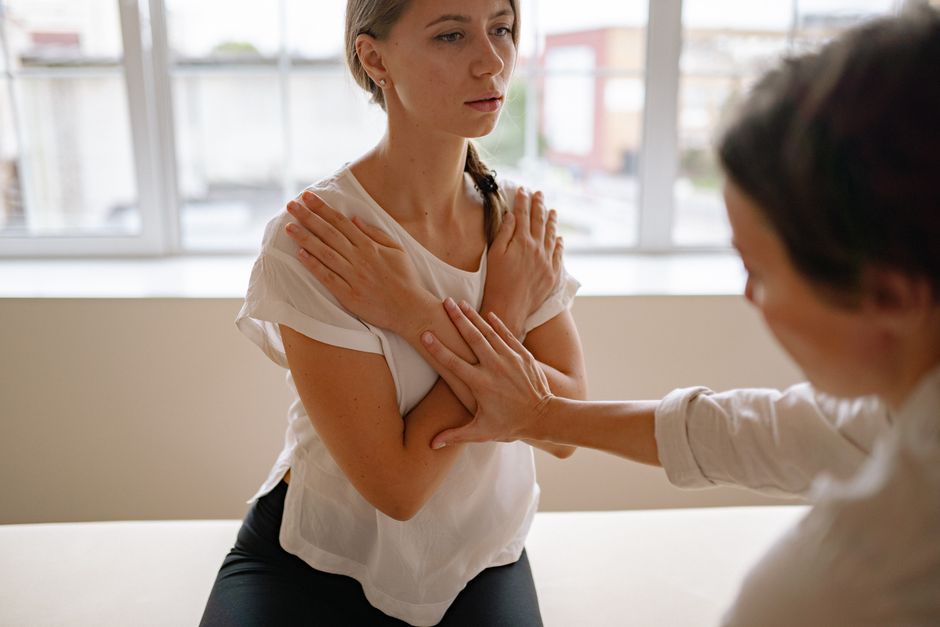
If you spend hours at a screen, you already know the sensation: shoulders creeping forward, chin jutting out, upper back tightening into a gentle hunch by mid-afternoon. Rounded shoulders and forward-head posture are not a character flaw or a sign of weakness. They are an almost inevitable response to prolonged static sitting, and they affect desk workers, parents carrying young children, and anyone who spends significant time looking down at a phone or laptop.
The downstream effects reach further than you might expect. Research published in the Journal of Physical Therapy Science suggests that forward-head posture reduces lung capacity by compressing the thoracic cavity, which means your breathing becomes shallower without you noticing. Shoulder impingement, chronic neck tension, and mid-back fatigue often follow. The good news: the muscles and joints involved respond well to deliberate mobility work. If you are curious about how posture also affects digestion, Digestive Bloating From Tight Breathing and Shallow Movement: Why Posture Fixes Work Better Than Food Restriction explores the connection in more detail.
This 10-minute routine uses six progressive bodyweight movements that target the chest, anterior shoulder, and upper back in a sequence. Practice it before your workday begins or immediately after prolonged screen time for the most noticeable benefit.
What You Need Before You Start
No equipment is required. You will need a clear floor space, ideally a yoga mat or soft surface for the floor-based exercises, and a doorframe or wall for two movements. Wear comfortable clothing that does not restrict shoulder rotation.
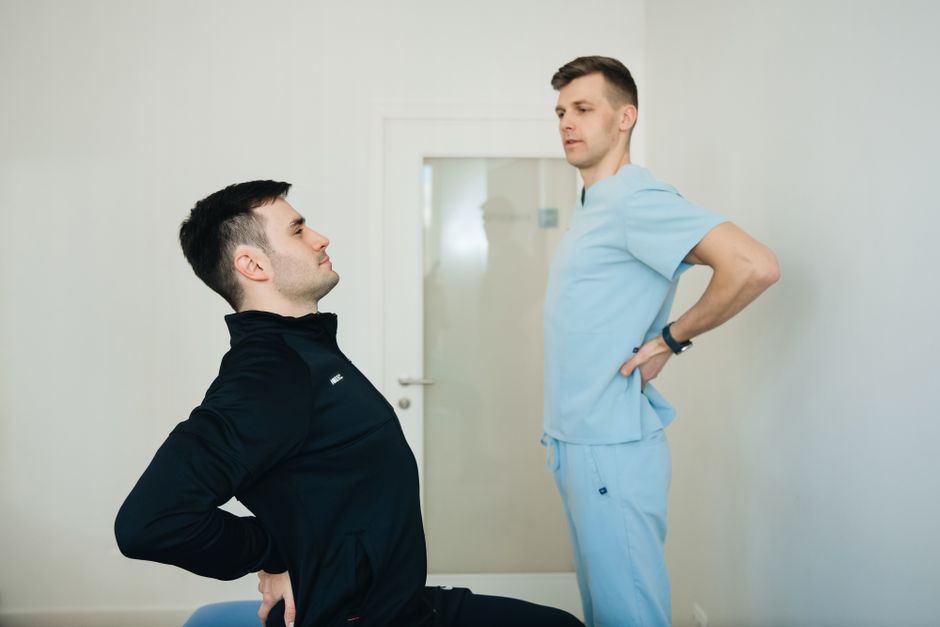
A quick self-check before beginning: stand naturally and look sideways in a mirror. If your ears sit noticeably in front of your shoulders, or if your palms naturally face behind you rather than toward your thighs, your posture reflects the pattern this routine addresses. That is normal and correctable.
For a broader beginner framework that includes the neck and upper traps alongside these shoulder drills, see Beginner Shoulder and Neck Mobility: Five Exercises That Reverse Desk Stiffness in 10 Minutes.
The 6-Exercise Routine
1. Chest-Opening Doorframe Stretch (60 seconds per side)
Stand in a doorframe and place your forearm vertically against the frame at a 90-degree elbow angle. Step one foot forward until you feel a gentle pull across your pectoral muscle and the front of your shoulder. Hold for 30 seconds, breathe steadily, then switch sides.
Why it matters: Chronic sitting shortens the pectoralis minor, the small muscle that pulls the shoulder blade forward and down. Lengthening it is the first step in any rounded shoulders posture correction plan.
Beginner modification: If any pinching sensation occurs in the shoulder joint, lower your arm position to 45 degrees rather than 90.
2. Thoracic Extension Over a Rolled Towel (90 seconds)
Roll a bath towel tightly into a cylinder and place it horizontally on your mat. Sit in front of it, then carefully lower your upper back onto the towel so it sits between your shoulder blades. Let your arms rest at your sides and allow your head to gently lower toward the floor. Breathe into the stretch for 90 seconds.
Why it matters: The thoracic spine stiffens into flexion with desk work. Gentle extension over a bolster counteracts that curve and can increase overhead range of motion.
Beginner modification: Start with a softer, thinner roll and build to a firmer one over several sessions.
3. Wall Angel (10 slow repetitions)
Stand with your back against a wall, feet a few inches from the baseboard. Press your lower back, upper back, and the back of your head against the wall. Bend your elbows to 90 degrees and press the backs of your arms against the wall. Slowly slide your arms upward like a snow angel as far as you can without any part of your arm losing contact with the wall. Lower back down with control.
Why it matters: Wall angels train scapular upward rotation, which is often weak in people with rounded shoulders. This is where you will feel the most challenge if your upper back muscles have become underactive.
Beginner modification: Allow a small gap between your lower back and the wall if full contact causes back discomfort. Gradually work toward full contact over weeks.
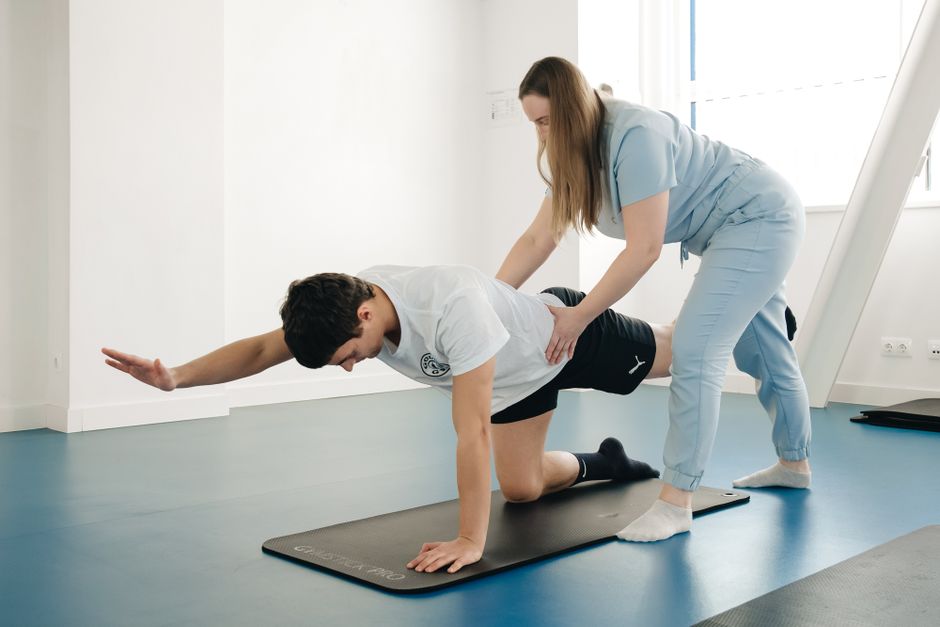
4. Prone Y-T-W (8 repetitions of each letter)
Lie face-down on your mat with your arms extended overhead. For Y: raise both arms diagonally to form a Y shape, squeeze your shoulder blades, hold one second, lower. For T: arms extended straight out to the sides, lift, hold, lower. For W: bend elbows and pull them toward your hips to form a W, squeeze, hold, lower.
Why it matters: These positions activate the lower and middle trapezius and the rhomboids, the muscles most responsible for holding your shoulder blades in a healthy position. Research cited by the National Strength and Conditioning Association consistently highlights these muscles as underactive in people with forward posture.
Beginner modification: Keep movements small and controlled. Range of motion matters less than activation quality.
5. Kneeling Hip-Flexor and Chest Opener (45 seconds per side)
Kneel on one knee with your other foot forward. Press your hips slightly forward to feel a stretch in the front of the rear hip. At the same time, reach the arm on the kneeling side overhead and lean gently to the opposite side.
Why it matters: Forward posture is often anchored by tight hip flexors pulling the pelvis forward, which tilts the entire spine and amplifies the head-forward position. This combined stretch addresses both areas at once. For more on hip and lower body mobility, Mobility Moves for Tight Hips and Lower Back: A 5-Exercise Routine That Fits Your Lunch Break walks through a targeted sequence.
Beginner modification: Hold a wall or chair with your free hand for balance.
6. Cat-Cow with Neck Nod (10 slow breath cycles)
Begin on all fours. On an exhale, round your spine fully toward the ceiling (cat), tucking your chin gently to your chest. On an inhale, let your belly drop and lift your gaze slightly upward (cow). Move slowly, letting your breath lead the movement rather than rushing through repetitions.
Why it matters: Cat-cow mobilizes the full spine and reinforces the coordination between breath and movement that forward posture tends to disrupt. Ending the routine here helps integrate the preceding work into a more relaxed nervous system state.
How to Build the Habit
Ten minutes practiced four to five days per week will produce more lasting change than an occasional 30-minute session. A useful anchor habit: run through this sequence as your computer starts in the morning, or immediately after you close your laptop for the day.
Expect to notice reduced neck tension and slightly more natural posture within two to three weeks of consistent practice. Fuller chest expansion and pain-free overhead reaching typically develop over four to eight weeks, though individual results vary based on how long postural patterns have been established.
For a complementary routine that addresses the full upper body, Rebuilding Shoulder Strength Without Weights: Progressive Bodyweight Moves for Desk Workers and Beginners builds on these mobility foundations with progressive strengthening work.
Start with whichever single exercise from this list feels most accessible today. Consistency with one movement beats perfect execution of six movements done once. If shoulder pain, numbness, or tingling accompanies any exercise, stop and consult a qualified healthcare professional before continuing.
Sources
- Dimitriadis Z, et al. “The effect of posture on lung function.” Journal of Physical Therapy Science, 2015. (National Center for Biotechnology Information, PubMed)
- National Strength and Conditioning Association. Position statement on assessment and programming for shoulder health. NSCA, current edition.
- Page P. “Shoulder muscle imbalance and subacromial impingement syndrome in overhead athletes.” International Journal of Sports Physical Therapy, 2011.
This article is for general educational and informational purposes only and is not a substitute for medical advice, diagnosis, or treatment. Health needs vary by individual. Consult a qualified healthcare professional before making significant changes to your diet, exercise routine, supplements, medication, or treatment plan, especially if you have a medical condition, are pregnant or breastfeeding, take medication, or have concerns about your symptoms.