If you spend most of your day sitting, you are probably familiar with that creeping tightness across your upper back and the dull ache that settles into your lower spine by late afternoon. Stretching and yoga can help you feel looser in the moment, but research suggests they are not enough on their own to correct the muscle imbalances that cause poor posture in the first place.
According to a 2020 systematic review published in the Journal of Physical Therapy Science, targeted strengthening of the back extensors, deep neck flexors, and scapular stabilizers is more effective at improving posture and reducing pain than stretching alone. The good news: you do not need a gym or any equipment to start.
These five beginner strength exercises for posture target the muscles that sitting weakens most. Three short sessions per week is enough to see gradual, sustainable progress. If you want to understand why strength work beats stretching for this problem, the guide on Stretching vs. Strength Training for Better Posture: Which One Fixes Slouching and Desk Stiffness gives you the full breakdown first.
Why Your Posture Problems Are Really a Strength Problem
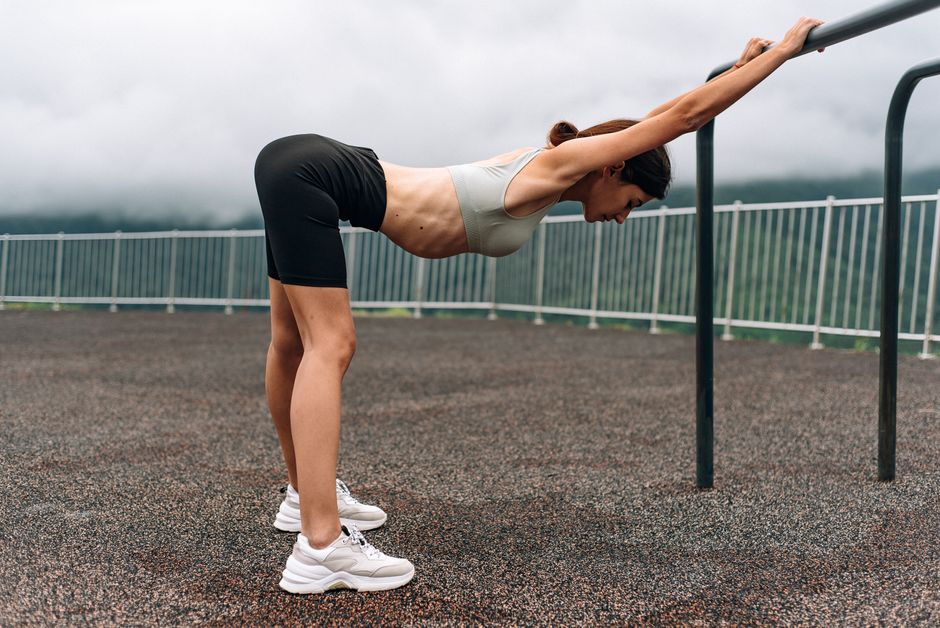
When you sit for long periods, the muscles that hold you upright, including your glutes, mid-back rhomboids, deep core, and posterior neck, gradually switch off. Meanwhile, the hip flexors and chest muscles shorten and tighten. This imbalance pulls your spine into a forward curve, rounds your shoulders, and stresses the lumbar discs.
Stretching the tight areas gives temporary relief, but the weak muscles never get stronger unless you actually load them. That is the gap these five moves are designed to close.

The Five Moves
1. Wall Angel
What it works: Scapular stabilizers, mid-back rhomboids, rotator cuff
Stand with your back flat against a wall, feet a few inches out, knees slightly soft. Press your lower back, upper back, and the backs of your hands against the wall. Slowly slide your arms overhead like making a snow angel, keeping contact with the wall throughout. Return to the start.
Aim for 2 sets of 8 to 10 slow reps. If your lower back arches away from the wall, bend your knees a little more. This move directly counters the rounded-shoulder pattern that desk work creates.
2. Glute Bridge
What it works: Glutes, hamstrings, lumbar stabilizers
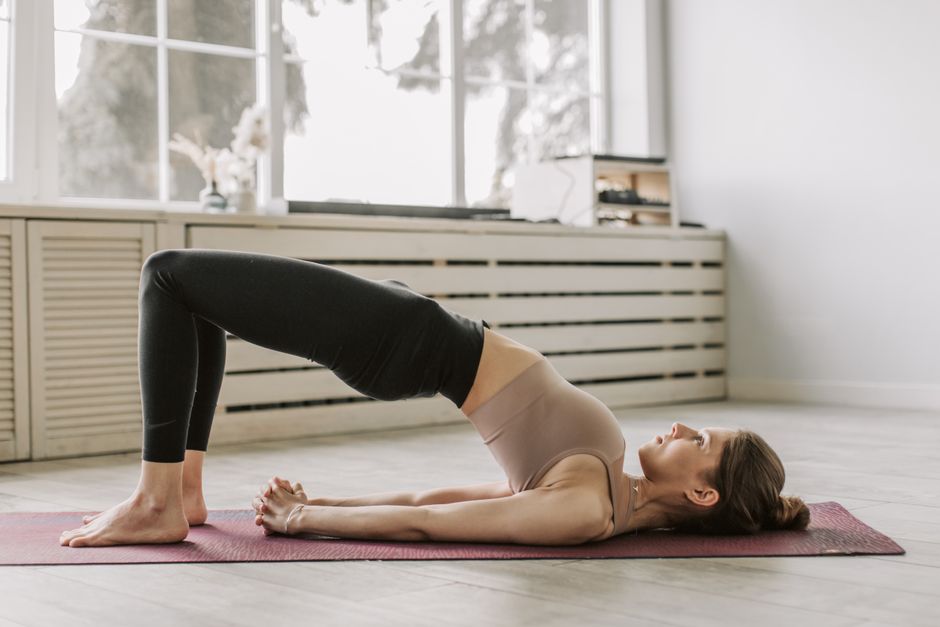
Lie on your back with knees bent and feet flat on the floor, hip-width apart. Press your feet into the ground and lift your hips until your body forms a straight line from knees to shoulders. Hold for two seconds at the top, then lower slowly.
Aim for 2 sets of 12 reps. Your glutes are the largest muscle group involved in keeping your pelvis level, and prolonged sitting switches them off more than almost any other pattern of daily life. Rebuilding glute strength is one of the most impactful beginner strength exercises for posture you can do.
3. Bird Dog
What it works: Deep core stabilizers (multifidus and transverse abdominis), spinal extensors
Start on all fours with your wrists under your shoulders and knees under your hips. Keeping your spine neutral, slowly extend your right arm forward and your left leg back at the same time. Pause for two seconds, return to center, and switch sides.
Aim for 2 sets of 8 reps per side. Move slowly and avoid rotating your hips. This exercise trains the deep spinal stabilizers that protect your lumbar vertebrae during any loaded movement. For desk workers, it is a foundational move rather than an optional add-on.
4. Superman Hold
What it works: Erector spinae, posterior chain, glutes
Lie face down with arms extended overhead. Simultaneously lift your arms, chest, and legs a few inches off the floor, squeezing your glutes gently. Hold for 2 to 3 seconds, then lower.
Aim for 2 sets of 8 to 10 reps. The erector spinae run along either side of your spine and are chronically underloaded in people who sit most of the day. Strengthening them supports better natural spinal alignment and may help reduce lower back discomfort over time. Modify by lifting only your arms at first if the full version feels too intense.
5. Chin Tuck with Neck Extension
What it works: Deep cervical flexors, upper trapezius, posterior neck
Sit or stand tall. Gently draw your chin straight back, creating a slight double chin, without bending your neck down. Hold for 5 seconds, then release. After completing a set, gently tilt your head back 10 to 15 degrees from neutral and hold for 3 seconds.
Aim for 2 sets of 10 reps. Forward head posture is nearly universal among people who spend time on phones and computers. The deep neck flexors that correct it are rarely strengthened through traditional exercise, making this one of the most targeted and underused beginner posture moves available.
How to Structure Your Three Weekly Sessions
Do all five exercises back to back as a single circuit. At a controlled pace with rest included, the circuit takes roughly 15 to 20 minutes. Three sessions per week with at least one rest day between each is enough stimulus for gradual progress without overloading tissue that is not yet conditioned.
For the first two weeks, focus on form rather than adding reps. Once the movements feel natural, increase to 3 sets per exercise. If you want to build from here into a fuller home strength routine, Strength Training for Beginners at Home: Build Confidence and Lean Muscle Without Equipment or a Gym maps out a progressive plan you can grow into.
On non-workout days, even a few minutes of mobility work can keep you comfortable. The Nine Mobility Exercises for Desk Workers: Reverse Sitting Stiffness in Just 10 Minutes guide pairs well with this routine on rest days.
What to Expect and When
Most people notice less afternoon back fatigue within two to three weeks of consistent training. Visible posture changes typically take longer, around six to eight weeks, because you are retraining both muscle strength and motor patterns. Gradual progress is normal and sustainable; rapid changes in posture are not typically how this works.
If you experience sharp pain during any of these moves, particularly in the neck or lower back, stop and consult a qualified healthcare professional before continuing. These exercises are designed for general strength building and postural support, not rehabilitation of existing injuries.
Choose one exercise from this list today, set a reminder for three sessions this week, and start there. Consistency with even one move beats an occasional perfect workout every time. When you are ready to expand your routine further, the Functional Strength Training at Home guide covers how to build real-world movement capacity using the same no-equipment approach.
Sources
- Kwon JW, Son SM, Lee NK. “Changes of spinal muscle endurance according to postural stabilization exercise in healthy adults.” Journal of Physical Therapy Science, 2020. (Published via J-STAGE / PubMed index, search JPTS postural strengthening systematic reviews)
- National Institute of Neurological Disorders and Stroke (NINDS), NIH: Low Back Pain Fact Sheet. https://www.ninds.nih.gov/health-information/public-education/low-back-pain
- American Council on Exercise (ACE): Scapular stabilization and posture research summaries. https://www.acefitness.org
This article is for general educational and informational purposes only and is not a substitute for medical advice, diagnosis, or treatment. Health needs vary by individual. Consult a qualified healthcare professional before making significant changes to your diet, exercise routine, supplements, medication, or treatment plan, especially if you have a medical condition, are pregnant or breastfeeding, take medication, or have concerns about your symptoms.