

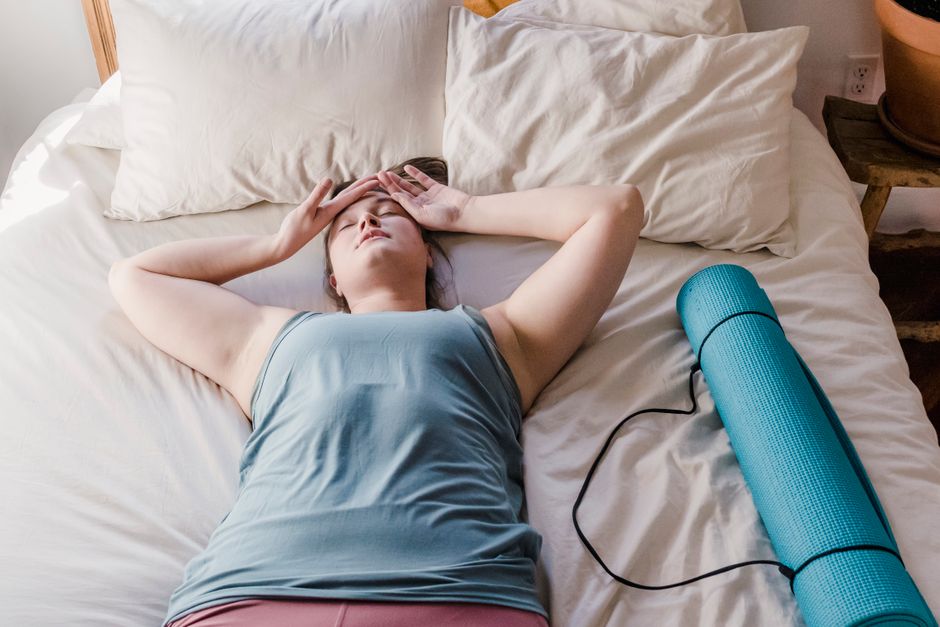
You slept until 10am on Saturday. You still feel foggy by noon. Sound familiar?
Most of us assume that if sleep deprivation is the problem, more sleep must be the fix. But the relationship between recovery sleep quality versus quantity is more nuanced than that, and confusing the two can keep you trapped in a cycle of grogginess that no amount of lying in bed will solve.
This comparison breaks down what genuine recovery sleep actually is, when extra hours help (and when they backfire), and how to figure out which type of sleep problem you are actually dealing with.

What Recovery Sleep Actually Means
Recovery sleep is a specific biological response to accumulated sleep debt. When you consistently fall short of your individual sleep need (the National Sleep Foundation notes most adults need 7 to 9 hours), your body builds a deficit that affects cognitive function, immune response, metabolism, and mood.
During genuine recovery, your brain prioritizes slow-wave (deep) sleep and REM sleep, the two stages most responsible for memory consolidation, cellular repair, and emotional regulation. Research published by the NIH’s National Center on Sleep Disorders Research confirms that after short-term deprivation, the brain does rebound by spending more time in these restorative stages once given the opportunity.
The key phrase is “short-term.” A few nights of poor sleep followed by one or two fuller nights can legitimately help. But chronic sleep debt, built up over weeks or months, does not erase with a single long weekend.

When Extra Sleep Becomes the Problem
Oversleeping regularly (consistently logging 9 or more hours without a clear reason) is associated with its own set of issues. Research in the journal Sleep has linked habitual long sleep duration with increased inflammation markers, higher risk of cardiovascular concerns, and, counterintuitively, greater daytime fatigue.
This is partly because sleeping significantly past your body’s natural wake time disrupts your circadian rhythm, the internal clock that regulates cortisol, body temperature, and alertness. When you stay in bed too long, you may wake in the middle of a deep sleep cycle, which produces what researchers call sleep inertia: that heavy, disoriented grogginess that can linger for hours.
So the extra hours on a Sunday morning that feel like recovery may actually be making Tuesday harder.

The Real Question: Is Your Problem About Time or Quality?
Before adding more hours, it helps to honestly assess which type of deficit you have.
Signs your problem is time-based (genuine recovery sleep needed):
- You are averaging fewer than 7 hours most nights
- You fall asleep within minutes of lying down
- You feel significantly better after a full 8-hour night
- Your fatigue is tied to a specific period of stress, illness, or schedule disruption
- You catch up on weekends and notice a real difference by Sunday afternoon
Signs your problem is quality-based (more hours will not help much):
- You are logging 7 to 9 hours but still wake unrefreshed
- You experience frequent nighttime awakenings or vivid, anxious dreams
- You snore, gasp, or wake with a dry mouth (possible signs of disordered breathing worth discussing with a healthcare professional)
- Extra sleep on weekends leaves you feeling just as tired or worse
- Your fatigue is constant rather than tied to a specific busy period
Quality problems need quality solutions, not quantity additions.

Practical Fixes for Each Scenario
If You Have a True Time Deficit
Gradual recovery works better than one dramatic catch-up session. Research from the journal Current Biology suggests that extending sleep by 60 to 90 minutes per night over several nights is more effective for cognitive recovery than a single extended sleep block.
- Aim for one consistent bedtime across the week, even on weekends
- Protect sleep opportunity by shifting other obligations, not by cutting sleep shorter
- Consider your meal timing in the evenings, since late eating can delay sleep onset and reduce slow-wave sleep depth (see Building a Balanced Dinner for Stable Sleep: Why Protein Order and Meal Timing Matter More Than Carb Restriction for practical guidance)
- If work or parenting schedules fragment your sleep, Meal Prep for Shift Workers: How to Eat on Flipped Schedules Without Sacrificing Sleep or Energy covers strategies for irregular rhythms
If Your Problem Is Sleep Quality
Adding hours to poor-quality sleep is like turning up the volume on a static-filled radio. The signal does not improve just because it is louder.
Stabilize your circadian rhythm first. Wake at the same time every day, including weekends. Light exposure within 30 minutes of waking (natural sunlight when possible) anchors your body clock.
Review your evenings carefully. Alcohol, late-night screen time, and large meals within two to three hours of bed are among the most common quality disruptors. Digital Wellness and Evening Habits: How Screen Time Before Bed Sabotages Your Sleep and Focus walks through the evidence on blue light and cognitive arousal.
Consider what happens before the bedroom. Evening digestion affects sleep architecture more than most people realize. Building Better Sleep Without a Bedroom Overhaul: How Meal Timing and Evening Digestion Shape Rest explains how to adjust your routine without a complete lifestyle overhaul.
Watch caffeine timing. Caffeine has a half-life of roughly 5 to 6 hours, meaning an afternoon coffee is still partly active at midnight. Caffeine Timing vs. Natural Energy Rhythms: Which Strategy Actually Sustains Your Focus All Day offers a practical framework for shifting your intake without energy crashes.
If symptoms suggest disordered breathing or a clinical sleep condition, a conversation with your doctor is the appropriate next step. Quality issues that do not respond to basic lifestyle adjustments deserve professional evaluation.

A Simple Two-Week Self-Check
Rather than guessing, run a brief personal experiment:
- For two weeks, maintain the same wake time every day (yes, weekends too)
- Track when you fall asleep and how you feel 90 minutes after waking
- Note whether evening habits (meal timing, screens, alcohol, exercise timing) correlate with better or worse mornings
- If you feel meaningfully better by week two with the same hours, your problem was circadian disruption, not a deficit
- If you still wake unrefreshed despite consistent timing and good habits, a healthcare provider or sleep specialist can help rule out underlying causes
This small experiment costs nothing and tells you far more than a single long weekend in bed ever could.

Which Actually Wins: Quantity or Quality?
Neither is universally more important, but when most adults are struggling, quality and consistency tend to be the more neglected variables. Adding hours helps when there is a real, recent debt. It rarely helps when the underlying architecture of sleep is disrupted.
The most sustainable approach is building a rhythm your body can rely on: consistent timing, evenings that support winding down, and attention to the habits that happen in the hours before bed. Occasional recovery nights are a normal, healthy response to genuinely demanding periods. Chronic compensatory sleeping is usually a sign something else needs addressing.
Choose one concrete action from the sections above, whether that is setting a consistent wake time, adjusting your evening meal, or tracking how you feel across two weeks, and practice it steadily. Small, consistent changes tend to produce more durable improvements than dramatic sleep marathons.
For more practical, evidence-informed guidance on rest, energy, and whole-person wellness, consider joining the Clean Body Mentor newsletter for weekly ideas you can actually use.
This article is for general educational and informational purposes only and is not a substitute for medical advice, diagnosis, or treatment. Health needs vary by individual. Consult a qualified healthcare professional before making significant changes to your diet, exercise routine, supplements, medication, or treatment plan, especially if you have a medical condition, are pregnant or breastfeeding, take medication, or have concerns about your symptoms.

Sources
- National Sleep Foundation. Sleep Duration Recommendations. sleepfoundation.org
- NIH National Center on Sleep Disorders Research. Sleep Deprivation and Deficiency. National Heart, Lung, and Blood Institute.
- Chaput, J.P. et al. (2020). Sleeping hours: what is the ideal number and how does age impact this? Nature and Science of Sleep, 12, 529-541.
- Åkerstedt, T. et al. (2019). Sleep duration and mortality: does weekend sleep matter? Journal of Sleep Research.
- Goldstein, C.A. & Smith, Y.R. (2016). Sleep, the brain, and behavior. Current Biology references on recovery sleep extension.
- Wright, K.P. et al. (2013). Entrainment of the human circadian clock to the natural light-dark cycle. Current Biology, 23(16), 1554-1558.