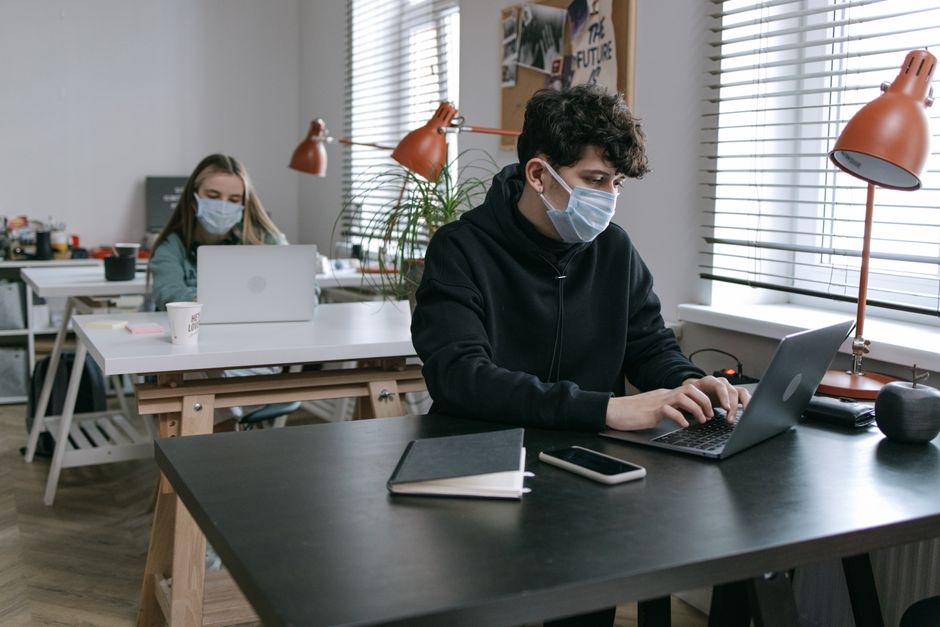
If your hips feel locked, your upper back aches by noon, or your neck is stiff before lunch, you are not imagining things. Research published in the British Journal of Sports Medicine suggests that adults spend more than seven hours a day sitting on average, and that prolonged static posture reduces joint range of motion, compresses spinal discs, and shortens the hip flexors over time.
The good news: you do not need a gym, foam roller, or extra hour in your day. These five mobility exercises for desk workers target the exact muscles and joints most burdened by chair-bound hours. Each drill takes one to two minutes, they flow well together, and you can do the whole sequence before your first meeting or during a mid-afternoon break.
If you want more context on why movement capacity matters for everyday function, Strength Training for Functional Mobility: How to Build Real-World Movement Capacity at Home pairs well with this routine.

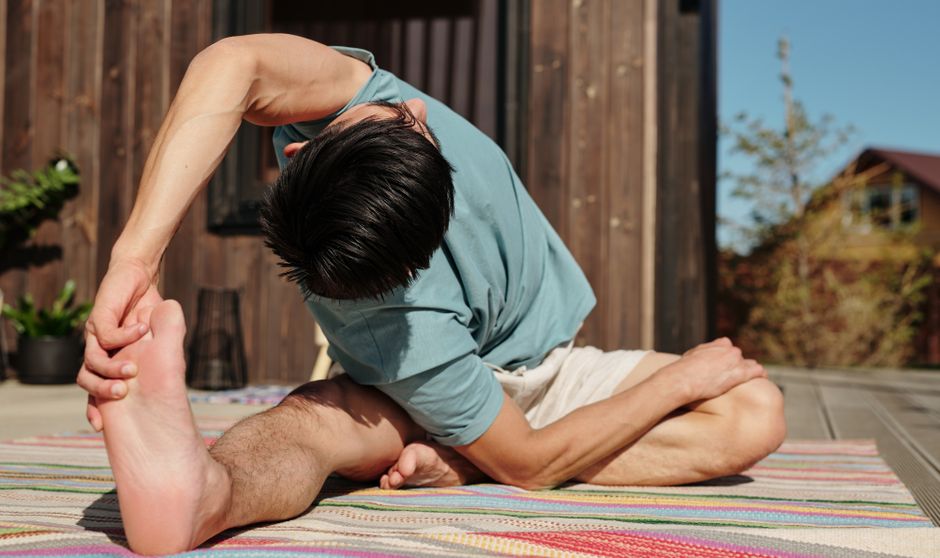
1. 90/90 Hip Switch
Why it works: Sitting locks your hips in one plane of movement. The 90/90 position opens both internal and external hip rotation simultaneously, addressing the full joint rather than just one tight direction.
How to do it:
- Sit on the floor with both knees bent at roughly 90 degrees, one shin in front and one to the side.
- Sit tall with a neutral spine. Hold for five slow breaths.
- Rotate your hips so the front shin becomes the back shin. That is one switch.
- Do five to eight switches per side, moving with control.
Modification: If the floor is uncomfortable, sit on a folded blanket to elevate your hips slightly. Focus on keeping your torso upright rather than slumping forward.
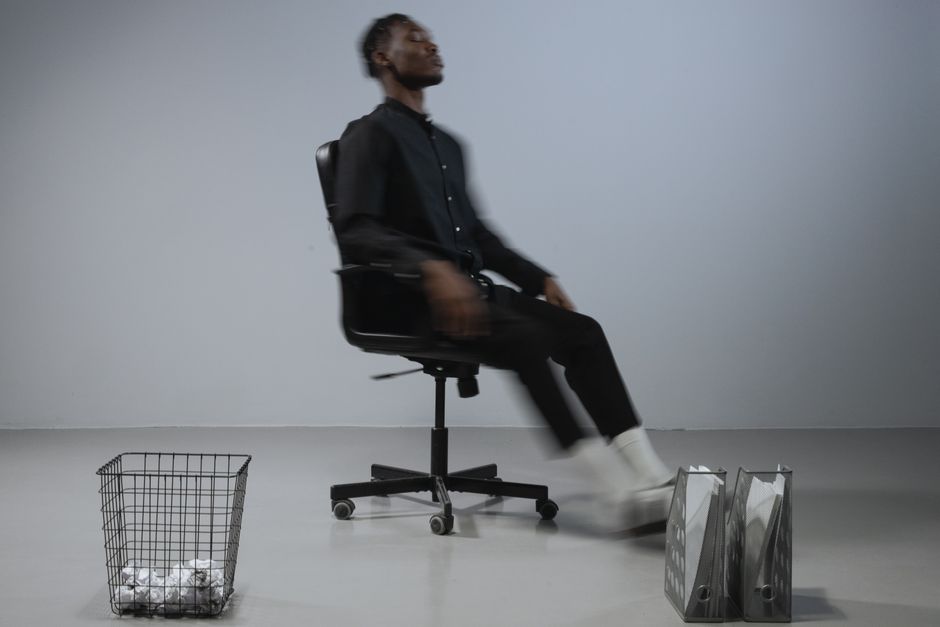
2. Thoracic Extension Over a Chair Back
Why it works: Hours of forward-leaning posture flex the thoracic spine into a rounded curve. Gently extending it in the opposite direction counteracts that compression and can relieve the upper-back tension that accumulates across a workday.
How to do it:
- Sit in your desk chair and scoot forward so your mid-back is near the top edge of the backrest.
- Interlace your fingers behind your head and gently arch backward over the chair back, opening your chest toward the ceiling.
- Breathe in at the top, then slowly return upright. Repeat five to eight times.
- Move the contact point slightly up or down the spine to find your tightest segment.
Note: Move slowly and stop if you feel sharp pain. This drill targets the mid-back, not the lower back or neck.
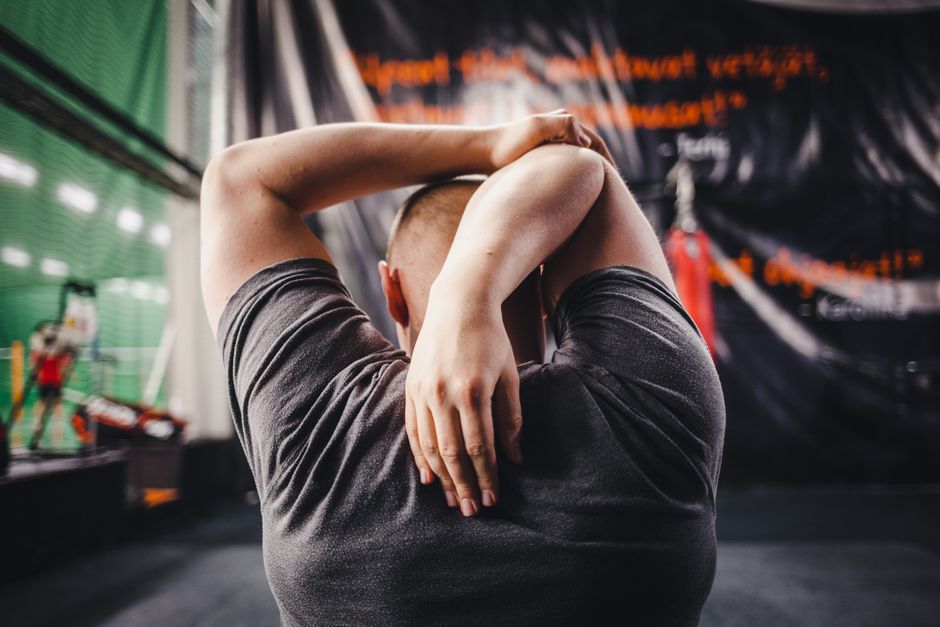
3. Half-Kneeling Hip Flexor Stretch with Reach
Why it works: The psoas and iliacus (your primary hip flexors) shorten when you sit for extended periods. Research from the Journal of Physical Therapy Science links tight hip flexors to both anterior pelvic tilt and lower-back discomfort. Adding an overhead reach lengthens the entire front-body chain in one movement.
How to do it:
- Kneel on one knee with the other foot forward, forming a 90-degree angle at both knees.
- Squeeze the glute of your back leg gently and shift your hips slightly forward until you feel a stretch at the front of the back hip.
- Raise the arm on the same side as your back knee overhead and lean slightly away. Hold for four to six breaths.
- Switch sides.
Modification: Place a folded towel under your back knee for cushioning. Keep the movement small if your balance feels unstable.
4. World’s Greatest Stretch (Simplified)
Why it works: This multi-joint drill combines a hip opener, thoracic rotation, and hamstring lengthening in a single flow. It earned its informal name because it efficiently addresses several areas that desk workers lose range of motion in at once.
How to do it:
- Start in a low lunge with your right foot forward and both hands on the floor inside your right foot.
- Drop your right elbow toward the floor (or as far as comfortable). Hold two seconds.
- Rotate your right arm up toward the ceiling, following your hand with your eyes. Hold two seconds.
- Return to the start and repeat three to five times per side.
If a full lunge is too much, Five Beginner Mobility Exercises for Desk Workers: Reverse Sitting Stiffness and Build Movement Confidence in 10 Minutes offers gentler entry points for this same movement pattern.

5. Standing Cat-Cow at Your Desk
Why it works: Cat-cow is well established as a way to restore segmental spinal movement, and the standing version lets you do it without a mat. The American College of Sports Medicine notes that controlled spinal flexion and extension can help maintain disc hydration and joint health when practiced regularly.
How to do it:
- Stand with feet hip-width apart and place your hands on your desk or thighs.
- Inhale and arch your back gently, lifting your chest and tailbone (cow).
- Exhale and round your spine, tucking your chin and pelvis (cat).
- Move slowly through five to eight breath cycles.
This one works especially well immediately after sitting through a long meeting. It takes less than 90 seconds.
How to Build This Into Your Day
You do not need to do all five drills at once to see benefit. Research suggests that breaking up sitting time every 30 to 60 minutes with brief movement may help reduce the cumulative effects of prolonged static posture (source: National Institutes of Health, Active People, Healthy Nation initiative).
A simple approach:
- Morning: Do the full five-drill sequence before you open your laptop (about 8 to 10 minutes).
- Midday: Pick two drills during a break, particularly the thoracic extension and the hip flexor stretch.
- Afternoon: Standing cat-cow for 90 seconds before or after your next call.
Once this routine feels familiar, you may want to complement it with light strength work. Stretching vs. Strength Training for Better Posture: Which One Fixes Slouching and Desk Stiffness walks through why both have a place in a balanced approach.
One Step to Start Today
Choose the drill that addresses your most noticeable discomfort right now and do it once today. Consistency with one movement beats occasional effort with all five. When you are ready to expand, the Mobility Routines for Office Workers guide on Clean Body Mentor offers a longer daily framework. You can also subscribe to the newsletter for practical weekly wellness guidance delivered without the overwhelm.

Sources
- Biswas A, et al. “Sedentary time and its association with risk for disease incidence, mortality, and hospitalization in adults.” Annals of Internal Medicine, 2015. Published by the American College of Physicians.
- American College of Sports Medicine. ACSM’s Guidelines for Exercise Testing and Prescription, 11th edition.
- National Institutes of Health. Active People, Healthy Nation initiative overview (NIH.gov).
- Kendall FP, et al. Muscles: Testing and Function with Posture and Pain, 5th edition. A standard reference on hip flexor mechanics and postural alignment.
- Journal of Physical Therapy Science: multiple peer-reviewed studies on hip flexor tightness and lower-back pain in sedentary populations.
This article is for general educational and informational purposes only and is not a substitute for medical advice, diagnosis, or treatment. Health needs vary by individual. Consult a qualified healthcare professional before making significant changes to your diet, exercise routine, supplements, medication, or treatment plan, especially if you have a medical condition, are pregnant or breastfeeding, take medication, or have concerns about your symptoms.