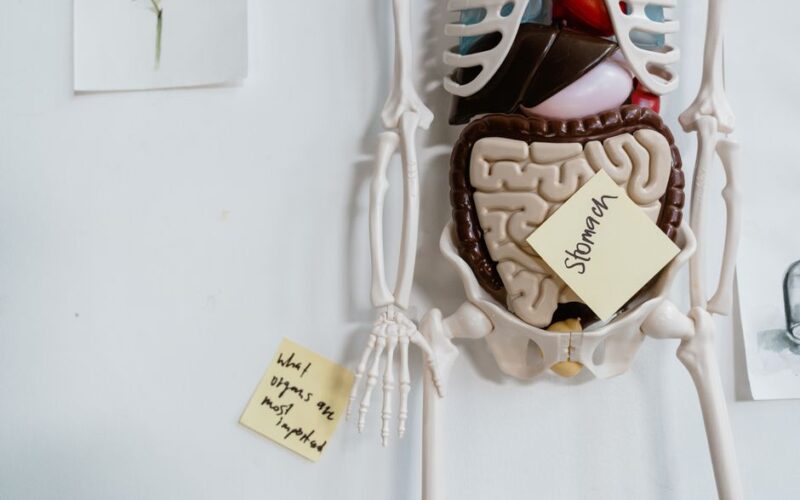


You forget to eat for most of the day, then realize it only because your hands are shaking. Or you sit down to a meal that used to be your favorite and feel nothing, not hunger, not pleasure, just a dull awareness that food exists. If you have experienced grief, you may recognize this pattern immediately. It is not weakness, indifference, or a lack of self-care. It is your body responding to one of the heaviest forms of emotional stress a person can carry.
Grief emotional eating and loss of appetite are two sides of the same disrupted response. Some people eat compulsively to soothe pain. Many more stop eating almost entirely. Both reactions stem from the same physiological storm happening inside you. Understanding why can make it easier to give yourself some grace, and some food.

What Stress Hormones Actually Do to Your Appetite
When you experience significant loss, your body activates the same stress-response pathway it uses in physical danger. The adrenal glands release cortisol and epinephrine, and your nervous system shifts into a heightened state. According to research published in the journal Psychosomatic Medicine and summarized by the National Institute of Mental Health, acute psychological stress suppresses activity in the digestive system and can significantly reduce appetite-regulating hormones like ghrelin.
In simpler terms: your body temporarily deprioritizes digestion and hunger because it is convinced you are in a crisis that requires all available energy elsewhere. You are not broken. Your nervous system is doing exactly what it was designed to do, just in response to an emotional wound rather than a physical threat.
This is also why grief can create digestive discomfort, nausea, and a feeling of fullness even when you have barely eaten. If you want a deeper look at how emotional loss affects the body beyond appetite, the guide on Grief and Your Body: Why Emotional Loss Disrupts Sleep, Appetite, and Recovery covers several of these physical responses together.

Three People, Three Experiences With Grief and Food
Abstract physiology only goes so far. Here is what that disruption actually looks like in real life.
Marcus, 41, after losing his father. Marcus described the first two weeks after his father’s death as “eating on autopilot.” He would accept food neighbors brought over, take a few bites, and push the plate aside. He lost seven pounds in three weeks without intending to. What helped him was keeping a bag of mixed nuts and dried fruit on his kitchen counter, something with no preparation required and no social pressure attached. He did not force meals. He grazed when his body signaled anything at all.
Priya, 34, after a pregnancy loss. Priya’s grief was layered with physical recovery, which made eating feel both necessary and impossible. She found that smoothies were the one thing she could consistently get down. A simple blend of banana, spinach, peanut butter, and oat milk took less than five minutes and delivered protein, fat, and micronutrients without requiring her to sit at a table and eat a full meal. The Smoothie Satiety Breakdown guide has useful ideas for building smoothies that genuinely hold you until your next small meal, which is exactly the kind of low-pressure nutrition that helped Priya during her hardest weeks.
David, 58, after the death of his long-term partner. David’s pattern was the opposite. He found himself eating compulsively late at night, not from hunger but from the unbearable quiet of his apartment. He was experiencing a grief-driven version of emotional eating. Recognizing the difference between genuine physical hunger and emotional grasping was something he worked on with a therapist. The article on Emotional Eating vs. True Physical Hunger explores that awareness process with compassion and without shame, which mirrors the kind of self-observation David found helpful.
Practical Ways to Nourish Yourself When Appetite Is Gone
There is no single right approach. These strategies are meant to reduce the friction between you and basic nourishment, not to optimize your diet during one of the hardest seasons of your life.
Start smaller than you think you should. Half a piece of toast with nut butter. A few crackers with cheese. A small bowl of soup. Forcing a full plate when your nervous system is on high alert can actually increase nausea and aversion. Research suggests smaller, more frequent eating is gentler on a suppressed digestive system.
Prioritize protein and fat in whatever you do eat. When intake is low, the quality of what you consume matters more. Eggs, nut butters, Greek yogurt, cheese, and legumes are nutrient-dense, require minimal preparation, and provide lasting energy even in small quantities.
Accept help with food without guilt. When people offer to bring meals, let them. When someone suggests sitting together to eat, try to accept. Social eating, even brief and quiet, can gently reactivate appetite signals that isolation tends to suppress further.
Use beverages strategically. Warm broth, milk, smoothies, and protein-enriched drinks can deliver meaningful calories and nutrients when solid food feels impossible. This is not a long-term plan, but it can bridge the gap.
Rebuild routine slowly. Even eating at a loose, consistent time each day helps re-anchor hunger signals. You do not need structure. You need a gentle anchor. If meal prep feels overwhelming, the guide on Meal Prep for Different Hunger Patterns offers a low-pressure system for planning around variable appetite, which can be useful as you begin to find your footing again.

When to Reach Out for Professional Support
Grief-related appetite disruption is common and usually temporary. But if significant weight loss continues beyond a few weeks, if you are unable to keep food down, if fatigue is affecting your ability to function, or if emotional eating has become distressing and habitual, those are signs to reach out to a qualified healthcare professional or a registered dietitian. A licensed mental-health professional who specializes in grief can also be genuinely helpful when food and emotions remain tangled for an extended period.
You deserve support. Asking for it is not a sign that your grief is too much. It is a sign that you are taking care of yourself, which is exactly what the people you have lost would want for you.

A Gentle Closing Thought
Grief does not follow a schedule, and neither does your appetite during it. The goal right now is not optimized nutrition. It is showing up for yourself in the smallest, most manageable ways, one bite at a time.
Choose one strategy from this article, just one, and try it consistently this week. If smoothies feel easiest, start there. If keeping easy snacks within reach is all you can manage, that is enough. And when you are ready to think about rebuilding a more stable eating rhythm, the Clean Body Mentor newsletter shares practical, evidence-informed guidance each week that meets you wherever you are.
This article is for general educational and informational purposes only and is not a substitute for medical advice, diagnosis, or treatment. Health needs vary by individual. Consult a qualified healthcare professional before making significant changes to your diet, exercise routine, supplements, medication, or treatment plan, especially if you have a medical condition, are pregnant or breastfeeding, take medication, or have concerns about your symptoms.

Sources
- National Institute of Mental Health. Stress and the body. nimh.nih.gov
- Psychosomatic Medicine. Research on psychological stress and gastrointestinal suppression. Published by Wolters Kluwer on behalf of the American Psychosomatic Society.
- Academy of Nutrition and Dietetics. Guidance on eating during emotionally stressful periods. eatright.org