

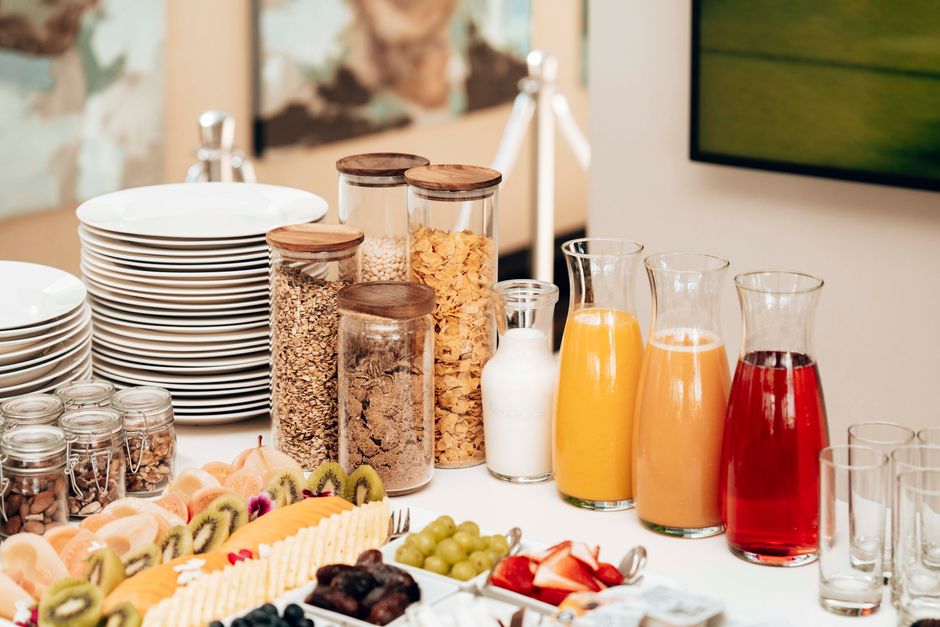
You ate breakfast. You are certain of it. And yet, by 9am, your stomach is already signaling for more food. If this pattern sounds familiar, the issue almost certainly is not discipline or appetite size. It is macronutrient composition.
A breakfast that keeps you full all morning depends on three interacting variables: how much protein you eat, how much fiber and fat accompany it, and when you eat relative to waking. Most traditional breakfasts get at least one of these wrong. To show exactly how this plays out in real life, we followed four readers through their actual morning eating habits, tracked their hunger signals, and shifted one or two variables at a time to find what worked.

The Hormone Behind Early Hunger
Before the case studies, it helps to understand what drives hunger in the first place. Ghrelin, sometimes called the hunger hormone, rises before meals and drops after eating. Research published by the National Institutes of Health notes that ghrelin suppression depends heavily on meal composition, not just calorie content. A high-carbohydrate, low-protein meal produces a faster return of ghrelin than a protein-anchored meal with similar calories.
This is why a bowl of sweetened oatmeal, a bagel with margarine, or a large banana with juice can leave you genuinely hungry again within 60 to 90 minutes. The carbohydrates digest quickly, blood sugar rises and falls sharply, and ghrelin rebounds. Protein and fiber slow both digestion and ghrelin rebound significantly.
For a closer look at the mechanics behind early hunger, Five Unexpected Reasons Your Hunger Returns Too Soon After Eating covers the physiology in practical detail.
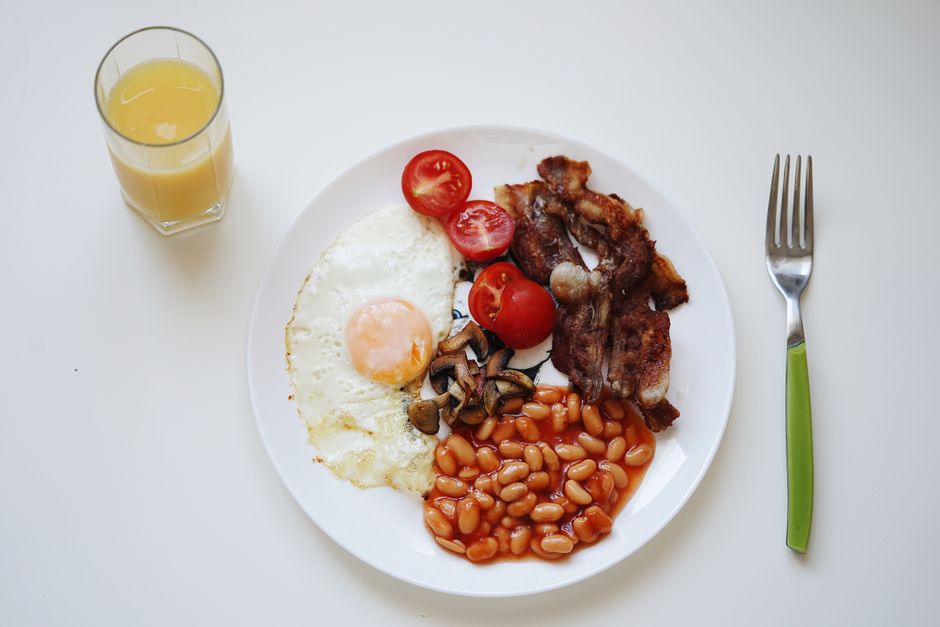
Four Readers, Four Breakfasts, One Pattern
Reader 1: Mara, 38, Busy Parent
Original breakfast: Whole-wheat toast with peanut butter and a banana. Coffee with oat milk. Ate at 7:15am. Hungry again by 8:45am.
Mara’s breakfast had decent fiber from the toast and banana, but protein was low (about 8g from the peanut butter). Fat was moderate but not paired with a slowing fiber source. The banana added rapid-digesting sugars on top of the toast.
Adjustment: Replaced the banana with half an avocado. Added two scrambled eggs alongside the toast. Total protein climbed to roughly 22g. Fat-to-fiber ratio improved substantially.
Result: Hunger held until after 11am. Mara described her energy as steadier, without the mid-morning mental fog she had normalized.
Reader 2: Dom, 45, Desk Worker
Original breakfast: Greek yogurt parfait with granola and berries. Ate at 7:00am. Hungry by 8:30am.
Greek yogurt is marketed as a protein food, and plain versions are. But Dom’s flavored yogurt contained added sugar, the granola added more, and protein was diluted to around 10g per serving. The blood sugar curve was sharp.
Adjustment: Switched to plain 2-percent Greek yogurt (20g protein per serving), topped with ground flaxseed and blueberries. Granola was cut in half and replaced partly with chopped walnuts for slower-digesting fat.
Result: Satiety extended past 11:30am. Dom noted he stopped reaching for the office snack drawer before his 10am meeting.
Reader 3: Priya, 31, First-Time Breakfast Eater
Priya had skipped breakfast for years and recently started eating in the morning to manage energy. Her early attempt: a smoothie made with frozen mango, spinach, almond milk, and honey. Ate at 8:00am. Hungry by 9:00am.
This smoothie was nutrient-dense in some ways but very low in protein (about 3g) and fat, and the mango and honey spiked blood sugar quickly. Liquid meals also empty from the stomach faster than solid ones, which accelerates hunger signals.
Adjustment: Added one scoop of plain protein powder (20g protein) and two tablespoons of almond butter to the smoothie. Swapped honey for a small handful of oats to slow digestion.
Result: Hunger held until nearly noon on the days she ate the adjusted smoothie. The protein and fat addition made the biggest difference. For readers building a breakfast smoothie habit, How to Build a Balanced Breakfast Bowl With Whole Grains, Protein, and Healthy Fats offers a complementary framework.
Reader 4: James, 52, Early Riser
Original breakfast: Two fried eggs and coffee. Ate at 5:45am. Hungry by 8:00am.
James had the protein right (eggs provide about 12g for two), but his meal lacked fiber almost entirely. Fat from the eggs was present, yet without fiber to slow transit, digestion finished quickly. He was also eating unusually early, extending the window to his next meal.
Adjustment: Added a side of black beans (about 7g additional protein, 6g fiber) and a slice of whole-grain toast with olive oil. Total protein rose to 22g, and fiber jumped from nearly zero to around 10g.
Result: Hunger held reliably until 9:30am to 10:00am despite the early start time, a significant improvement from his two-hour window.

The Combination That Consistently Won
Across all four cases, the breakfast that kept readers full all morning shared the same profile:
- At least 20g of protein from eggs, plain Greek yogurt, legumes, or protein powder
- 5 to 10g of fiber from vegetables, whole grains, ground seeds, or fruit with the skin
- A moderate fat source such as avocado, nuts, olive oil, or full-fat dairy
- Minimal added sugar and limited rapid-digesting carbohydrates eaten alone
Protein sequencing also mattered. In the cases where readers ate protein first before toast or fruit, they reported hunger returning later. This aligns with emerging research on protein-first meal sequencing described in Protein Order at Breakfast Changes Your Hunger Signals All Day: The Science Behind Eating Eggs or Beans First.
For readers who want to extend this principle into the rest of their day, Afternoon Hunger and Food Pairing: Why Your 3pm Cravings Return and Which Meal Combinations Actually Stabilize Blood Sugar applies the same logic to lunch and the afternoon window.

What This Means for Your Morning
You do not need a complicated meal or an early alarm. You need a breakfast that leads with protein, includes fiber, and pairs both with a steady fat source. Even small adjustments, like adding eggs to toast or swapping flavored yogurt for plain, can extend your satiety window by two to three hours.
Choose one shift from this article and try it for five mornings. Notice how your hunger signals change. That single observation, repeated consistently, tends to build the motivation to keep going.
For more practical meal-timing guidance, the Building a Breakfast Routine for Stable Morning Energy: Protein, Timing, and Real-Life Combinations guide covers how to structure your first meal around your schedule and goals.
This article is for general educational and informational purposes only and is not a substitute for medical advice, diagnosis, or treatment. Health needs vary by individual. Consult a qualified healthcare professional before making significant changes to your diet, exercise routine, supplements, medication, or treatment plan, especially if you have a medical condition, are pregnant or breastfeeding, take medication, or have concerns about your symptoms.
Sources
- Cummings, D.E., et al. “Plasma ghrelin levels after diet-induced weight loss or gastric bypass surgery.” New England Journal of Medicine, 2002. (NIH PubMed)
- U.S. Department of Agriculture, Dietary Guidelines for Americans 2020-2025, Chapter 3: Foods and Beverages. Available at dietaryguidelines.gov.
- Leidy, H.J., et al. “The role of protein in weight loss and maintenance.” American Journal of Clinical Nutrition, 2015. (NIH PubMed)
- Jakubowicz, D., et al. “High caloric intake at breakfast vs. dinner differentially influences weight loss…” Obesity, 2013. (Wiley Online Library)