You know the feeling. Your inbox is overflowing, someone cuts you off in traffic, or a difficult conversation catches you off guard. Before you reach for coffee or start scrolling your phone, consider this: your breath is already with you, and it can shift your nervous system state faster than most people realize.
Breathwork for stress relief is not a wellness trend reserved for yoga studios. Research published in Cell Reports Medicine (Huberman Lab collaborators, Stanford, 2023) found that deliberate breathing practices reduced anxiety and improved mood more reliably than mindfulness meditation in a randomized controlled trial. That is a meaningful finding, and it points to something practical: you can change how you feel by changing how you breathe.
This guide walks you through three foundational techniques, explains the science behind why they work, and gives you real-life scenarios so you know exactly which one to reach for.

Why Your Breath Has a Direct Line to Your Nervous System
Your autonomic nervous system has two main modes. The sympathetic branch drives the stress response, raising heart rate and cortisol. The parasympathetic branch, sometimes called the rest-and-digest system, does the opposite. Most people cannot consciously control their heart rate or digestion. But you can control your breath, and breathing is the only autonomic function you can deliberately override.
Slowing your exhale, in particular, activates the vagus nerve, which runs from your brainstem through your chest and abdomen. Longer exhales signal safety to the brain and reduce heart rate through a mechanism called respiratory sinus arrhythmia. The National Institutes of Health (NIH) has funded research confirming that slow, rhythmic breathing consistently activates parasympathetic tone. In plain terms: a few controlled breaths can genuinely interrupt a stress spiral.
If you are curious how breathwork compares to sitting meditation, the Breathwork vs. Meditation for Stress Relief: Which Practice Fits Your Life and Goals guide covers the tradeoffs in depth.
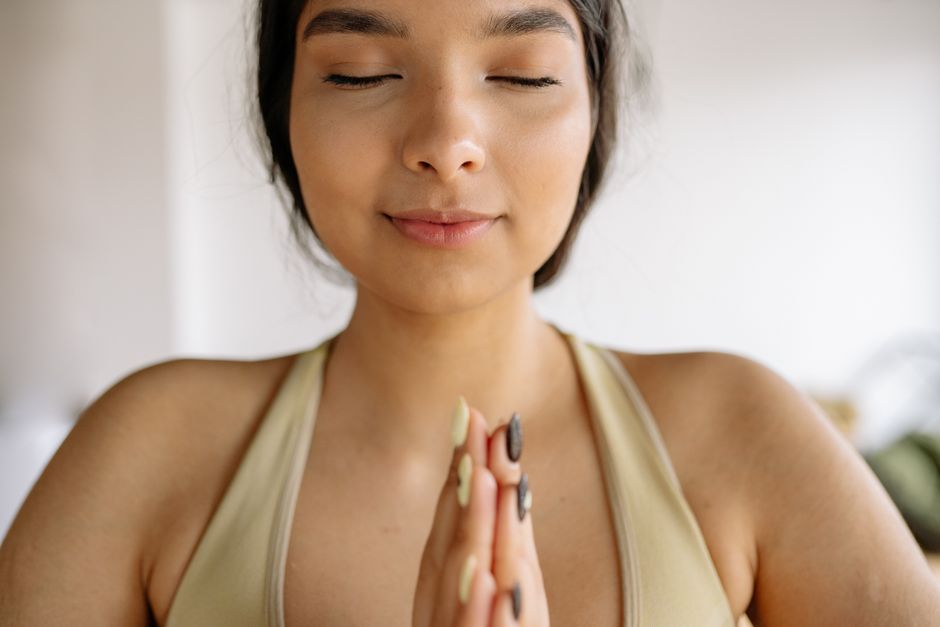
Three Breathwork Techniques Worth Learning
1. Physiological Sigh (30 Seconds, Immediate Calm)
This is probably the fastest nervous system reset available to you without any equipment or training.
How to do it:
- Inhale fully through your nose.
- At the top of that inhale, take one short extra sniff to fully inflate your lungs.
- Release a long, slow exhale through your mouth until your lungs feel empty.
- Repeat one to three times.
Why it works: Deep sighs reinflate collapsed air sacs in the lungs and rapidly offload carbon dioxide. Research from Stanford University (Yackle et al., Science, 2017) identified the neurons that trigger involuntary sighs and showed they are closely linked to emotional state. The deliberate version mimics this reflex and produces a measurable drop in heart rate within seconds.
Best scenario: You just got a stressful message or you are about to say something reactive that you will regret. One physiological sigh before you respond can lower the temperature of the moment.
2. Box Breathing (4-4-4-4, Focused Calm)
Box breathing, sometimes called square breathing, is used by military personnel, first responders, and athletes to maintain composure under pressure. It is slightly more structured than the sigh and works best when you have a minute or two.
How to do it:
- Inhale through your nose for a count of four.
- Hold at the top for a count of four.
- Exhale through your nose or mouth for a count of four.
- Hold at the bottom for a count of four.
- Repeat for four to six rounds.
Why it works: The equal-ratio pattern and breath holds stabilize carbon dioxide levels and engage voluntary attention, which pulls mental focus away from rumination. Research from the U.S. Navy on tactical breathing protocols supports its use for acute stress management.
Best scenario: A high-stakes meeting, a difficult phone call, or a parenting moment that is about to escalate. Box breathing is also practical before bed if racing thoughts are keeping you awake. Speaking of which, the connection between stress and sleep quality is worth understanding, and Emotional Resilience and Sleep Recovery: How Rest and Stress Management Work Together explores that relationship directly.
3. Extended Exhale Breathing (4-7 or 4-6, Sustained Wind-Down)
If you have three to five minutes, deliberately lengthening your exhale relative to your inhale is one of the most evidence-supported ways to shift your body from sympathetic to parasympathetic dominance.
How to do it:
- Inhale through your nose for four counts.
- Exhale slowly through pursed lips or your nose for six to eight counts.
- Aim for a ratio where the exhale is at least one and a half times longer than the inhale.
- Continue for ten to fifteen breath cycles.
Why it works: Longer exhales mechanically slow the heart via the vagus nerve and lower cortisol over repeated cycles. A 2017 review in Frontiers in Psychology found that slow breathing at approximately six breath cycles per minute produced the strongest parasympathetic activation across multiple studies.
Best scenario: End-of-workday decompression, post-conflict cool-down, or preparing for sleep. Pair this with a body scan or gentle movement if you have time.
Matching the Technique to the Moment
Having three tools is only useful if you know when to reach for each one:
| Situation | Recommended Technique | Time Required |
|---|---|---|
| Sudden spike of stress or anger | Physiological sigh | 30 seconds |
| Pre-performance anxiety or meeting prep | Box breathing | 2-3 minutes |
| Daily decompression or sleep prep | Extended exhale breathing | 3-5 minutes |
One note: if you feel dizzy or lightheaded during any breathing exercise, return to your normal breathing rhythm. People with cardiovascular conditions, asthma, or respiratory concerns should check with a qualified healthcare professional before practicing breath holds or extended breath work.

Building the Habit So It Works Under Pressure
The catch with any stress management tool is that you need to practice it when you are calm before you can reliably access it when you are not. Think of it like a fire drill. You rehearse so the response becomes automatic.
A simple starting routine: pick one technique and practice it for two minutes every morning for two weeks. Attach it to something you already do, like your first cup of water or the moment you sit down at your desk. Once the pattern is familiar, it becomes available to you during the hard moments.
Stress does not only live in your mind. It shows up in your body as tension, in your eating patterns (worth reading: Stress Eating vs. Physical Hunger: How to Respond With Awareness Instead of Judgment), and in the quality of your sleep and relationships. Breathwork is one piece of a whole-person approach to emotional resilience, and it is a piece that costs nothing and takes almost no time.
Start with the physiological sigh today. Use it the next time something catches you off guard. That single, small habit may shift how the rest of your day unfolds.
For more practical wellness guidance delivered weekly, consider joining the Clean Body Mentor newsletter.
This article is for general educational and informational purposes only and is not a substitute for medical advice, diagnosis, or treatment. Health needs vary by individual. Consult a qualified healthcare professional before making significant changes to your diet, exercise routine, supplements, medication, or treatment plan, especially if you have a medical condition, are pregnant or breastfeeding, take medication, or have concerns about your symptoms.
Sources
- Balban, M. Y., et al. (2023). Brief structured respiration practices enhance mood and reduce physiological arousal. Cell Reports Medicine. (Stanford University)
- Yackle, K., et al. (2017). Breathing control center neurons that promote arousal in mice. Science, 355(6332), 1411-1415.
- Zaccaro, A., et al. (2018). How breath-control can change your life: A systematic review on psycho-physiological correlates of slow breathing. Frontiers in Human Neuroscience.
- National Center for Complementary and Integrative Health (NCCIH), NIH: research summaries on mind-body practices and stress.