

You wake up, grab a coffee and a piece of toast, and by 10:30 a.m. you are staring at the snack drawer. Sound familiar? The problem is often not your willpower. It may be your protein breakfast timing and hunger signals.
How early or late you eat protein in the morning can influence two of your key appetite hormones: ghrelin (which drives hunger) and leptin (which signals fullness). Getting this timing roughly right does not require a rigid schedule, but it does reward a little planning.
Here is a clear comparison of eating protein immediately after waking versus waiting one to two hours, what the research suggests about each, and how to find the approach that fits your real life.

How Protein Affects Your Appetite Hormones
Before comparing timing, it helps to understand the mechanism. When you eat protein, your body releases less ghrelin compared to a carbohydrate-only meal of similar calories. Research published in the journal Obesity (University of Missouri, 2011) found that a high-protein breakfast significantly reduced ghrelin levels and increased feelings of fullness throughout the morning, compared to a normal-protein breakfast or skipping breakfast entirely.
Protein also stimulates the release of peptide YY (PYY), a gut hormone that signals satiety to the brain. This combination, lower ghrelin and higher PYY, is largely why a protein-forward breakfast tends to reduce calorie intake later in the day for many people.
What changes with timing is how those hormone signals interact with your body’s natural morning cortisol rhythm and circadian biology.
For a deeper look at how the amount and pairing of protein shapes satiety signals, see Protein Timing and Hunger: When You Eat Protein Matters as Much as How Much.

Eating Protein Right After Waking (Within 30-60 Minutes)
What happens hormonally: Cortisol peaks naturally in the first hour after waking, a pattern sometimes called the cortisol awakening response. This surge temporarily suppresses appetite for some people but also raises blood sugar slightly. Eating protein early may help stabilize that blood sugar rise and begin suppressing ghrelin before it builds momentum.
Who this tends to work well for:
- People who wake up genuinely hungry
- Those with physically active mornings (workouts, childcare, manual work)
- Anyone who notices strong midday hunger crashes when they skip or delay breakfast
- People managing weight or working toward body composition goals
Practical early-protein examples:
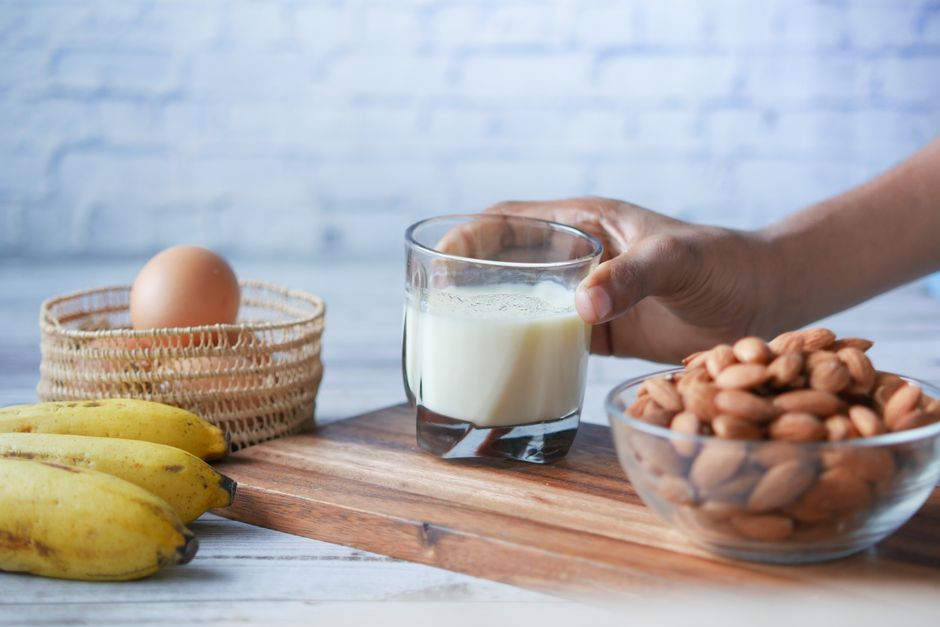
- 2-3 scrambled eggs with a slice of whole-grain toast (roughly 18-20 g protein)
- Greek yogurt with berries and a tablespoon of hemp seeds (roughly 17 g protein)
- A protein smoothie with unsweetened milk, half a banana, and a scoop of protein powder (roughly 25-30 g protein)
Aiming for 20-30 grams of protein at breakfast appears to be the range most consistently associated with reduced hunger signals through the morning, according to findings cited by the American Journal of Clinical Nutrition.
For ready-to-use options, High-Protein Breakfast Ideas for Steady Energy and Satiety covers combinations that hold up through a busy morning.

Eating Protein Later in the Morning (1-2 Hours After Waking)
What happens hormonally: For some people, appetite is genuinely low right after waking, particularly those who are not morning hungry or who practice a shorter eating window. Forcing food when you are not hungry can feel uncomfortable and may not produce better hunger regulation than simply eating when appetite arrives.
Research on time-restricted eating (including work published by the Salk Institute and covered in journals such as Cell Metabolism) suggests that consistent eating windows matter more for metabolic health than the exact minute you start eating. Delaying protein by an hour or two is unlikely to erase its satiety benefits, as long as you eventually eat enough protein earlier in your active hours rather than pushing protein intake to late afternoon.
Who this tends to work well for:
- People who genuinely feel nauseous or uncomfortable eating immediately after waking
- Those who exercise fasted in the morning (light to moderate intensity) and prefer to eat afterward
- People with later work schedules who start their day at 9 or 10 a.m.
The tradeoff to watch: Waiting too long, say skipping until noon without protein, often means ghrelin has peaked and your hunger arrives hard, making impulsive, high-calorie food choices more likely. If you delay breakfast, try to keep the window under two hours and make sure protein is the anchor of that first meal.
If your mornings include movement before eating, Fasted Morning Movement vs. Eating Before Exercise: Which Approach Supports Your Goals and Energy walks through the tradeoffs honestly.

Side-by-Side: Early vs. Late Protein Breakfast
| Factor | Early (within 60 min) | Later (1-2 hours after waking) |
|---|---|---|
| Ghrelin suppression | Begins earlier | Delayed but still effective with enough protein |
| Midday hunger risk | Lower for most people | Higher if meal is delayed past 2 hours |
| Blood sugar stability | Better, especially with high-carb alternatives | Depends on what you eat when you do eat |
| Best fit | Hungry wakers, active mornings, weight management goals | Not-hungry wakers, fasted exercisers, late schedules |
| Main risk | None if appetite is present | Overhunger if delay becomes skip |

What Actually Matters Most: Protein Amount and Consistency
Timing matters, but it is not the only lever. Two things consistently outperform perfect timing in the research:
- Eating enough protein at your first meal. Hitting 20-30 grams at breakfast tends to produce stronger satiety signals than a smaller amount regardless of when you eat it.
- Eating consistently across the day. Spreading protein across meals rather than loading it all at dinner supports steadier hunger hormone balance. Protein Combinations That Reduce Hunger Signals: Which Pairings Work Best for Satiety covers how different pairings affect fullness signals meal by meal.
If you have been eating protein at breakfast but still find yourself hungry by mid-morning, The Breakfast Protein Mistake: Why You Might Still Feel Hungry (And How to Fix It) identifies the most common gaps worth fixing.

A Practical Starting Point
You do not need to overhaul your mornings. Pick one small, realistic action: if you currently eat only carbohydrates at breakfast, add one protein source this week (eggs, yogurt, cottage cheese, or a protein smoothie). If you skip breakfast entirely and notice strong midday hunger, try moving your first protein-containing meal to within two hours of waking and observe whether your afternoon appetite changes over several days.
Consistency matters more than precision. A good-enough protein breakfast you actually eat beats a perfect one you skip.
For weekly practical guidance on balanced eating and sustainable habits, consider joining the Clean Body Mentor newsletter.
This article is for general educational and informational purposes only and is not a substitute for medical advice, diagnosis, or treatment. Health needs vary by individual. Consult a qualified healthcare professional before making significant changes to your diet, exercise routine, supplements, medication, or treatment plan, especially if you have a medical condition, are pregnant or breastfeeding, take medication, or have concerns about your symptoms.
Sources
- Leidy HJ, et al. “Beneficial effects of a higher-protein breakfast on the appetitive, hormonal, and neural signals controlling energy intake regulation in overweight/obese, ‘breakfast-skipping,’ late-adolescent girls.” American Journal of Clinical Nutrition, 2013. (University of Missouri research group)
- Leidy HJ, Racki EM. “The addition of a protein-rich breakfast and its effects on acute appetite control and food intake in ‘breakfast-skipping’ adolescents.” International Journal of Obesity, 2010.
- Sutton EF, et al. “Early Time-Restricted Feeding Improves Insulin Sensitivity, Blood Pressure, and Oxidative Stress Even without Weight Loss in Men with Prediabetes.” Cell Metabolism, 2018.
- Paddon-Jones D, et al. “Protein and healthy aging.” American Journal of Clinical Nutrition, 2015. (protein distribution across meals)