
By 2:30 in the afternoon, your concentration starts to dissolve. You reach for whatever is nearby, and that often means a packaged snack bar with an ingredient list that runs to sixteen items. The bar delivers a quick lift, then sends you lower than before. This pattern is not a willpower problem. It is a food-composition problem.
Research suggests that blood-glucose stability is closely tied to cognitive performance during the afternoon hours (National Institutes of Health, Nutrients, 2021). Whole foods tend to slow glucose absorption through fiber, fat, and protein content, which is exactly what most processed snack bars strip out during manufacturing. The question is not whether whole foods are better in principle. The question is which whole-food categories actually deliver stable energy, fit a real budget, and can survive a bag or desk drawer without refrigeration.
Below is a direct comparison of four practical options: nuts, seeds, dried fruit, and whole-grain snacks. Each is evaluated on energy stability, cost per serving (using common U.S. grocery averages), and transport ease so you can build a rotation that gets you through 5pm without depending on convenience foods.
If afternoon crashes are a persistent problem for you, it also helps to look at the bigger picture. Why Your Afternoon Energy Crashes at 3pm and How Meal Order Actually Fixes It explains how what you ate at lunch shapes your 3pm experience just as much as what you snack on.
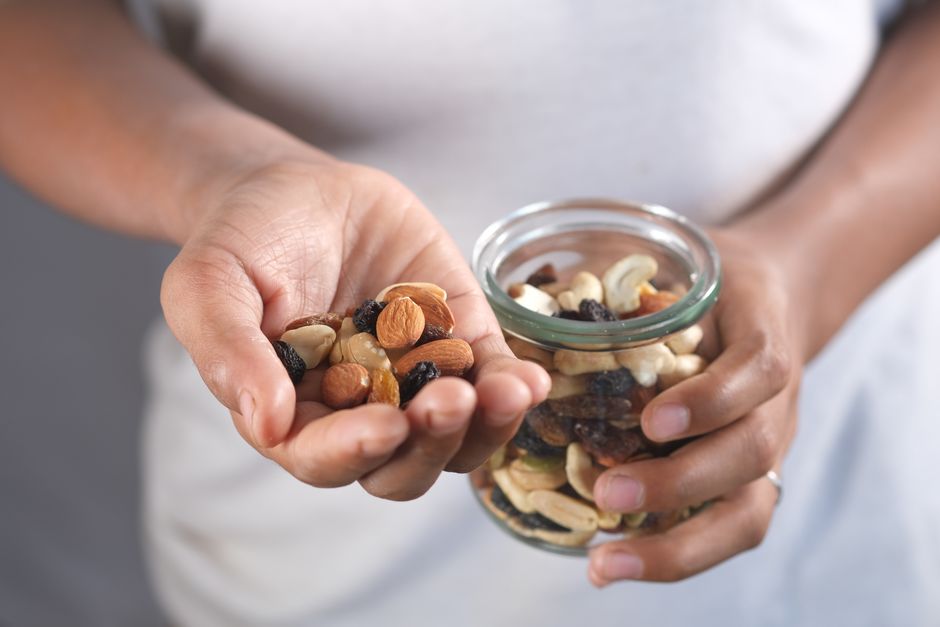
Nuts: Slow-Burn Energy with the Highest Cost per Ounce
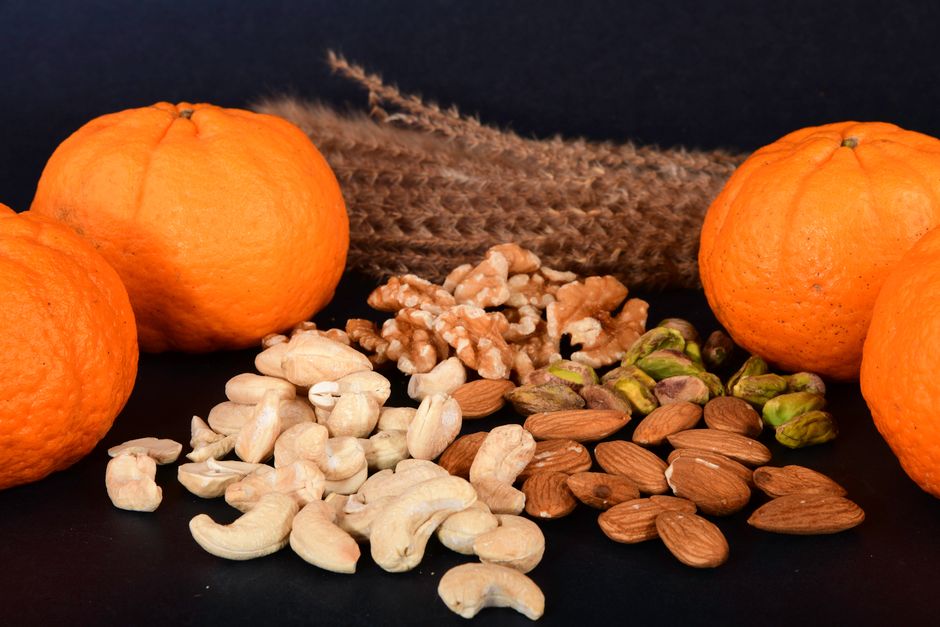
Nuts are probably the most studied whole-food snack category. Almonds, walnuts, cashews, and pistachios all provide a mix of unsaturated fat, plant protein, and fiber that tends to blunt glucose spikes and support satiety for two to three hours.
Energy stability: High. The fat-to-fiber ratio slows digestion considerably. A one-ounce serving of almonds (roughly 23 nuts) delivers about 6 grams of protein and 3.5 grams of fiber alongside healthy fats, all working together to keep glucose steady.
Cost per serving: Moderate to high. At typical U.S. grocery stores, mixed nuts run $0.60 to $1.20 per one-ounce serving, depending on variety and whether you buy in bulk. Walnuts and cashews sit at the pricier end; peanuts (technically a legume, but nutritionally similar) can drop to $0.20 to $0.30 per serving and perform comparably for satiety.
Transport ease: Excellent. Pre-portioned into a small container or zip bag, nuts travel without refrigeration for days. No prep required.
Practical note: Portions matter here. A handful is easy to manage, but mindless grazing from a large bag can push calories up quickly. Pre-portioning before you leave home helps.
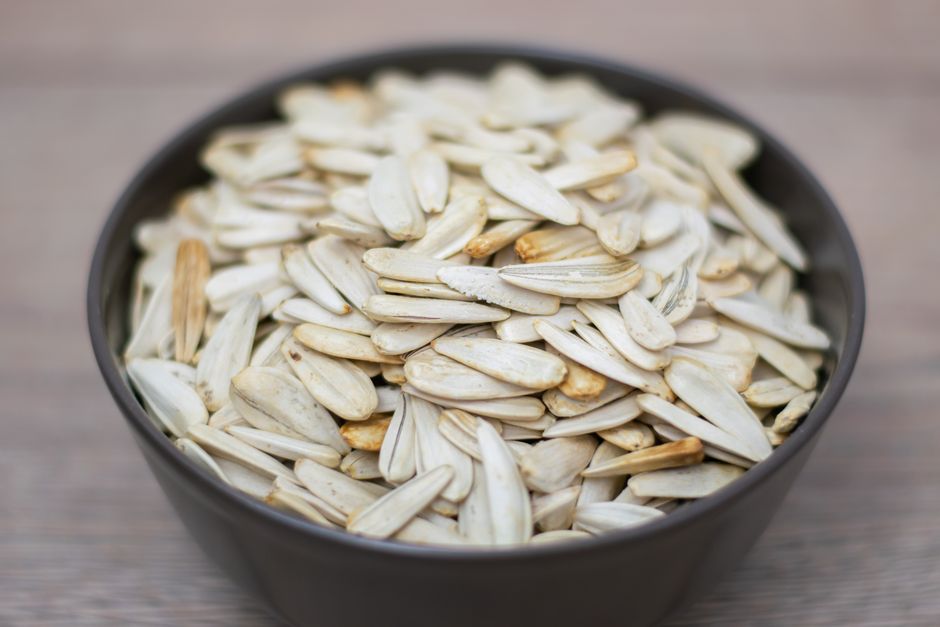
Seeds: Underrated Nutrition at a Lower Price
Pumpkin seeds, sunflower seeds, and hemp seeds rarely get as much attention as nuts, but they compete strongly on both nutrition and cost. Pumpkin seeds in particular are high in magnesium, which research suggests may play a role in reducing fatigue (NIH Office of Dietary Supplements, Magnesium Fact Sheet).
Energy stability: High. Similar fat-protein-fiber profile to nuts. Hemp seeds add a small complete-protein advantage because they contain all nine essential amino acids, which is uncommon in plant foods. For a deeper look at complete plant proteins, Whole-Food Plant Proteins Ranked by Satiety, Cost, and Prep Time is a useful companion read.
Cost per serving: Low to moderate. Raw pumpkin seeds (pepitas) average $0.40 to $0.70 per ounce in bulk bins. Sunflower seeds are even cheaper, often $0.20 to $0.35 per serving. Hemp seeds are pricier at $0.60 to $0.90 per serving but deliver a denser nutrient payload per tablespoon.
Transport ease: Very good. Seeds are lighter than nuts and pack flat. They work stirred into yogurt or eaten alone. The only limitation is that some seeds (hemp, flax) absorb moisture quickly, so an airtight container helps.
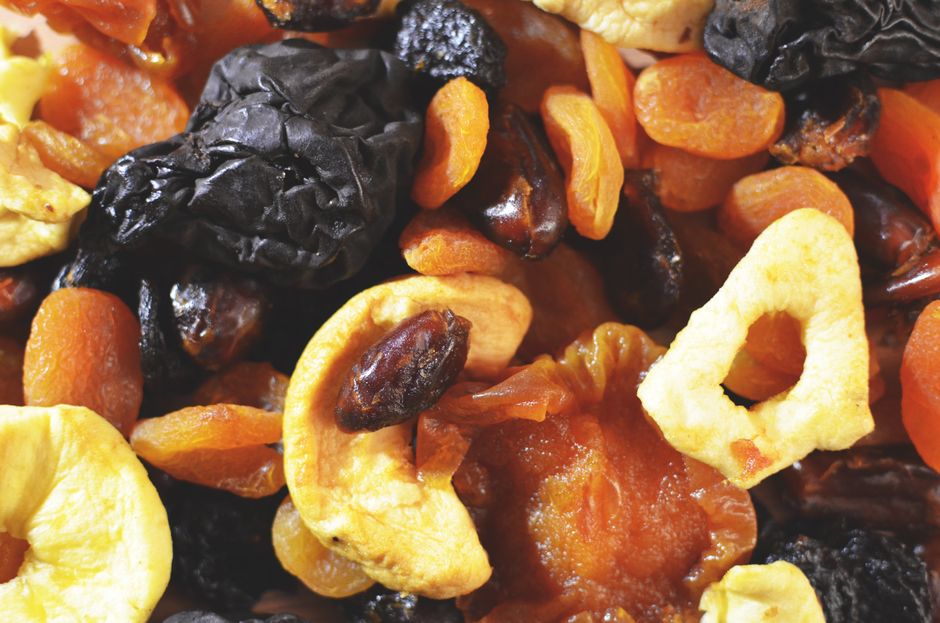
Dried Fruit: Quick Energy That Needs a Pairing
Dried fruit is the most misunderstood category on this list. It is not junk food. Dates, apricots, raisins, and figs provide fiber, potassium, and iron in a shelf-stable form. But the drying process concentrates natural sugars significantly, which raises the glycemic response compared to the fresh version of the same fruit.
Energy stability: Moderate, and pairing-dependent. Eaten alone, dried fruit can cause a faster glucose rise and a quicker comedown, especially in smaller portions. Paired with a fat or protein source (a few almonds alongside three dates, for example), the response flattens noticeably. This is not speculation. The concept of pairing high-glycemic foods with fat and protein to blunt the response is supported by research on mixed-meal glycemic load (American Diabetes Association dietary guidelines).
Cost per serving: Low to moderate. Raisins are among the cheapest snack options available, often under $0.25 for a one-ounce serving. Medjool dates run $0.50 to $1.00 per piece depending on the source. Dried apricots and figs average $0.40 to $0.70 per serving.
Transport ease: Excellent. Dried fruit is lightweight, non-perishable, and compact. It is probably the easiest category to toss in a bag without any container at all, though a small bag keeps it from sticking together.
Practical note: Check labels if you buy pre-packaged dried fruit. Added sugar and sulfites are common. Unsweetened, minimally processed versions are the better choice.
Why Your Afternoon Cravings Feel Irresistible at 3pm and Four Snack Pairings That Actually Interrupt the Cycle breaks down exactly how pairing strategies interrupt the craving loop.
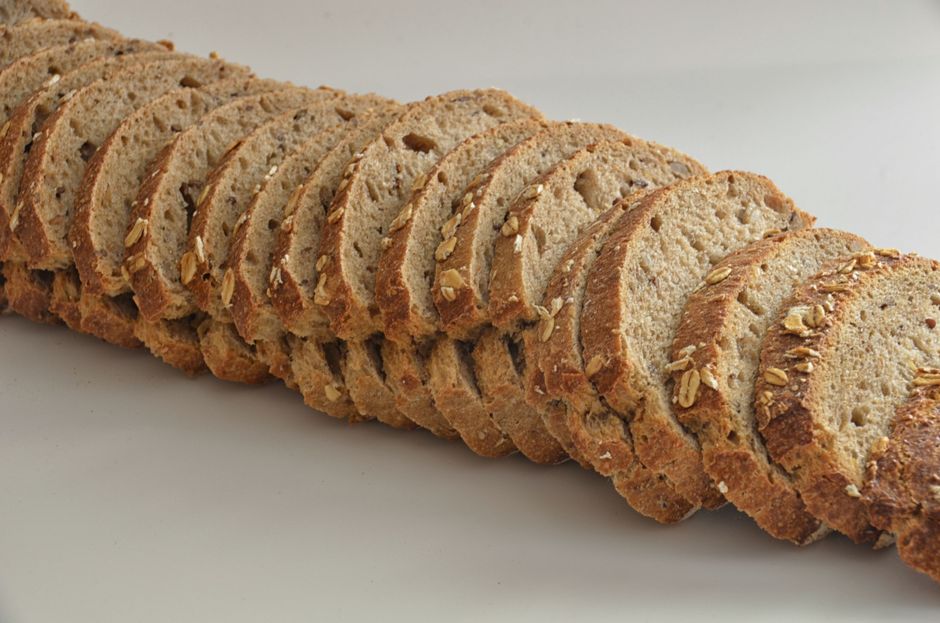
Whole Grains: Portable Carbohydrate With More Fiber Than You Think
This category includes options like plain popcorn, oat-based crackers, whole-grain rice cakes, and even pre-cooked whole-grain cups. It is the broadest and most variable group, so label-reading matters most here.
Energy stability: Moderate to high, depending on the product. Whole grains retain their bran and germ, which means more fiber and a slower glucose release than refined-grain equivalents. Air-popped popcorn, for example, provides about 3.5 grams of fiber per three-cup serving at a low calorie count. Paired with a small amount of nut butter or seeds, it becomes a genuinely sustaining snack. Alone, it is lighter fuel.
Cost per serving: Very low. Plain popcorn kernels cost pennies per serving. Whole-grain rice cakes average $0.15 to $0.25 per cake. Even higher-quality whole-grain crackers usually stay under $0.50 per serving when purchased in standard packages.
Transport ease: Good, with caveats. Popcorn and crackers can crush in a bag. A small rigid container solves this. Rice cakes travel well individually. This category requires the most packaging attention of the four.
Practical note: Be cautious about products that say “whole grain” on the front but lead with refined flour in the ingredient list. The first ingredient should be a whole grain.

Building a Realistic Afternoon Rotation
No single category wins outright. The most practical approach is a rotation that uses the strengths of each:
- Monday/Wednesday: Small handful of mixed nuts or seeds (high satiety, no prep)
- Tuesday/Thursday: Dates or apricots paired with pumpkin seeds (quick energy balanced by fat)
- Friday: Popcorn or whole-grain crackers with almond butter (low cost, satisfying texture)
If you find that even good snack choices are not holding your energy through the afternoon, hydration may be a missing factor. Hydration for Sustained Afternoon Focus: Why Thirst Signals Lie and How to Drink for Energy Without Caffeine Crashes explains how mild dehydration mimics fatigue and hunger in ways that snacks alone cannot fix.
Start small: pick one of the four categories this week, pre-portion two or three servings on Sunday, and see whether your 3pm focus holds better than it does now. That single habit, repeated consistently, tends to build momentum for broader changes. For more practical guidance like this, the Clean Body Mentor newsletter delivers weekly ideas directly to your inbox.
This article is for general educational and informational purposes only and is not a substitute for medical advice, diagnosis, or treatment. Health needs vary by individual. Consult a qualified healthcare professional before making significant changes to your diet, exercise routine, supplements, medication, or treatment plan, especially if you have a medical condition, are pregnant or breastfeeding, take medication, or have concerns about your symptoms.
Sources
- National Institutes of Health, Nutrients journal: research on blood glucose and cognitive performance (2021)
- NIH Office of Dietary Supplements, Magnesium Fact Sheet: https://ods.od.nih.gov/factsheets/Magnesium-HealthProfessional/
- American Diabetes Association, Standards of Medical Care in Diabetes dietary guidance on glycemic load and food pairing
- USDA FoodData Central for macronutrient values: https://fdc.nal.usda.gov/