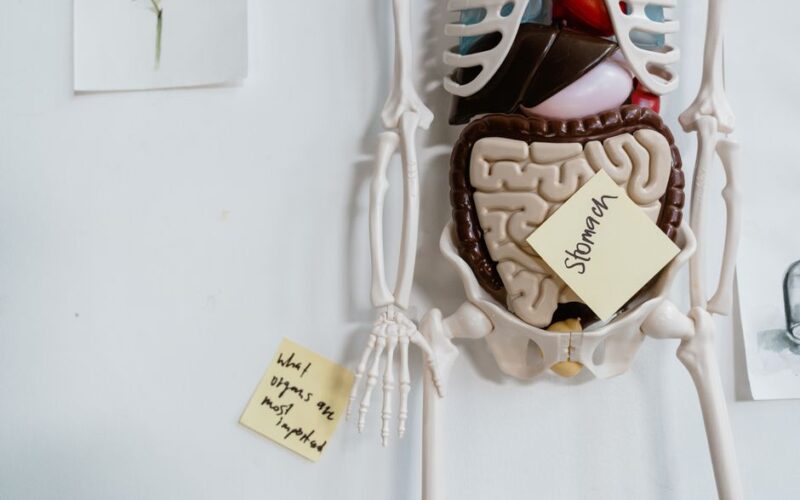


You finished your first real strength workout. The next morning, climbing stairs feels like a negotiation. Your thighs ache, your arms protest every movement, and a small voice asks: Did I hurt myself?
For most beginners, that discomfort is completely normal. But here is the honest truth: not every ache after a workout is safe to ignore. Knowing the difference between muscle soreness vs injury pain is one of the most practical skills you can develop as a new strength trainee. It keeps you progressing without unnecessary rest days, and it keeps you from overtraining through something that genuinely needs care.
This guide gives you a clear, evidence-informed framework for reading your body’s signals.

What Delayed-Onset Muscle Soreness Actually Is
Delayed-onset muscle soreness, commonly called DOMS, is the dull, achy stiffness that typically peaks 24 to 72 hours after unfamiliar or intense exercise. Research published through the National Institutes of Health (NIH) describes DOMS as a result of microscopic muscle fiber damage and localized inflammation during the repair process. That inflammation is not harmful. It is part of how muscle tissue adapts and grows stronger over time.
DOMS tends to feel:
- Diffuse and spread across a muscle group rather than pinpointed to one spot
- Worse when you first start moving, then easing slightly as you warm up
- Symmetrical (both legs sore after squats, both shoulders sore after pressing)
- Present in muscles you actually trained
- Manageable without significantly limiting your range of motion
It typically fades on its own within two to four days. As your body adapts, the same workout produces less soreness over time.
If you are just starting out and want a structured plan that builds gradually enough to manage DOMS well, the guide on Strength Training on a 20-Minute Budget: A Realistic Four-Week Home Plan for Beginners shows exactly how to ramp up volume without overwhelming your recovery.

What Injury Pain Feels Like Instead
Injury pain communicates differently. Where DOMS is a background ache across a muscle, injury pain tends to be sharper, more localized, and harder to work around.
Signs that your discomfort may be more than normal soreness include:
- Sharp or stabbing pain during movement rather than after it
- Joint pain in the knees, shoulders, elbows, wrists, or hips (DOMS lives in muscle tissue, not joints)
- Sudden onset during the workout rather than the following day
- Swelling, bruising, or visible changes around the area
- Pain on one side only when you trained both sides equally
- Weakness or instability in a limb that was not there before
- Pain that worsens as you move rather than easing after a warm-up
- Tingling or numbness, which can suggest nerve involvement
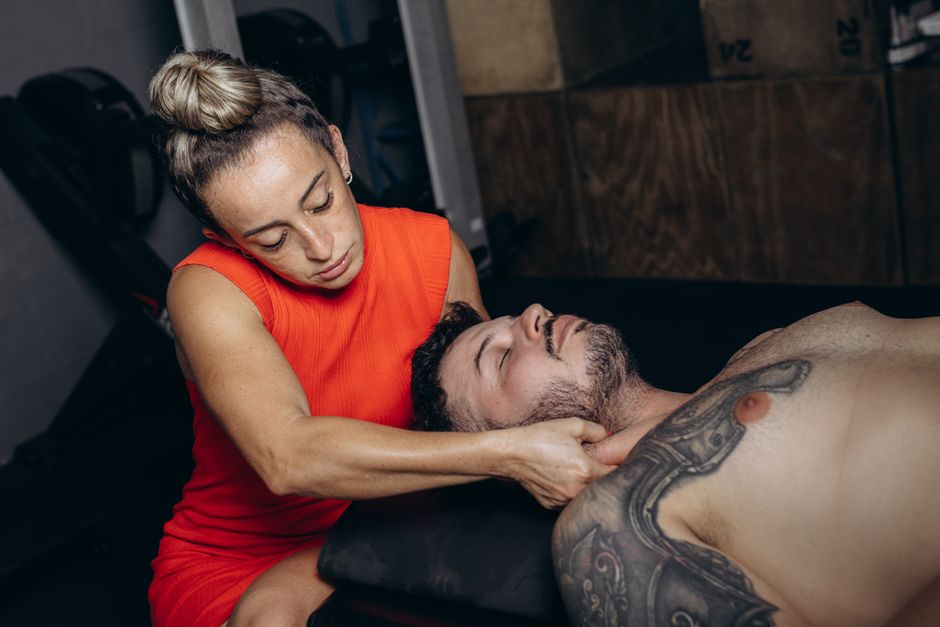
If several of these describe what you are feeling, the appropriate move is to stop loading that area and consult a qualified healthcare professional, particularly if symptoms persist beyond a few days or follow a specific incident like a pop, slip, or sudden overload.
The Simple Push-Through or Rest Decision
Not every situation is a clear-cut DOMS versus injury call. Here is a practical way to sort through the gray area:
When it is generally safe to continue training
- You feel diffuse muscle soreness but full range of motion is intact
- A gentle warm-up reduces the discomfort noticeably
- Pain is not located in a joint, tendon, or the site of a previous injury
- You feel 3 out of 10 on a discomfort scale or below during movement
In this case, training at a reduced intensity or targeting a different muscle group entirely is a reasonable approach. Active recovery, light movement, and stretching often help more than staying completely still. Strength Training Recovery Days: Why Active Stretching Beats Complete Rest for Muscle Growth covers this in detail and can help you structure those in-between days productively.
When rest, modification, or medical attention makes more sense
- Pain is sharp, sudden, or worsens under load
- A joint is involved or the area is visibly swollen
- Pain is rated above a 5 or 6 out of 10, or it changes your movement mechanics
- Symptoms started suddenly during the workout rather than the day after
- You have a known injury, pre-existing condition, or are returning from a long break
Pushing through genuine injury pain does not build toughness. It builds injury. Rest, ice, compression, and elevation (often called RICE) remain a reasonable first response for mild acute injuries while you wait to see whether symptoms resolve or warrant professional care.
How to Reduce DOMS Without Skipping Progress
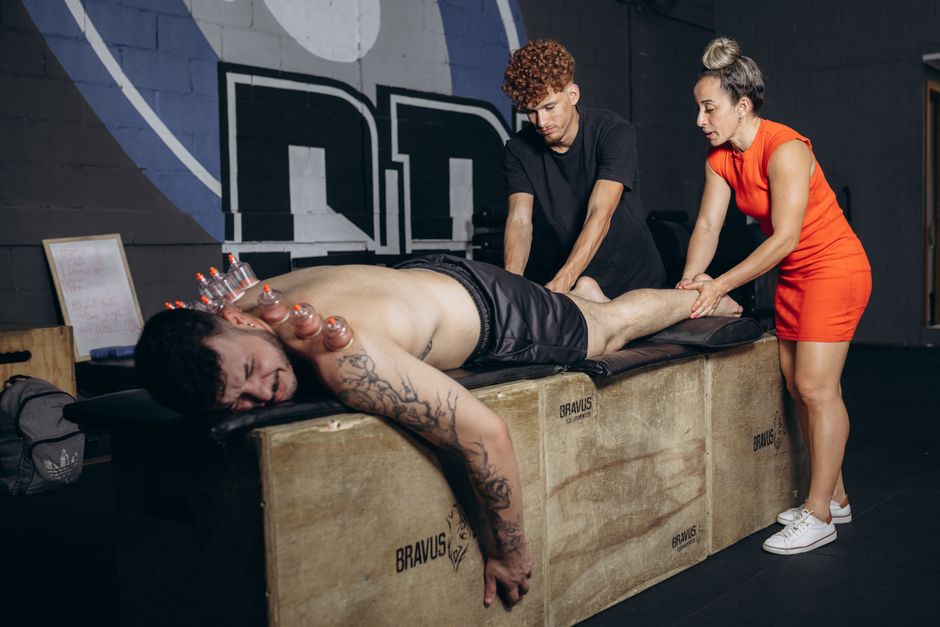
Managing post-workout soreness well is not about eliminating it. A modest amount of DOMS confirms your muscles were challenged. The goal is recovery that keeps you showing up.
Practical strategies supported by research include:
- Protein intake around your training window. Muscle repair depends on amino acids. Research suggests consuming enough protein throughout the day, with particular attention around workout timing. For the specifics, Workout Nutrition Timing: When to Eat Protein and Carbs for Real Muscle Progress is worth reading.
- Gentle movement on sore days. Walking, light stretching, or low-intensity bodyweight work may help clear metabolic byproducts and improve blood flow to recovering tissue.
- Adequate sleep. Deep sleep is when growth hormone is most active and tissue repair peaks. Prioritizing consistent, quality sleep is genuinely part of your training plan.
- Hydration. Muscle tissue is largely water. Staying well-hydrated before, during, and after workouts supports recovery without overcomplication.
- Gradual progression. The single best way to limit excessive DOMS is to increase training volume and intensity slowly. Beginners who avoid common early mistakes tend to recover faster and build more sustainable habits.
A Note on When to See a Professional
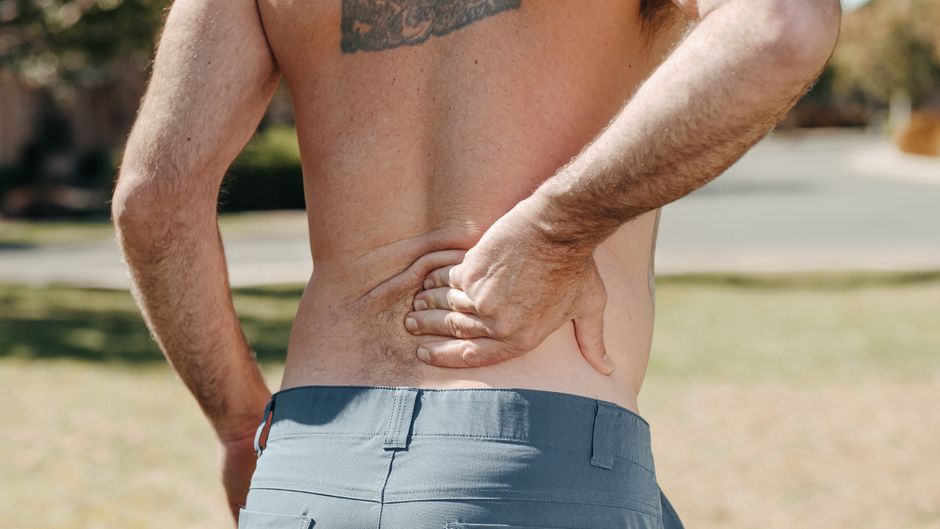
This guide is built for the gray zone most beginners experience. But when in doubt, seeing a qualified healthcare professional or a licensed physical therapist is always the right call. Certain symptoms, including joint instability, numbness, tingling, or pain following a clear incident, warrant prompt evaluation rather than a wait-and-see approach.
No article replaces a hands-on assessment, and no goal is worth training through a legitimate injury.
The practical takeaway is straightforward: choose one signal from this guide to pay attention to during your next workout. Notice where your discomfort lives, when it starts, and whether it responds to warming up. That single habit of body awareness builds better training decisions over time than any rigid rule ever could.
If you are building your foundation from scratch, the guide on Building Confidence in Your First Strength Workout: A Beginner’s Case Study of Four People Who Overcame Gym Intimidation pairs well with what you have just read. And if you want practical weekly guidance across movement, nutrition, and recovery, the Clean Body Mentor newsletter is a good place to keep learning.
Sources
- National Institutes of Health (NIH), National Library of Medicine. Overview of delayed-onset muscle soreness and exercise-induced muscle damage.
- American College of Sports Medicine (ACSM). Position stand on progression models in resistance training for healthy adults.
- National Institute of Arthritis and Musculoskeletal and Skin Diseases (NIAMS). Information on muscle soreness, strains, and sprains.
This article is for general educational and informational purposes only and is not a substitute for medical advice, diagnosis, or treatment. Health needs vary by individual. Consult a qualified healthcare professional before making significant changes to your diet, exercise routine, supplements, medication, or treatment plan, especially if you have a medical condition, are pregnant or breastfeeding, take medication, or have concerns about your symptoms.