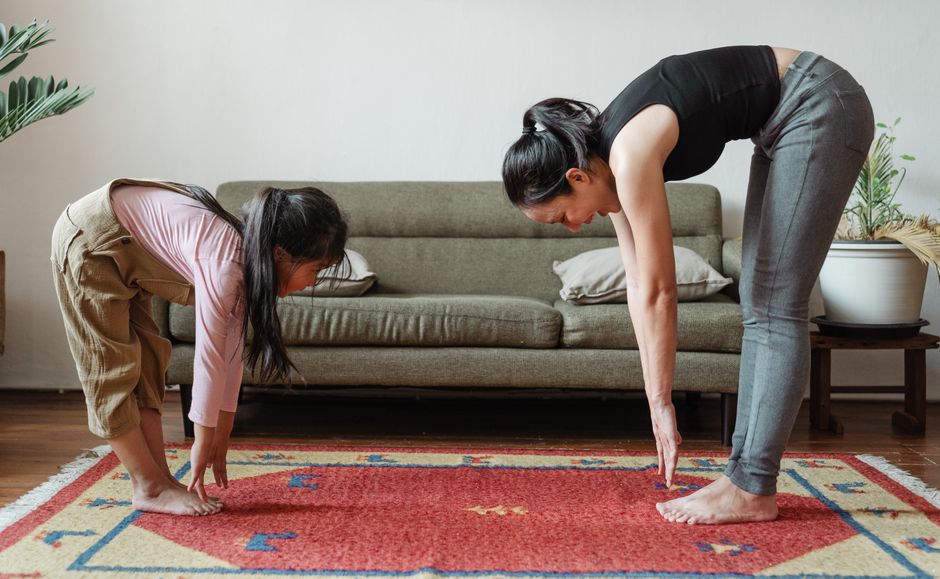
You had twenty minutes blocked out. Then a toddler woke up early, a school call came in, and dinner needed to happen thirty minutes ahead of schedule. By the time you looked up, the window was gone.
This is the actual obstacle for home workouts as a busy parent: not laziness, not motivation, not even equipment. It is the unpredictability of family life colliding with plans that require a fixed block of time. Most traditional strength programs assume you have 45 uninterrupted minutes, a consistent schedule, and the freedom to restart when life interrupts. You probably have none of those things on a regular basis.
The plan below works differently. You choose the block that fits your day, 15, 20, or 30 minutes, complete what you can, and pick up where you left off. Nothing resets. No guilt required.
Why Modular Beats All-or-Nothing for Parent Fitness
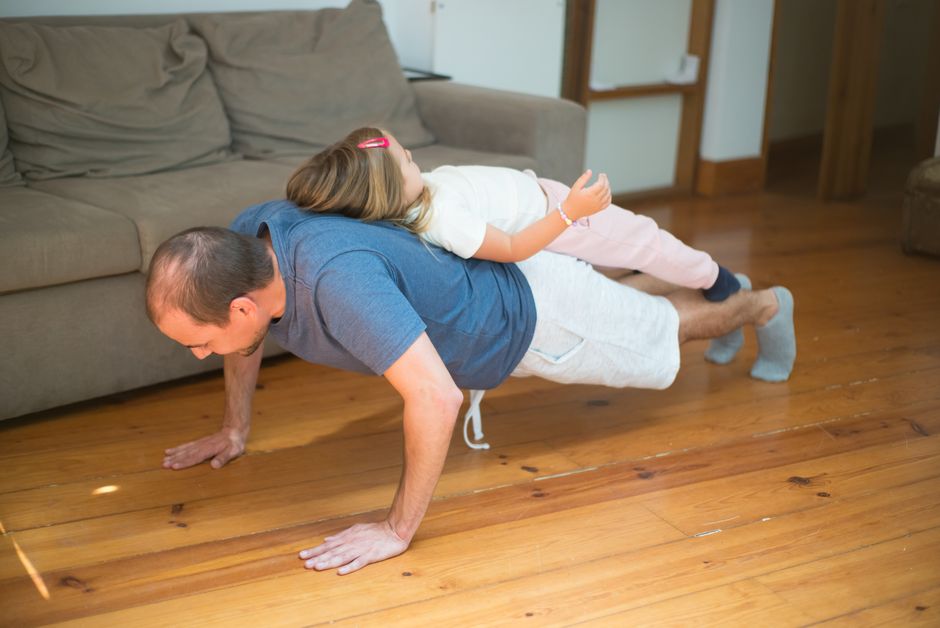
Research published in the Journal of the American Heart Association (2016) found that multiple short bouts of physical activity throughout the day produced comparable cardiovascular benefits to a single longer session. For strength training specifically, consistency of stimulus matters more than session length. Three 15-minute sessions in a week build more muscle than one 45-minute session abandoned after two weeks.
If you want to understand why guilt often derails parent fitness routines more than time does, this guide on building intuitive strength training confidence explains the mindset shift that makes a real difference.
The modular approach also removes the “I can’t do my full workout so I won’t bother” trap. Every block, even the short one, counts.

The Three-Block Structure
This plan uses five foundational movements that work the entire body. Each session always starts with the same warm-up and ends with the same cool-down. The middle block simply expands or contracts based on available time.
The Five Movements
- Bodyweight squat (lower body, glutes, core)
- Push-up (chest, shoulders, triceps; modify on knees)
- Hip hinge or Romanian deadlift hold (posterior chain)
- Reverse lunge (single-leg stability, glutes)
- Plank or shoulder tap (core, shoulder stability)
These require no equipment, a 6×6 foot floor space, and no jumping, so they work in a small living room or bedroom during nap time without waking anyone.
Warm-Up (3 Minutes, Every Session)
- 30 seconds arm circles, forward and back
- 30 seconds bodyweight squat, slow and controlled
- 30 seconds hip circles each side
- 30 seconds cat-cow on hands and knees
- 30 seconds march in place, driving knees up
15-Minute Block (Two Rounds)
Complete two rounds of the five movements. Do 10 reps of each, rest 30 seconds between movements.
Finish with 2 minutes of slow walking in place and one 60-second plank hold or knee plank.
20-Minute Block (Three Rounds)
Complete three rounds of the five movements. Do 10-12 reps of each, rest 20 seconds between movements.
Finish with 3 minutes of stretching: 60 seconds each on hip flexors, hamstrings, and thoracic rotation.
30-Minute Block (Four Rounds, with Progression)
Complete four rounds. In rounds three and four, add a tempo change: take 3 seconds to lower into the squat or push-up, pause 1 second at the bottom, then drive back up. This increases muscle demand without any extra equipment.
Finish with 4-5 minutes of mobility work. The hip mobility drills in this guide pair well here if tight hips are limiting your squat depth.

Beginner Modifications You Can Use Without Shame
- Push-up: Start on your knees. When you can do 10 clean reps with a flat back, move to full push-ups.
- Squat: Hold a wall or chair back for balance. Reduce depth until hip flexors and knees feel comfortable.
- Reverse lunge: Step back onto a stable surface rather than dropping the knee fully to the floor.
- Hip hinge: Practice the motion standing 6 inches from a wall, hinging until your hips tap the wall, before adding any load.
- Plank: Begin with a forearm plank on your knees. Progress to toes when you can hold 30 seconds without your lower back arching.
If you are returning after a break, muscles rebuild faster than most people expect. This article explains why muscle memory makes a comeback phase easier and may help you pace your first few weeks without overdoing it.
How to Progress Without Restarting
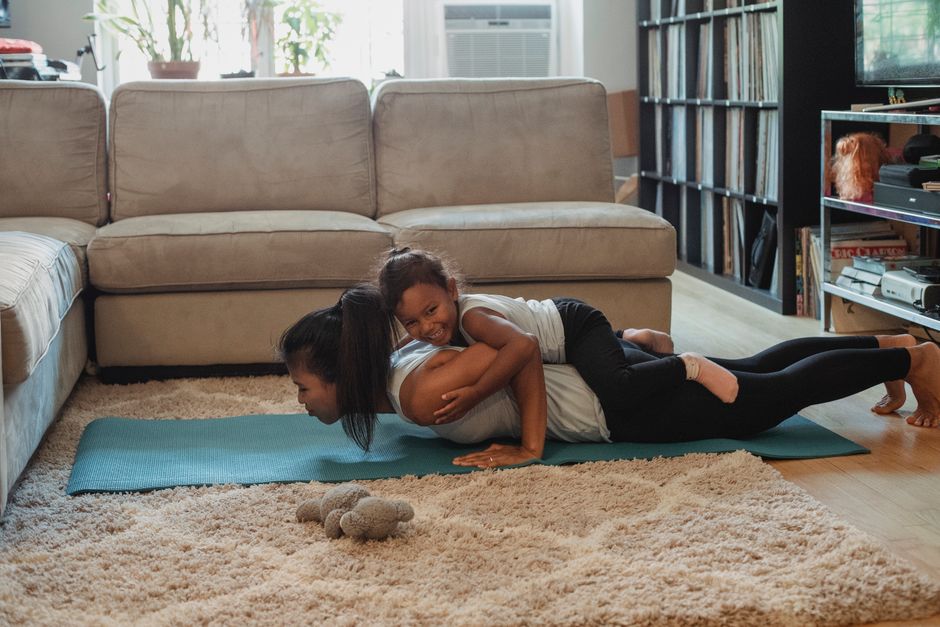
The plan does not restart after a hard week. Instead, use this simple rule:
- Two or more 30-minute blocks in a week: Add one extra round the following week or increase tempo on all movements.
- Mostly 15-minute blocks this week: Stay at current difficulty next week, no regression needed.
- Missed most sessions: Pick up exactly where you left off, same block sizes, same rounds.
Strength progress stalls for different reasons than most beginners expect. If you find yourself stuck after four to six weeks, this breakdown of common home strength training plateaus offers concrete adjustments that do not require heavier weights.
Supporting Your Effort Between Sessions
Recovery matters as much as the sessions themselves. Two practical areas to manage:
Hydration during short sessions: For sessions under 30 minutes at moderate intensity, water is usually sufficient. For longer or warmer sessions, this guide on electrolyte timing for home workouts clarifies when a more targeted approach actually helps.
Soreness after new movements: Muscle soreness after starting a new routine is normal, especially in the glutes, quads, and chest. This recovery practices guide covers what actually reduces soreness, beyond the usual advice.

Building the Habit, Not Just the Workout
The goal of this plan is not to complete 30 minutes every day. It is to make movement a dependable, flexible part of your week regardless of what the family schedule throws at you. On a chaotic Tuesday, 15 minutes is a win. On a quieter Saturday morning, 30 minutes feels almost restful.
Choose one block size to try this week. Commit to it twice. Notice how it fits. Adjust block size based on your actual week, not an ideal one.
If you want to add walking alongside this routine, the four-week walking plan for busy parents layers well with this strength framework without creating scheduling conflicts.
For broader weekly wellness guidance, the Clean Body Mentor newsletter delivers practical, no-pressure tips every week. Small, consistent actions compound over time, and that is exactly what this plan is built on.
This article is for general educational and informational purposes only and is not a substitute for medical advice, diagnosis, or treatment. Health needs vary by individual. Consult a qualified healthcare professional before making significant changes to your diet, exercise routine, supplements, medication, or treatment plan, especially if you have a medical condition, are pregnant or breastfeeding, take medication, or have concerns about your symptoms.
Sources
- Glazer NL et al. “Sustained and shorter bouts of physical activity are similarly associated with cardiovascular health.” Journal of the American Heart Association, 2016. Published by the American Heart Association.
- American College of Sports Medicine (ACSM) Position Stand on resistance training for adults: ACSM Guidelines for Exercise Testing and Prescription.
- National Strength and Conditioning Association (NSCA): Foundations of Fitness Programming guidelines on session frequency and volume for untrained individuals.