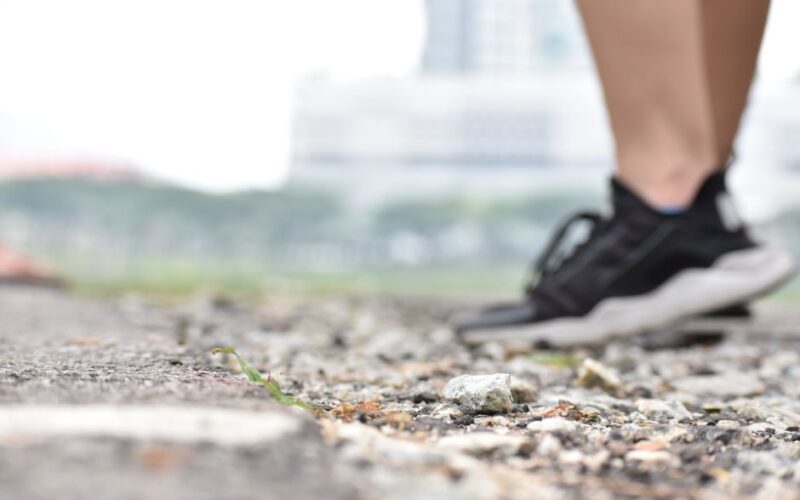

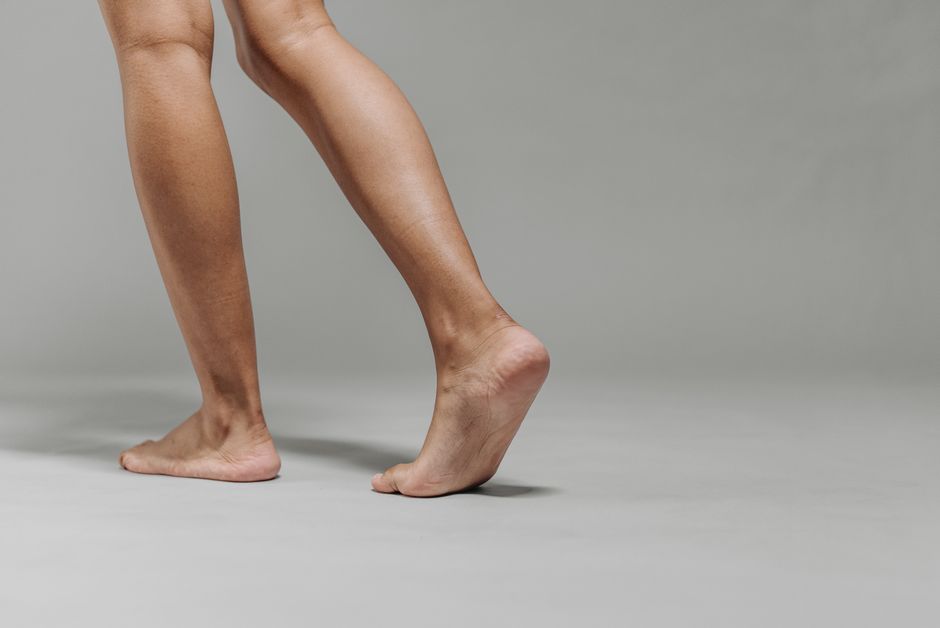
If you walk or jog almost exclusively on sidewalks and treadmills, your feet are likely working far less than they could be. Flat, predictable surfaces ask very little of the small muscles in your feet and the stabilizing structures around your ankles. Over time, that consistent lack of challenge can leave those areas undertrained and more vulnerable to sprains, plantar discomfort, and general instability during everyday movement.
The fix is not complicated, and it does not require a gym membership or special equipment. Moving on uneven ground, even briefly and progressively, can meaningfully improve foot strength, ankle stability, and whole-body balance. Here is why it works and how to get started safely.

What Flat Pavement Does (and Does Not) Do for Your Feet
Flat pavement offers a reliable, joint-friendly surface for cardiovascular exercise. There is real value in it. But consistency has a trade-off: your neuromuscular system adapts to that predictability and stops recruiting the smaller intrinsic foot muscles and ankle stabilizers as actively.
Research published in the Journal of Biomechanics and broader work on proprioception, the body’s internal sense of position and movement, suggests that walking on consistent flat surfaces reduces the sensory challenge to foot and ankle mechanoreceptors. Those nerve receptors need irregular input to stay sharp. When they stop getting it, reaction time and balance control can gradually decline.
The result is what some movement specialists call “passive feet,” feet that rely heavily on footwear structure and smooth ground rather than their own muscular coordination.
Why Uneven Ground Changes the Equation
When you step onto grass, gravel, a packed dirt trail, or a moderately rocky path, every footfall is slightly different. Your foot has to read the surface, adapt in real time, and distribute load across structures it rarely uses on pavement. That constant micro-adjustment is the training stimulus.
Specifically, uneven terrain tends to:
- Activate the intrinsic foot muscles (the small muscles inside the foot that control arch shape and toe positioning)
- Increase demand on the peroneals and tibialis posterior muscles that stabilize the ankle against lateral roll
- Improve proprioceptive feedback loops between the foot and the brain
- Build hip and knee stability as compensating links in the movement chain
A review in Gait and Posture found that trail and off-road walking produced measurably greater muscle activation in lower-leg stabilizers compared to treadmill or pavement walking. The effect compounds over time: more activation means more strength, and more strength means better ankle stability during unpredictable movement.
For a deeper look at how surface variation compares for balance outcomes, the guide Walking on Uneven Ground vs. Flat Pavement: Which Surface Builds Better Balance and Ankle Stability covers the research side in more detail.

How to Transition Safely: A Progressive Plan for Beginners
Jumping straight from treadmill sessions to a rocky trail is the fastest way to sprain an ankle. A gradual progression lets your muscles, tendons, and nervous system adapt at a pace that minimizes injury risk.
Week 1 to 2: Introduce Gentle Variation
Start by replacing 10 to 15 minutes of your regular flat walk with a grass field, a packed dirt path, or a gentle slope. Aim for three sessions per week. Focus on shorter, more deliberate steps rather than your usual stride length. This slower pace gives your ankles time to react without overloading them.
During this phase, wearing a supportive trail shoe with a wider base is reasonable. If you are curious about when footwear structure helps versus when less shoe promotes more foot activation, Barefoot Walking vs. Supportive Shoes for Daily Movement: When Each Builds Better Foot Strength and Which Fits Your Life walks through the tradeoffs clearly.
Week 3 to 4: Add Moderate Texture
Progress to surfaces with more variation: light gravel, wood-chip paths, or rolling grass with gentle dips. Extend the uneven segment to 20 to 25 minutes per session. You may notice your lower legs feel more fatigued than usual. That is the intrinsic foot muscles and ankle stabilizers responding to new demand, and it is a healthy sign.
Add one simple strength drill at home: standing single-leg balance for 20 to 30 seconds per side. This reinforces the proprioceptive work you are doing outdoors.
Week 5 to 6: Moderate Trail Walking
Now introduce actual trail terrain with visible roots, small rocks, or uneven camber. Keep the pace comfortable and stay fully present, scanning ahead rather than checking your phone. Many ankle rolls happen when attention drifts rather than when the terrain is genuinely difficult.
At this stage, pairing trail walks with a short calf and ankle mobility routine at home accelerates adaptation. The article Building Stronger Calves and Ankles at Home: Progressive Bodyweight Drills for Everyday Mobility and Injury Prevention offers a structured home routine that complements trail work well.
Week 7 and Beyond: Sustain and Vary
Maintain at least two to three sessions weekly on varied surfaces. The goal from here is variety, not always harder terrain. Rotate between grass, packed dirt, light gravel, and moderate trails. Each surface type sends slightly different sensory signals and continues building the movement vocabulary your feet and ankles need.
If desk work limits your movement during the week, the guide How to Restore Foot Strength and Mobility When Desk Work Has Locked Your Ankles covers what you can do in short indoor sessions between outdoor days.
A Note on Safety and Individual Differences
Progressive terrain training is appropriate for most healthy adults, but certain situations call for professional input first. If you have a history of ankle sprains, balance disorders, peripheral neuropathy, joint hypermobility, or any lower-extremity injury, speak with a physical therapist or qualified healthcare professional before shifting your walking surfaces. They can assess your baseline stability and recommend modifications suited to your specific needs.
Similarly, if you experience sharp pain, significant swelling, or recurring ankle giving-way during any phase of this progression, stop and seek evaluation rather than pushing through.
The Bigger Picture: Foot Strength as Whole-Body Stability
Foot strength and ankle stability are not isolated fitness goals. They connect upward through the kinetic chain, influencing knee tracking, hip function, and even spinal posture during walking. Building them through natural terrain variation is one of the most efficient, low-barrier ways to support movement quality for everyday life.
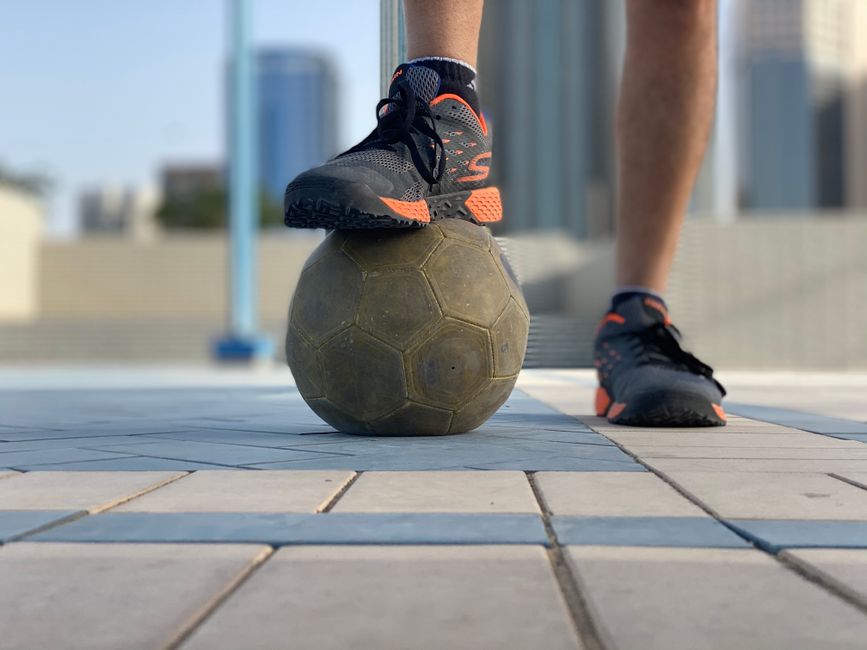
You do not need a dramatic trail system. A slightly uneven park lawn, a gravel path, or even a grass soccer field can provide enough surface variety to meaningfully challenge your feet and begin building genuine stability over time.
Pick one surface near you that is a step up from pure pavement. Start there this week, just 10 minutes. That one consistent action, repeated across weeks, is where real adaptation begins.
This article is for general educational and informational purposes only and is not a substitute for medical advice, diagnosis, or treatment. Health needs vary by individual. Consult a qualified healthcare professional before making significant changes to your diet, exercise routine, supplements, medication, or treatment plan, especially if you have a medical condition, are pregnant or breastfeeding, take medication, or have concerns about your symptoms.
Sources
- Nigg, B. M., et al. “The role of surface inclination and variability in lower limb muscle activation during walking.” Journal of Biomechanics (various editions). National Library of Medicine / PubMed.
- Peterka, R. J. “Sensorimotor integration in human postural control.” Journal of Neurophysiology, 2002. PubMed abstract available via NIH National Library of Medicine.
- Hollander, K., et al. “Foot muscle activity during trail and road running.” Gait and Posture, published findings available via PubMed.
- American College of Sports Medicine position stand on physical activity and injury prevention. ACSM (acsm.org).