


You started January with genuine momentum. A new gym membership, a treadmill playlist, maybe a resolution journal. Then week three arrived and the alarm felt harder to ignore, the living room felt smaller, and the whole plan quietly unraveled.
You are not lacking discipline. Research from the journal Frontiers in Psychology suggests that motivation tied to novelty fades within two to four weeks when the environment stays constant. The problem is not willpower. It is the setting. Taking your winter exercise routine outdoors, even in cold or grey weather, changes the equation in ways that a treadmill simply cannot replicate.
Here are six reasons outdoor movement outlasts indoor resolutions, plus practical ways to make it work when the days are short and the air is sharp.
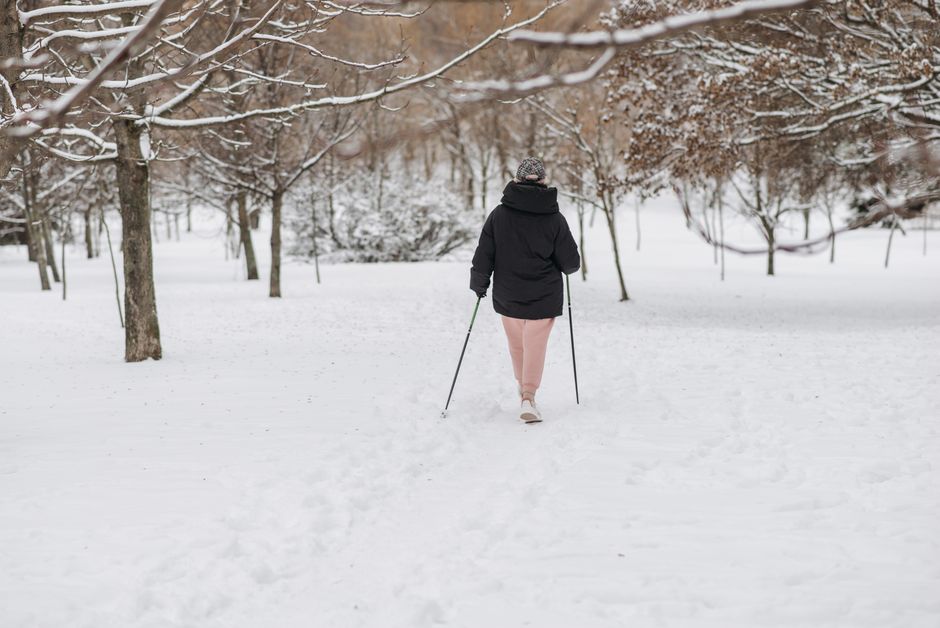
1. Changing Scenery Keeps Your Brain Engaged
Your nervous system is wired to respond to novelty. Walk the same treadmill path every morning and your brain stops registering it as interesting, which makes the effort feel larger than it actually is. Outdoor routes offer constant micro-variation: shifting light, uneven ground, different sounds, and small wildlife moments that keep attention alive without requiring extra willpower.
If you are comparing your options, the full breakdown in Outdoor Walking vs. Gym Treadmill Running: Which Movement Pattern Actually Builds Mental Resilience and Fits Your Life is worth reading before you commit to one approach.

2. Cold Air Is a Natural Mood Regulator
Exposure to cold temperatures activates your sympathetic nervous system in a measured way, raising alertness and improving mood without the cortisol spike of extreme cold. A 2019 study published in Environmental Health and Preventive Medicine found that outdoor winter walking was associated with reduced tension and fatigue compared to indoor exercise at the same intensity.
You do not need to brave a blizzard. Temperatures above 20 degrees Fahrenheit are manageable with layering. The key is dressing for the second mile, not the first: start slightly cool and let your body heat up rather than sweating through your base layer from the parking lot.

3. Trail Walking Adds a Fitness Layer That Flat Pavement Skips
Uneven terrain recruits stabilizing muscles in your ankles, hips, and core that smooth pavement simply does not challenge. This is meaningful for long-term fitness: those muscles protect your knees, improve posture, and reduce injury risk as you age. Even a moderately hilly park path counts.
For anyone who wants to start building this kind of resilience from the ground up, Building Foot Strength and Ankle Stability on Uneven Ground: Why Trails Beat Flat Pavement for Everyday Movement covers the progression in practical detail.

4. Natural Light Addresses the Winter Motivation Gap Directly
Short days are a real biological challenge. Reduced sunlight lowers serotonin availability and disrupts circadian rhythm, both of which directly erode motivation. Getting outside during daylight hours, even on overcast days, delivers meaningful light exposure that indoor lighting cannot replicate.
A practical adjustment: shift your outdoor walk to your lunch break or early afternoon instead of early morning if sunrise is after 7:30 a.m. where you live. Twenty to thirty minutes of outdoor light exposure mid-day may support mood and sleep quality, according to research summarized by the National Institute of Mental Health.

5. A Progressive Walking Plan Beats an Ambitious Gym Schedule
One reason week three becomes the breaking point is that January goals are often set for the motivated version of yourself, not the tired, cold, busy version. A sustainable winter exercise routine starts smaller than feels necessary.
A structure that works for beginners and returning movers:
- Week 1: Three outdoor walks of 15 to 20 minutes, flat terrain, comfortable pace
- Week 2: Add one longer walk (30 minutes) and one route with a gentle hill
- Week 3: Introduce two walks per week with intentional pace variation (two minutes brisk, two minutes easy)
- Week 4: You choose: add frequency, distance, or a new trail
This matches the approach outlined in Walking for Stress Relief and Mood: A Three-Week Progressive Plan for Beginners, which also addresses the mood benefits that accumulate alongside the physical ones.

6. Outdoor Movement Removes the Friction That Kills Indoor Routines
Gym routines require packing a bag, commuting, finding a machine, and commuting back. That friction is manageable in September. By January week three, it becomes the excuse. Outdoor walking requires shoes and a jacket.
Reducing the activation cost of exercise is one of the most evidence-supported behavior-change strategies in habit formation research. If your winter exercise routine demands too much preparation, it will not survive contact with a difficult week. Outdoor movement lives where you already are.
For readers whose challenge is keeping any movement habit alive past the initial burst of enthusiasm, Five Reasons Your Walking Habit Fades by Week Three and How to Make Movement Stick for Real explores the psychology and practical fixes in depth.

Adapting for Cold, Dark, and Wet Days
Outdoor winter movement does not require ideal conditions. It requires a few honest adjustments:
- Layering correctly: A moisture-wicking base layer, an insulating mid-layer, and a wind-resistant outer shell cover most conditions between 20 and 45 degrees Fahrenheit.
- Footwear with grip: Waterproof trail shoes or winter walking shoes with textured soles prevent slips on wet leaves and light frost.
- Reflective gear: Short days mean walking in lower light. A reflective vest or clip-on blinker costs very little and removes a real safety concern.
- Starting indoors first: On genuinely harsh days (ice, wind chill below 10 degrees Fahrenheit), a 10-minute indoor warm-up followed by a shorter outdoor loop is a reasonable compromise rather than skipping entirely.

One Action Worth Taking Today
Choose one of the six strategies above that fits your current situation, not the most impressive one. Perhaps it is shifting your walk to your lunch break to catch daylight, or identifying a trail within 15 minutes of your home that you have not explored yet. Small, specific actions taken consistently build a winter exercise routine that is genuinely sustainable, not just aspirational.
If you want practical weekly guidance delivered to your inbox, the Clean Body Mentor newsletter covers seasonal movement, whole-person wellness, and realistic habit-building throughout the year.
This article is for general educational and informational purposes only and is not a substitute for medical advice, diagnosis, or treatment. Health needs vary by individual. Consult a qualified healthcare professional before making significant changes to your diet, exercise routine, supplements, medication, or treatment plan, especially if you have a medical condition, are pregnant or breastfeeding, take medication, or have concerns about your symptoms.

Sources
- Frontiers in Psychology: research on novelty, motivation, and behavioral adaptation in exercise contexts
- Ochiai H et al. (2015), Environmental Health and Preventive Medicine: outdoor walking and mood in cooler seasons
- National Institute of Mental Health: light exposure and its relationship to mood and circadian regulation (nimh.nih.gov)
- Fogg BJ: Tiny Habits (2019), on activation cost and habit formation