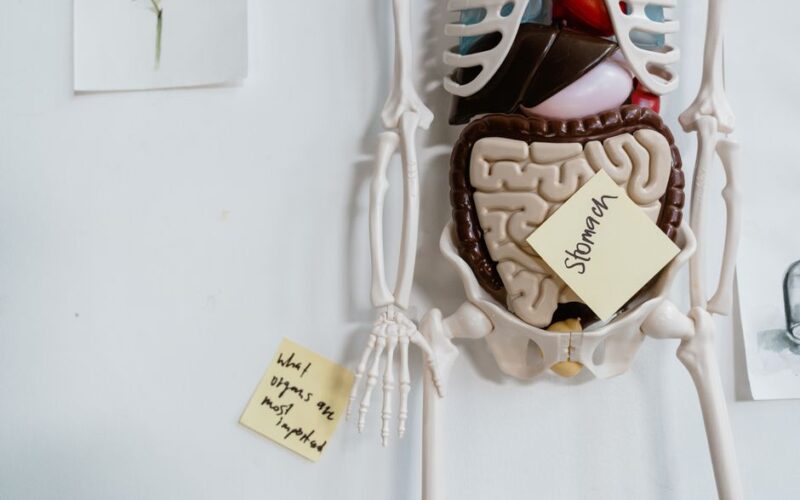


You finish lunch in eight minutes, get back to your desk, and twenty minutes later your stomach feels like a balloon. So you start mentally cataloging what you ate, wondering if it was the bread, the beans, or maybe dairy. You cut one thing out. Then another. But the bloating keeps coming back.
Here is the part most people miss: the problem is rarely the food on your plate. Research suggests that eating speed and chewing thoroughness have a direct effect on digestive comfort, and for many people, slowing down matters more than eliminating any particular ingredient.
This article explains why rushed eating disrupts digestion at a physiological level, how chewing rate makes a measurable difference, and gives you three concrete daily practices to improve digestive comfort eating speed without removing foods you enjoy.

What Actually Happens When You Eat Too Fast
Digestion begins in your mouth, not your stomach. Chewing breaks food into smaller particles while saliva releases amylase, an enzyme that starts breaking down carbohydrates before they even reach your gut. When you rush, both of those steps get short-changed.
Large, poorly chewed food particles arrive in your stomach and take longer to break down. Your stomach has to work harder, which can slow gastric emptying and create that heavy, full-but-uncomfortable feeling. In the small intestine, undigested fragments can ferment, producing gas. This is a common source of post-meal bloating that has nothing to do with which foods you chose.
Rushed eating also interferes with the cephalic phase digestive response, the anticipatory signals your brain sends to your gut to prepare stomach acid and digestive enzymes before you even swallow. When you eat under stress or distraction, these signals are weaker. Your gut gets less preparation time, and the result is often slower, less comfortable digestion.
A 2011 review published in the Journal of the American Dietetic Association found that eating rate is associated with digestive symptoms and overall dietary intake patterns. Separate research from the NIH National Institute of Diabetes and Digestive and Kidney Diseases notes that swallowing too much air (common when eating quickly) is a primary driver of gas and bloating.
For a deeper look at how eating pace and food order interact, Digestive Comfort Through Eating Order and Pace: Why Timing Your Food Matters More Than Portion Size walks through the mechanics in practical detail.

Three Practices That Slow Your Pace Without Willpower
You do not need a 45-minute lunch or a mindfulness retreat to make this work. These three habits are specific, low-effort, and designed to fit a real day.
1. Set a Minimum Chew Count for Dense Foods
This one feels awkward at first, but it works. For denser foods like meat, cooked grains, roasted vegetables, and legumes, aim for 20 to 30 chews per bite before swallowing. For softer foods, 10 to 15 chews is often enough.
You do not need to count every bite forever. Doing this deliberately for one or two meals per day builds awareness of how thoroughly (or not) you are usually chewing. Most people discover they were swallowing after five or six chews.
Increased chewing has practical support: a small study published in Obesity (2014) found that people who chewed food 40 times consumed fewer calories and reported different satiety signals than those who chewed 15 times. The mechanism is partly hormonal, with slower eating giving your gut peptides more time to signal fullness to your brain. Better chewing also means less fermentable material arriving in your large intestine, which directly reduces gas production.
2. Use a Pacing Anchor at Each Meal
A pacing anchor is a simple behavioral cue that interrupts automatic fast eating. A few options that readers have found practical:
- Put your fork or spoon down between every two or three bites.
- Take one sip of water between each bite of dense food (but avoid drinking large amounts with meals, since this can dilute stomach acid; sipping is different from gulping). For more on this nuance, see Digestive Bloating From Hydration Timing: Why Drinking Water With Meals Feels Different Than Between Them.
- Set a quiet timer for 15 to 20 minutes when you sit down, and aim to still be eating when it goes off.
The point is not to manufacture mindfulness. It is to interrupt the automatic speed that most adults default to, especially at work or while scrolling a phone. Choosing one anchor and using it consistently at a single meal per day is more sustainable than trying to transform every eating occasion at once.
3. Create a Two-Minute Transition Before You Eat
Your nervous system matters here. Eating while stressed or in a hurry activates sympathetic nervous system activity (the fight-or-flight state), which suppresses digestive enzyme output and slows peristalsis. Your gut genuinely works better when you are calm.
A two-minute transition does not require deep breathing exercises or a ritual. It can be as simple as:
- Sitting down before your food arrives and looking away from your screen.
- Taking three slow breaths before your first bite.
- Putting your phone face-down for the first five minutes of eating.
This short window shifts your body toward a parasympathetic state, where digestion operates more efficiently. Pair this with the mindful eating approach in Mindful Eating Without the Rules: How to Eat With Awareness and Enjoyment Instead of Restriction if you want a broader framework that goes well beyond pace alone.

Why Restriction Often Makes Things Worse
Eliminating foods can feel like problem-solving, and sometimes a specific food genuinely does cause sensitivity. But when bloating and discomfort follow every meal regardless of what you eat, the common thread is usually how you are eating, not what.
Prolonged food restriction also creates its own digestive complications: anxiety around eating can heighten the stress response that was causing slow digestion in the first place, and repeatedly cutting food groups can affect gut microbiome diversity over time.
If you suspect a true food intolerance, working with a registered dietitian is the most accurate path forward. But before you cut anything, try adjusting your eating speed for two weeks and track your symptoms. Many readers find the discomfort improves significantly without removing a single food.
For more on how afternoon symptoms specifically respond to pace-based changes, How to Reduce Afternoon Bloating Without Cutting Carbs or Fats: A Practical Guide to Eating Order and Pace covers that window in detail.
A Realistic Starting Point
You do not need to change everything at once. Choose one of the three practices above and apply it to one meal per day for the next two weeks. Small, consistent shifts in digestive comfort eating speed tend to produce more lasting results than overhauling your entire diet.
If you want to keep building on this, explore the Clean Body Mentor newsletter for practical weekly guidance on nutrition, gut health, and sustainable wellness habits.
This article is for general educational and informational purposes only and is not a substitute for medical advice, diagnosis, or treatment. Health needs vary by individual. Consult a qualified healthcare professional before making significant changes to your diet, exercise routine, supplements, medication, or treatment plan, especially if you have a medical condition, are pregnant or breastfeeding, take medication, or have concerns about your symptoms.

Sources
- Ohkuma T, et al. “Association between eating rate and obesity.” Systematic review and meta-analysis. International Journal of Obesity, 2015.
- Andrade AM, et al. “Eating slowly led to decreases in energy intake within meals in healthy women.” Journal of the American Dietetic Association, 2008.
- Zhu Y, Hollis JH. “Relationship between chewing behavior and body weight status in fully dentate healthy adults.” Physiology and Behavior, 2014.
- National Institute of Diabetes and Digestive and Kidney Diseases (NIDDK). “Gas in the Digestive Tract.” U.S. Department of Health and Human Services.
- Cephalic phase digestive responses: referenced in overview literature from the American Journal of Clinical Nutrition on pre-absorptive digestion signaling.