
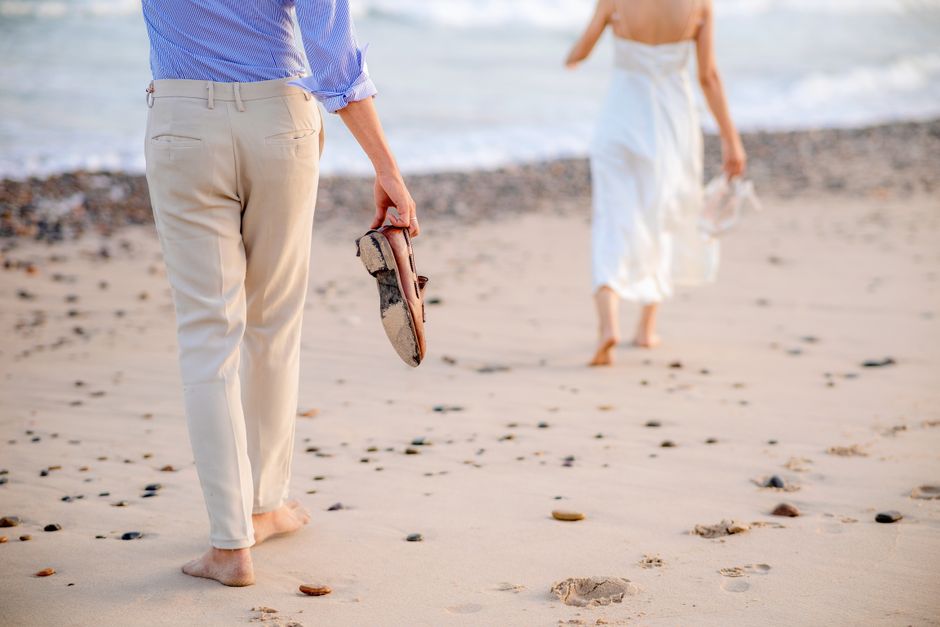
You have probably noticed more people talking about ditching their cushioned sneakers for minimalist sandals or even just walking barefoot in the yard. The barefoot movement has real appeal, especially if you are curious about natural movement and building foot strength without relying on gear. But if you have ever rolled an ankle on gravel or developed plantar fasciitis, you also know that feet are complicated.
The honest answer to “barefoot walking vs. shoes” is not one-size-fits-all. Both approaches have genuine benefits and real drawbacks, and the right choice depends on your foot structure, activity level, and how gradually you make any change. Here is a clear-eyed look at what the research and clinical experience actually suggest.
What Barefoot Walking Actually Does for Your Feet
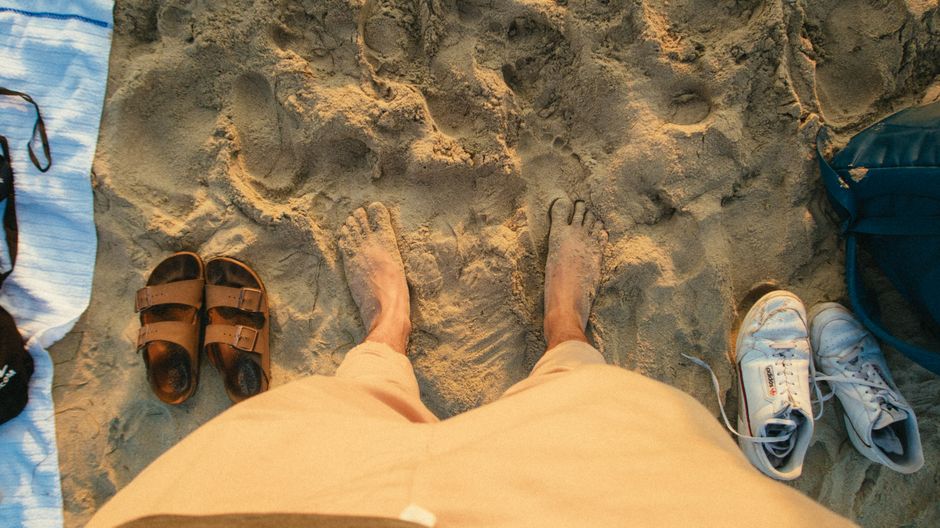
Walking barefoot or in minimalist footwear places greater demand on the small muscles of the foot and ankle. Research published in Scientific Reports (2022) found that people who habitually walked barefoot or in minimal shoes showed significantly stronger foot muscles and higher arch stiffness compared to those who wore conventional supportive footwear. That muscular engagement matters because foot strength is connected to balance, ankle stability, and how load is distributed up through your knees and hips.
Barefoot walking also changes your gait. Without a cushioned heel, most people naturally shift toward a midfoot or forefoot strike, which may reduce impact forces on the knee joint according to research from the American Journal of Sports Medicine. For people with certain running-related knee issues, this shift can be beneficial over time.
On the other hand, barefoot walking puts more stress on the plantar fascia, Achilles tendon, and metatarsals, especially early in a transition. Jumping in too fast is one of the most common reasons people end up frustrated or injured.
What Supportive Shoes Actually Do
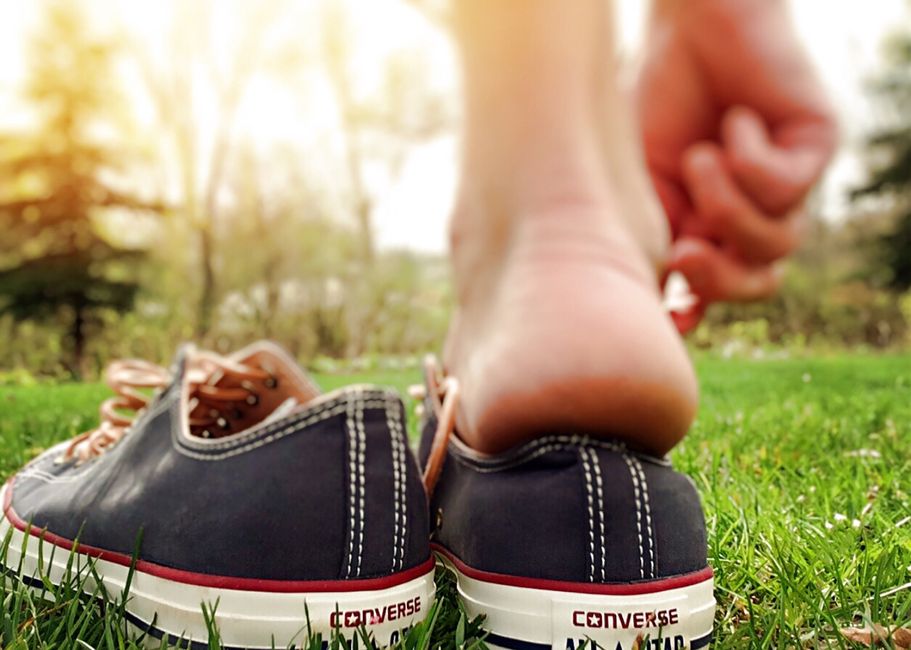
Conventional supportive footwear, including motion-control shoes, arch-support insoles, and well-cushioned trainers, is designed to absorb shock and limit excessive foot motion. For people with flat feet, overpronation, or conditions like plantar fasciitis, bunions, or nerve issues, that support can reduce pain and allow continued movement when barefoot walking would not be realistic.
The tradeoff is that prolonged reliance on highly supportive footwear may reduce how much work the foot’s intrinsic muscles actually do. Think of it as a splint analogy: useful when you need it, potentially limiting if worn indefinitely without any additional foot strengthening. Some podiatrists and physical therapists refer to this as “motion control dependency,” though the research on long-term outcomes is still developing.
Supported shoes remain the safer starting point for most people, particularly those who are new to regular walking, have existing lower-limb conditions, are postpartum, or walk primarily on hard urban surfaces. If you are just beginning a walking habit, the Building a Walking Habit That Lasts: How to Progress From 10 Minutes to Daily Movement Without Burnout guide is a good companion resource.
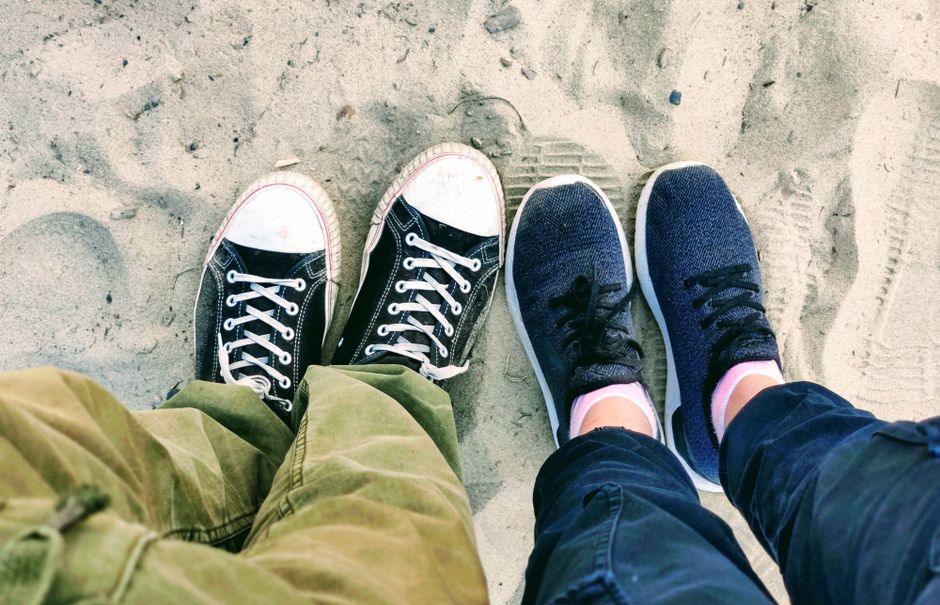
Comparing the Two Approaches Side by Side
| Factor | Barefoot or Minimalist | Supportive Shoes |
|---|---|---|
| Foot muscle activation | Higher | Lower |
| Shock absorption | Lower | Higher |
| Transition time needed | Weeks to months | Minimal |
| Suited for flat feet | Use caution | Generally yes |
| Best surface | Soft natural terrain | Any surface |
| Injury risk if rushed | Higher | Lower |
Neither column is automatically better. The goal is matching the tool to your individual needs and the context of your movement.
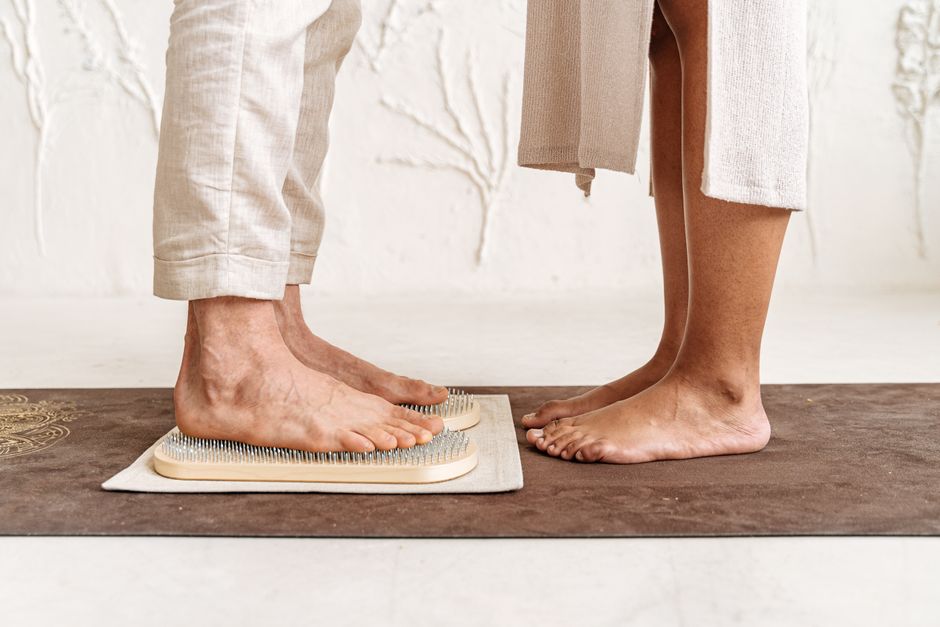
Which Foot Types Benefit Most from Each Approach
Barefoot or minimalist walking tends to work well for:
- People with neutral or high arches who have no existing lower-limb conditions
- Those transitioning gradually over at least 8 to 12 weeks
- People who spend meaningful time on grass, dirt, sand, or softer surfaces
- Individuals interested in foot strengthening as part of a broader intuitive movement or mobility practice
Supportive shoes tend to work better for:
- People with flat feet, overpronation, or existing plantar fasciitis
- Those walking primarily on concrete or pavement for longer distances
- Anyone managing joint pain, postpartum recovery, or orthopedic concerns
- Beginners whose primary goal is building a consistent daily walking habit without new variables
If you are unsure about your arch type or gait, a visit to a podiatrist or a physical therapist who specializes in biomechanics is worth the investment. They can assess your foot structure and recommend whether minimalist footwear is appropriate for you.
How to Transition Safely if You Want to Try Either Direction
Whether you are moving toward more minimal footwear or switching from heavy trainers to something more supportive, the principle is the same: gradual change protects tendons, ligaments, and bones that need time to adapt.
For moving toward barefoot or minimalist walking:
- Start with 5 to 10 minutes of barefoot walking on a soft, safe surface like grass or a yoga mat indoors.
- Add foot strengthening exercises: toe spreads, single-leg calf raises, and towel scrunches are all research-supported options.
- Increase barefoot time by no more than 10 percent per week.
- Watch for heel, arch, or forefoot pain that persists beyond 24 to 48 hours. That is a signal to slow down.
For moving toward more supportive footwear:
- Get a proper fit from a knowledgeable shoe store or sports medicine clinic.
- Consider a custom or over-the-counter orthotic if you have a diagnosed gait issue.
- Pair new shoes with some foot and ankle mobility work so you maintain intrinsic muscle activity. The Stretching vs. Strength Training for Better Posture article covers related mobility principles worth reading.
Regardless of which direction you go, walking more is the real priority. The mental and physical benefits of daily movement are well-documented, and your footwear matters far less than the habit itself. For a deeper look at walking’s broader benefits, the Walking for Mental Clarity: How Daily Movement Reshapes Your Mood and Focus guide is a useful next read.
The Honest Bottom Line
The barefoot walking vs. shoes debate does not have a universal winner. Barefoot and minimalist approaches can build genuine foot strength and improve proprioception, but they require patience and a slow build. Supportive shoes reduce injury risk for people with specific structural needs and make it easier to walk longer distances more comfortably right now.
The most sustainable habit is the one you can maintain without pain, frustration, or forced heroics. If you are drawn to minimalist walking, start slowly and let your feet adapt. If supportive shoes keep you moving consistently and comfortably, that is a valid and healthy choice too.
Pick one small action from this article, whether that is trying 5 minutes of barefoot walking on grass, booking a gait assessment, or simply paying attention to how your feet feel after your next walk, and practice it consistently this week.
This article is for general educational and informational purposes only and is not a substitute for medical advice, diagnosis, or treatment. Health needs vary by individual. Consult a qualified healthcare professional before making significant changes to your diet, exercise routine, supplements, medication, or treatment plan, especially if you have a medical condition, are pregnant or breastfeeding, take medication, or have concerns about your symptoms.
Sources
- Holowka, N.B., et al. (2022). Foot muscle morphology is related to foot posture and mobility. Scientific Reports. National Library of Medicine.
- Kulmala, J.P., et al. Patellofemoral joint load is associated with foot strike pattern in runners. American Journal of Sports Medicine.
- American Podiatric Medical Association: position statements on barefoot running and minimalist footwear.
- National Institutes of Health (NIH), MedlinePlus: plantar fasciitis overview.