If your shoulders creep toward your ears by mid-afternoon, your upper back aches after a full day at your desk, or your neck feels like it is carrying a small boulder, you are not alone. Prolonged sitting with arms forward and eyes fixed on a screen gradually shortens the muscles across your chest while letting the muscles of your upper back and shoulder girdle go slack. The result is a posture pattern that researchers sometimes call “upper crossed syndrome”: tight pecs and neck flexors paired with weak deep neck flexors and lower trapezius muscles.
The good news is that you can start reversing this pattern today, without dumbbells, machines, or a gym membership. The four shoulder strengthening exercises at home outlined below use only your body weight, a floor, and a wall. They are arranged in a genuine progression, so beginners can start where it is safe and build challenge over time.
If you want a broader foundation before diving in, Building Strength Without a Gym: Progressive Bodyweight Exercises for Beginners at Home is a useful starting point.
Why Desk Workers Need Shoulder Strengthening Specifically
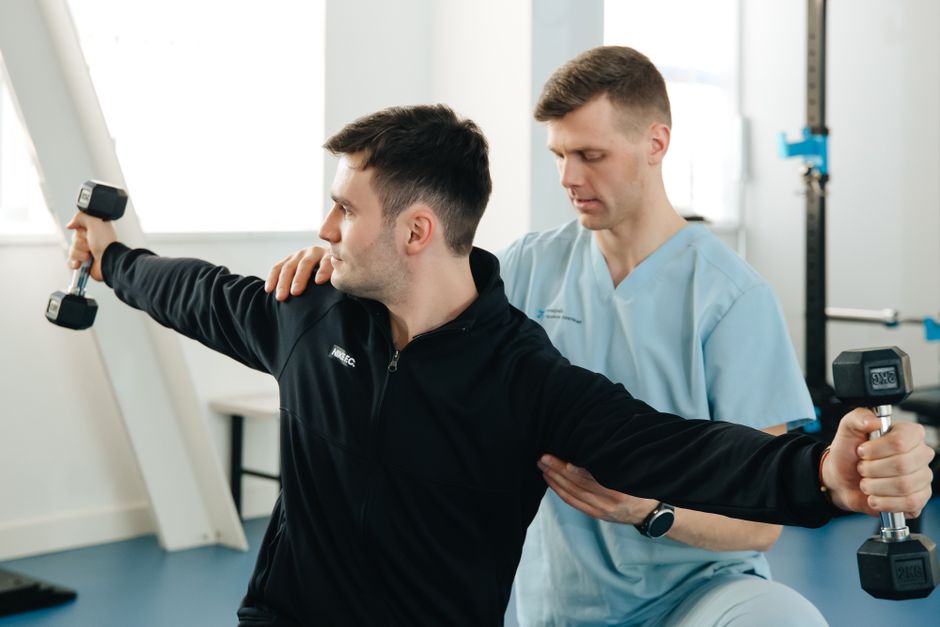
Stretching alone eases short-term tightness, but research suggests that without corresponding strength work, posture tends to drift back to the habitual pattern within hours. A 2015 paper published in the Journal of Physical Therapy Science found that a combination of strengthening and stretching produced significantly greater improvements in forward head posture than stretching alone. That is why the moves below prioritize building active stability, not just releasing tension.
For a clear look at how stretching and strength training interact for postural improvement, Stretching vs. Strength Training for Better Posture: Which One Fixes Slouching and Desk Stiffness breaks down the tradeoffs well.
The muscles you most want to reactivate are:
- Lower and middle trapezius: pull the shoulder blades down and together
- Serratus anterior: keeps the shoulder blade flat against the rib cage
- Rotator cuff stabilizers: control the humeral head during reaching and overhead movement
- Deep cervical flexors: support proper head position
The Four-Move Progressive Routine
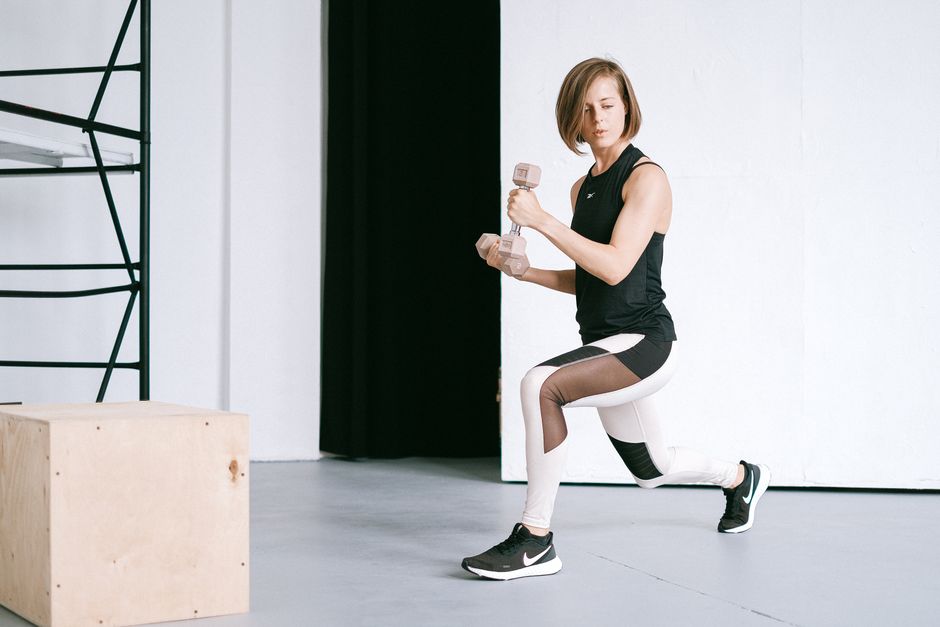
Perform this routine two to three times per week, allowing a rest day between sessions. Move through each exercise in order. Do not rush to the harder variations; spending two or three weeks at the beginner version builds the neuromuscular control that makes advanced moves safe and effective.
Move 1: Wall Angel
What it trains: Lower trapezius, thoracic extension, scapular mobility
Stand with your back flat against a wall, feet about six inches away from the base. Press your lower back gently into the wall and bring both arms up into a “goalpost” shape, elbows bent at 90 degrees and upper arms parallel to the floor. Slowly slide your arms up the wall until they are overhead (or as far as you can go without your lower back arching away), then slide them back down.
- Beginner: Use a slightly bent-knee stance to reduce lower-back tension; only slide arms halfway up
- Progression: Keep wrists, elbows, and upper arms touching the wall throughout the full range of motion
- Sets and reps: 2 sets of 8-10 slow reps
Move 2: Prone Y-T-W
What it trains: Middle and lower trapezius, posterior deltoid, rhomboids
Lie face-down on the floor with arms extended overhead. Squeeze your shoulder blades gently and lift your arms a few inches off the floor. Form a Y shape (arms angled 45 degrees above your head), a T shape (arms straight out to the sides), and a W shape (elbows bent, thumbs pointing toward the ceiling). Hold each position for two seconds, lower, and repeat.
- Beginner: Keep forehead resting on a folded towel; only lift arms two or three inches
- Progression: Add a slow five-second hold at the top of each position
- Sets and reps: 2-3 sets of 6 reps per shape, or cycle through all three shapes continuously for 30-40 seconds
Move 3: Pike Push-Up
What it trains: Anterior and medial deltoid, serratus anterior, upper trapezius in a controlled range
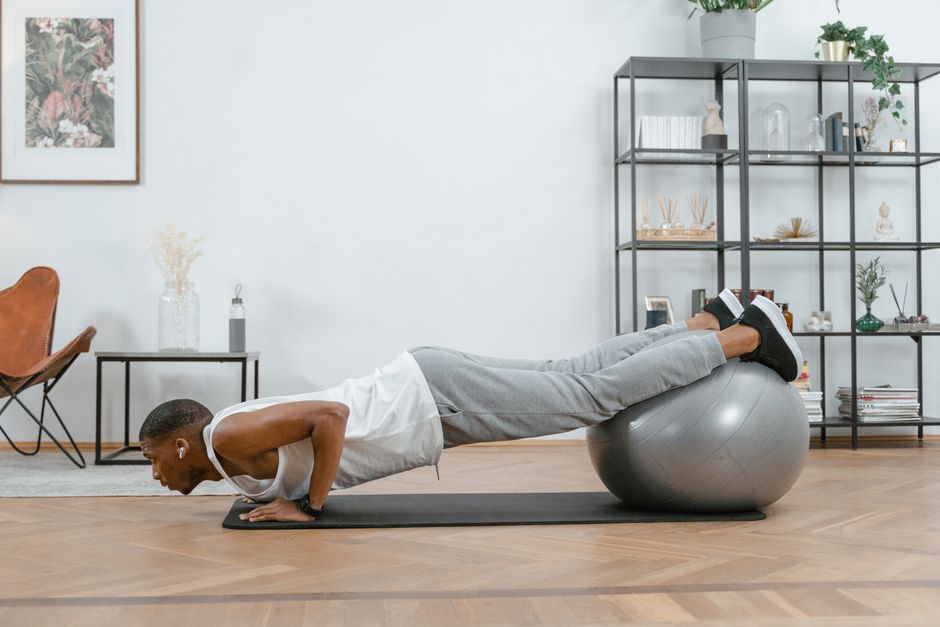
Start in a high plank position, then push your hips up and back until your body forms an inverted V. Keep your arms straight and your head between your arms. From this pike position, bend your elbows and lower the top of your head toward the floor, then press back up.
This is one of the most effective shoulder strengthening exercises at home because it loads the deltoids through a longer range than a standard push-up without requiring any equipment.
- Beginner: Elevate your hands on a chair seat so the angle is shallower and less weight goes through the shoulders
- Progression: Elevate your feet on a chair to increase the overhead angle and load
- Sets and reps: 2-3 sets of 5-8 reps
Move 4: Scapular Push-Up
What it trains: Serratus anterior, scapular protraction and retraction control
Begin in a high plank with arms straight. Without bending your elbows, let your shoulder blades squeeze together (scapular retraction), then push them apart by rounding your upper back slightly (scapular protraction). This is a small movement, maybe an inch or two in each direction, but it directly trains the serratus anterior, a muscle that is chronically underworked in desk workers.
- Beginner: Perform from your knees
- Progression: Add a two-second pause at full protraction before retracting
- Sets and reps: 2-3 sets of 10-12 reps
How to Progress Over Time
Spend roughly two to three weeks on each tier before adding difficulty. A simple rule: when you can complete all sets with controlled form and no compensations (no shrugging, no lower-back arching, no neck cramping), you are ready to increase challenge. This mirrors the progressive overload principle used in traditional strength training, applied through leverage and range of motion rather than added weight.
If you find yourself hitting a plateau or wondering why the moves stop feeling effective, Strength Training Mistakes That Slow Progress at Home: What Beginners Actually Miss covers the most common reasons adaptation stalls.
For desk workers, pairing this routine with brief mobility breaks during the workday amplifies results. Even two or three wall angels every hour can interrupt the postural pattern that builds up over a long sitting session. Nine Mobility Exercises for Desk Workers: Reverse Sitting Stiffness in Just 10 Minutes offers a complementary desk-break routine worth bookmarking.
Supporting Your Progress With Nutrition and Recovery
Muscle tissue rebuilds during rest, not during the workout itself. Two to three sessions per week with recovery days in between is more effective than daily high-volume work for beginners. Protein intake also matters: research from the American College of Sports Medicine suggests 1.2 to 2.0 grams of protein per kilogram of body weight per day to support muscle repair during a strength-building phase. A high-protein breakfast and a protein-rich lunch can go a long way toward meeting that target without overthinking it.
One Practical Step Forward
Choose one move from this list, the wall angel is a great starting point for most desk workers, and practice it consistently for the next two weeks. Two sets of eight reps takes about four minutes. Done three times a week, that is twelve minutes of deliberate shoulder strengthening exercises at home that can meaningfully shift how your body feels by mid-afternoon.
If you want more guidance on building sustainable home movement habits, explore the Clean Body Mentor newsletter for weekly practical wellness ideas delivered without pressure or overwhelm.
This article is for general educational and informational purposes only and is not a substitute for medical advice, diagnosis, or treatment. Health needs vary by individual. Consult a qualified healthcare professional before making significant changes to your diet, exercise routine, supplements, medication, or treatment plan, especially if you have a medical condition, are pregnant or breastfeeding, take medication, or have concerns about your symptoms.
Sources
- Kwon JW, Son SM, Lee NK. “Changes of upper-extremity muscle activities due to head position in subjects with a forward head posture.” Journal of Physical Therapy Science, 2015. (PubMed)
- American College of Sports Medicine. “Position Stand: Nutrition and Athletic Performance.” Medicine and Science in Sports and Exercise, 2016.
- National Strength and Conditioning Association. Essentials of Strength Training and Conditioning, 4th ed. Human Kinetics, 2015.