
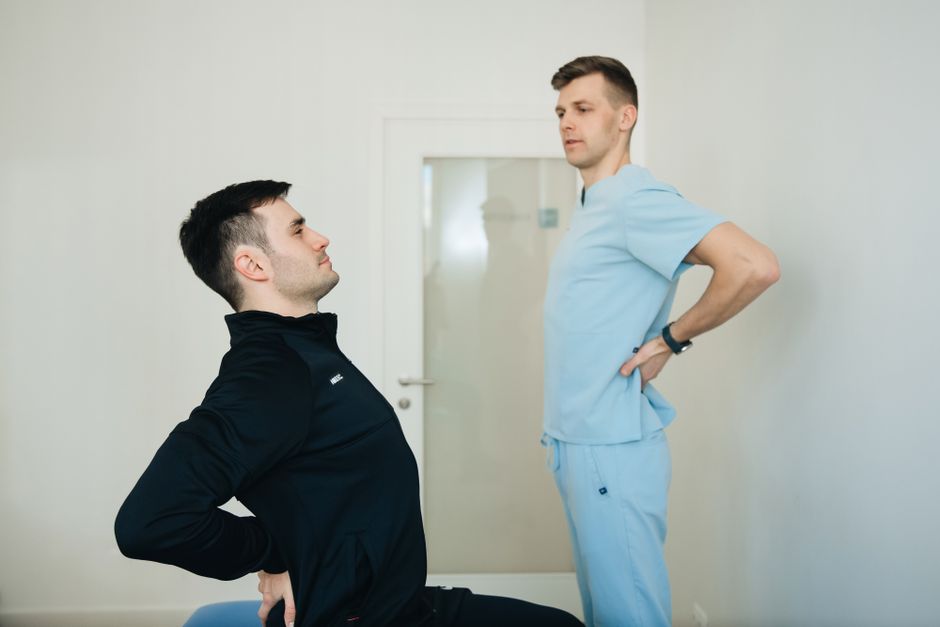
If you spend several hours a day at a desk, you have probably noticed that familiar pull in your upper back, the forward creep of your head, or the tightness across your chest that sets in by early afternoon. You might have tried a few stretches and felt some relief, only for the stiffness to return the next morning.
The honest answer is this: stretching alone will not fix poor posture, and neither will strength training alone. The two approaches work on different parts of the same problem. Understanding what each one actually does helps you build posture improvement exercises that work together rather than guessing which to do first.

Why Desk Posture Problems Happen
Sitting for extended periods tends to create a predictable pattern in the body. Your hip flexors shorten. Your chest muscles tighten. Your upper back rounds forward, and the deep muscles that should hold your spine upright become underactive. The American Council on Exercise describes this as a pattern of “tight overactive muscles” and “weak underactive muscles” working against each other.
This matters because it means you have two separate jobs to do: release and lengthen the tight areas, and rebuild strength in the areas that have gone quiet. Neither stretching nor strength training handles both jobs on its own.
What Stretching Actually Does for Posture
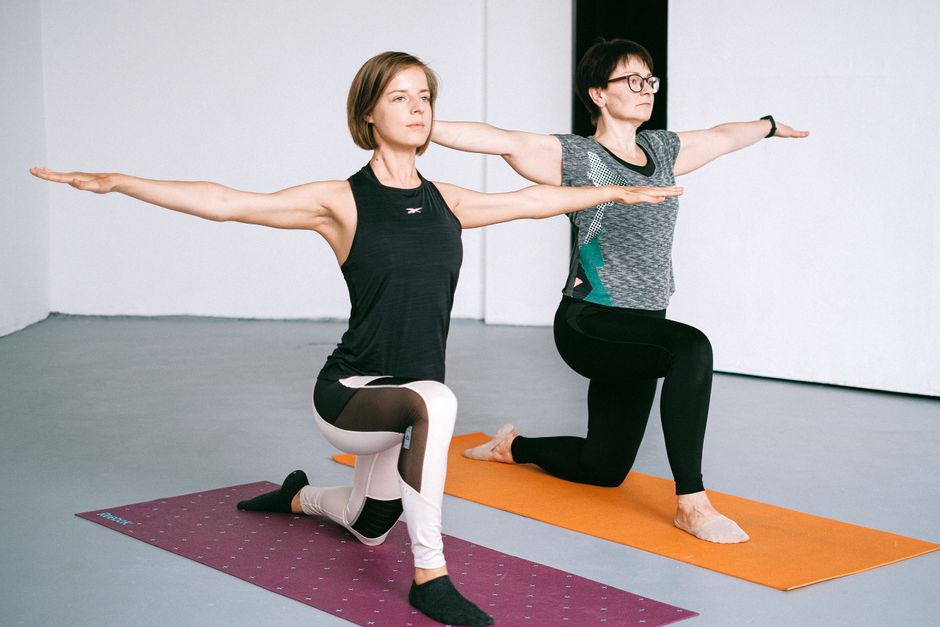
Stretching and mobility work address the tight, shortened side of the equation. When your chest and anterior shoulder muscles are chronically shortened from hours of forward-reaching at a keyboard, they pull your shoulders forward even when you try to sit straight. Stretching those areas can reduce that pull and give your posture muscles room to do their job.
Research published in the Journal of Physical Therapy Science found that a regular pectoral and cervical stretching program improved forward head posture in office workers over several weeks. Stretching also addresses hip flexor tightness, which affects how your pelvis tilts and, by extension, how your lower back curves when you sit or stand.
For desk workers, the most useful stretches tend to target:
- The chest and anterior shoulders (doorway or strap stretch)
- The hip flexors (low lunge or kneeling hip flexor stretch)
- The upper trapezius and levator scapulae (gentle neck side tilts)
- The thoracic spine (foam roller extension or thread-the-needle)
If you want a structured starting point, Stretching and Mobility Routines for Desk Workers: Counteract Sitting and Improve Daily Movement walks through a practical routine you can do at or near your desk.
The limitation of stretching alone is that it creates space and reduces restriction, but it does not build the muscular endurance needed to hold good posture through a long workday. You can stretch your chest open, but if your mid-back and deep neck flexors are too weak to maintain that open position, you will drift back into a slouch within minutes.
What Strength Training Actually Does for Posture
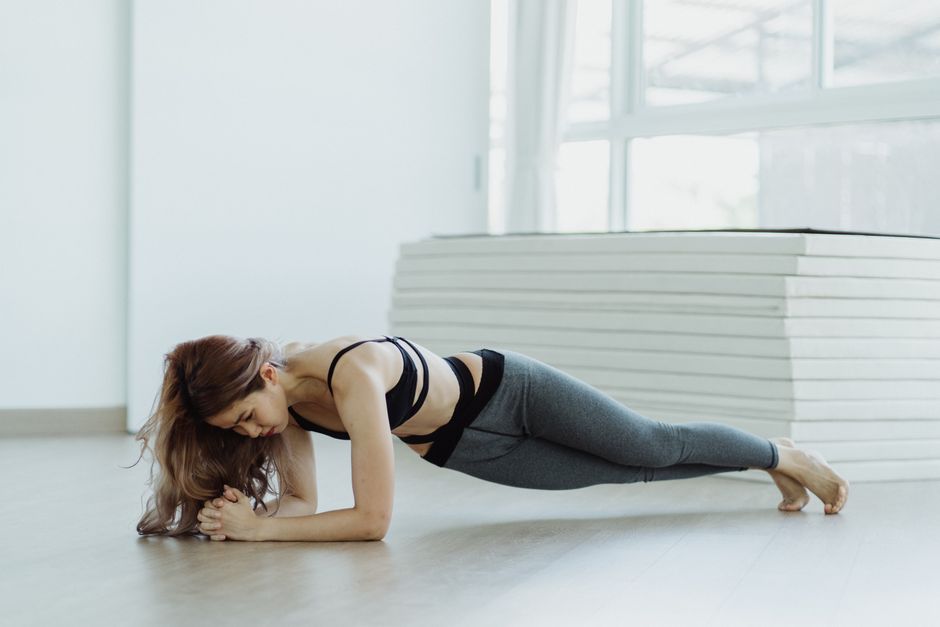
Strength training addresses the weak, underactive side. For most desk workers, that means the muscles of the mid and upper back, the deep core, the glutes, and the deep neck flexors. When these muscles are trained consistently, they can hold your spine in a neutral position without constant conscious effort.
A 2021 review in BMC Musculoskeletal Disorders found that exercise programs targeting the cervical and thoracic stabilizers significantly reduced neck and shoulder pain associated with prolonged sitting. Importantly, the strongest improvements in posture alignment came from programs that included both strengthening and flexibility components rather than either alone.
The posture improvement exercises that tend to deliver the most return for desk workers include:
- Rows (resistance band or cable): strengthen the rhomboids and mid-trapezius that retract the shoulder blades
- Face pulls: target the rear deltoids and rotator cuff, which counteract the forward shoulder rounding
- Dead bugs and bird dogs: activate the deep core without overloading the lower back
- Chin tucks: rebuild strength and endurance in the deep cervical flexors that keep your head from drifting forward
- Glute bridges: address hip extension weakness that contributes to anterior pelvic tilt
Resistance bands make most of these exercises accessible at home without equipment. Resistance Band Workouts for Beginners at Home: Build Strength and Confidence Without Weights or Machines is a good companion resource if you are just starting out.
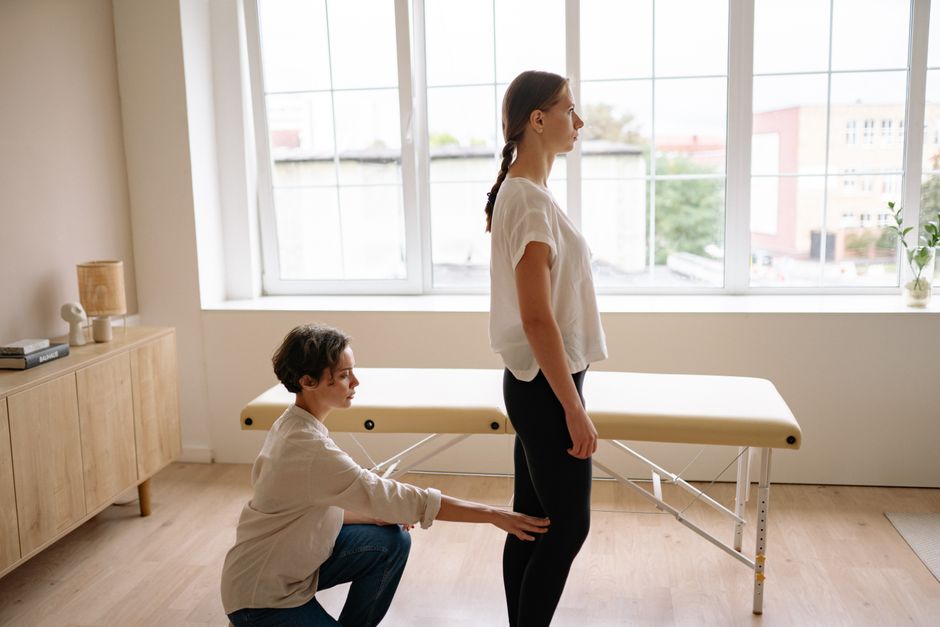
The Comparison: Which Comes First?
Think of stretching as preparing the terrain and strength training as building the structure.
If you start with strengthening before releasing the tight muscles, you may find that your movement patterns are restricted, or that compensating muscles take over. For example, trying to do rows with a chronically tight chest often results in shrugging through the upper trapezius rather than engaging the mid-back properly.
A reasonable sequence for most beginners:
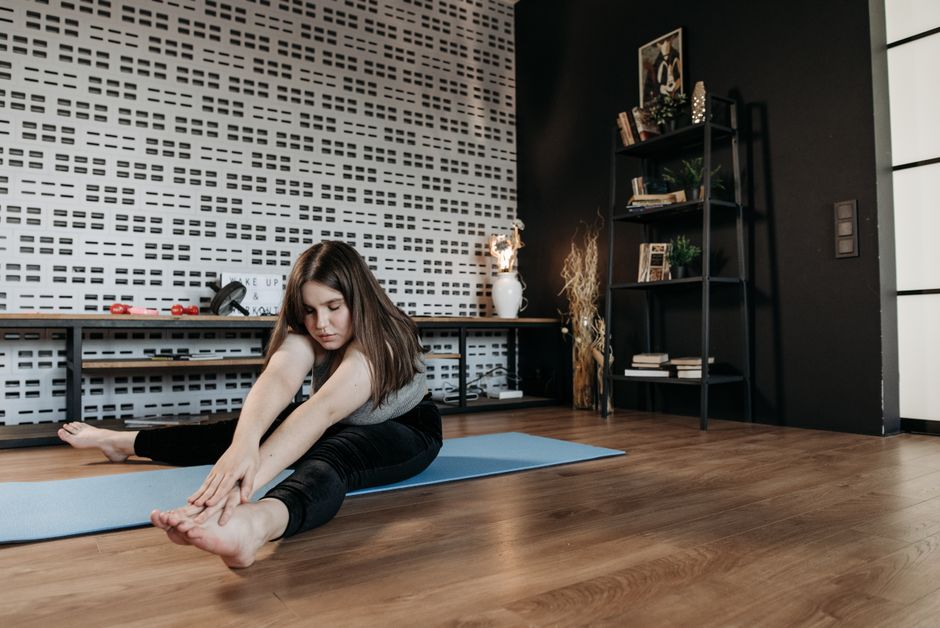
- Spend 5 to 10 minutes on mobility and stretching to release the tightest areas
- Follow with 15 to 20 minutes of targeted strengthening
- End with a brief cool-down stretch to reinforce length in the muscles worked
For sustained desk relief, adding short movement breaks throughout your day amplifies both approaches. Even two minutes of standing, chest opening, and chin tucks every hour can reduce the cumulative stiffness that builds through the afternoon. Movement Breaks for Deep Focus: How to Use Stretching and Walking to Reclaim Energy and Concentration at Work covers how to make this practical without disrupting your workflow.
If you are looking for a more complete home-based strength program that includes functional movement patterns relevant to everyday posture and mobility, Strength Training for Functional Mobility: How to Build Real-World Movement Capacity at Home offers a solid progressive framework.
A Simple Starting Point
You do not need a complicated plan to start seeing improvement. Here is a minimal combination you can build from:
Morning (5 minutes): Doorway chest stretch, hip flexor stretch, thoracic extension on a rolled towel.
After work (15 minutes): 3 sets of resistance band rows, 3 sets of face pulls or band pull-aparts, 2 sets of dead bugs, 10 chin tucks.
Throughout the day: One posture reset per hour: stand, roll your shoulders back, do a chin tuck, take three deep breaths.
This is not a dramatic overhaul. It is a sustainable starting point that addresses both sides of the posture equation consistently over time.

What to Realistically Expect
Research suggests that meaningful improvements in posture alignment and pain reduction from a combined approach typically become noticeable after four to eight weeks of consistent effort, not days. Posture is largely a habit of muscular endurance, not a one-time fix. The goal is gradually re-educating the muscles so good alignment becomes the default rather than something you have to consciously force.
If you have significant pain, nerve symptoms, or a history of spinal injury, working with a physical therapist before starting a posture program is strongly recommended.
Choose one small piece from this article today, whether that is a chest stretch at your desk or adding chin tucks to your afternoon break, and practice it consistently this week. Small, repeatable actions accumulate into real structural change over time.
This article is for general educational and informational purposes only and is not a substitute for medical advice, diagnosis, or treatment. Health needs vary by individual. Consult a qualified healthcare professional before making significant changes to your diet, exercise routine, supplements, medication, or treatment plan, especially if you have a medical condition, are pregnant or breastfeeding, take medication, or have concerns about your symptoms.
Sources
- Singla, D., and Veqar, Z. “Association Between Forward Head Posture and Postural Deformities: A Narrative Review.” Journal of Chiropractic Medicine, 2017. (National Institutes of Health / PMC)
- Harman, K., et al. “Effectiveness of an exercise program on postural control in seated adults.” Journal of Physical Therapy Science, 2019.
- Andersen, L. L., et al. “Effect of physical exercise on neck-shoulder pain in office workers: a systematic review.” BMC Musculoskeletal Disorders, 2021.
- American Council on Exercise. “Upper Crossed Syndrome.” ACE Certified News (publication, no specific URL cited to avoid error).