
You finish a reasonable lunch and twenty minutes later you feel like you swallowed a bag of sand. Your stomach feels tight, your focus fades, and the idea of doing anything productive until 3pm seems optimistic. Sound familiar?
Most people assume they ate too much or made the wrong food choice. But research suggests the real culprit is often something far less obvious: the sequence in which you ate your meal. Changing that sequence, without removing a single food from your plate, can meaningfully reduce post-lunch heaviness and the afternoon slump that follows.
This is about digestive comfort eating order, and it is simpler to apply than it sounds.

Why Eating Order Changes How Your Stomach Feels
Your digestive system does not treat all foods equally. Vegetables and protein require different digestive enzymes and transit times than refined starches and sugars. When you lead with a starch-heavy food such as white bread, pasta, or rice, your blood sugar climbs quickly, your pancreas releases insulin, and your gut has to manage a large, fast-digesting carbohydrate load all at once.
A 2015 study published in Diabetes Care (Cornell University, Weill Cornell Medicine) found that eating vegetables and protein before carbohydrates produced significantly lower post-meal blood glucose and insulin spikes compared to eating carbohydrates first. Lower blood sugar spikes are directly linked to less bloating, less gut inflammation, and less of the heavy, foggy feeling that follows a carb-heavy meal.
Fiber-rich vegetables eaten first also slow gastric emptying slightly, meaning the rest of your meal moves through your digestive system at a more manageable pace. That slower, steadier movement reduces the gas buildup and distension that cause that tight, uncomfortable pressure after lunch. For a broader look at why food pairing and pace matter more than portion size, see Digestive Bloating After Meals: Why Food Pairing and Eating Pace Beat Portion Control.

The Three-Step Eating Order That Supports Digestive Comfort
You do not need a new meal plan. You need a new sequence. Here is a practical way to restructure any lunch plate:
Step 1: Start with vegetables (5-10 minutes)
Eat the non-starchy vegetables on your plate first. Think leafy greens, broccoli, cucumbers, peppers, tomatoes, or a simple side salad. Aim for 5 to 8 bites before moving on. The fiber signals the gut to prepare for digestion and begins stabilizing the environment for what comes next.
If you typically skip vegetables at lunch entirely, even adding a handful of raw vegetables as a starter is enough to see a difference. You can read more about how sequencing shapes afternoon comfort in How to Reduce Afternoon Bloating Without Cutting Carbs or Fats: A Practical Guide to Eating Order and Pace.
Step 2: Eat protein next
After your vegetables, shift to the protein on your plate: grilled chicken, eggs, legumes, tofu, fish, cottage cheese. Protein triggers a strong satiety signal through the hormone peptide YY and reduces the speed at which the rest of your meal empties from your stomach. This is the step most people skip entirely, going straight from a bite of salad to a forkful of pasta or rice.
For those curious about how this sequencing pattern plays out at other meals, Protein Order at Breakfast Changes Your Hunger Signals All Day: The Science Behind Eating Eggs or Beans First covers the morning version in detail.
Step 3: Finish with starches and any sweet bites
Now eat your carbohydrates: the bread, rice, pasta, potato, or wrap. By this point, the fiber and protein have already slowed gastric emptying. Your blood sugar response to the carbohydrate will be blunted, your digestive system has a steadier workload, and you are less likely to overeat the starch because you have already begun to feel satisfied.
If you want a dessert or something sweet, having it after protein and fiber means the sugar hits a more prepared digestive environment, which typically produces less bloating than eating it first or alongside everything else.
What This Looks Like With Real Lunches
Abstract steps are easier to apply when you can see them in context:
- Grain bowl: Start with the greens and any raw or roasted vegetables. Then eat the protein (chickpeas, chicken, or eggs). Finish with the rice, quinoa, or farro at the bottom of the bowl.
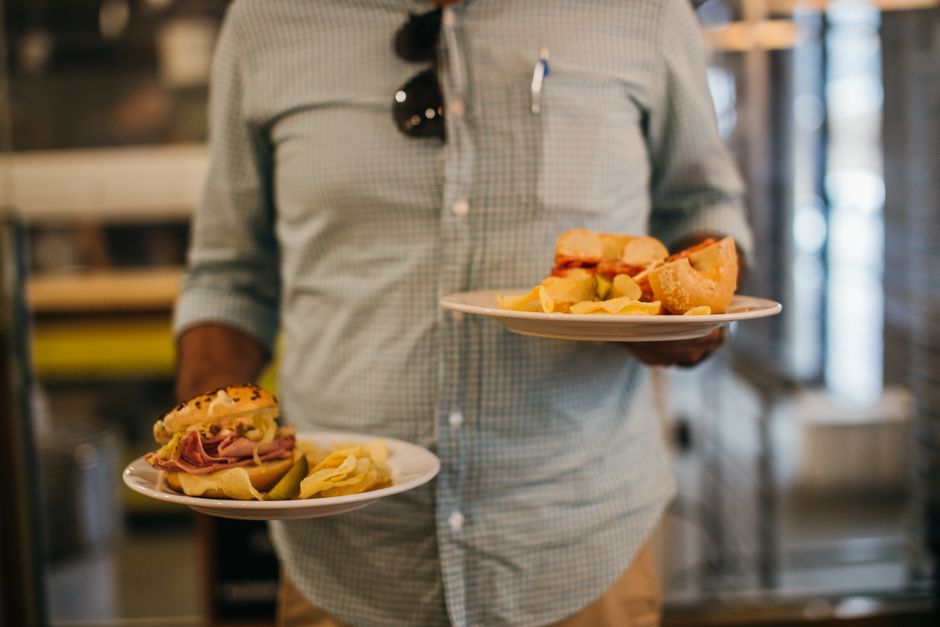
- Sandwich and side salad: Eat the side salad first, then the protein filling from the sandwich on its own, then the bread.
- Soup and bread: Eat a broth-and-vegetable soup first, let it settle briefly, then have the bread.
- Stir-fry over rice: Work through the vegetables and protein topping before eating the rice base.
None of these changes require you to remove anything from your lunch. You are simply shifting when within the meal each food arrives.
Eating Pace Is the Other Half of the Equation
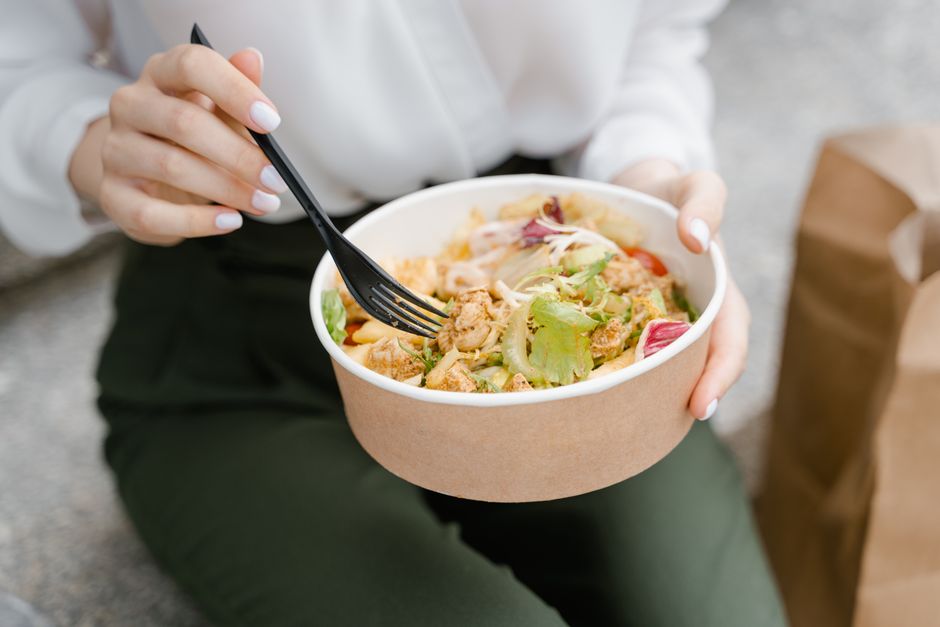
Eating order works better when your pace supports it. If you inhale your lunch in five minutes, there is not enough time for appetite hormones to signal fullness before you have already finished, regardless of food sequence. Research suggests it takes approximately 20 minutes for satiety signals to travel from the gut to the brain.
A practical target: chew each bite 10 to 15 times before swallowing. Set your fork down between bites occasionally. If you find slowing down difficult at lunch, Mindful Eating Without the Rules: How to Eat With Awareness and Enjoyment Instead of Restriction offers low-pressure strategies that work even on a busy schedule.
After eating, a short walk, even five to ten minutes around the block or your office building, can further support motility and reduce the heavy, stagnant feeling. For more on this, Stretching After Eating: How Movement Supports Digestion and Stabilizes Blood Sugar covers light post-meal movement in practical detail.

One Small Change to Start Today
You do not need to overhaul your entire diet to notice a difference. Start with one lunch this week. Before you take your first bite of bread or rice, eat the vegetables and protein on your plate first. That is the whole experiment.
Most readers who try this for three or four days in a row report noticeably less post-lunch heaviness and a steadier sense of energy heading into the afternoon. If you want to keep building on this foundation, the Clean Body Mentor newsletter delivers practical, evidence-informed weekly guidance for meals, movement, and whole-person wellness.
This article is for general educational and informational purposes only and is not a substitute for medical advice, diagnosis, or treatment. Health needs vary by individual. Consult a qualified healthcare professional before making significant changes to your diet, exercise routine, supplements, medication, or treatment plan, especially if you have a medical condition, are pregnant or breastfeeding, take medication, or have concerns about your symptoms.

Sources
- Shukla, A.P. et al. (2015). Food Order Has a Significant Impact on Postprandial Glucose and Insulin Levels. Diabetes Care, 38(7). Published by the American Diabetes Association. Reference available via PubMed (search author Shukla AP, Dickison M, 2015).
- National Institute of Diabetes and Digestive and Kidney Diseases (NIDDK). Digestive Diseases. U.S. Department of Health and Human Services. www.niddk.nih.gov
- Cummings, D.E., and Overduin, J. (2007). Gastrointestinal regulation of food intake. Journal of Clinical Investigation, 117(1), 13-23. Available via PubMed.