

You eat lunch, return to your desk, and by mid-afternoon your waistband feels two sizes too small. The usual instinct is to blame the meal: too many carbs, too much salt, maybe that side salad. But if you spent the last two hours hunched over a keyboard breathing in shallow sips, food may be the least important variable on the list.
Research suggests the state of your nervous system during and after eating shapes digestion just as powerfully as what lands on your plate. Poor posture and shallow breathing can keep your body in a low-grade stress mode that actively slows gut motility, reduces stomach acid output, and traps gas. The good news: you can interrupt that pattern in minutes without eliminating a single food.
Why Your Nervous System Runs Digestion
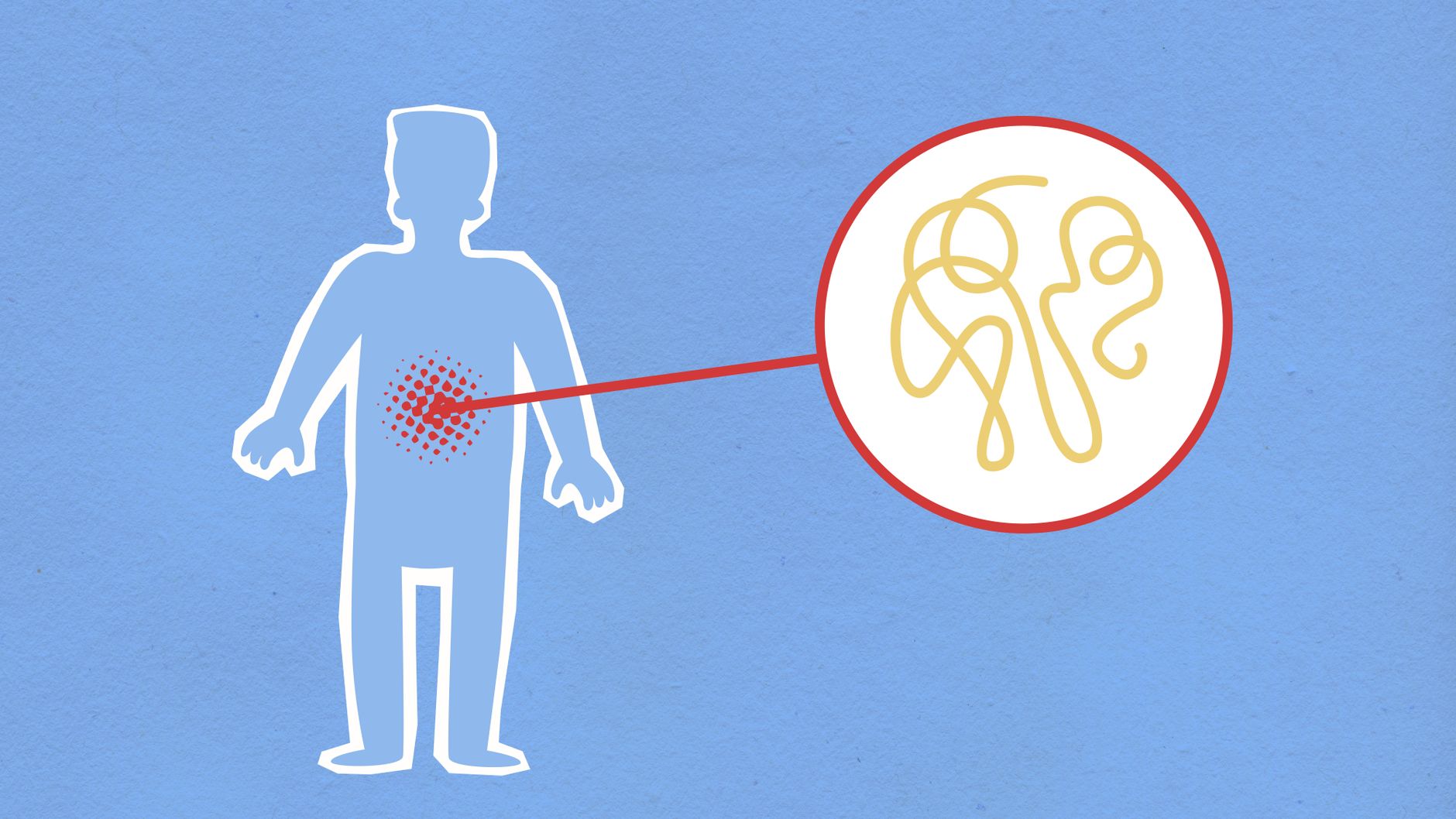
Your gut is sometimes called the “second brain” because it contains roughly 500 million neurons and is directly linked to the vagus nerve, the main highway of parasympathetic (rest-and-digest) activity. According to research published through the National Institutes of Health, vagal tone plays a central role in gastric motility and digestive enzyme release. When vagal tone is high, digestion runs smoothly. When it drops because of stress, shallow breathing, or compressed posture, the gut slows.
This matters because most people sit down to eat while still mentally running from their last meeting. The sympathetic nervous system is still activated, which means digestion is essentially on pause while your body handles perceived stress. Food sitting in a sluggish gut ferments, producing the gas and pressure you feel as afternoon bloating.
If this connection is new to you, the deeper guide on Digestive Sluggishness After Meals: Why Posture and Breathing Matter More Than Food Swaps walks through the physiology in more detail.
How Shallow Breathing Makes Afternoon Bloating Worse
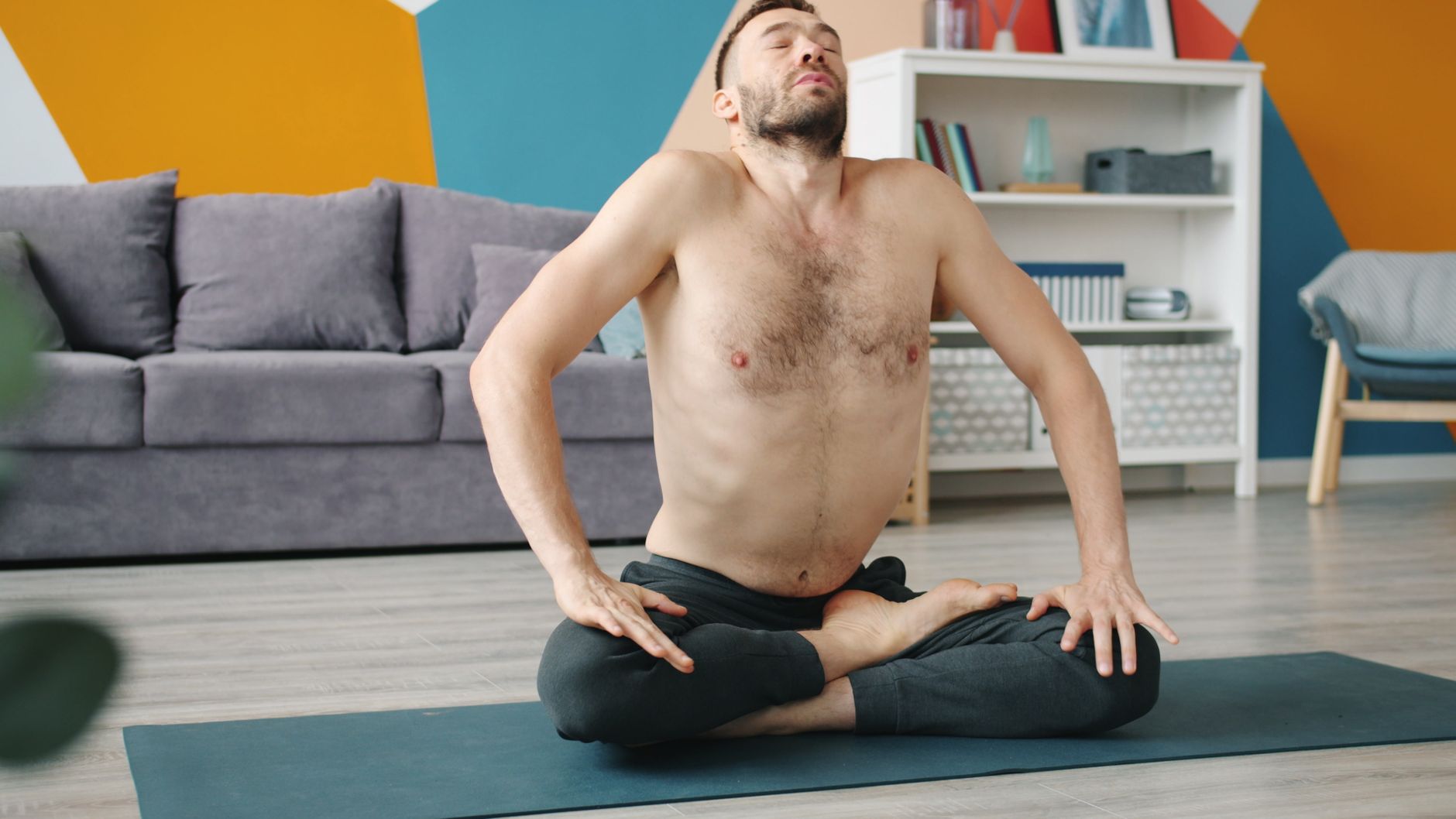
When you breathe shallowly into the chest rather than the belly, your diaphragm barely moves. That matters for digestion because the diaphragm sits directly on top of the stomach and descending colon. Its rhythmic movement during deep breathing acts like a gentle pump for the digestive tract, helping move food and gas through the system.
Shallow breathing also keeps blood CO2 slightly elevated and maintains mild sympathetic activation. A 2018 review in the journal Frontiers in Psychiatry found that slow diaphragmatic breathing reliably increases heart rate variability (HRV), a reliable marker of parasympathetic nervous system activation. Higher HRV is associated with better gut motility and reduced functional gastrointestinal symptoms.
In plain terms: slow, deep breaths signal your body that the threat is over and digestion can begin in earnest.

How Posture Compounds the Problem
Slumped sitting compresses your abdominal cavity, literally reducing the space your stomach has to expand and your intestines have to contract. When you eat a meal in a rounded-forward position, the lower esophageal sphincter can be slightly more prone to allowing stomach contents upward, contributing to reflux-like discomfort. Gas that might otherwise move through the colon gets trapped.
Sitting upright, with your pelvis tilted slightly forward and your sternum lifted, decompresses the abdomen and allows the diaphragm to descend fully on each inhale. It is a small positional change that creates meaningful space for digestive organs to do their job. For a practical look at how desk posture specifically affects gut comfort, Digestive Bloating From Desk Posture: Why Slouching Slows Your Gut and Four Stretches That Fix It in Minutes is worth reading alongside this one.

Three Breathing Techniques to Activate Parasympathetic Digestion
These three techniques can be used before a meal, during a midday break, or any time afternoon discomfort sets in. They require no equipment and take under ten minutes total.
1. Pre-Meal Diaphragmatic Reset (2 minutes)
Before you take your first bite, pause for four slow breaths. Inhale through your nose for four counts, letting your belly rise rather than your chest. Hold gently for two counts, then exhale slowly through your mouth for six counts. The extended exhale is key: a longer exhale compared to the inhale directly stimulates the vagus nerve and shifts nervous system state.
This brief reset noticeably changes how your stomach receives food. Think of it as opening a closed door before trying to pass through it.
2. Box Breathing Between Courses or After Eating (3 minutes)
Box breathing uses equal-count phases: inhale for four counts, hold for four, exhale for four, hold for four. Repeat six to eight cycles. This technique is well-studied in stress physiology and helps flatten the cortisol curve that often spikes right after a stressful morning carries into lunch.
Sit upright with both feet flat on the floor. Rest one hand on your belly to confirm diaphragmatic movement. This is also an accessible introduction to mindful eating because it forces a pause and brings attention to the body.
3. The 4-7-8 Afternoon Rescue (5 minutes)
If bloating and discomfort have already settled in by 3pm, the 4-7-8 breath pattern can help restart motility. Inhale for four counts, hold for seven, exhale fully for eight. The long hold and extended exhale send a strong parasympathetic signal.
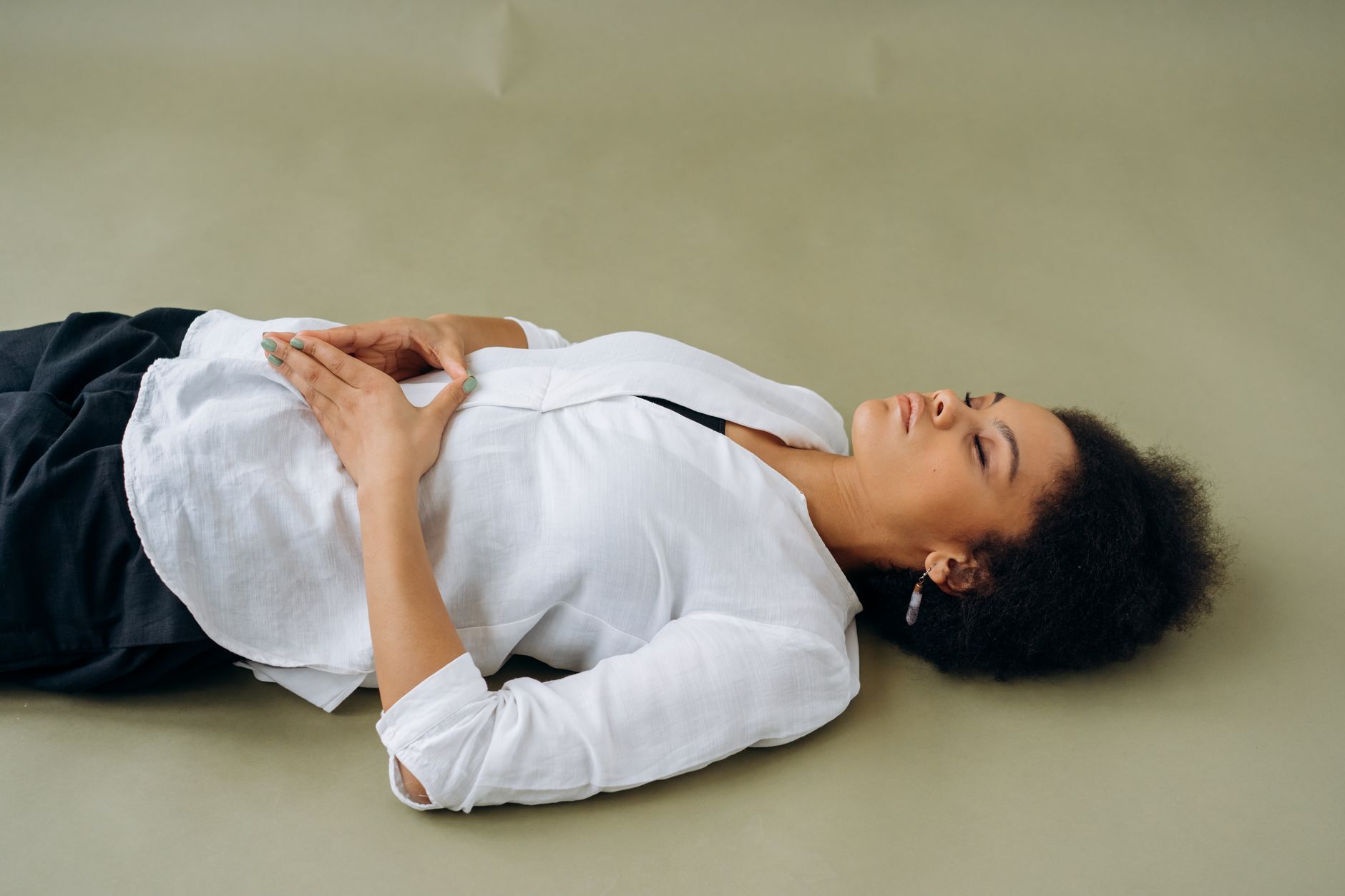
Do this sitting tall in your chair or lying on your back with knees bent. Four to six cycles is usually enough to notice a shift in abdominal tension. If you find that your afternoon energy also dips around this time, the article on why your afternoon energy crashes at 3pm and how meal order actually fixes it pairs well with this practice.

Putting Posture and Breathwork Together at Meals
The techniques above work best when they are wrapped around a simple mealtime posture habit. Here is a practical sequence that takes no extra time:
- Before the meal: Sit with both feet flat on the floor, hips back in the chair, spine long. Do the two-minute diaphragmatic reset.
- During the meal: Chew slowly, breathe between bites, and keep your torso upright rather than leaning over the plate.
- After the meal: Stay seated upright for ten minutes rather than returning immediately to a slumped desk position. Even a short walk to refill your water supports motility without discomfort.
This sequence costs you roughly two minutes and no money. It does not ask you to cut gluten, remove legumes, or give up your afternoon coffee.
If you are curious whether food composition also plays a supporting role, Digestive Comfort Through Meal Composition: Why Vegetable Order Stops Bloating Better Than Food Restriction explores how small sequencing choices can also shift your afternoon comfort without restriction.

A Simple Place to Start
Choose one of the three breathing techniques above and try it consistently for one week at the same meal. That is enough to notice a real difference before adding anything else. Sustainable habits build on small, specific actions rather than complete overhauls.
If you want broader practical guidance on digestion, posture, and whole-person wellness, consider joining the Clean Body Mentor newsletter for weekly evidence-informed tips delivered without pressure or overwhelm.
Disclaimer: This article is for general educational and informational purposes only and is not a substitute for medical advice, diagnosis, or treatment. Health needs vary by individual. Consult a qualified healthcare professional before making significant changes to your diet, exercise routine, supplements, medication, or treatment plan, especially if you have a medical condition, are pregnant or breastfeeding, take medication, or have concerns about your symptoms.
Sources
- Breit, S., et al. (2018). “Vagus Nerve as Modulator of the Brain-Gut Axis in Psychiatric and Inflammatory Disorders.” Frontiers in Psychiatry. Published by NCBI/NIH (search at pubmed.ncbi.nlm.nih.gov).
- Ma, X., et al. (2017). “The Effect of Diaphragmatic Breathing on Attention, Negative Affect and Stress in Healthy Adults.” Frontiers in Psychology. Available via NIH National Library of Medicine.
- National Institute of Diabetes and Digestive and Kidney Diseases (NIDDK). “Your Digestive System and How It Works.” niddk.nih.gov.
- Bonaz, B., Bazin, T., and Pellissier, S. (2018). “The Vagus Nerve at the Interface of the Microbiota-Gut-Brain Axis.” Frontiers in Neuroscience. Available via NIH National Library of Medicine.


