
You use your hands for almost every physical task in your day, yet grip training rarely appears in home workout plans. That gap matters more than most people realize. Research published in the Lancet (the Prospective Urban Rural Epidemiology study, 2015) found that reduced grip strength was associated with higher all-cause mortality and cardiovascular disease risk across 17 countries. A 2018 systematic review in PLOS ONE further identified grip strength as a reliable marker of functional independence as people age.
You do not need a hand gripper, a pull-up bar, or a gym to fix this. The five grip strength exercises at home below use your own bodyweight, door frames, towels, and everyday household objects. Each drill includes a beginner option and an advanced progression so you can grow with it.
If you want deeper context on why bodyweight training builds lasting strength, Building Intuitive Strength at Home: Why Bodyweight Progression Works Better Than Heavy Weights for Beginners is a helpful companion read before you start.
1. Towel Dead Hang
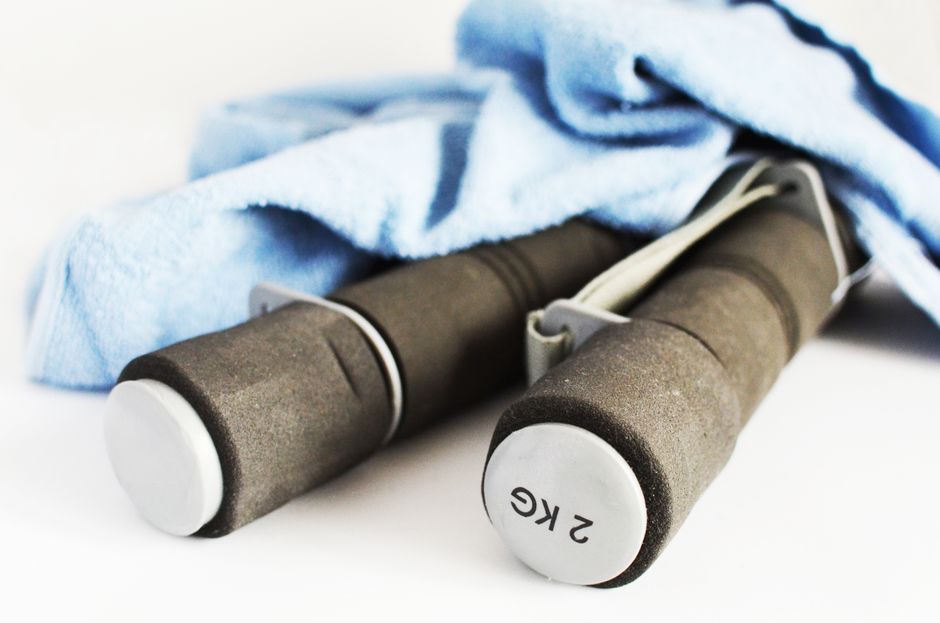
What you need: A sturdy towel and a door frame or horizontal bar (a pull-up bar, tree branch, or railing that supports your weight).
How to do it: Drape a folded bath towel over the bar and grip both sides with an overhand hold. Hang with arms fully extended, shoulders lightly engaged (not shrugging). Breathe steadily.
- Beginner: Keep feet lightly resting on the floor to reduce load. Aim for 3 sets of 15-20 seconds.
- Advanced: Lift feet completely and hang for 3 sets of 30-45 seconds, or slowly move hands closer together on the towel to thicken the grip surface.
Why it works: The towel creates a thicker, less stable surface than a bar, which forces the fingers, palm, and forearm flexors to work harder just to maintain hold. This is a foundational grip strength exercise at home that translates directly to real-life pulling tasks.
2. Wall Fingertip Push-Up
What you need: A clear wall section.
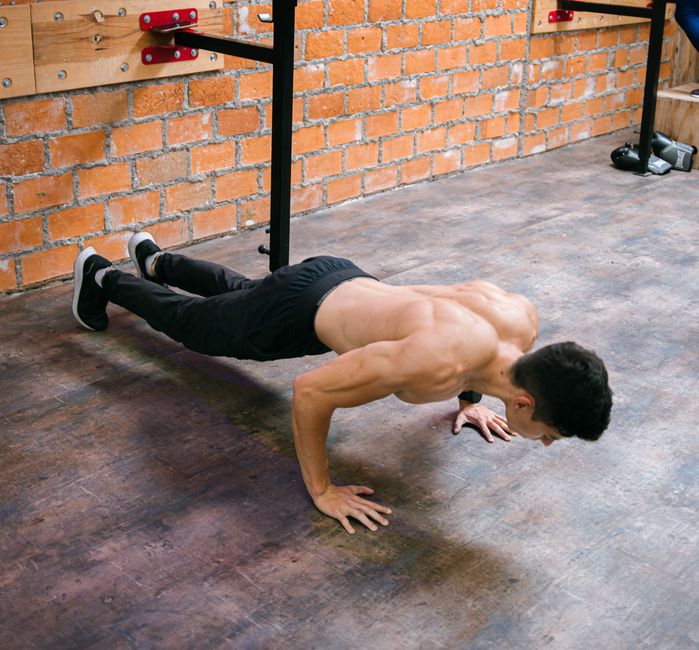
How to do it: Stand arm’s length from the wall. Place only your fingertips (not your palm) flat against the surface. Lean in slowly until elbows bend to roughly 45 degrees, then push back. Keep your core lightly braced.
- Beginner: Use the wall and move slowly through 3 sets of 8-10 reps. Focus on spreading fingers wide to distribute load evenly.
- Advanced: Progress to a countertop or low table (more horizontal position), then to a floor fingertip push-up with knees down.
Why it works: The fingertip position shifts load away from the palm and directly into the small muscles of the fingers and the deep forearm flexors. This builds the grip endurance you need for sustained tasks like carrying, climbing, and typing without fatigue.
3. Grocery Bag Farmer’s Carry
What you need: Two plastic or reusable grocery bags loaded with canned goods or water bottles.
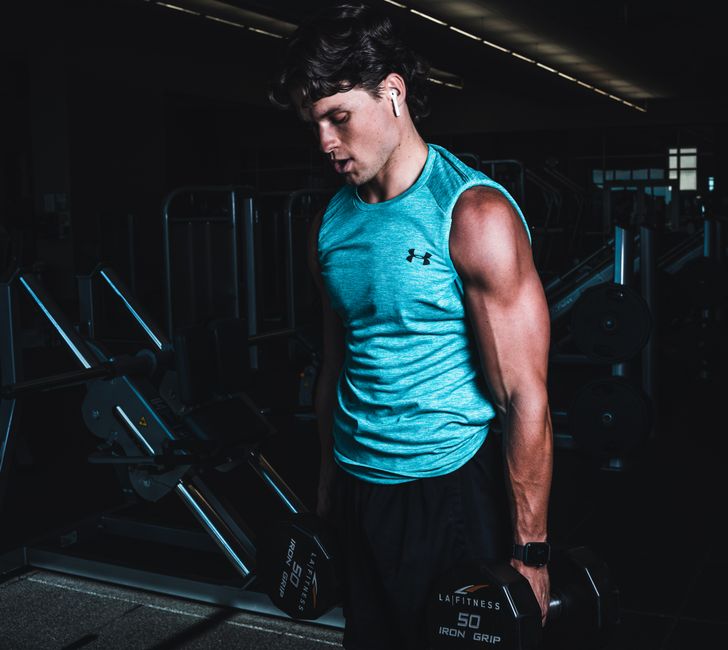
How to do it: Fill bags to a manageable weight (start at roughly 5-10 lbs each). Hold one in each hand, stand tall with shoulders back, and walk a defined circuit in your home or yard for 30-60 seconds without resting the bags on your body.
- Beginner: Use lighter bags and walk for 20-30 seconds. Rest 60 seconds between carries. Do 3 rounds.
- Advanced: Increase bag weight, walk longer circuits, or carry one heavy bag on one side (suitcase carry) to challenge grip asymmetrically.
Why it works: The farmer’s carry is one of the most functional grip strength exercises at home because it mirrors real life: carrying laundry, groceries, a child’s bag. Sustained loading over distance trains forearm endurance rather than just peak squeeze force.
For a fuller lower-body complement to this drill, Home Leg Workouts Without Equipment: Progressive Bodyweight Exercises for Stronger Legs, Glutes, and Everyday Movement pairs well.
4. Towel Wring and Hold
What you need: A damp hand towel.
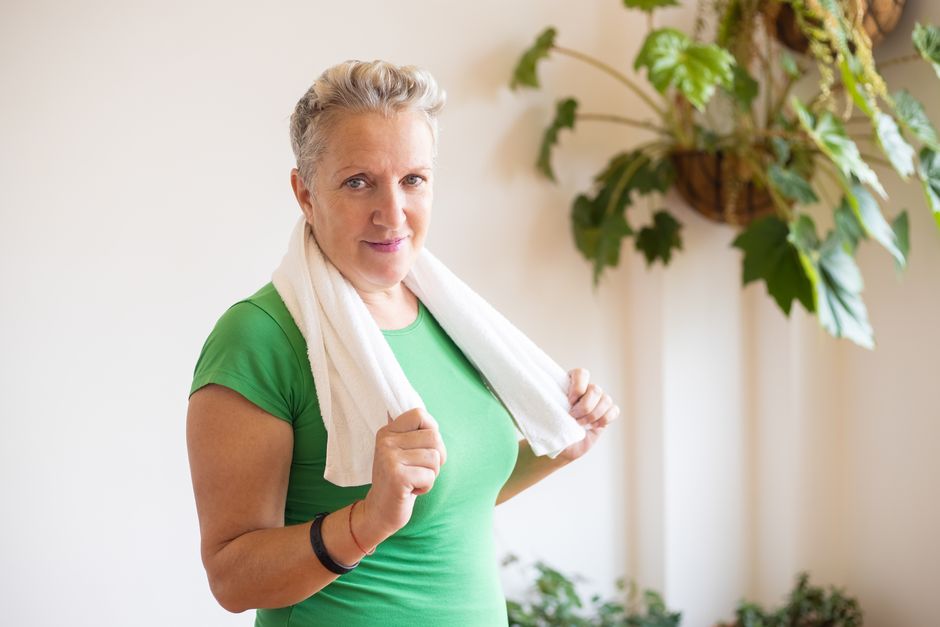
How to do it: Hold the towel at both ends. Wring it tightly in one direction for 5 seconds, then reverse direction for 5 seconds. Repeat continuously.
- Beginner: 3 sets of 30 seconds total (15 seconds each direction). Keep wrists neutral to start.
- Advanced: Use a thicker towel or increase sets to 5. Try wringing with eyes closed to heighten proprioceptive feedback.
Why it works: Wringing isolates the wrist extensors and flexors through rotation rather than straight compression. Because most grip training favors one plane, this drill helps fill a common gap in forearm endurance and reduces the risk of repetitive strain that builds up in desk workers or people who type heavily.
If desk work is also affecting your shoulders and neck, Rebuilding Shoulder Strength Without Weights: Progressive Bodyweight Moves for Desk Workers and Beginners addresses the upstream chain.
5. Book Pinch Hold
What you need: Two hardcover books of similar size.
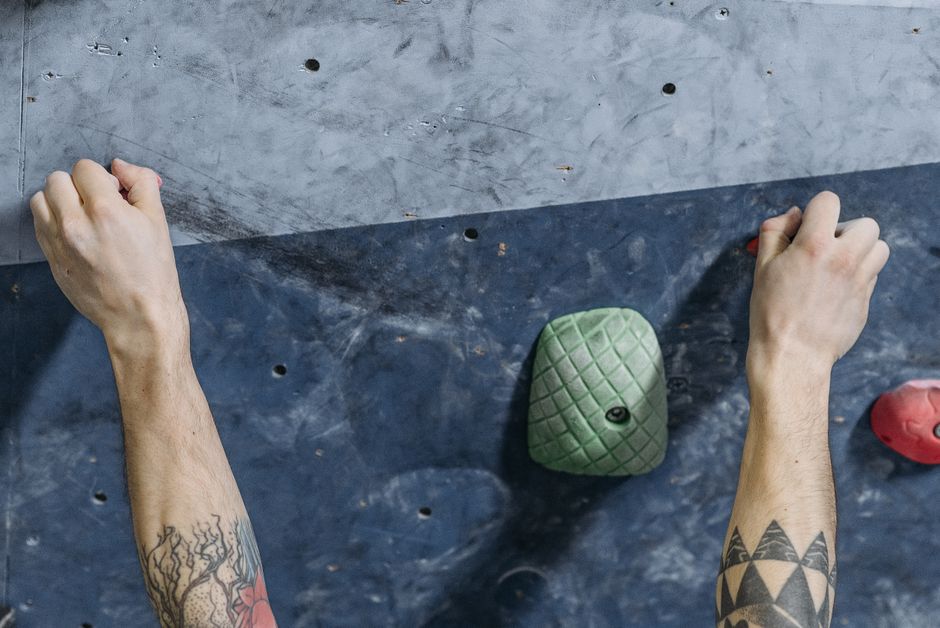
How to do it: Hold one book on each side by pinching the cover between your thumb and fingers (not wrapping the full hand). Hold at hip height with arms extended for as long as you can. Switch grips after rest.
- Beginner: Use a single lightweight book, one hand at a time. Aim for 3 holds of 15-20 seconds per side.
- Advanced: Use two heavier books simultaneously or place a smooth rubber band around each book to increase friction challenge.
Why it works: Pinch strength is often undertrained compared to crush grip (full-hand squeeze). Weak pinch grip contributes to difficulty opening jars, buttoning clothing, and fine motor tasks that become more important with age. This is a simple but surprisingly effective grip strength exercise at home that takes about 3 minutes total.
How to Build These Drills Into Your Day
You do not need a dedicated training session for any of these. Consider attaching them to existing routines:
- Do a towel dead hang while waiting for coffee to brew.
- Pair wall fingertip push-ups with a bathroom or midday break.
- Use the grocery bag carry every time you bring groceries inside, intentionally.
- Keep a damp towel near your desk for a quick wring set between tasks.
- Keep two books on a shelf and pinch-hold them while reading or watching a short video.
For a broader look at how bodyweight progressions compound over time, Five Strength Training Plateaus and How Beginners Actually Break Through Them at Home explains the progression logic that keeps these simple drills effective long-term.
Start with one drill you can realistically practice three to four times this week. Consistency across a month will do far more than a single intense session. When you are ready to explore how nutrition supports this kind of functional strength building, Five Whole-Food Proteins That Build Muscle Without Meat or Powders is worth a read.
Sources
- Leong DP et al. “Prognostic value of grip strength: findings from the Prospective Urban Rural Epidemiology (PURE) study.” The Lancet, 2015. (Lancet.com)
- Bohannon RW. “Grip Strength: An Indispensable Biomarker for Older Adults.” Clinical Interventions in Aging, 2019. (NIH/PubMed)
- Rijk JM et al. “Prospective studies on changes in grip strength and the risk of functional decline and mortality.” PLOS ONE, 2016. (PubMed)
This article is for general educational and informational purposes only and is not a substitute for medical advice, diagnosis, or treatment. Health needs vary by individual. Consult a qualified healthcare professional before making significant changes to your diet, exercise routine, supplements, medication, or treatment plan, especially if you have a medical condition, are pregnant or breastfeeding, take medication, or have concerns about your symptoms.